On Monday, news filtered through that the vaccine being developed by Pfizer and BioNTech is 90% effective - with zero safety concerns raised during its testing phase during which it was used on 43,500 people.
The sensation of relief that swept the country on Monday was understandable.
During the afternoon, news filtered through that a vaccine being developed by Pfizer and BioNTech has been confirmed to be 90% effective – with zero safety concerns raised from its testing phase during which it was used on 43,500 people.
This is as close as we’ve been to the prospect of immunisation since the pandemic took hold.
Chief Medical Officer Chris Whitty called the news “very encouraging”, whilst Deputy CMO Jonathan Van-Tam even suggested there could be a vaccine by Christmas – with a “much better horizon by spring.”
Preliminary news that the Pfizer/BioNTech vaccine is effective demonstrates the power of science against COVID. We must see the final safety and efficacy data, but it is very encouraging.
It is essential we continue to suppress COVID, but it is a reason for optimism for 2021.
Prime Minister Boris Johnson – who himself must have been buoyed by the very real prospect of a magic jab after a torrid few months leading the nation – urged caution.
He warned it was still “very, very early days”, and that “the biggest mistake we could make now would be to slacken our resolve at a critical moment.”
ADVERTISEMENT
Van Tam also admitted that setbacks during the distribution of a vaccine could easily happen, and attempted to clarify the situation with a football analogy.
“[We] haven’t won the cup yet, but what it does is it tells you that the goalkeeper can be beaten,” he said.
Here’s what we know about the new vaccine so far…
ADVERTISEMENT
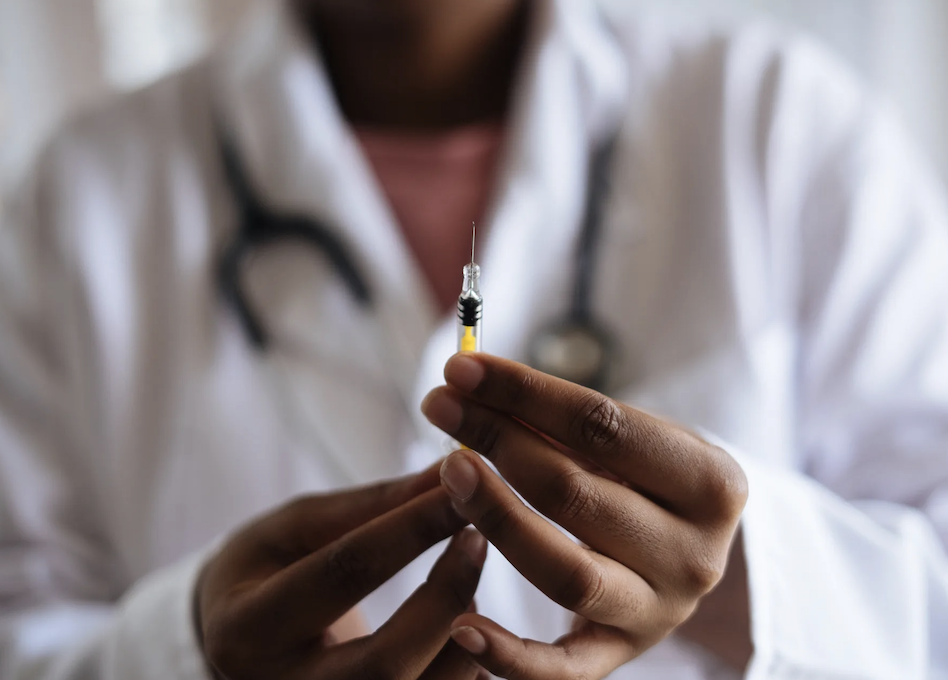
Unsplash
How does the vaccine work?
The Pfizer and BioNTech vaccine works by teaching the immune system to combat coronavirus.
Two doses are required – three weeks apart – for maximum effect.
The vaccine involves injecting people with a tiny bit of the virus which the immune system immediately recognises as a threat and learns how to defeat; thereby offering future protection.
According to developers, 9 out of 10 people who receive the vaccine will not get COVID symptoms.
Who will get it first?
The most vulnerable people in the UK will have first dibs on any vaccine.
ADVERTISEMENT
This means it’s likely to be distributed to care homes and hospitals – locations the virus has hit hardest.
Frontline workers may also be prioritised for doses.
The expectation is that the older you are, the sooner you will be eligible for the coronavirus vaccine.
Younger people are likely to be lower down the list unless they have a condition that categorises them as vulnerable.
But the answer as to whether the vaccine will work in the long-term is a case of wait and see.
There are apparently some logistical challenges to storing the vaccine, too – with doses having to be kept at -80 degrees (facilities a humble GP surgery or pharmacy would not have).
The virus may also mutate later down the line, which would mean the vaccine would have to be tweaked in order to remain effective.
When will lockdowns stop?
Once the vaccine is ready, the challenge is getting it to the people who need it most.
This will take time, and until then, social restrictions remain of crucial importance in the fight against COVID-19.
ADVERTISEMENT
Is the UK getting the Pfizer and BioNTech vaccine?
Yes.
Britain has ordered 30 million doses.
What about other vaccines?
There are around a dozen vaccines in the final stages of development – with news expected on these in the coming weeks and months.
However, the Pfizer vaccine appears to be the lead candidate.
The BBC’s Health and science correspondent, James Gallagher, stated: “We are still waiting for the full data, but these results are even better than people were hoping for.
“A good flu vaccine protects around half of people, so 90% at the first attempt is a triumph.”
News
Victim named and murder investigation launched after young woman is killed in Newton Heath stabbing
Emily Sergeant
The victim of a street stabbing in Newton Heath this week has been named for the first time as a murder investigation continues.
It comes after officers from Greater Manchester Police (GMP) responded to reports of a disturbance at around 2am yesterday (Thursday 15 October) on Dorking Avenue, in the Newton Heath area of Manchester, and when they arrived on the scene, they found a woman in her 20s with serious injuries that were ‘consistent with a stabbing’.
Despite best efforts of all emergency services involved, the young woman was sadly pronounced dead at the scene.
As the murder investigation progresses, the woman has now been publicly named and a photo of her has been released for the first time.
She has been named as 26-year-old Alisha Samuels.
At this time, one man, aged 25, has been arrested on suspicion of murder, and a man and woman, aged 61 and 38, have been arrested on suspicion of assisting an offender, and they all remain in custody – with officers continuing their enquiries to establish the full circumstances of this incident.
Alisha’s family have asked for privacy whilst they deal with the devastating loss of their loved one, GMP has stated.
“We are continuing to urge people who may have information in relation to this incident to please come forward to support our investigation and bring justice for Alisha,” the police force said in a public appeal.
Anyone who may have witnessed the incident, or has mobile phone, CCTV, or doorbell footage, is urged to call GMP on 0161 856 5464, or contact them via the Major Incident Public Portal here.
Alternatively, you can contact Crimestoppers on 0800 555 111
Featured Image – GMP (Family Handout)
News
Former supply teacher jailed for multiple upskirting and AI sex offences across Greater Manchester
Emily Sergeant
A former supply teacher has been jailed for multiple upskirting and AI sex offences in schools across Greater Manchester.
Abusali Rahman – a British national of Bangladeshi ethnicity from Salford – appeared in Bolton Crown Court this week for his sentencing after first being charged with, and then pleading guilty to, several offences.
The offences are including, but not limited to, 12 counts of taking an indecent photograph/pseudo-photograph of a child (images obtained by upskirting), three counts of making indecent photograph / pseudo-photograph of a child (making AI-generated images), and one count of attempting to meet girl under 16 following sexual grooming.
The offences are alleged to have taken place between December 2023 and June 2025, according to Greater Manchester Police (GMP).
Twelve girls have been identified in relation to the upskirting offences – aged between 13 and 16 at the time of the alleged offending – at seven high schools in three Greater Manchester boroughs (Bury, Bolton, and Salford).
GMP says it has remained in close contact with the schools, local authorities, and other partners throughout the investigation to ensure all appropriate support is in place for those who need it.
Additionally, the court also heard how Rahman amassed a collection of images of young girls, using AI and other methods to sexualise them.
The images numbered more than 300 in total, ranging from Category A to Category C classifications, and Rahman would post these on social media, often alongside humiliating and disgusting captions.
Rahman was sentenced to six years in prison, and will also be subject to a 20-year Sexual Harm Protection Order.
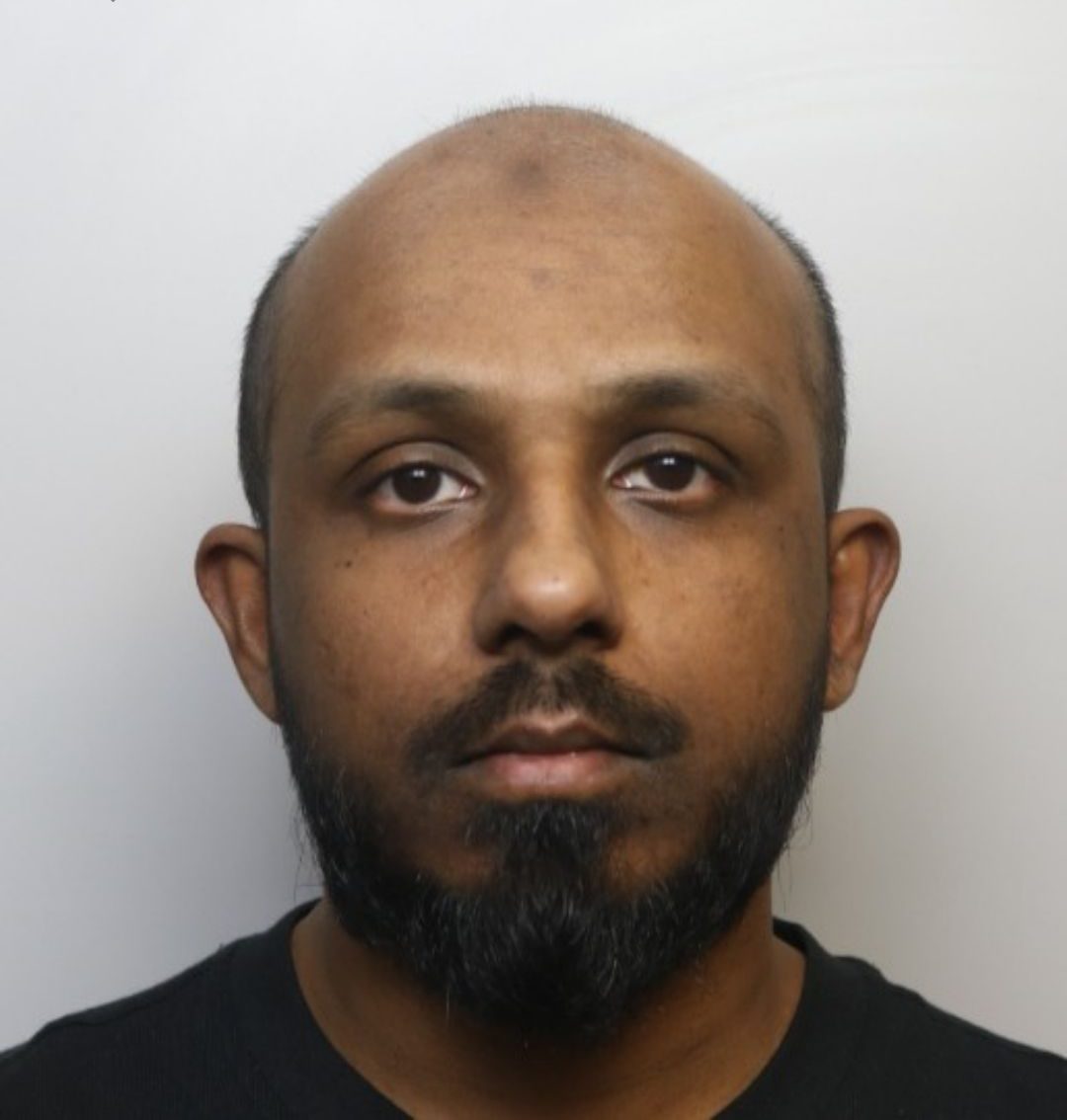
A former supply teacher has been jailed for child sex offences in schools across Greater Manchester / Credit: GMP
Detective Constable Lisa McGaffin, from GMP’s Bolton Child Protection Team, described Rahman’s crimes as ‘absolutely abhorrent’.
“My thoughts throughout this process have always been with the young girls who have been subject to such indignity,” DC McGaffin said following the sentencing this week. “Their welfare and support will always be a priority for us.
“While working as a teacher – someone who young children should trust and be safe with – Rahman repeatedly took secret photos for his own sick gratification, before posting images online which showed his total disregard for the girls’ respect and dignity.

 The Manc -
10th November 2020
The Manc -
10th November 2020