The government is today unveiling its ‘Levelling Up’ report that it says will “transform” the country.
Aiming to “close the gap” between the richer and poorer parts of the country, the long-awaited strategy – which has been unveiled by Levelling Up Secretary Michael Gove, and will be further detailed in a white paper report being released later today – will take until 2030, and looks to improve services such as education, broadband, and transport.
Officials say the report will set out a blueprint to bring prosperity “to all parts” of the UK.
In the Conservatives’ 2019 general election-winning manifesto, the party said its focus would be “levelling up every part of the UK”, and the term has since become a key slogan for Prime Minister Boris Johnson’s government.
At the heart of the strategy is a plan to create more regional mayors, such as existing posts like Labour’s Andy Burnham in Greater Manchester, or the Conservative’s Andy Street in the West Midlands, and Ben Houchen in Tees Valley, and every part of England will have access to “London-style” powers if they want it.
ADVERTISEMENT
As stated in the strategy, Mr Gove’s plans would bring all existing initiatives together into 12 “national missions”, and set up a system for measuring progress.
Among the 12 missions are promises to refocus education spending on disadvantaged parts of the country and eliminate illiteracy and innumeracy, bring the rest of the country’s public transport up to London standards, and provide access to 5G broadband for the “large majority” of households.
ADVERTISEMENT
There’s also the aim to have wellbeing improved in every area of the UK, with the gap between top performing and other areas closing.
✅ Jobs ✅ Investment ✅ Opportunity ✅ Regeneration ✅ Health and wellbeing ✅ Education and training ✅ Empowering communities
— Ministry of Housing, Communities & Local Gov (@mhclg) February 2, 2022
Other missions identified include significantly increasing the number of people successfully completing high-quality skills training in every area of the UK, and renters having a secure path to property ownership, with the number of first-time buyers increasing in all areas.
Derelict urban sites in 20 towns and cities will be targeted for redevelopment, with Sheffield and Wolverhampton the first places selected for this.
ADVERTISEMENT
One of the crucial parts of the plan for this region includes £100 million of new government funding for “innovation accelerators” to boost research and development in Greater Manchester, as well in West Midlands and Glasgow City-Region.
Speaking ahead of the publishing of the white paper, Levelling Up Secretary Michael Gove said: “The United Kingdom is an unparalleled success story. We have one of the world’s biggest and most dynamic economies, ours is the world’s most spoken language [and] we have produced more Nobel Prize winners than any country other than America.
“But not everyone shares equally in the UK’s success [and] for decades, too many communities have been overlooked and undervalued.
“As some areas have flourished, others have been left in a cycle of decline.”
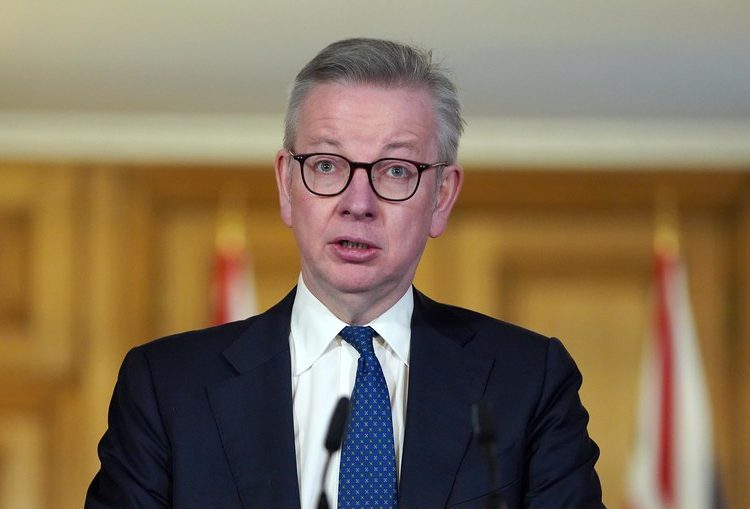
The strategy has been unveiled by Levelling Up Secretary Michael Gove / Credit: Number 10 / Pippa Fowels (via Flickr)
“Levelling Up and this White Paper is about ending this historic injustice and calling time on the postcode lottery,” he continued.
ADVERTISEMENT
“This will not be an easy task, and it won’t happen overnight, but our 12 new national levelling up missions will drive real change in towns and cities across the UK, so that where you live will no longer determine how far you can go.”
Prime Minister Boris Johnson assured that levelling up is the “defining mission of this government”, adding that this “comprehensive and ambitious” is a “vision for the future”.
Salford RLFC issue statement as head coach Mike Grady departs after less than three months
Danny Jones
Salford Rugby League Football Club have issued an official statement following the departure of head coach Mike Grady, who has left the role after less than three months in the job.
It has been insisted that this is not a sacking, but rather a joint decision to terminate his contract.
Grady, who took up the mantle at the start of this project following the end of the Salford Red Devils era, was only appointed on 5 January.
He had previously been in charge of the Red Devils’ women’s side over the past couple of years, but moved over to hopefully lead this new era forward.
As you can see, the club confirmed in a statement that they and Grady have “mutually agreed to part ways due to changes in his personal circumstances.”
They go on to write: “We are forever indebted to Mike for his unwavering commitment to the club. We want to thank him for all his hard work since taking on the role as Head Coach in very challenging circumstances in December.”
Also sharing a comment from former player turned CEO, Ryan Brierley, he said: “Mike came in as Coach at a time when the club had just come through one of its toughest times with the double impact of relegation and liquidation.
“He was willing to roll up his sleeves and bring stability to the club on the pitch. The fact we were able to field a team against Oldham in January, after only three weeks, speaks volumes about his commitment and determination. To beat Hunslet at home only four weeks later was a fantastic achievement.
“Mike will always be remembered as the person [who] strived and achieved the objective of sending out the first Salford team of this new era. A team running onto the pitch, after so much hard work, gave us all something to cheer about. We also remember how well he successfully guided our women’s team to third and fourth place finishes in the Championship.”
Sharing his own farewell message, he went on to add: “I want to thank Ryan for the opportunity to represent this great club and fan base. What we created at the start of the year was pretty special, and I’m proud to have built that.
“I’m happy to leave the club in a better place than I found it and wish the club all the best for the future.” Salford RLFC have already assured that they are now recruiting for his replacement.
Price caps and standardisations to be introduced for vet care in UK following major investigation
Emily Sergeant
Reforms to the veterinary industry to help pet owners better navigate the vet services market are set to be introduced this year.
After an independent inquiry group recently found that the current system is leaving pet owners ‘in the dark’, with a lack of information to help make informed decisions leading to weak competition and high prices, the Competition and Markets Authority (CMA) has this week concluded its investigation into veterinary services for household pets in the UK.
The final report green-lights a package of measures to make the market more competitive, easier to navigate, and more responsive to pet owners’ needs.
It outlines the final remedies and recommendations, which together, will transform the market.
Remedies and recommendations in the report range from price caps and standardisations, through to upfront cost transparency.
We’ve set out major reforms to the UK’s veterinary sector now our market investigation is complete.
Our reforms will help pet owners better navigate the vet services market and will start coming into force later this year.
— Competition & Markets Authority (@CMAgovUK) March 24, 2026
Practices will soon be required to publish a comprehensive price list for standard services – including consultations, common procedures, diagnostics, written prescriptions and cremation options – so pet owners know up-front how much certain services are expected to cost.
They’ll also have to make it clear whether they are part of a group or an independent business, and provide a written estimate in advance for any treatment expected to cost £500 or more (including aftercare costs), plus an itemised bill.
Written prescription fees are set to be capped at £21 for the first medicine, and then £12.50 for any additional medicines.
Price caps and standardisations are set to be introduced for vet care in UK / Credit: Pxhere
There’s also set to be changes to the complaints process, as practices will now be required to follow a transparent, accessible, in-house complaints process, and engage in mediation where disputes cannot be resolved.
The CMA says an ‘unprecedented’ response from both the public and the sector has helped to shape the final report.
The next step is for the Government to respond to the report formally – with Secretary of State for Environment, Food and Rural Affairs, Emma Reynolds, commenting: “We are grateful for all the work of the Competition and Markets Authority, and we will respond to the report and set out next steps for our proposed reforms in due course.
“This Government is focused on helping families save money on vet services by improving transparency and choice around pricing, so the public can make informed decisions about their pets’ care.”