Going underground: The Manchester travel tunnel from Piccadilly to Victoria that never was
For more than ten years, Manchester was preparing an underground network that would reconnect the city in exciting, imaginative new ways. But then, the money stopped.
“We are going to face the difficult decision of whether or not we need to mothball the Metrolink.”
It’s April 2020, and the Mayor of Greater Manchester Andy Burnham is issuing a warning.
Almost the entire city is indoors, and the only thing travelling through it is COVID-19.
Losing millions of pounds each month, the Metrolink is at real risk of closure. The travel landscape of Manchester could be set to change forever.
Fast-forward four months, and the yellow trams are merrily tooting and weaving through the borough like nothing ever happened. If it wasn’t for all the occupants wearing masks, you wouldn’t know the difference.
ADVERTISEMENT
It’d be easy to say all that big panic about the Metrolink shutting in spring was over-the-top.
Only, it wasn’t.
ADVERTISEMENT
Transport networks in Manchester have collapsed before.
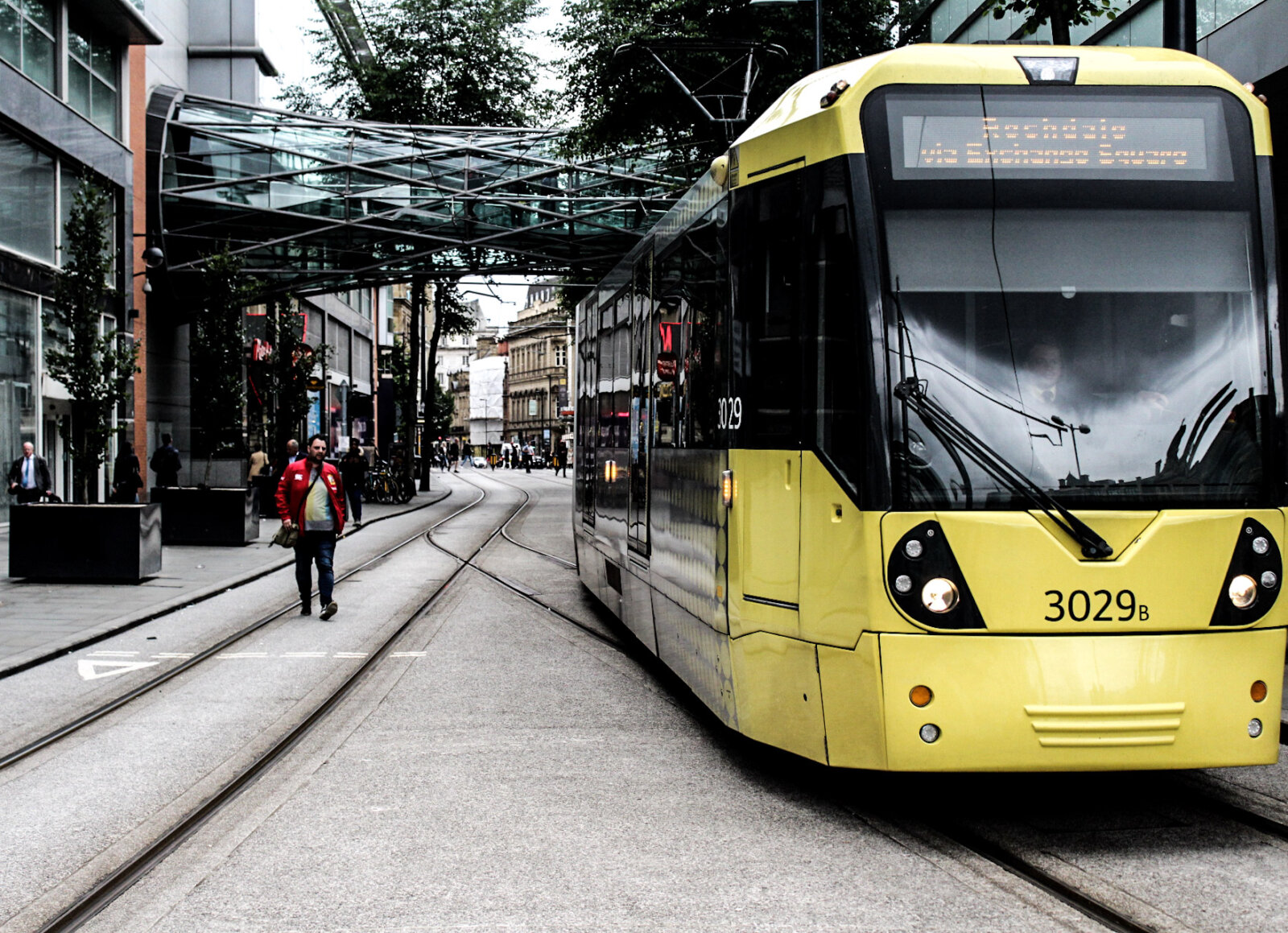
Wikimedia Commons
In spring, Manchester’s light rail system was ultimately been bailed out by Government money, ensuring its survival (at least for the short-term).
But history teaches us that if money does not trickle down from the top, local transport must remain in park.
ADVERTISEMENT
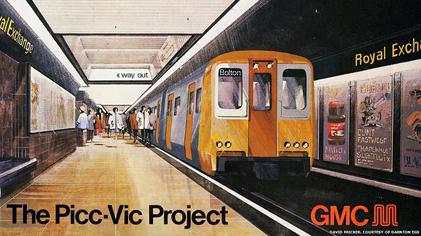
A perfect case in point is the Picc-Vic Tunnel project that infamously collapsed during the 1970s.
For more than ten years, the city was preparing an underground network that would reconnect the north and south sides of the city in an imaginative new way.
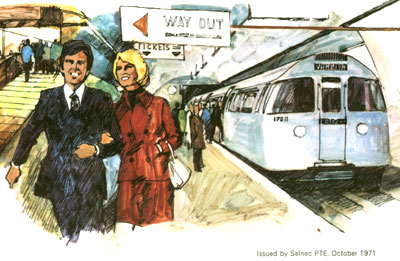
The subterranean route was all set to run on 2.3 miles of track, with trains running less than three minutes apart, passing below key landmarks and stopping at newly-built stations at Market Street, Cross Street, Whitworth Street and Manchester Central Library.
Albert Square was going to be redesigned, with a concourse below and a travelator link to Oxford Road railway station.
There was also talk of moving walkways and escalators within the system.
ADVERTISEMENT
All in all, the project would have cost around £100m (in today’s terms).
Wikipedia
But then, the money stopped.
In summer 1973, Transport Minister John Peyton pulled the plug.
There would be no grant, and therefore no way for the scheme to proceed.
Despite years of strategising, and initial Government green light, the Picc-Vic Tunnel was a victim of circumstance – rejected due to political problems and economic issues in the UK.
ADVERTISEMENT
It was a big blow. By this point, a small amount of construction had even begun.
UoM academics Martin Dodge and Richard Brook found a gaping hole below the Arndale Centre several years ago; the remains of the underground rail that had to be abandoned.
The pair outline the story of the Picc-Vic scheme in wonderful, vivid detail in an online presentation.
Amazing graphics from the early 1970s showing the proposed Picc-Vic project and potential Central Station at the Town Hall/ under Central Library. Taken from this fascinating presentation prepared by Martin Dodge and Richard Brook: https://t.co/Jr59e1nbVh#rebuildingmanchesterpic.twitter.com/JFY47FVAZQ
After new attempts for funding were repeatedly refused, all work on the Picc-Vic Tunnel network stopped. But the need for a cross-city centre travel network was still there.
Shuttlebuses were a temporary solution for travel between stations. But in the 1980s, an alternative proposal emerged; a light rail system.
ADVERTISEMENT
This would eventually become the Greater Manchester Metrolink – opening in 1992.
“In absence of that [government] support, we are forced into a corner,” said Mayor Burnham when discussing the future of the Metrolink earlier this year.
The people who spent years of their life developing the forgotten Picc-Vic project will testify to that.
Feature
The inflatable floating obstacle course you can splash around on near Manchester
Daisy Jackson
There’s a giant inflatable floating obstacle course less than an hour from Manchester, where you can slide, jump, and fall straight into a lake.
At Wild Shore Delamere, you can tackle obstacles like monkey bars, the ninja-jump, the tyre run, and a giant 3.8 metre-tall inflatable tower, all floating on the surface of the picturesque lake.
The adventure hub opened back in 2019, offering families a chance to play on Delamere Lake, or try new watersports right here in the North West.
Let’s head to that inflatable Aqua Park – even as a full-grown adult, this is one of the silliest afternoons you can imagine.
Squeeze yourself into a wetsuit then launch yourself into the lake, ready to clamber all over a course that is essentially a gigantic floating bouncy castle.
The trickiest part is managing to stay on your feet as you slip and slide your way around the course in your 50 minute session – but really, where’s the fun in staying on your feet?
Monkey BarsThe Ninja JumpThe Tyre RunThe Figure EightFeatures of the Aqua Park at Wild Shore Delamere
While you’re on the lake, you can also try other activities like the Ringo, which whips you up and down the water on a huge inflatable, while the operator seems dead-set on flinging you off.
As well as the inflatable Aqua Park, there’s the Aqua Chimp ropes course for the more gymnastic types, plus wakeboarding, paddle boarding, and open water swimming.
Wild Shore Delamere has also added a new sauna this year, which overlooks the water – you can enjoy contrast therapy, switching from the warm sauna to the lake itself.
Wetsuits and life vests are included, so all you need to pack is a swimsuit, towel, and a bit of reckless abandon as you crash beneath the surface.
Paddle boards at Wild Shore DelamereThe sauna and cold plungeThe RingoAqua Chimp
Family behind Salvi’s launch new concept, weeks after iconic restaurant closure
Daisy Jackson
Just weeks after the closure of its iconic, 16-year-old Italian restaurant in the Corn Exchange, the family behind Salvi’s have revealed a brand-new concept.
And this time, the reins are being handed over to the next generation.
Salvi’s founder Maurizio Cecco has helped to shape Amò, but it’s all the brainchild of his daughter, Sienna.
Sienna will run the business out of a unit up on Deansgate Mews, serving fresh pasta dishes, pizza sandwiches, tubs of tiramisu, and two-for-£10 spritzes.
The deli aspect of the original Salvi’s has been carried over to Amò too – you’ll find shelves almost to the ceiling filled with Italian pasta, wine, olive oils, pistachio spreads, and more.
Sienna has grown up in restaurants, with her parents launching Salvi’s when she was just two years old.
She said she wants the space to be a livelier, fresher version of the Italian restaurant that has been so loved by Mancs for so many years.
Sienna outside AmòFresh pasta dishesInside Amò by Salvi’sTheir viral frozen crema di caffeLemon granitaInside Amò by Salvi’sTiramisu pots
Amò, which is Neapolitan slang for ‘my love’, will have loads of fresh Italian dishes, including arancini, gnocchi, and hearty pasta plates.
At lunchtimes, guests can order from a £10 lunch menu, with dishes changing daily depending on the best produce the kitchen can get – it could be a pizza sandwich with proscuitto and tomato, a spicy pasta, or a gnocchi bake, always served with your choice of soft drink.
With its position on Deansgate Mews, Amò basks in the sunshine at lunchtimes.
And while it’s definitely a different concept to the original Salvi’s, Amò looks set to carry the family’s Italian food legacy into its next generation.