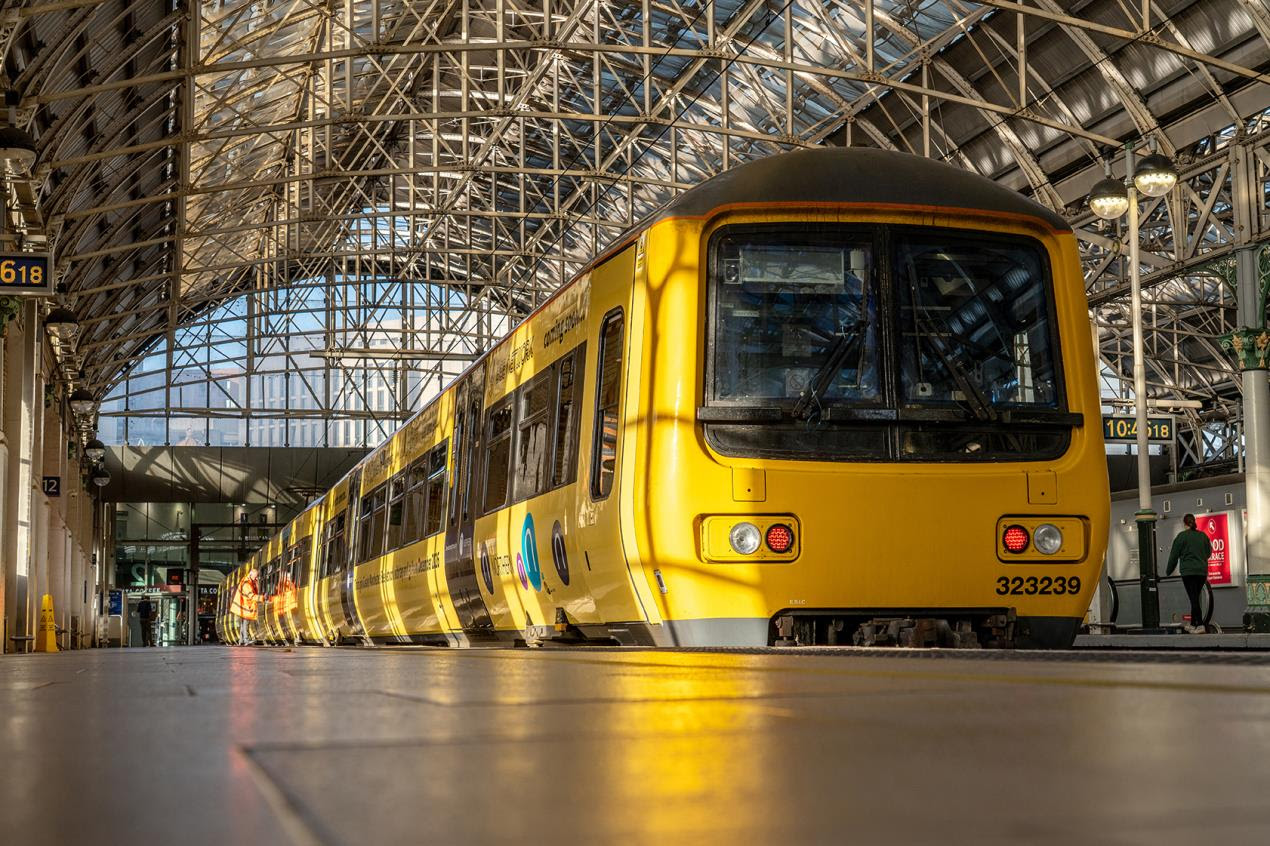
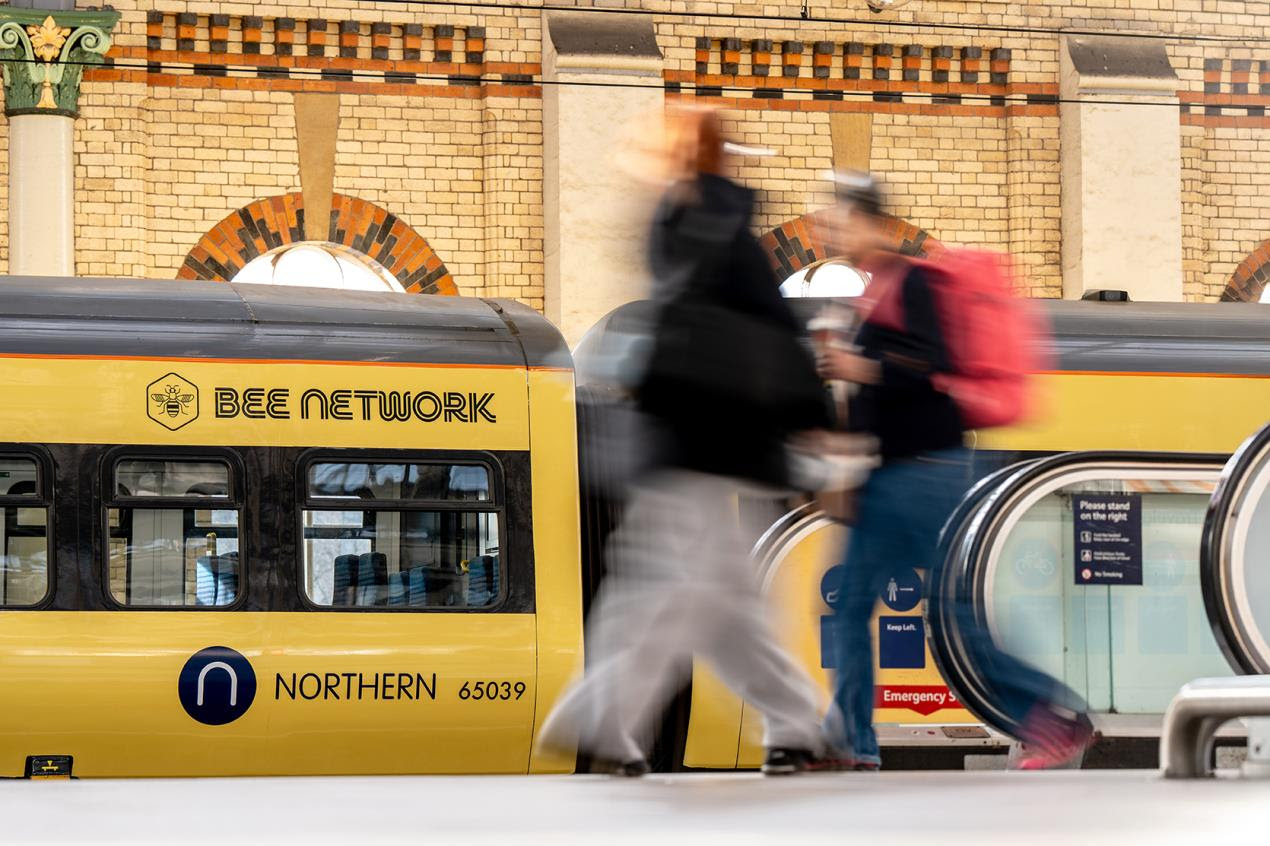
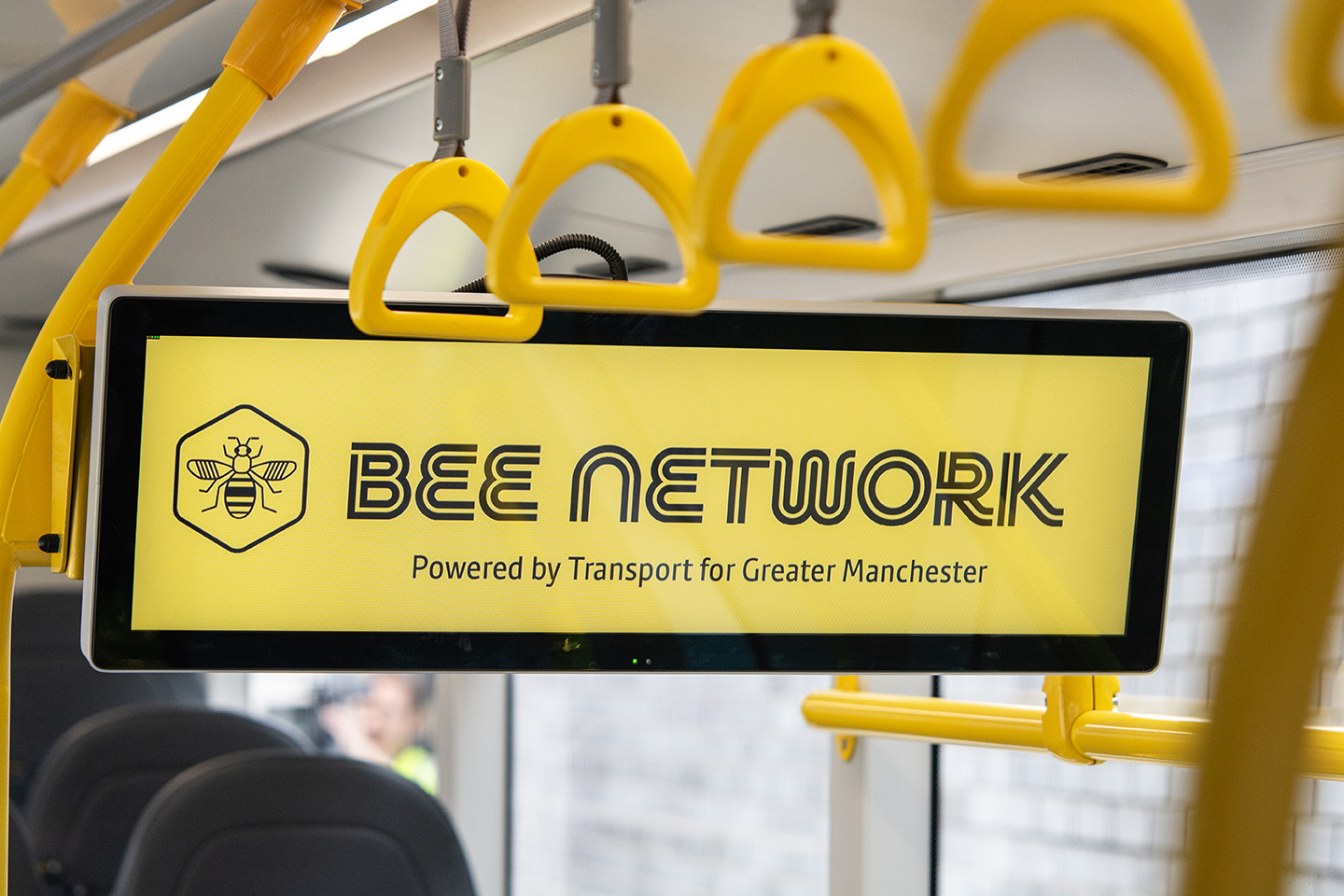
The first Bee Network train has been unveiled, as Greater Manchester prepares to integrate all public transport options in 2026.
Greater Manchester Mayor Andy Burnham has this week revealed a step-by-step plan for bringing the region’s rail lines into the Bee Network to create the first truly integrated public transport system outside London.
With just one year to go until the first rail services start joining the Bee Network, industry leaders unveiled a new yellow Bee Network promotional train and set out how passengers will benefit from new services, improved stations, and simpler fares and ticketing in the months ahead.
The first two lines – which will connect Manchester to Glossop and Stalybridge – are set to join the Bee Network from 13 December 2026.
Contactless ‘tap in, tap out’ ticketing will also rolled out across 17 stations on this date.
ADVERTISEMENT
Greater Manchester is on track to bring rail into the #BeeNetwork from December 2026. 🚆🐝
From new trains to station upgrades, contactless ticketing and step-free access – this is the start of a fully integrated transport system connecting trains, trams, buses and active… pic.twitter.com/FysCgzY72w
Transport for Greater Manchester (TfGM) says these initial two rail lines are ‘just the beginning’, with more lines set to follow in 2027 and 2028, and the further roll out of contactless and capped fares will work to join buses, trams, and trains together as Greater Manchester continues its journey to deliver an ‘affordable, accessible, and joined-up’ transport network.
By March 2026, the Bee Network app and TfGM website start to join together.
ADVERTISEMENT
They will feature comprehensive rail station information, from car park and cycling spaces through to step-free access – with real-time rail departure and disruption information added by the summer, and journey planning available by autumn.
Also, another huge step in the plan, is that from May 2026, TransPennine Express will run 25/7 night-time trains to Manchester Airport as a way of supporting the region’s ‘thriving’ night-time and visitor economy.
The first-ever Bee Network train has been unveiled ahead of its 2026 launch / Credit: TfGM (Supplied)
Looking forward the future, additional and later-running services on the Airport, Alderley Edge, and Rochdale-stopping lines will be piloted from 2027.
ADVERTISEMENT
And then, from January 2028, eight rail lines – with 64 stations included – will be fully integrated with Bee Network buses and trams, ‘tap and go’ payments, and daily and weekly fare caps, while the remaining 32 stations will join the system by 2030.
“With one year to go until rail joins the Bee Network, we are on the cusp of delivering a fully integrated, world-class transport system for our global city-region,” commented Mayor Andy Burnham, as the first Bee Network train was unveiled this week.
“These changes will make everyday journeys easier and open up new opportunities for people across Greater Manchester.
“I am excited for what the next twelve months will bring as we build a better, more connected future for us all.”
Featured Image – TfGM (Supplied)
News
First 14 Greater Manchester train stations set to join Bee Network this year revealed
Emily Sergeant
The first 14 train stations in Greater Manchester that are set to join Bee Network before the end of the year have been revealed.
In case you need bringing up to speed, back in December of last year, Andy Burnham – who was then Greater Manchester Mayor, at the time – announced a step-by-step plan for bringing the region’s rail lines into the Bee Network, all with the aim of creating the first truly integrated public transport system outside London.
Eight commuter rail lines will be brought onto the Bee Network in phases through to 2028, with the final additions expected by 2030, so passengers can enjoy all the benefits of joined up buses, trams, trains and active travel.
And now it’s been revealed which stations are set to be the first to join.
The first two lines – which will connect Manchester to Glossop and Stalybridge – will become part of the Bee Network from December 2026, with contactless ‘tap in, tap out’ ticketing also rolled out across 14 stations at the same time.
Here’s everything you need to know.
The first 14 Greater Manchester train stations set to join the Bee Network this year have been revealed / Credit: TfGM
The 14 Greater Manchester stations joining the Bee Network in December 2026
Ardwick
Ashburys
Broadbottom
Dinting
Fairfield
Flowery Field
Glossop
Godley
Gorton
Guide Bridge
Hadfield
Hattersley
Manchester Piccadilly
Newton for Hyde
The 15 stations planned to join the Bee Network in March 2027
Ashton-under-Lyne
Belle Vue
Bredbury
Brinnington
Hyde Central
Hyde North
Manchester Victoria
Marple
Reddish North
Romiley
Rose Hill Marple
Ryder Brow
Stalybridge
Strines
Woodley
The 43 stations planned to join the Bee Network by December 2028
Appley Bridge
Atherton
Bolton
Burnage
Castleton
Cheadle Hulme
Clifton
Daisy Hill
Davenport
Deansgate
East Didsbury
Eccles
Farnworth
Gathurst
Gatley
Hag Fold
Hazel Grove
Heald Green
Heaton Chapel
Hindley
Ince
Kearsley
Levenshulme
Manchester Airport
Manchester Oxford Road
Mauldeth Road
Middlewood
Mills Hill
Moorside
Moses Gate
Moston
Patricroft
Rochdale
Salford Central
Salford Crescent
Stockport
Swinton
Walkden
Westhoughton
Wigan North Western
Wigan Wallgate
Woodsmoor
The remaining 25 stations planned to join the Bee Network by 2030
Altrincham
Blackrod
Bramhall
Bromley Cross
Bryn
Chassen Road
Denton
Flixton
Glazebrook
Greenfield
Hale
Hall-i’-th’-Wood
Horwich Parkway
Humphrey Park
Irlam
Littleborough
Lostock Parkway
Mossley
Navigation Road
Orrell
Pemberton
Reddish South
Smithy Bridge
Trafford Park
Urmston
This means that contactless ‘tap and go’ payments with capped fares will be brought in across bus, tram and train services from 2030.
All timings are subject to ongoing work between Greater Manchester leaders and the Department for Transport (DfT), Network Rail, Shadow Great British Railways, and Train Operating Companies.
Featured Image – TfGM
News
Significant disruption in Manchester city centre as water pours down Portland Street
Daisy Jackson
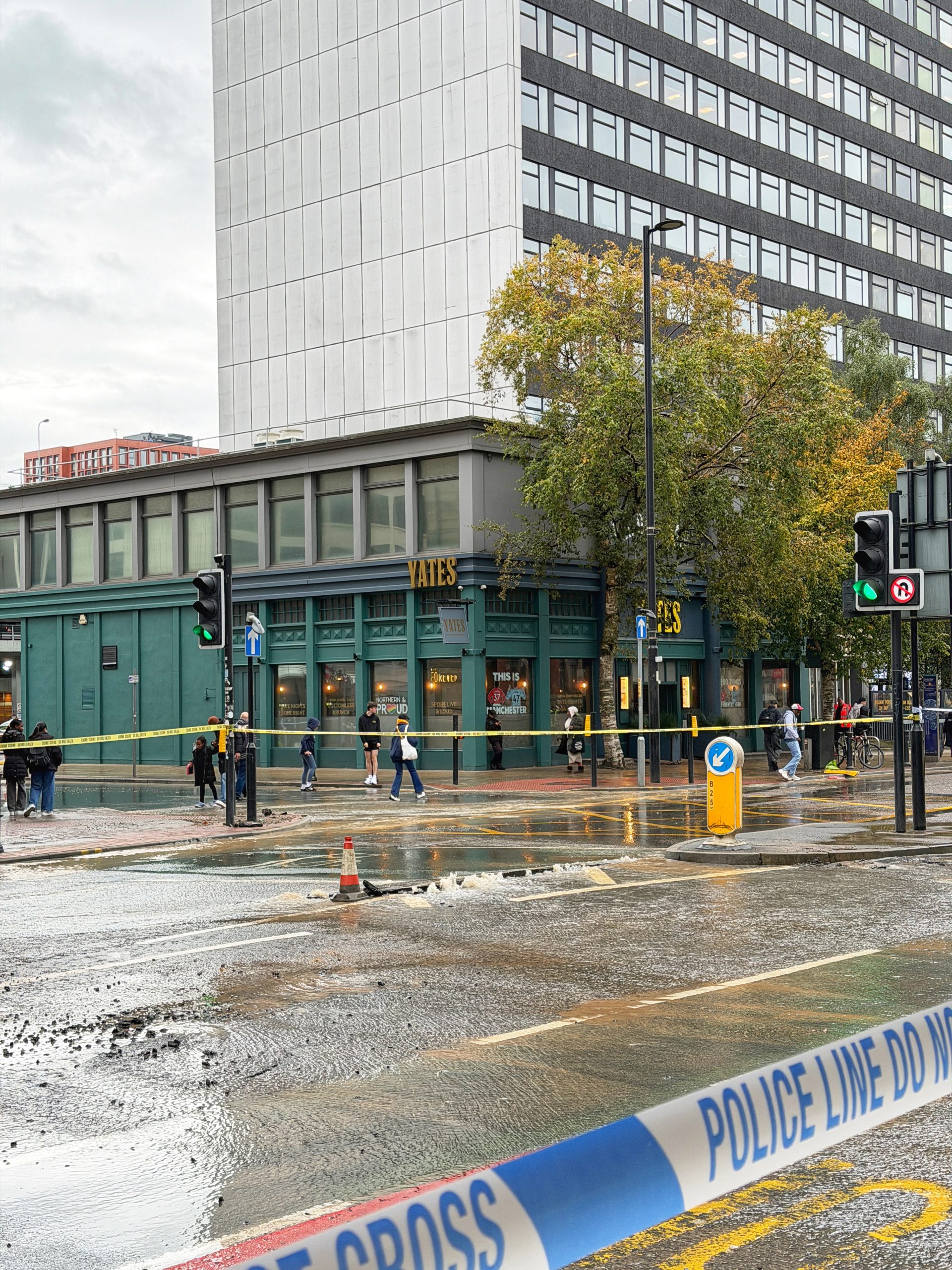
A burst water main in Manchester city centre is causing ‘significant disruption’ today, with Piccadilly Gardens and Portland Street both closed.
Water can be seen pouring down Portland Street with a large crack visible in the road’s surface.
As a result of the leak, Bee Network buses are having to be rerouted and a huge number of routes are disrupted.
Piccadilly Gardens – the city’s main hub for bus connections – has been closed until repair work on the burst pipe is complete.
TfGM said: “A water leak on Portland Street is causing significant disruption in the city centre.
“Portland Street and Piccadilly Gardens will be closed until further notice while work takes to repair the pipe.
“This is affecting bus services using Portland Street and Piccadilly Gardens.”
Bus routes affected are: 15, 18, 30, 33, 38, 41, 42, 42A, 42B, 42C, 43, 50, 85, 85A, 86, 101, 103, 111, 142, 143, 191, 197, 250, 255, 256, 263, Free bus 1 and Free bus 2.
The burst water main on Portland StreetBoth Portland Street and Piccadilly Gardens are closed
A United Utilities spokesperson said: “We apologise for any inconvenience caused by a burst water main on Portland Street.
“Customer water supplies have not been affected, and our teams are on site working to isolate the damaged main and complete repairs as quickly as possible.
“We are working closely with the police, TfGM and the council to manage disruption and reopen the road as soon as possible.”
Alison Chew, TfGM’s Network Director for Bus, said: “Due to a burst water main on Portland Street, buses in Manchester city centre are currently being diverted.
“Portland Street and Piccadilly Gardens bus station will be closed until further notice while utility companies carry out emergency repairs. We’ve also got our teams across the city centre to support passengers to make their journeys.
“Anyone planning to travel in or out of the city centre is advised to check the TfGM website or Bee Network app for the latest updates, including a list of affected services.”

 Emily Sergeant -
12th December 2025