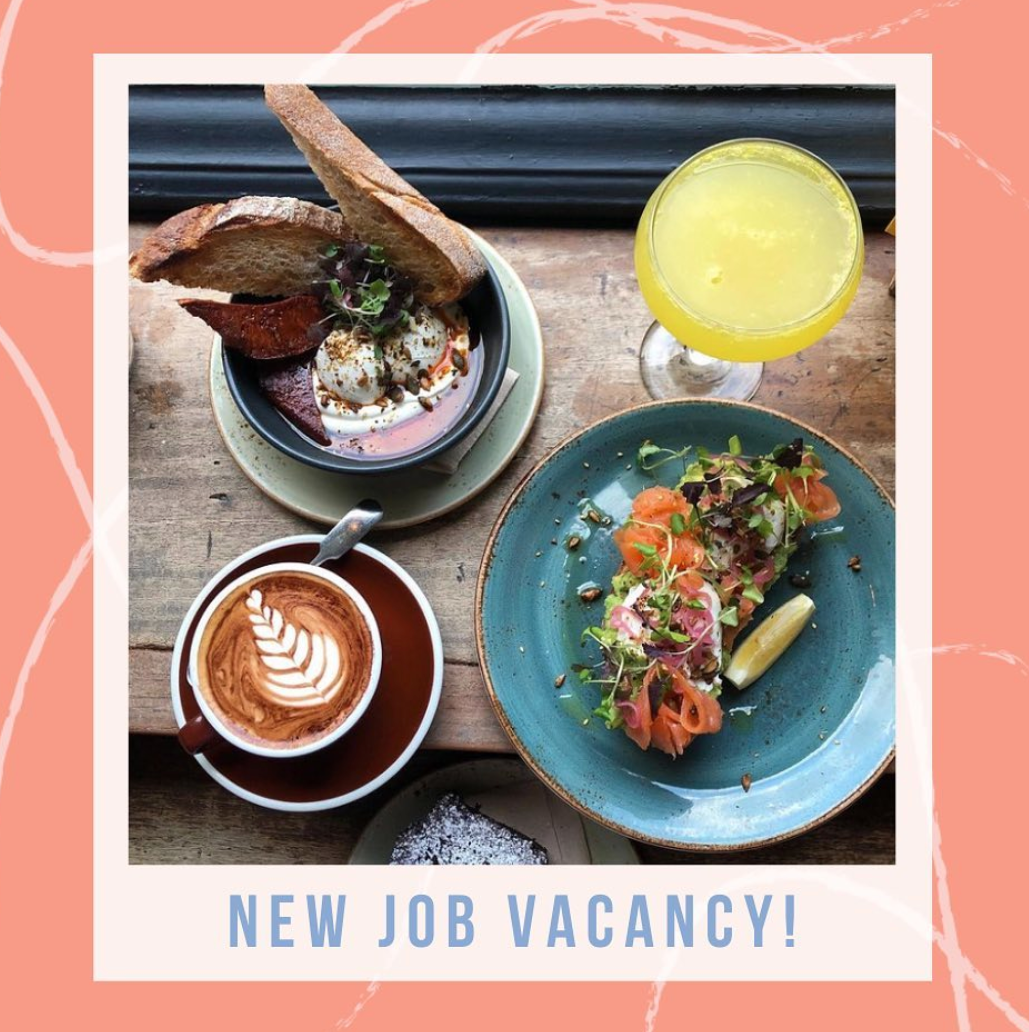
One of Manchester’s top recruitment agencies has launched a brand new platform that’s set to “revolutionise” the process for the hospitality sector.
Sixty Eight Jobs – which is founded by Abi Dunn and powered by prolific and highly-connected hospitality recruitment agency, Sixty Eight People – will provide a niche jobs board for hourly paid hospitality roles right across Greater Manchester.
Just like Sixty Eight People, this innovative new platform puts “people and their development” at the heart of everything.
Aiming to connect the most exciting hospitality businesses to the brightest stars in the industry, Sixty Eight Jobs is already proudly working with Mission Mars – operators of Albert’s Schloss and Rudy’s, Junkyard Golf Club, Blues Kitchen, Ducie Street Warehouse and Freight Island – and given the fact that the hospitality industry has been one of the worst affected amid the coronavirus (COVID-19) pandemic and subsequent lockdowns, will look to help rebuild it in a swift and effective way.
Specifically tailored towards hourly-paid roles within Greater Manchester, Sixty Eight Jobs is a platform built by hospitality recruitment experts to ensure that the look and feel of the site fits the employers and will attract the right candidates, with exclusive content that support both in their recruitment journey.
ADVERTISEMENT
Offering a refreshing change from “often outdated corporate, all sector boards” – which are known to provide high volumes of applications, but with low quality – Sixty Eight Jobs looks to counteract this and provide a platform with informal language, fresh imagery and slick mobile-friendly processes.
https://www.instagram.com/p/CM4LQG2gmv-/
How does it work then?
ADVERTISEMENT
Well first, all that hopeful candidates will need to do is simply create a ’68 Profile’ on the site, which only takes a couple of minutes, and from here, Sixty Eight Jobs will connect them directly with the best hospitality employers in the city, with everything from work in bars, restaurants, cinemas, hotels or coffee shops, all on offer.
For employers, there’s a range of packages available.
Each package provides employers with the ability to custom design job advertisements and share the link to all platforms, with Sixty Eight Jobs also helping to keep track of all applications by storing CV’s in one handy place.
ADVERTISEMENT
The packages include:
STAR – £0/Month, which includes one job post per month which remains live for 28 days.
CLUSTER – A monthly subscription which offers five job posts a month, with each one live for 28 days. (FREE until 1st October, and then £50 per month).
GALAXY – A monthly subscription which offers unlimited posts a month, with each one live for 28 days. (FREE until 1st October, and then £99 per month).
As part of the Sixty Eight Jobs’ “continued crusade to support the industry”, all packages will initially be free, with the STAR package remaining free and the others incurring a small charge after 1st October.
Abi Dunn / Sixty Eight Jobs
“This past year for the hospitality industry has just been absolutely devastating,” said Abi Dunn, Founder of Sixty Eight Jobs.
“And for me to watch it happen but powerless to do anything has been really hard, [so] this is when I decided to put my time to good use and develop a brand new platform that provided a slick and straightforward way to connect exciting businesses with hospitality stars.
“Sixty Eight Jobs isn’t about making money, it’s about creating a platform that helps hospitality businesses recover, helping them secure the right people for the job.
ADVERTISEMENT
“This is just phase one of the project,
“I aspire to turn this into an app further down the line, even looking to expand into further cities”.
Sixty Eight People
Sixty Eight Jobs will officially launch to the public on 31st March 2021, and you can find more information ahead of the launch and get started here.
Business
Manchester Airport releases statement after customer data stolen in ‘targeted’ cyber security attack
Emily Sergeant
Manchester Airport has released a formal statement after data was stolen from 8.7 million customers in a ‘targeted’ cyber security attack yesterday.
Manchester Airport Group (MAG) – which operates Manchester Airport, Stansted, and East Midlands Airport – said the cyber security incident happened at around 1pm yesterday (Thursday 27 August), and that the data seized from 8.7 million customers included email addresses, phone numbers, vehicle registrations, and postcodes.
The data that was stolen related to car park, lounge and Fast Track bookings, and in-airport WiFi sign-ups, MAG stated.
It was initially confirmed that the system the hackers accessed did not hold customers’ bank or payment details, however, and that all other regular airport operations and customer parking continued uninterrupted.
Manchester Airport has now released a formal statement to reassure customers that they are taking the matter ‘extremely seriously’.
The statement reads: “Manchester Airport Group has been subject to a cyber security incident by an unauthorised third party.
“A quantity of customer data has been obtained that relates to car park, lounge and Fast Track bookings and in-airport WIFI sign-ups at Manchester, Stansted and East Midlands airports.
“We immediately contained the risk and have been working with specialist advisors and taking appropriate steps to protect our customers and systems. We have informed and are working with the relevant authorities, and at no point has passenger safety or aviation security been compromised.”
MAG insisted that the incident had not resulted in any ‘operational disruption’, adding: “Airport operations remain unaffected and customer parking services continue to operate normally.
“Neither MAG nor the system accessed hold customers’ bank or payment details. The data that has been accessed includes customers’ email addresses, phone numbers, vehicle registrations and postcodes.
“We would like to reassure customers that Manchester Airport Group takes the security of customer information extremely seriously, and we apologise for any inconvenience or concern caused.”
Featured Image – MAG
Business
Workers at major Manchester city centre hotel to strike this bank holiday weekend
Emily Sergeant
Workers at one of the most prominent hotels in Manchester city centre are set to strike this bank holiday weekend.
Workers at Kimpton Clocktower Hotel and its bar venue The Refuge, who are members of the union Unite, will take 24 hours of strike action on Saturday (29 August) in what is said to be a ‘long-running dispute’ over union busting.
The strike day chosen by the workers is the second day of this year’s Manchester Village Pride, and is historically the most lucrative day of the year for their employer.
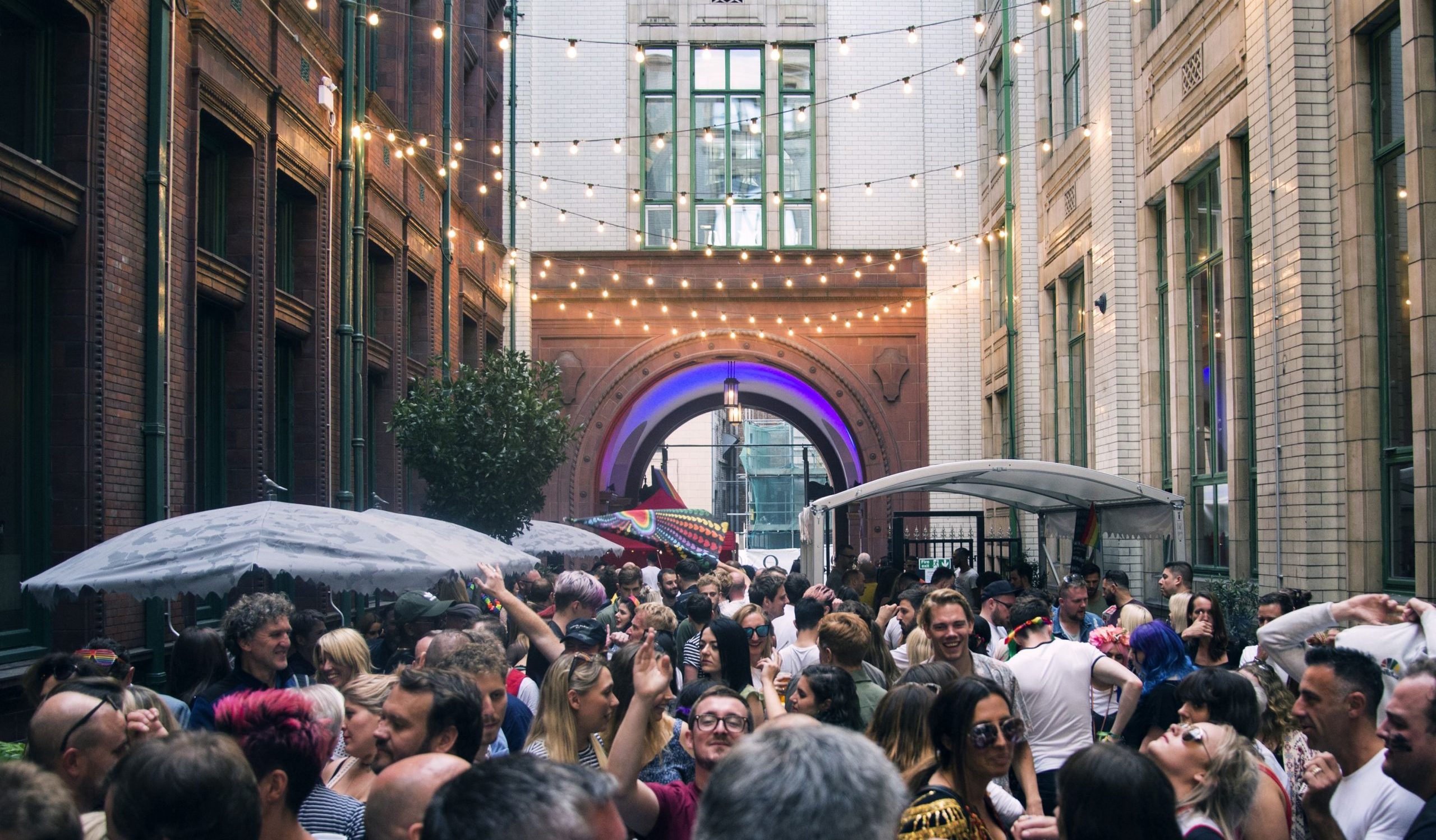
This is because Kimpton Clocktower is located very close to the Pride Parade route, and for several years has been a very popular location for people attending the festival, and even runs a number of Pride events itself.
Unite says that for months now, workers at the Kimpton Clocktower – which is owned by InterContinental Hotels Group UK (IHG) – have been asking for formal union recognition to improve conditions after raising several issues with management, but IHG UK has refused this and instead ‘targeted’ the union for its actions.
Workers at a major Manchester city centre hotel are set to strike this bank holiday weekend / Credit: Rebecca Hope Photography (Supplied)
Previous strikes have already taken place this summer, apparently causing ‘financial hits’ to the business in the process – with the bar being forced to close early at several events as there were not enough staff to cover them.
“A strike on Kimpton’s most profitable day is entirely of its own making,” commented Unite regional officer, Alison Treacher. “Throughout this dispute, Kimpton Clocktower management have treated its loyal workforce with contempt and our members have shown they will not stand for it.
“There is still time to avoid this highly disruptive strike action, but that relies on IHG changing tack by listening to its members and giving them the union recognition they have long been calling for.”
This dispute is said to be the first ever hospitality strike in the North West.
Unite is currently running a petition demanding that IHG UK stop targeting union activists, recognise the Kimpton workers rights to have their grievance heard collectively, and support their union recognition campaign.

 Emily Sergeant -
30th March 2021
Emily Sergeant -
30th March 2021