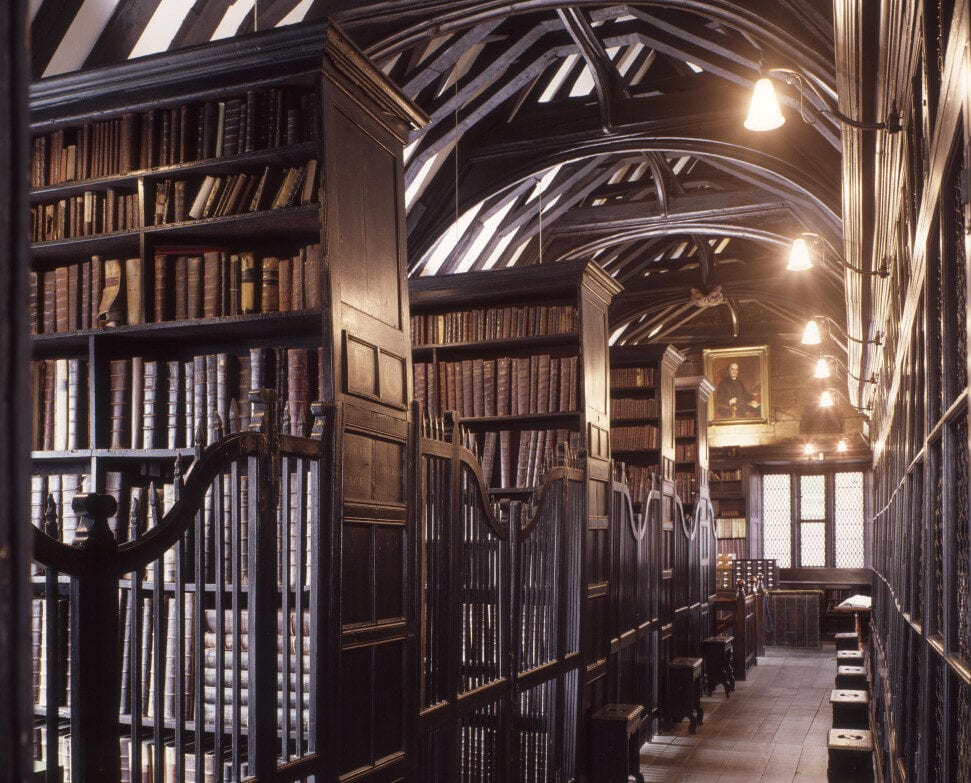
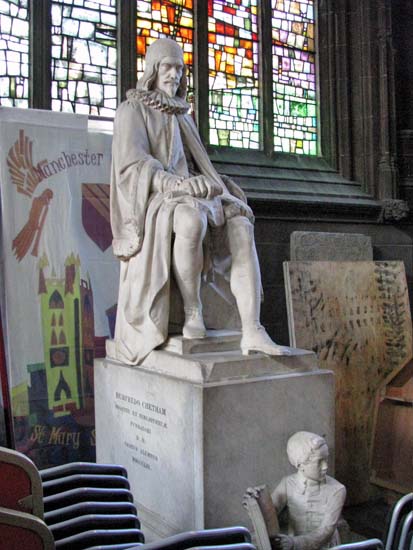
The Chetham name holds a great deal of significance in Greater Manchester.
Whether it’s a name you’re familiar with, a name you’ve seen mentioned before, but are unsure of its importance, or a name you’re just hearing for the first time right now, there’s no denying what it means to our region.
It’s a name you’ll find simultaneously bestowed upon a former public hospital turned world-leading independent music school, a 178-year-old text publication society concerned with the history of North West England founded in 1843 and commemorated in the window of Manchester Cathedral.
It also proudly features on the front of two local statues and a mural, heavily linked to both Clayton Hall near Droylsden and Turton Tower in Bolton (as well as a popular pub in a nearby village) and most notably, of course, the oldest public library in the English-speaking world right here in Manchester.
But who does this surname actually belong to? Just who is it that we have to thank for the integral part played in shaping the cultural landscape of our wonderful city and wider community that we so frequently enjoy today?
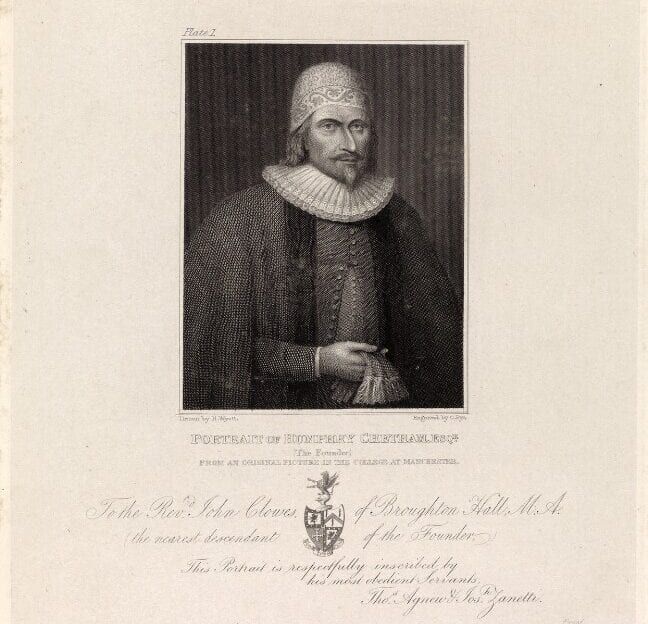
Humphrey Chetham made his name as an English textile merchant, financier, and philanthropist.
ADVERTISEMENT
He was born on 10th July 1580 in Crumpsalland was the son of Henry Chetham, a successful Manchester merchant who lived in Crumpsall Hall with his wife Jane, who was the daughter of Robert Wroe of nearby Heaton.
He was educated at Manchester Grammar School, and then in 1597, was the made the apprentice to Samuel Tipping, a well-known Manchester linen draper.
In 1605, Humphrey moved from Manchester to London with his brother George.
ADVERTISEMENT
The pair joined forces to trade in various textiles, primarily fustian — a strong woven fabric made of linen and cotton — and the business partnership went on to become highly successful, thanks to the fact that the fabric they were trading was bought in London and then sold for a higher price in Manchester.
Having made his fortune and now a shrewd and successful businessman, Humphrey began to purchase land and property in the Manchester area in the 1620s, with his first notable purchase being the acquisition of the 15th-century manor house Clayton Hall, close to his hometown, then followed by the purchase of the scheduled ancient monument and the Grade I-listed Turton Tower, which was bought from William Orrell in 1628.
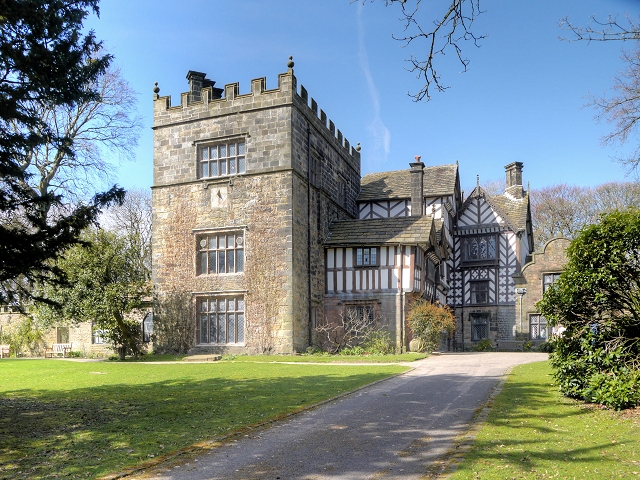
After his huge wealth and success became known to the crown, Humphrey was asked to be knighted in 1631, but he declined the honour and was subsequently fined for his refusal.
But in 1635, he was offered a job he was unable to refuse and became the High Sheriff of Lancashire.
His continuing list of titles and roles didn’t stop there either, as in 1643 he was forced into the position of General Treasurer of Lancashire, but he was said to have found this one very difficult to manage as a result of his old age and therefore turned down a second term.
ADVERTISEMENT
For many years prior to his death in 1653, Humphrey Chetham had attempted to make provisions for a large charitable scheme, but as time went on, he also began to obtain debts from his multiple businesses and began to fear that when he eventually passed on, parliament would take his money.
He therefore donated money to form a blue coat school for forty poor boys, which later became Chetham’s Hospital, and then the institution we know today as Chetham’s School of Music.
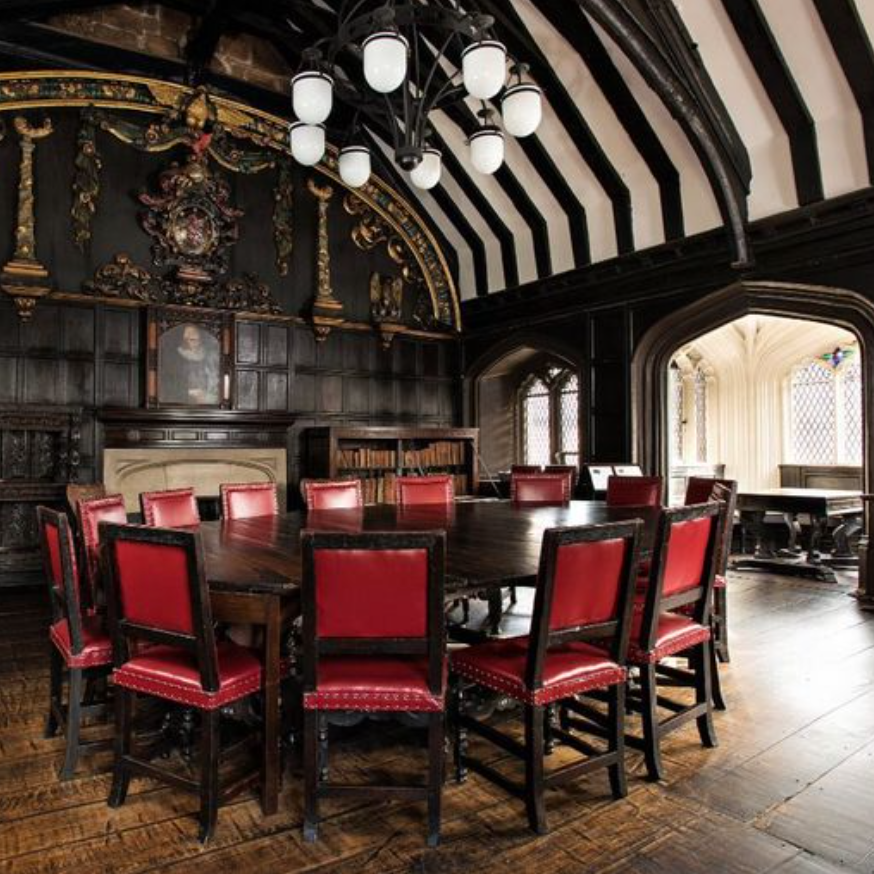
He also left money to establish what many would consider his greatest legacy, the iconic Chetham’s Library, founded in 1653 under his will for the education of “the sons of honest, industrious and painful parents” and for the use of scholars.
A real gem in Greater Manchester’s cultural crown, it is globally renowned as the oldest public library in the English-speaking world and has a rich history all of its own.
Chetham’s Library is known for being the regular meeting place of Karl Marx and Friedrich Engels, when Marx visited Manchester in the summer of 1845, with the research they undertook during this series of visits to the library ultimately leading to The Communist Manifesto.
ADVERTISEMENT
This is just one of many examples of how the library has cemented itself site of historical importance for the region, as well as further etching the Chetham name into global history.
Humphrey Chetham also left additional funds to pay for books on his death, and it’s said that more libraries were also constructed later on from this money.
And it’s from those charitable efforts and goodwill that he will always be remembered by Mancunians.
He truly did leave a lasting legacy we can still feel today.
Huge sale on Manchester theatre tickets launches, with shows from £11.70
Daisy Jackson
Theatre ticket prices have been slashed in a huge flash sale in Manchester, with big discounts on some of the world’s most famous shows.
Fans will be able to see iconic musicals, plays, and ballets from as little as £11.70, thanks to the ATG Tickets Summer Saver sale.
The theatre ticket platform’s sale has seen tickets reduced by up to 25% for productions performing at both the Palace Theatre and the Opera House Manchester.
Shows taking part in this year’s summer sale include Matilda The Musical, Annie, Matthew Bourne’s Cinderella, Back to the Future The Musical, and even Magic Mike Live.
Theatre shows included in the flash sale in Manchester include smash-hit musical Jersey Boys, which returns to Palace Theatre this September.
ATG Tickets has lowered prices for the musical, which features the greatest hits of Frankie Valli & The Four Seasons, to as low as £11.70.
Tickets for Jersey Boys range from £12.08 to £54.45 in the flash sale, with excellent availability at the time of writing.
Also included in the Manchester sale is Trainspotting the Musical, where tickets are as low as £14.99.
30 years on from the film that changed everything, and following its successful world premiere run in London’s West End, Trainspotting The Musical performs at the Palace Theatre this November.
Burlesque The Musical is included in the theatre tickets saleBack to the Future The Musical in Manchester also has tickets on sale
Next up for Manchester is Burlesque The Musical, which returns to the city for a run of shows at Opera House Manchester next January.
Tickets for Burlesque The Musical, a powerhouse show with songs by Christina Aguilera, Sia and Diane Warren, are priced from just £11.70 in the ATG Summer Saver.
And finally, Back To The Future The Musical returns to Manchester in Summer 2027, with a good handful of tickets now available from just £14.89.
The multi award-winning musical – based off the beloved 1985 film of the same name – had its world premiere in Manchester back in 2020 but the run was cut short by Covid. Now it’s heading back out on a UK tour.
You can see all the theatre shows included in the ATG Summer Saver tickets sale HERE.
Beat-Herder Festival 2026 – the wonderfully weird festival we can’t stop coming back to
Emily Johnson
Another weekend done in the magical, mystical world that is Beat-Herder.
For one weekend every year, a farm in Clitheroe transforms into what the organisers describe as “a place full of beats and barminess” – and honestly, they couldn’t have summed it up any better.
Big enough to keep you discovering something new all weekend, yet small enough that you’ll keep bumping into the same friendly faces, Beat-Herder strikes the balance perfectly.
Every corner has something different going on, every stage has its own personality, and every sound system is absolutely dialled in.
Where else can you go for a swim, get a tattoo, pop into church, visit Paris and dance until sunrise? No, we’re not describing a chaotic stag-do… we’re talking about Beat-Herder.
Every stage deserves a mention, but a few really stood out this year.
Julie’s Barn, a.k.a. ‘Gay Paris’, remains one of the festival’s best-kept secrets. Hidden away in the woods, it’s worth every wrong turn trying to find it.
A glowing dancefloor, disco balls hanging from the trees and a crowd that somehow never seems to leave. We even stumbled across a secret ‘Samurai Breaks SSBB’ set that had the place bouncing all the way through until sunrise.
Credit: The Manc Group
Over at Stumblefunk At The Factory, Breakage delivered one of the sets of the weekend. The bass rattled the roof, the crowd never stopped moving, and the whole place felt like it was about to lift off.
It’s also home to one of Beat-Herder’s many weird little surprises, with hidden missions and the chance to spy on other festival-goers. If you know, you know.
The Garage is another annual favourite. DJs squeezed into the front seat of a car while everyone else danced on the bonnet of old scrapped cars, bouncing to the bass that rattled from White Noise Audio’s soundsystem. It’s those ridiculous little details that make this festival unlike anywhere else.
Then there’s Beat-Herder’s Got Talent, which has become a non-negotiable part of our weekend. The winner earns a slot on the main stage, so every act gives it everything. This year’s line-up featured everything from incredible harmonica performances and live bands to rap duos.
But one contestant completely stole the show.
She walked on stage, admitted she wasn’t sure her talent was quite as impressive as everyone else’s, and the crowd fell silent. No instrument. No backing track. You could hear a pin drop. What on earth was this contestant about to do? And then she proceeded to fit her entire fist in her mouth.
If that doesn’t sum up Beat-Herder, we’re not sure what does. The wonderful woman didn’t win the contest unfortunately, but let’s hope she can get booked for next year, ey?
One of this year’s new additions was The Dub Tub, which quickly became one of our favourite discoveries. Artists like Woody Cook swapped high-energy sets for slower, dub-inspired sessions, creating the perfect place to reset before diving back into the madness.
Oh, and of course, in true Beat-Herder fashion, the DJs were performing in a bathtub, of course.
And speaking of madness… all the classics are still there. The famous tunnel leading to hidden stages, the weird and wonderful walkabout performers, the random discoveries you’ll never find on a map, the hidden swimming pool, fancy dress costumes, and the constant feeling that you’re about to stumble across something completely unexpected.
Massive credit has to go to everyone behind the scenes. From the organisers to the volunteers and crew, everything runs incredibly smoothly, despite how wonderfully chaotic it all feels. Beat-Herder, you’ve done it again; roll on 2027.