The undercover police operation dedicated to reducing robberies in Manchester
Operation Valiant sees police ditching their familiar uniforms for plain clothes - enabling officers to blend into the background as they perform brisk patrols in the area.
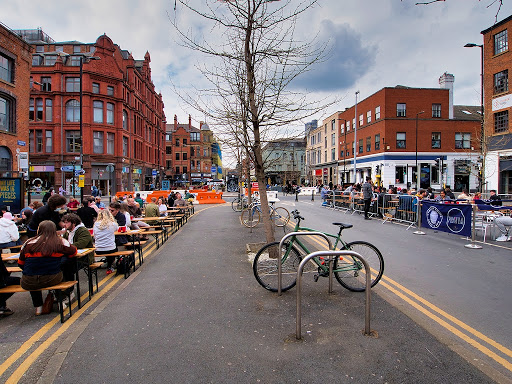
Footfall has increased considerably in Manchester city centre since lockdown was partially lifted / Image: Robert Wade via Flickr
You might get a tap on your shoulder whilst kicking back in a beer garden this weekend. More than likely, it’ll be a waiter letting you know your order is ready. But it could also be an officer issuing a warning.
Undercover cops have spent the past few weeks blending into the background as part of Greater Manchester Police’s rejuvenated mission to tackle criminals post-lockdown – with robbers and thieves targeting town with formidable persistence since shops and bars reopened.
“More people on the streets means more potential victims to choose from,” one plain-clothes officer tells us during an Operation Valiant patrol, slowly scanning Exchange Square with his eyes.
“They’re usually young lads from just outside the city who come in and target people who might not be aware of the risks, or people who may simply look vulnerable.”
The steady removal of COVID restrictions has brought an end to a whole winter’s worth of deafening silence in Manchester city centre – replacing the sight of locked shutters and deserted roads with a gaggle of masked-up waiters whisking drinks between packed tables.
ADVERTISEMENT
With food & drink service resuming alfresco since April 12, a burgeoning silver maze of outdoor furniture has swallowed up almost every last crumb of Northern Quarter’s tarmac.
It’s reached a point where you’ll struggle to find a street in NQ that isn’t at least partly being utilised as a makeshift beer garden – with chairs and tables squeezed into the tightest spots. No alley, nook or cranny is off-limits.
ADVERTISEMENT
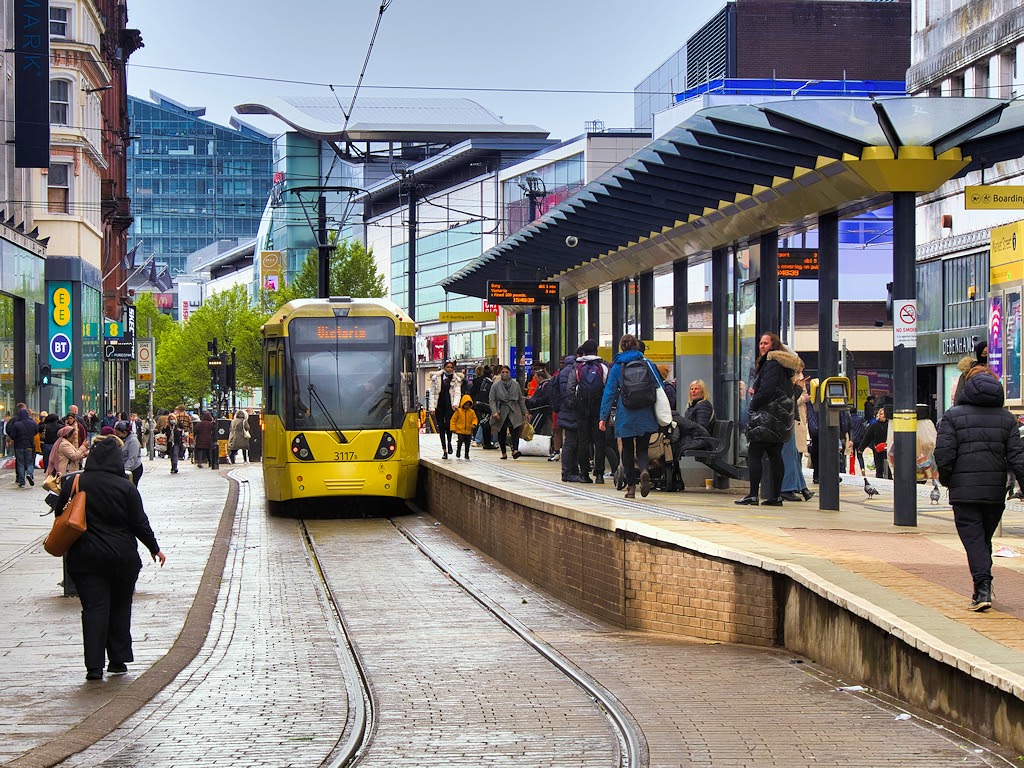
Thieves and robbers target the city centre / Image: David Dixon via Geograph
The hospitality industry has reported a roaring trade as residents have piled back into the city to drink and dine come rain or shine. But the comeback of bars has meant summer has also come early for thieves out to nick phones, purses and wallets.
Operation Valiant is dedicated to tackling these criminals: With police ditching familiar uniforms for plain clothes as they perform brisk patrols in the area.
From time-to-time, undercover officers spot iPhones on the edges of tables and alert the owner to the risk of potential pickpockets, but the unit is primarily focused on finding those who are responsible for stealing in the first instance.
ADVERTISEMENT
Sometimes incidents are far more sinister – with culprits known to wield large blades to intimidate people into handing over their possessions.
“Offenders have adapted their approaches during the pandemic in order to continue committing crime,” Detective Constable Bradley Gordon explains.
“We have seen offenders targeting pupils leaving schools, brandishing weapons, and using Facebook marketplace to arrange phone snatchings and robberies.”
As the patrol reaches Cathedral Gardens, officers slow their pace and peer through a seemingly innocuous steel fence with bins sat on the other side.
“They hide weapons here, sometimes,” one officer explains.
ADVERTISEMENT
“They put them in one place and then come back later so they aren’t caught with knives on them.”
Market Street is one of the areas in which undercover officers operate / Image: David Dixon via Geograph
Whilst teens are sometimes targeted for robberies, the textbook offenders are usually in the same age bracket.
Despite their young ages, they can be “cunning” – even utilising their own crude intel via social media channels such as Snapchat.
If one is collared by an officer, another takes the earliest opportunity to grab a photo/video and shares it online. Seconds later, the footage is out there for all to see – and the rest of the criminal group know which cops to look out for.
It presents another challenge, one officer admits, which means the emphasis of Op Valiant is always on staying one step ahead wherever possible.
ADVERTISEMENT
Whenever police spot a suspect, they quickly approach them for questioning – and images are circulated among fellow officers for future reference.
One policeman explains: “We want people to be able to relax and have a good time – everyone should be allowed to do that – we just want them to be aware.
“When you have a drink, you let your guard down. And there are people who will take advantage of that.”
DC Gordon added that it was “fantastic to see people out and about again enjoying themselves in the city”, but people needed to be aware of their surroundings as lockdown continues lifting.
“Unfortunately there are people out there who feel like they are entitled to take your belongings,” he stated.
“Most of all we would like people to get out and enjoy themselves in the knowledge that we are doing our best to keep them safe.”
Manchester
Tickets officially go on sale for rare 70mm IMAX screenings of Dune: Part Three in Manchester
Emily Sergeant
Tickets have now officially gone on sale for rare 70mm IMAX screenings of Dune: Part Three in Manchester.
Arriving on screens from 18 December and gearing up to be one of the most anticipated films of the year, Dune: Part Three – which is the third and final instalment in director Denis Villeneuve’s Dune franchise – will be screening in IMAX 70mm at Vue Manchester Printworks, one of only three venues to show it in this format nationwide.
There are only 40 other venues across the globe showing the film in IMAX 70mm, and Manchester is the only city outside of London to screen the blockbuster this way too.
Based on the novels of Frank Herbert and set nearly two decades after the previous film, Dune: Part Three features an ensemble cast of all-star names led by Timothée Chalamet and Zendaya.
Alongside them will be Jason Momoa, Florence Pugh, Anya Taylor-Joy, Rebecca Ferguson, Robert Pattinson, Charlotte Rampling, Javier Bardem, and Josh Brolin.
After seats for a special early screening of the film in IMAX sold out in less than 30 minutes last month, the IMAX 70mm showings – which officially went live today (20 October) – are expected to be snapped up fast by film fans in Manchester.
“A decade in the making, Denis Villeneuve’s epic Dune trilogy is reaching its dramatic conclusion this December,” explained Dean Cross, who is the Senior Screen Content Manager at Vue.
“As the only venue outside of London to be screening Dune: Part Three in IMAX 70mm, it’s a privilege for us to offer this unique way to experience the film.”
Dune: Part Three is coming to Vue Manchester Printworks on 18 December, and you can book your tickets here.
Featured Image – Warner Bros.
Manchester
Free pints and live craft experiences coming to a Manchester pub for one night only
Daisy Jackson
A pop-up pub takeover is opening its doors in Manchester, where you can get your hands on a free pint as well as some amazing craft experiences.
The Uncommon Inn is being operated by premium Italian lager brand Poretti, who want to help us Brits break out of our daily routines.
Matt & Phreds on Tib Street will welcome The Uncommon Inn on Thursday 22 October, from 4pm to 8pm, giving visitors the chance to discover unusual creative skills and watch artisans at work, with a free pint in hand.
It comes after research commissioned by Poretti found that 61% of UK adults feel they are living on autopilot, while a quarter have not tried a new creative pursuit in five years or more.
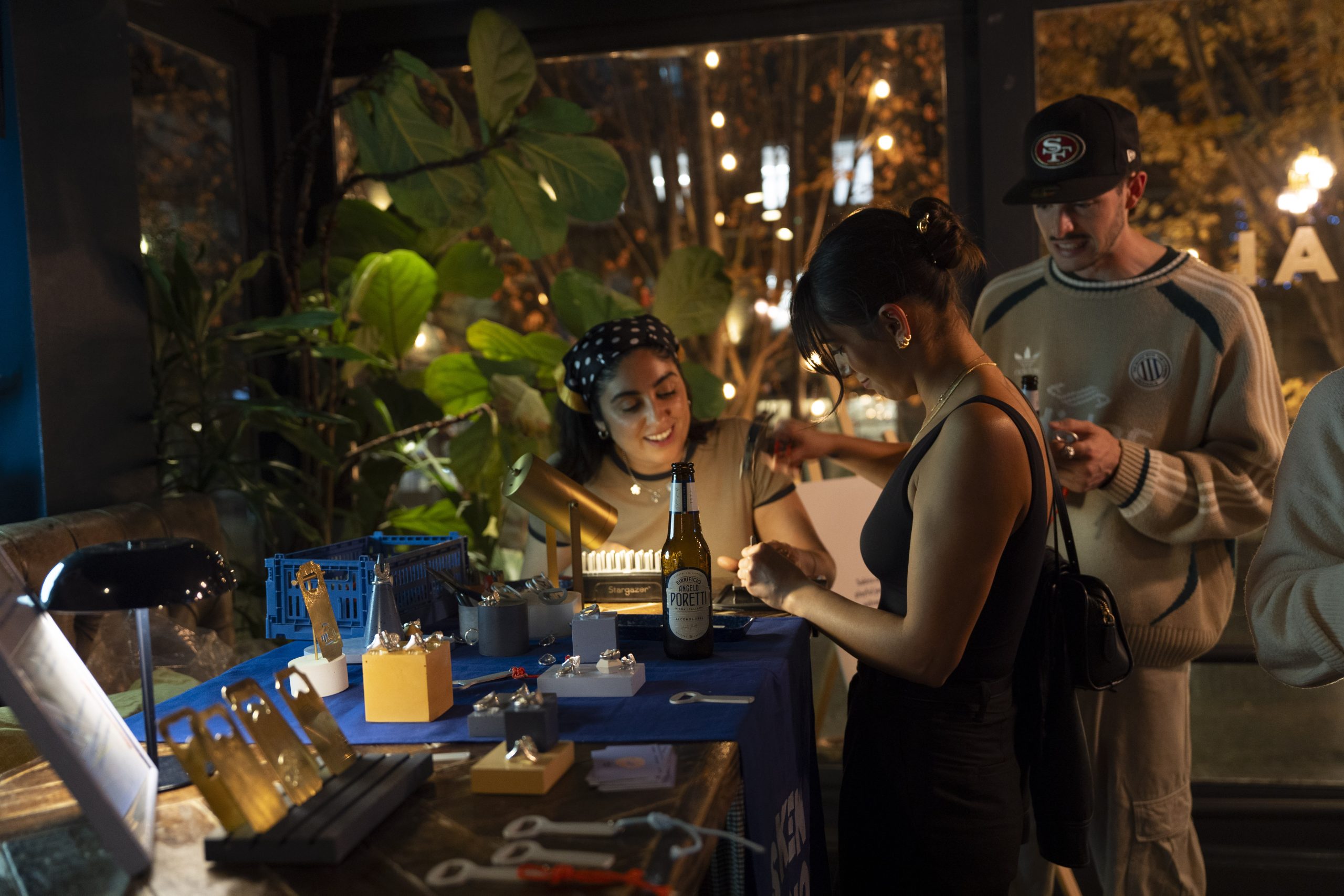
Free pints and live craft experiences are coming to a Manchester pub for one night only / Credit: Supplied
The study also found that adults have an average of just 90 minutes of genuine personal time each day, with 58% spending that time watching television and 35% scrolling through social media.
Exhaustion and financial constraints came out as the main barriers preventing people from trying new things.
The Uncommon Inn has been designed to offer an alternative, bringing together a collective of specialist makers to showcase their skills in a familiar pub setting.
Visitors to the Manchester event can watch Giulio Miglietta embroidering personalised beer mats, using a vintage Singer sewing machine dating back to the early 1900s, alongside live hand-engraving and bespoke jewellery-style crafting using recycled silver.
The Uncommon Inn is being operated by premium Italian lager brand Poretti / Credit: Supplied
Other demonstrations include 3D body-casting by sculptor Ami of Angelcasts and personalised, hand-engraved glassware from Leigh Calligraphy. Sabira of Sken Studios will also demonstrate how recycled silver can be turned into bespoke bottle openers.
Guests will be able to enjoy complimentary pints of Poretti while watching the makers at work.
Caitlin Maley, Senior Brand Manager at Poretti, said: “Modern life moves at an overwhelming pace, and it’s all too easy to fall into autopilot mode where routine replaces curiosity.
“We believe in celebrating intentional craft, rare skills, and authentic human connection – values that are at the core of our brewing heritage.
“We created The Uncommon Inn to turn an ordinary pub visit into an inspiring journey. By bringing together our Masters of Crafts, from chainstitch embroiderers to live engravers and musicians, we’re inviting pubgoers to slow down, pick up a new skill, and enjoy a pint crafted with genuine passion.”
The Uncommon Inn is at Matt & Phreds in Manchester on Thursday 22 October, from 4pm until 8pm.

 The Manc -
10th May 2021
The Manc -
10th May 2021