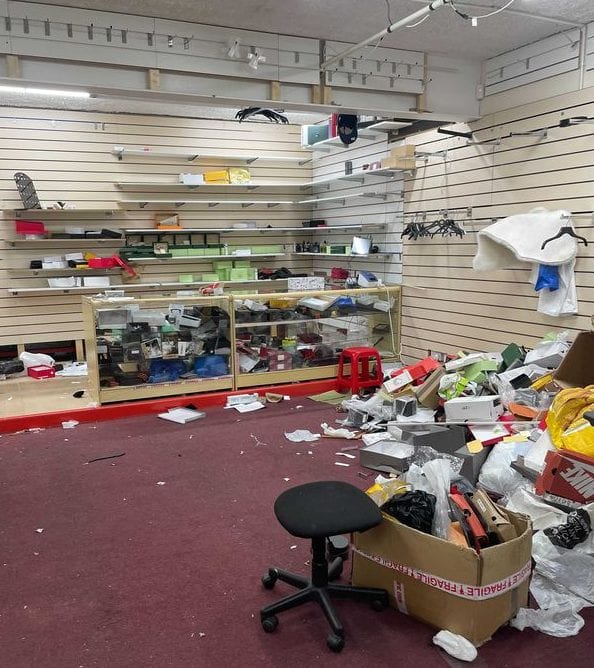
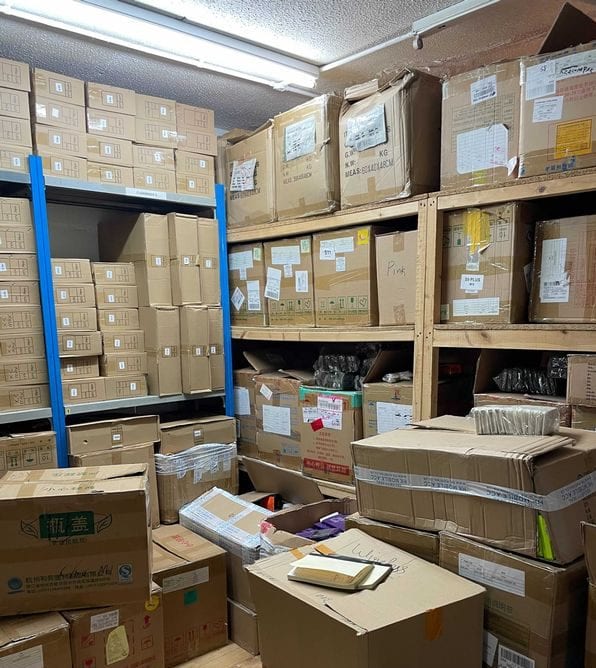
An estimated £15 million worth of counterfeit designer clothes and accessories have been seized during a number of raids in central Manchester.
Counterfeit branded clothing, shoes, electrical goods, watches, jewellery, perfume, and even suspected fake medication were all found and seized during three days of raids on four premises in the Cheetham Hill area, near to Manchester city centre.
Fake brand labels have also been uncovered.
The raids were conducted by Greater Manchester Police (GMP) and City of London Police.
Four premises in Strangeways were raided by officers between Monday 19th April and Wednesday 21st April as part of a large-scale operation aimed to crackdown on the sale of counterfeit goods, and according to the City of London Police, around 45,000 items were seized during the raids, with an estimated loss to brands of £15 million if sold at retail price.
ADVERTISEMENT
City of London Police
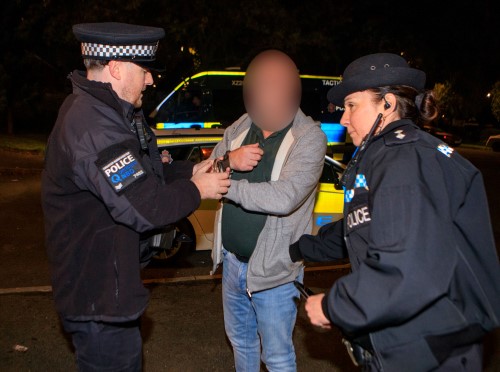
The joint action between the police forces, Border Force and Immigration Services, saw seven people arrested.
Six people were arrested for offences relating to the importation and distribution of counterfeit goods, and one was arrested for intent to supply prescription drugs.
ADVERTISEMENT
Mobile phones and money were also seized.
Speaking on the raids, Detective Superintendent Paul Denn – from the North West Regional Organised Crime Unit – said: “Buying and selling counterfeit goods is not a victimless crime.
“As well as damaging legitimate businesses, it helps to fund organised crime, and with that often comes violence [so] whenever we receive intelligence about illegal goods, we will always work closely with our colleagues in the City of London Police and other partners to investigate and take the appropriate action”.
ADVERTISEMENT
City of London Police
Inspesctor Helen Hallworth, of Greater Manchester Police, added: “Working in partnerships such as this is instrumental when tackling counterfeit operations, as each unit is able to bring its own precise specialisms to help achieve the most effective policing operation.
“Please be under no false illusions that the selling of counterfeit goods is a victimless crime.
“Selling counterfeit goods is illegal and the money made in these shops helps to fund organised crime, lining the pockets of criminals for much more sinister crimes which can have a devastating impact on our communities.
“Finally, be aware that counterfeit goods can pose a serious health risk to individuals as they have not undergone the health and safety checks that are mandatory for mainstream goods”.
You can find more via the City of London Police website here.
Featured Image – City of London Police
News
Victim named and murder investigation launched after young woman is killed in Newton Heath stabbing
Emily Sergeant
The victim of a street stabbing in Newton Heath this week has been named for the first time as a murder investigation continues.
It comes after officers from Greater Manchester Police (GMP) responded to reports of a disturbance at around 2am yesterday (Thursday 15 October) on Dorking Avenue, in the Newton Heath area of Manchester, and when they arrived on the scene, they found a woman in her 20s with serious injuries that were ‘consistent with a stabbing’.
Despite best efforts of all emergency services involved, the young woman was sadly pronounced dead at the scene.
As the murder investigation progresses, the woman has now been publicly named and a photo of her has been released for the first time.
She has been named as 26-year-old Alisha Samuels.
At this time, one man, aged 25, has been arrested on suspicion of murder, and a man and woman, aged 61 and 38, have been arrested on suspicion of assisting an offender, and they all remain in custody – with officers continuing their enquiries to establish the full circumstances of this incident.
Alisha’s family have asked for privacy whilst they deal with the devastating loss of their loved one, GMP has stated.
“We are continuing to urge people who may have information in relation to this incident to please come forward to support our investigation and bring justice for Alisha,” the police force said in a public appeal.
Anyone who may have witnessed the incident, or has mobile phone, CCTV, or doorbell footage, is urged to call GMP on 0161 856 5464, or contact them via the Major Incident Public Portal here.
Alternatively, you can contact Crimestoppers on 0800 555 111
Featured Image – GMP (Family Handout)
News
Former supply teacher jailed for multiple upskirting and AI sex offences across Greater Manchester
Emily Sergeant
A former supply teacher has been jailed for multiple upskirting and AI sex offences in schools across Greater Manchester.
Abusali Rahman – a British national of Bangladeshi ethnicity from Salford – appeared in Bolton Crown Court this week for his sentencing after first being charged with, and then pleading guilty to, several offences.
The offences are including, but not limited to, 12 counts of taking an indecent photograph/pseudo-photograph of a child (images obtained by upskirting), three counts of making indecent photograph / pseudo-photograph of a child (making AI-generated images), and one count of attempting to meet girl under 16 following sexual grooming.
The offences are alleged to have taken place between December 2023 and June 2025, according to Greater Manchester Police (GMP).
Twelve girls have been identified in relation to the upskirting offences – aged between 13 and 16 at the time of the alleged offending – at seven high schools in three Greater Manchester boroughs (Bury, Bolton, and Salford).
GMP says it has remained in close contact with the schools, local authorities, and other partners throughout the investigation to ensure all appropriate support is in place for those who need it.
Additionally, the court also heard how Rahman amassed a collection of images of young girls, using AI and other methods to sexualise them.
The images numbered more than 300 in total, ranging from Category A to Category C classifications, and Rahman would post these on social media, often alongside humiliating and disgusting captions.
Rahman was sentenced to six years in prison, and will also be subject to a 20-year Sexual Harm Protection Order.
A former supply teacher has been jailed for child sex offences in schools across Greater Manchester / Credit: GMP
Detective Constable Lisa McGaffin, from GMP’s Bolton Child Protection Team, described Rahman’s crimes as ‘absolutely abhorrent’.
“My thoughts throughout this process have always been with the young girls who have been subject to such indignity,” DC McGaffin said following the sentencing this week. “Their welfare and support will always be a priority for us.
“While working as a teacher – someone who young children should trust and be safe with – Rahman repeatedly took secret photos for his own sick gratification, before posting images online which showed his total disregard for the girls’ respect and dignity.

 The Manc -
23rd April 2021
The Manc -
23rd April 2021