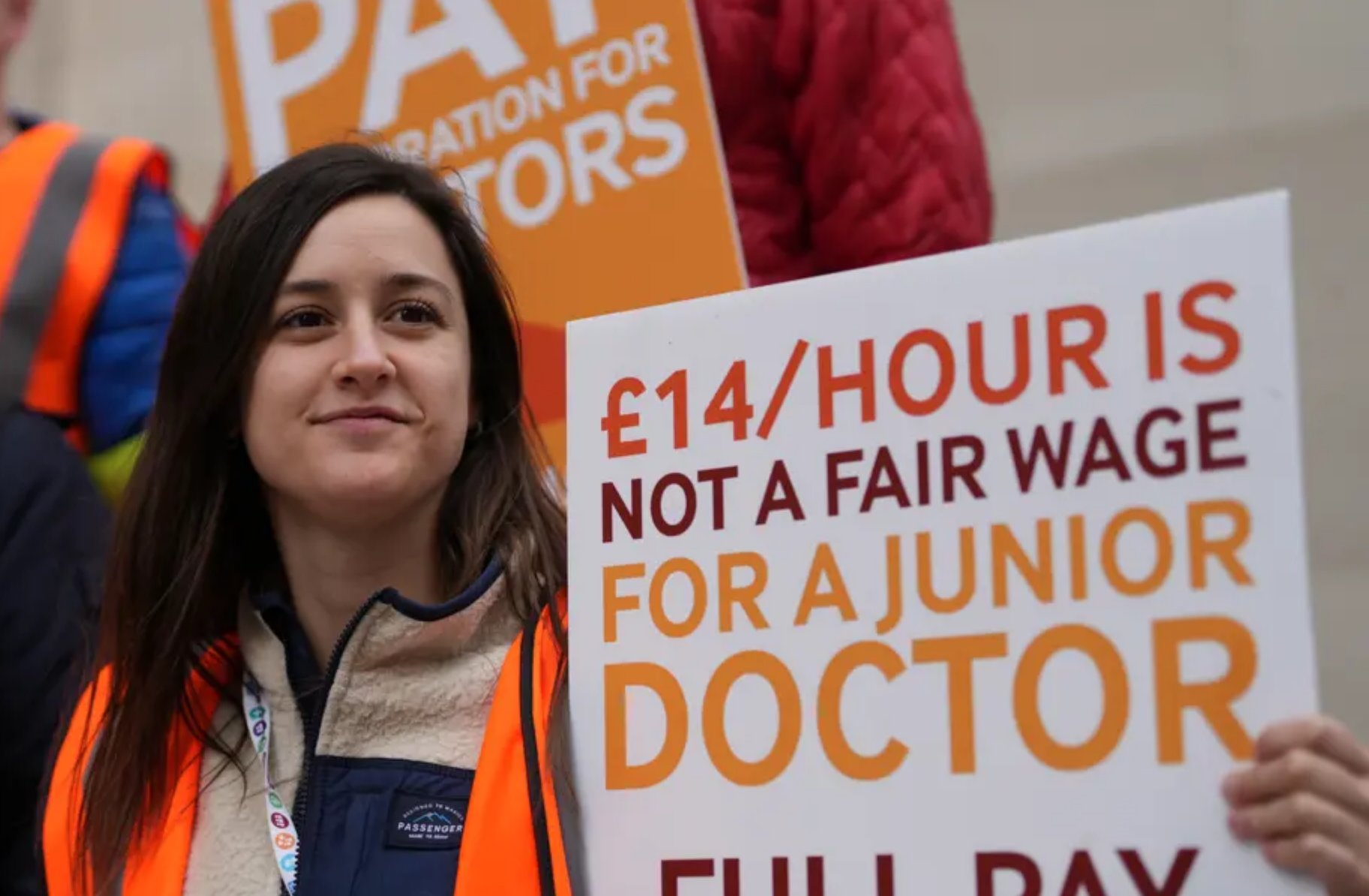
Resident doctors in England have voted to stage strike action over pay, and the dates for the industrial action have now been confirmed.
The British Medical Association (BMA) says doctors have ‘spoken clearly’ after the results of a vote published today revealed that 90% of resident doctors have voted in favour of a potential return to industrial action.
It comes after the ballot – which ran from 27 May until 7 July – saw a turnout of 55% members, with almost 30,000 (29,741) votes cast.
26,766 of those votes endorsed the use of strike action as part of efforts to restore pay, while just under 3,000 voted against it.
The result means that resident doctors have now secured a fresh mandate to stage industrial action when they choose from now until January 2026.
ADVERTISEMENT
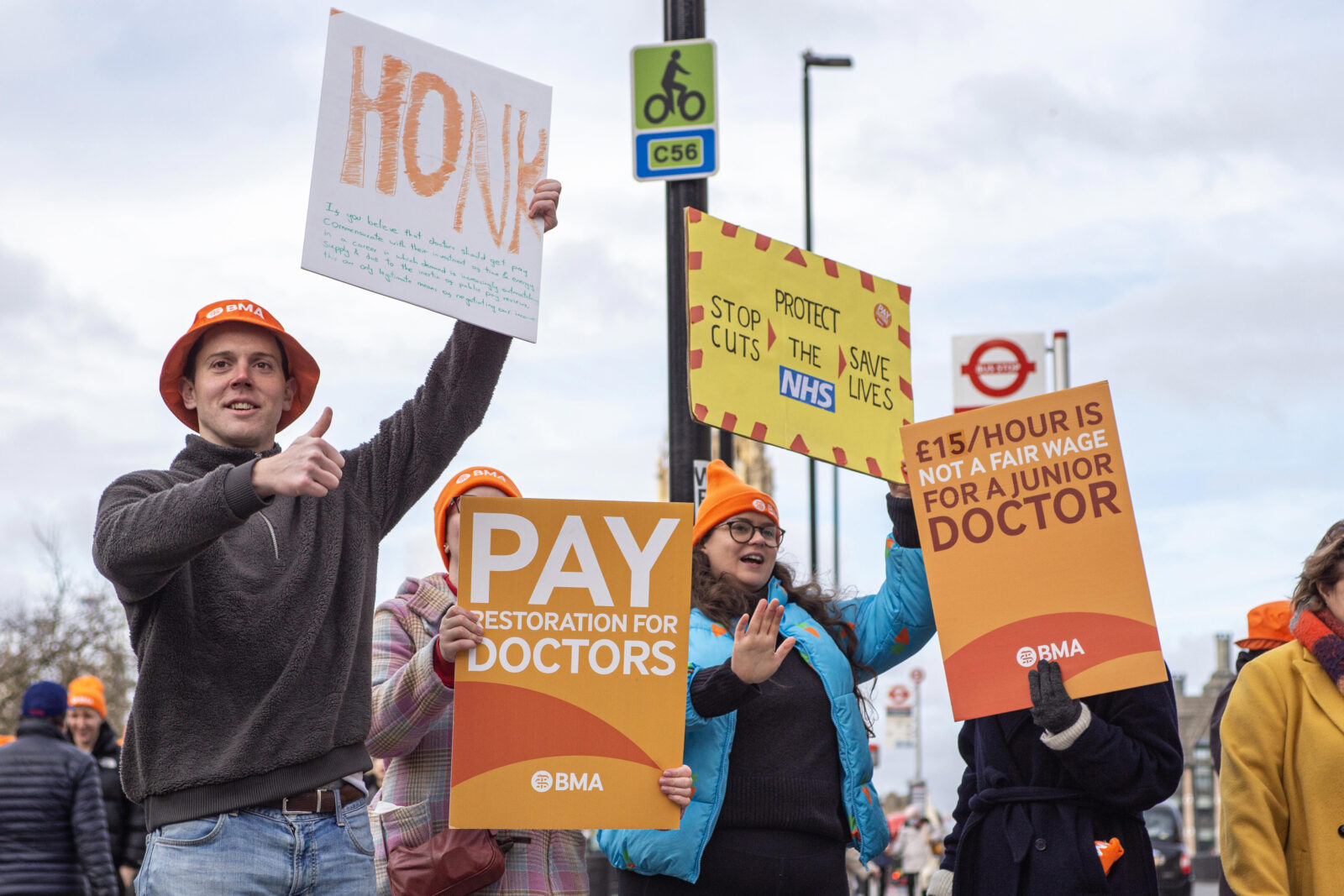
The dates have been announced as resident doctors prepare to stage strikes this month / Credit: BMA
BMA resident doctors committee co-chairs, Melissa Ryan and Ross Nieuwoudt, said that, while no doctor took the possibility of striking lightly, a clear majority of members felt that they had ‘no other choice’ given the ongoing failures to restore pay.
They added that Health Secretary Wes Streeting has the power to ‘make the right decision’ on pay, and urged the Government to return to negotiations ‘as soon as possible’.
ADVERTISEMENT
It’s now been confirmed that resident doctors will stage a full walk out from 7am on Friday 25 July until 7am on Wednesday 30 July.
These upcoming strikes come after resident doctors – formerly known as junior doctors, until 2024 – in England participated in an unprecedented 11 rounds of strike action after negotiations with the previous Conservative Government over restoring pay repeatedly stalled.
“Doctors have spoken and spoken clearly – they won’t accept that they are worth a fifth less than they were in 2008,” the committee co-chairs said. “Our pay may have declined but our will to fight remains strong.
ADVERTISEMENT
“Doctors don’t take industrial action lightly, but they know it is preferable to watching their profession wither away.
“The next move is the Government’s – will it repeat the mistakes of its predecessor? Or will it do the right thing and negotiate a path to full pay restoration and the restoration of doctors’ confidence in our profession’s future?”
Featured Image – BMA
News
How will the Government’s new digital ID alternative for alcohol sales work?
Emily Sergeant
All licensed venues across England and Wales now have the choice to introduce digital proof of age for alcohol sales alongside physical.
Instead of having to hand over physical ID that contains personal information, such as names and home addresses, customers now have the choice to simply provide confirmation that they are 18 or over on their phone – helping to better protect privacy and personal safety in the process.
This means that, no matter whether you’re buying a drink at your favourite pub, heading to a festival, or enjoying a night out at a concert, you won’t need to worry if you’ve left your ID at home.
According to the Government, this new change will benefit businesses greatly too, as certified digital services are able to check that an ID is genuine and belongs to the person presenting it much easier than the alternative can, which therefore helps to reduce the risk of any fake or borrowed IDs going undetected.
Well, according to the Government, it could be as simple as a customer showing a QR code for staff to scan, or tapping their phone against a compatible reader, where staff will then receive a clear confirmation on their device that the customer has passed the age check.
This change follows a 2024 Government consultation where it was reported that 72% of respondents supported the use of digital identities for age verification when buying alcohol.
Digital Government Minister Stephanie Peacock reiterated that ‘it will remain an individual or business’ choice whether to use or adopt [digital ID]’ and that physical ID will ‘still remain a valid way’ for customers to prove their age.
“This groundbreaking change in the law will mean you do not need to carry a physical ID, nor hand over sensitive personal information such as your name or address just to prove your age, allowing everyone to feel safer on a night out,” she concluded.
Featured Image – Robin Worrall (via Unsplash)
News
Manchester to host G20 Summit in 2027 with more than a dozen world leaders descending on the city
Emily Sergeant
Manchester has been confirmed as the host city for the G20 Summit next year.
It was already announced back in November last year that the G20 Summit would be coming to the UK in 2027, and plans were apparently already being discussed to host it in Manchester even before Andy Burnham became Prime Minister and Number 10 North was set up.
But now, ahead of this year’s leaders’ summit being held in Miami in December, it has been confirmed that the G20 Summit will arrive in Manchester in November 2027.
Manchester is said to have been picked to host the leaders’ summit because of its ‘cultural heritage’.
Bringing together 19 of the world’s largest economies and two major multilateral bodies – the European Union and the African union – G20 members who will be invited to attend the summit next year make up 85% of global GDP, 75% of international trade, and two-thirds of the world’s population as a whole.
Manchester has been confirmed to host the G20 Summit in 2027 / Credit: 10 Downing Street | Paul Kagame (Flickr)
G20 members are also some of the UK’s closest economic partners, the Government insists.
17 of the UK’s top 20 global export markets attend the summit, as do 18 of the UK’s top 20 sources of foreign direct investment.
The presidency of the G20 is currently held by the US but will pass to the UK after the leaders’ summit hosted by the president at his Trump National Doral Miami golf resort in December.
The 2027 summit will be held at Manchester Central, it has been confirmed, and other locations across the UK will also host other G20 events as part of the year-long presidency, but these are yet to be announced.