The Bank of England has issued a warning that all £20 paper bank notes will no longer be valid for use by the autumn.
Following the recent withdrawal of the paper £10 and £5 banknotes, it’s been confirmed that from 30 September 2022, the more than £19 billion worth of old-style £20 and £50 banknotes that are still in circulation will see lose their legal tender status and become redundant.
It’s part of what’s being described as a shake-up to tackle fake money.
The Bank of England said it will continue to swap old notes for their face value, but households are urged to use the old notes up the autumn deadline.
Not only that, but according to the Royal Mint, there are also £105 million old one pound coins in circulation too, which is now five years after losing their tender status, but while they cannot be spent in shops, they can still be deposited at high street banks.
ADVERTISEMENT
Since June 23, 2021, the entire collection of currently-printed banknotes is made of plastic – with the polymer £50 note featuring Alan Turing completing the collection, reports The Mirror.
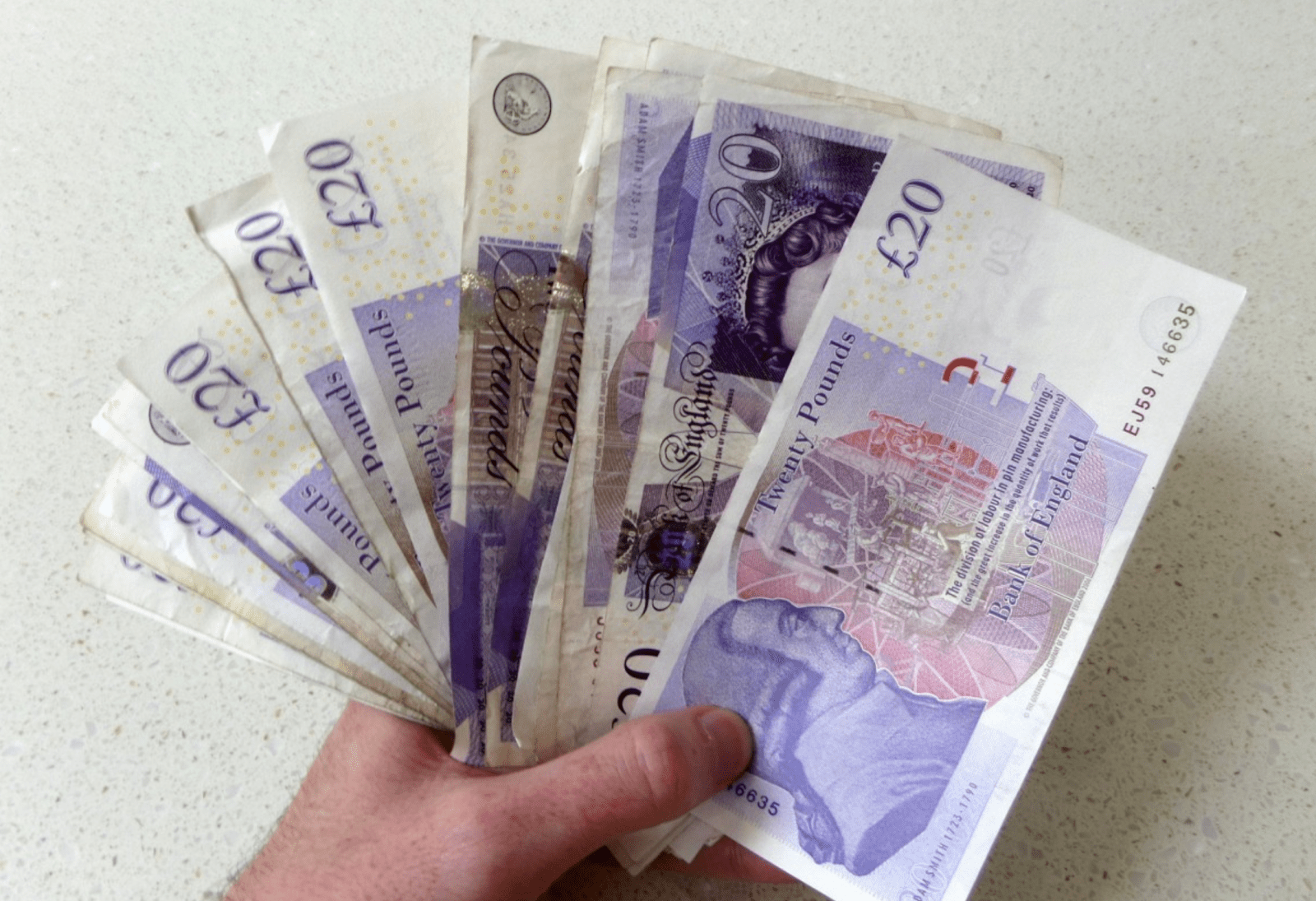
The Bank of England has issued a warning that all £20 paper bank notes will no longer be valid for use by the autumn / Credit: Pxhere
A spokesperson for the Bank of England explained that “all genuine Bank of England banknotes that have been withdrawn from circulation retain their face value for all time”.
ADVERTISEMENT
People can also post old notes to the bank in Threadneedle Street, in the City of London, to be paid into a bank account, by cheque or, “if you live in the UK and your exchange is worth less than £50”, swapped for new-style polymer ones.
The Bank of England explained that for anyone with a UK bank account, the easiest way to exchange paper money “will normally be to deposit them with your bank”.
“Polymer notes are safer than paper notes and last more than twice as long,” the Bank of England said.
Manchester has been ranked one of the ‘most influential cities’ in Europe
Danny Jones
As per a development that we’d consider so obvious it’s barely worth writing about (even though we are), Manchester has been ranked one of the most influential cities in Europe.
In other news, water is still very much wet.
While there’s plenty of it here in Greater Manchester, given our standard rainy forecasts, when it comes to anything besides the weather, we deliver in spades.
Let’s be honest: we know it, you do too, and apparently so do plenty of other folks – and there’s some concrete statistics to back it up.
Case in point – First Chanel, now Vogue… (Credit: The Manc Group)
You’ll find all manner of surveys, polls and studies diving into how Manchester ranks across various categories, but knowing we boast nods such as ‘the original industrial city’, the place that helped split the atom and the place that the first modern computer was born, we know all about our global impact.
With that in mind, when we saw that Sixt had recently named us as one of the most influential cities in all of Europe, we couldn’t ignore the well-deserved pat on the back.
That’s right, although you might not associate the car rental company with this sort of stuff, as part of their new exclusive ‘Sixt Ride’ offering (think a posh taxi service), they looked into which cities have the most luxuries, tourist attractions and other cultural bonuses to their name.
Per their recent research, Manchester city centre didn’t just break into the top 100 but found itself among the 30 most influential cities in Europe.
You can see the full rankings table down below.
#
City
Country
*Fortune 500 Companies
Fashion weeks
Film Festivals
International Airports
5-Star Hotels
High End/Luxury Shopping areas
Michelin Restaurants
1
Paris
France
10
6
77
2
122
11
134
2
London
United Kingdom
12
3
241
3
182
5
81
3
Milan
Italy
1
4
52
3
29
5
22
4
Rome
Italy
2
0
97
2
65
4
21
5
Stockholm
Sweden
0
3
14
2
12
2
13
6
Madrid
Spain
5
0
38
1
42
2
29
7
Zurich
Switzerland
6
0
10
1
12
4
18
8
Munich
Germany
5
0
10
1
16
4
17
9
Berlin
Germany
1
1
76
1
40
2
21
10
Hamburg
Germany
1
0
16
2
17
3
16
11
Amsterdam
Netherlands
4
0
24
1
29
1
30
12
Copenhagen
Denmark
1
2
12
1
12
2
20
13
Barcelona
Spain
0
0
45
1
47
1
31
14
Lisbon
Portugal
1
0
38
1
49
1
20
15
Athens
Greece
0
0
41
1
52
2
12
16
Vienna
Austria
1
0
24
1
24
3
14
17
Bucharest
Romania
0
0
22
2
12
2
0
18
Warsaw
Poland
0
0
22
2
17
1
3
19
Glasgow
United Kingdom
0
0
17
2
4
2
2
20
Lyon
France
0
0
9
2
7
0
16
21
Prague
Czechia
0
0
16
1
60
1
2
22
Brussels
Belgium
0
0
18
1
14
1
29
23
Oslo
Norway
0
1
8
1
6
1
11
24
Manchester
United Kingdom
0
0
20
1
7
3
2
25
Budapest
Hungary
0
0
16
1
24
1
7
26
Dublin
Ireland
2
0
16
1
11
0
6
27
Naples
Italy
0
0
34
1
5
0
22
28
Porto
Portugal
0
0
8
1
28
0
10
29
Turin
Italy
1
0
21
1
4
0
10
30
Sofia
Bulgaria
0
0
22
1
14
1
0
31
Helsinki
Finland
0
0
5
1
10
1
5
32
Belgrade
Serbia
0
0
32
1
9
0
1
33
Marseille
France
0
0
5
1
4
0
12
34
Birmingham
United Kingdom
0
0
12
1
4
0
6
35
Minsk
Belarus
0
0
11
1
0
0
0
Read it and weep; we Mancs landed 24th on the leaderboard, just behind Norway’s capital, Oslo, and ever so slightly ahead of Budapest in Hungary.
As you can see, to identify the ‘most influential European cities’, they broke down how the 35 most populous cities on the continent and here UK (barring Russia and Ukraine) and what noteworthy cultural touchstones they possess.
For instance, did you hear that our very own Warehouse Project recently found itself breaking into the top half of the best nightclubs on the entire planet?
Going on to analyse everything from the number of Fortune 500 companies headquartered in the city, their connections to film, fashion, fine-dining and more, they found that Paris, London and Milan were the most influential (no surprises there), but we’re glad to be keeping such good company.
After all, in the last couple of years alone, Manchester city centre has welcomed the Metiers D’art fashion show, opened one of the biggest indoor entertainment venues in all of Europe, and still takes eternal credit for giving the world Oasis and, therefore, the Live ’25 reunion. Again, you’re welcome.
What do you make of Sixt’s study, and do you agree with their findings on the whole?
It goes without saying that we’d probably put ourselves higher on the list if anything, but then again, maybe we’re getting too used to being told how brilliant it is to live in this region.
Featured Images — Anthony Parkes (via Geograph)/The Manc Group
News
Police ‘delighted’ after Manchester man is jailed for running county lines drug operation
Emily Sergeant
A Manchester man has been jailed for his part in running a county lines drug operation that exploited vulnerable people.
Following an investigation by Greater Manchester Police‘s (GMP) County Lines Team, John Joyce, of Stuart Street in Manchester, was identified as operating a county lines drugs network that supplied Class A drugs across Greater Manchester, and was subsequently jailed for possession with intent to supply crack cocaine and heroin.
The investigation – which uncovered extensive evidence of drug supply – found that Joyce was the controller of the “CEE” line – a mobile number used to distribute crack cocaine and heroin.
Among that ‘extensive’ evidence was more than 31,000 text messages and 8,700 calls linked to drug dealing activity, and ‘flare’ messages advertising drugs for sale sent in bulk, as well as forensic analysis linking Joyce to two personal mobile numbers and vehicles used during the operation.
CCTV footage was also uncovered showing Joyce purchasing top-up vouchers for the drugs line.
#JAILED | Man sentenced to over 5 years in prison for running county lines drug operation
Our County Lines Team investigation uncovered extensive evidence of drug supply & found he was the controller of the “CEE” line, a mobile number used to distribute crack cocaine & heroin pic.twitter.com/WAdej9lLxU
And the final nail in the coffin was that a search of the 28-year-old’s Manchester apartment uncovered more than 460g of crack cocaine, heroin, drug paraphernalia, and cash.
Joyce fled the UK and headed to Dubai in an attempt to evade justice, but was arrested upon his return at Manchester Airport in October 2025.
“This case demonstrates our commitment to dismantling county lines networks that exploit vulnerable people and blight communities,” explained Detective Constable Josh Claxton, of GMP’s County Lines Team.
“Joyce’s operation was significant and his sentence reflects the harm caused by class A drug supply in Greater Manchester.