Groundbreaking endometriosis tests could help catch diagnosis ‘years earlier’

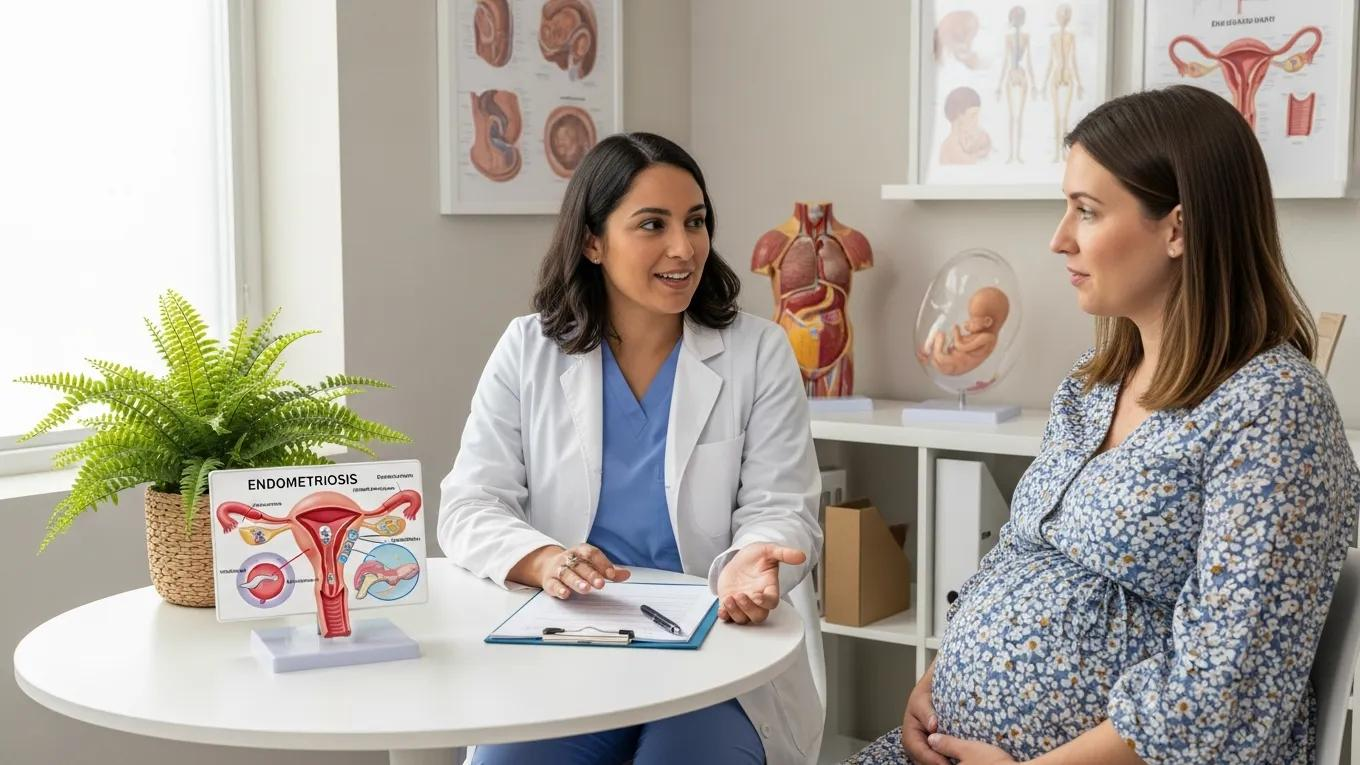
In some major public health news, two pioneering and crucially faster tests for endometriosis, which are set to be rolled out across Great Britain soon, could be about to reduce the time taken to diagnose the condition by several years.
That’s according to the National Institute for Health and Care Excellence (NICE), who have issued an update revealing that the fresh testing technology could significantly speed up the process that can currently take the best part of a decade or even more.
In some cases, it can take upwards of 11 years to fully identify endometriosis, especially within certain ethnically diverse communities, but now the executive non-departmental public body has given the green light for the NHS to introduce the pair of expeditious testing methods here in the UK.
Announced on Tuesday, 7 July, the dual approach – one half of which is already being used domestically as part of a pilot study – won’t serve as a standalone diagnostic system in itself, but should help drastically reduce the time between suspected symptoms, confirmation and treatment.
In the UK, average diagnosis takes over 9 years.
— NICE (@NICEComms) July 7, 2026
Endosure and Endotest can now be used in the NHS while more evidence is gathered.
Learn more: https://t.co/s2e5nnqcZW
👉Developing or adopting healthtech? Explore support: https://t.co/v2WeiJQqJU pic.twitter.com/CbqUsyCLgA
Emma Cox, chief executive of Endometriosis UK, said in a public statement: “Availability of these new tests needs to go hand-in-hand with education of GPs and practice nurses to ensure prompt access to those that need them, and an end to pain and symptoms not being recognised.”
The two prongs of this new approach revolve around the already in-trial Endotest®, currently being manufactured by French biotech company Ziwig.
Essentially a straightforward saliva test, it’s been recommended for wider use over some time now.
Meanwhile, the second step is ‘EndoSure’: a non-invasive test that uses “topical electrode pads similar to those used in an electrocardiogram (ECG) to measure the myoelectric activity of the smooth muscle of the GI tract”, with sensors placed on the stomach area.
You can see an instructional video explaining more information about the former down below.

Put in the simplest terms, in tandem, they could save one in 10 women lots of time and pain.
Dr Anastasia Chalkidou, healthtech programme director at NICE, went on to add: “A diagnosis of endometriosis can for some women take the best part of a decade […] That delay means living with chronic pelvic pain that affects daily life, relationships and work.
“These technologies have the potential to change that by giving primary care professionals better non-invasive tools to identify endometriosis earlier, allowing earlier and better treatment.
“Our draft guidance reflects our commitment to getting promising innovations to patients quickly, while making sure the evidence to support their wider use is built in a rigorous way.”
While both are still pending full approval and eventual scaling across the country, here’s hoping it can make the difference in the lives of millions of British women and beyond.
Read more:
- NHS to offer thousands of people access to ‘life-extending’ cancer drug
- Liam Gallagher ‘ready’ to perform ‘Wonderwall’ in the US if England reach World Cup final
- Sky-ITV merger: British broadcasters accept £1.6 billion buyout in watershed takeover deal
For all the latest news, events and goings on in Greater Manchester, subscribe to The Manc newsletter HERE
Featured Images — Stock image (via Endo Excellence Centre/Dr Rachael Haverland)