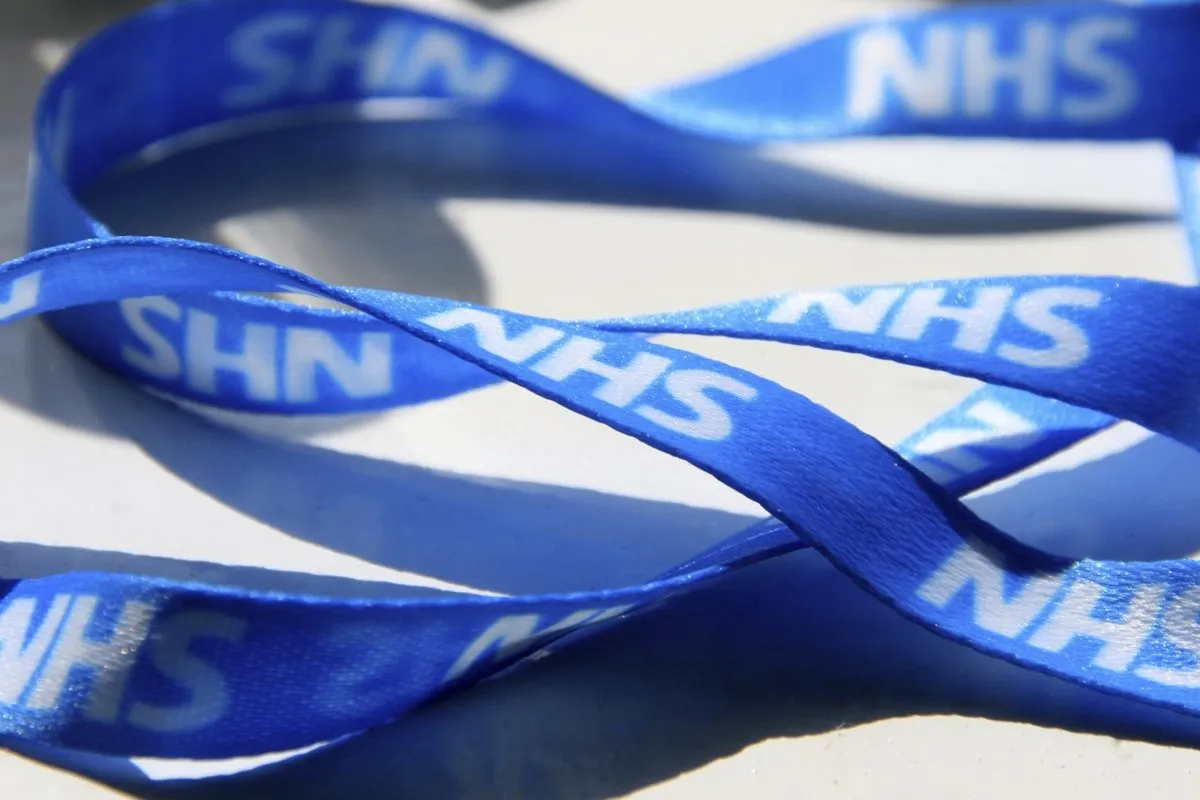
The NHS has launched a ‘trailblazing’ new AI and robot pilot to help spot cancers sooner.
Patients who are facing suspected lung cancer could get answers sooner under the new pilot that makes use of artificial intelligence (AI) and robotic technology to help doctors reach hard-to-detect cancers earlier, and all without with fewer tests too.
At the moment, patients are faced with weeks of repeat scans and procedures to come to a diagnosis.
But this could soon be replaced with a single, half-hour cancer biopsy – reducing prolonged uncertainty, and avoiding more invasive surgery.
According to the NHS, the new approach uses AI software to rapidly analyse lung scans and flag small lumps that are most likely to be cancerous, before a robotic camera is then used to guide biopsy tools through the airways with much greater precision than standard techniques.
ADVERTISEMENT
A new NHS pilot using AI and robotic technology will help doctors reach hard-to-detect lung cancers earlier.
Weeks of scans and procedures could be replaced with a single biopsy, reducing uncertainty and avoiding more invasive surgery.
The robot can reach nodules as small as 6mm – which is around the size of a grain of rice – that are hidden deep in the lung and are often deemed too risky or difficult to access using existing methods, and once AI has highlighted higher-risk areas, doctors can then take a precise tissue sample, which is sent to specialist laboratories and reviewed by expert cancer teams to confirm or rule out cancer.
The NHS’s top cancer doctor hailed the pilot – which is currently being carried out at Guy’s and St Thomas’ NHS Foundation Trust – as ‘a glimpse of the future of cancer detection’.
ADVERTISEMENT
“Waiting to find out if you might have cancer is incredibly stressful for patients and their families,” admitted Professor Peter Johnson, who is NHS England’s National Clinical Director for Cancer.
The NHS has launched a new AI and robot cancer detection pilot that’s offering a ‘glimpse into future’ / Credit: rawpixel
“Our lung cancer screening programme means that we are picking up more cancers at an early stage than ever, and by bringing AI and robotics together in this trailblazing NHS pilot, we’re bringing in the very latest technology to give clinicians a clearer look inside the lungs and support faster, more accurate biopsies.
“This is a glimpse of the future of cancer detection.
ADVERTISEMENT
“Innovation like this is exactly how we can help diagnose more cancers faster, so treatment can be most effective, and why the NHS continues to lead the way in bringing new technology safely into frontline care.”
If successful, the pilot will help the NHS to generate evidence to develop a national commissioning policy for robotic bronchoscopy.
It will also support more consistent access to the technology across the NHS in future.
Featured Image – Tima Miroshnichenko (via Pexels)
News
New measures announced to tackle ‘rogue’ landlords across Greater Manchester
Emily Sergeant
A cohort of trained enforcement officers are set to hit the streets in all 10 boroughs to help improve the lives of the region’s renters.
Forming part of Greater Manchester‘s commitment to the highest-quality housing standards alongside the Good Landlord Charter, the newly trained enforcement officers will be tasked with protecting tenants, joining Council teams in checking rental properties, bringing enforcement action against bad landlords, and cracking down on illegal practices.
The introduction of the new enforcement officers comes after what has been ‘years of sustained pressure’ on local budgets.
Greater Manchester Combined Authority (GMCA) says it is working with the 10 councils across the region to strengthen local teams, rebuild in-house skills and expertise, and ensure that powers can be applied with consistency in all boroughs.
As mentioned, this all forms part of the Good Landlord Charter – which is GMCA’s ‘bold approach’ to drive up standards for renters across the region.
Landlords of more than half of rented properties in Greater Manchester have now signed up as supporters of the Charter, and as supporters, they have committed to going above and beyond legal minimums to improve the renting experience for hundreds of thousands of people.
“A safe place to call home is the cornerstone of a happy, healthy life,” explained Mayor Bev Craig. “But for years, people have felt trapped in poor-quality housing, and cash-strapped councils were unable to step in to help. I’m putting an end to that.
“We know there are plenty of good landlords in Greater Manchester, and many of them have already signed up to our Good Landlord Charter, but too many are just not good enough.
“That’s why we’re deploying a new generation of expert housing officers onto the streets of our towns and cities.”
Mayor Bev Craig declared that she ‘won’t stand by and let rogue landlords take advantage of people’.
She continued: “By empowering renters, working with responsible landlords, and using our powers to crack down on the bad ones, I will make sure everyone in Greater Manchester has the foundation for a good life.”
Featured Image – Benjamin Elliott (via Unsplash)
News
One million UK adults who have never smoked before are now vaping, new stats reveal
Emily Sergeant
More than a million UK adults who claim to have never smoked cigarettes are now vaping.
According to alarming new data from the Office for National Statistics (ONS), relating to people aged 16 and over, around 2.8 million men (11.3%) and 2.1 million women (8.2%) are thought to be smokers in the UK… but more than a million people, who have never smoked before, have now made the decision to start vaping instead.
People in the 25 to 34 age group were found to be the most likely to vape, according to the data, overtaking those aged 16 to 24, as it was the only age group to see a rise in e-cigarette usage.
Daily or occasional vaping is still higher than the proportion of people smoking cigarettes too, the ONS revealed, at 5.4 million, or 9.9%, versus 4.8 million (8.7%).
One million UK adults who have never smoked are now vaping / Credit: Lil Artsy (via Pexels) | Pxhere
“Fewer than one in 10 adults now smoke,” commented David Mais, from the ONS.
“This is the lowest proportion on record and continues the long-term decline in smoking. [But] at the same time, e-cigarette use remains more common than smoking and has followed an overall upward trend since 2020.
“E-cigarette users are also getting older, with those aged 25 to 34 now overtaking 16 to 24-year-olds as the age group most likely to use them.

 Emily Sergeant -
27th January 2026
Emily Sergeant -
27th January 2026