Second coronavirus wave is a “six-month problem” says Professor Chris Whitty
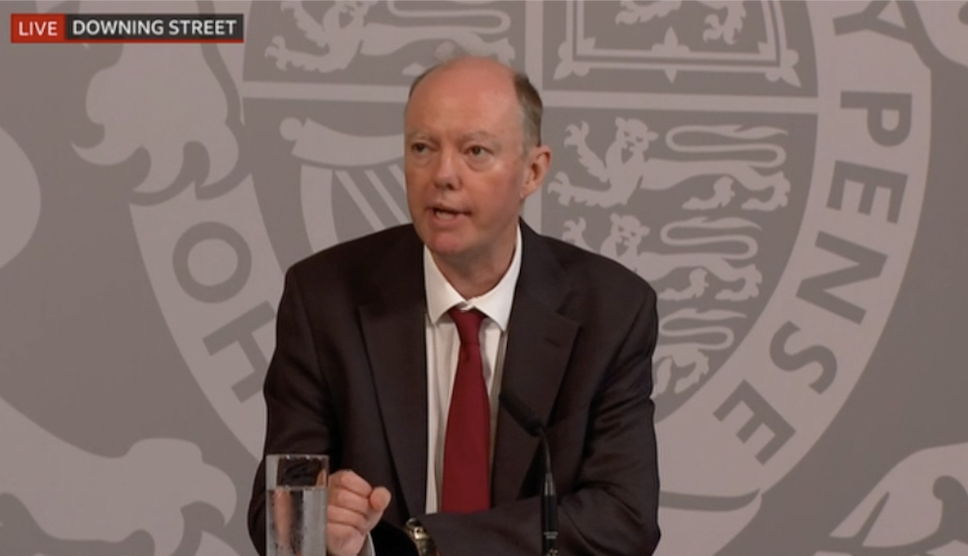
Professor Chris Whitty, England's Chief Medical Officer, and scientific adviser Sir Patrick Vallance, hosted a televised presentation of the recent coronavirus data on Monday morning (21 September).
Professor Chris Whitty has called the second wave of coronavirus in Britain a “six-month problem” – warning that cases could potentially rise to 50,000 per day if trends continue.
“What we’re seeing is a rate of increase across the majority of the country,” he said on Monday.
“As we go through in time, any [region in the UK] which was falling is beginning to rise.
“This is not someone else’s problem; this is all of our problem.
“We have, in a bad sense, turned a corner. The seasons are against us.
ADVERTISEMENT
“We should see this as a six-month problem.”
England’s Chief Medical Officer and the government’s Chief Scientific Adviser Sir Patrick Vallance delivered the message during a televised presentation on Monday morning (21 September) to address the second wave of coronavirus which has appeared across the UK in recent weeks.
ADVERTISEMENT
David Dixon / Geograph
Looking at other countries to “learn lessons”, Vallance stated: “We’ve seen increase in cases across Europe. It started with younger people in their twenties and spread gradually to older people as well.
“This has translated to an increase in hospitalisations.
“Sadly, but not unexpectedly, deaths are also increasing.”
ADVERTISEMENT
The number of cases in Britain is now over 3,000 per day on average; the highest levels seen since May.
But Vallance said this could grow very quickly, and that every age group is now beginning to see an increase in cases.
“I’d like to remind you how quickly this can move,” he added.
“We think the epidemic is doubling roughly every seven days. If that continues unabated… by mid-October we would end up with something like 50,000 cases per day.
“The vast majority of the population remain susceptible and therefore you’d expect spread.”
ADVERTISEMENT
Vallance reiterated that whilst this was not a prediction, it should serve as a warning as to what could potentially happen.
Currently, as many as 11 million people in the UK are living under tighter restrictions – which include curbs on socialising and visiting family and friends.
Certain businesses have also had their opening hours reduced, whereas the hospitality sector in Bolton – the town with the highest rate of cases in the country – has been asked to revert to takeaway-only.
Wikimedia Commons
Prime Minister Boris Johnson had previously stated that he did not want a national lockdown, but admitted measures would likely have to go further than the recently-imposed Rule of Six.
More local restrictions have been introduced since, and from 28 September anyone who has either tested positive or been contacted by Test & Trace must self-isolate or risk a fine of up to £10,000.
ADVERTISEMENT
Transport Secretary Grant Shapps called Monday’s briefing “very stark,” claiming the UK is now at a “tipping point“.
Whitty and Valance were familiar figures in the early part of the pandemic, having flanked the Prime Minister during his daily updates in spring.
Whilst they’ve largely appeared calm and collected, the subject matter of the briefings has meant the pair’s presence on the podium has since come to symbolise the imminent arrival of bad news.
And indeed, the message on Monday was a foreboding one: The UK could be set for a very challenging winter period unless the tide begins to turn soon.
News
First 14 Greater Manchester train stations set to join Bee Network this year revealed
Emily Sergeant
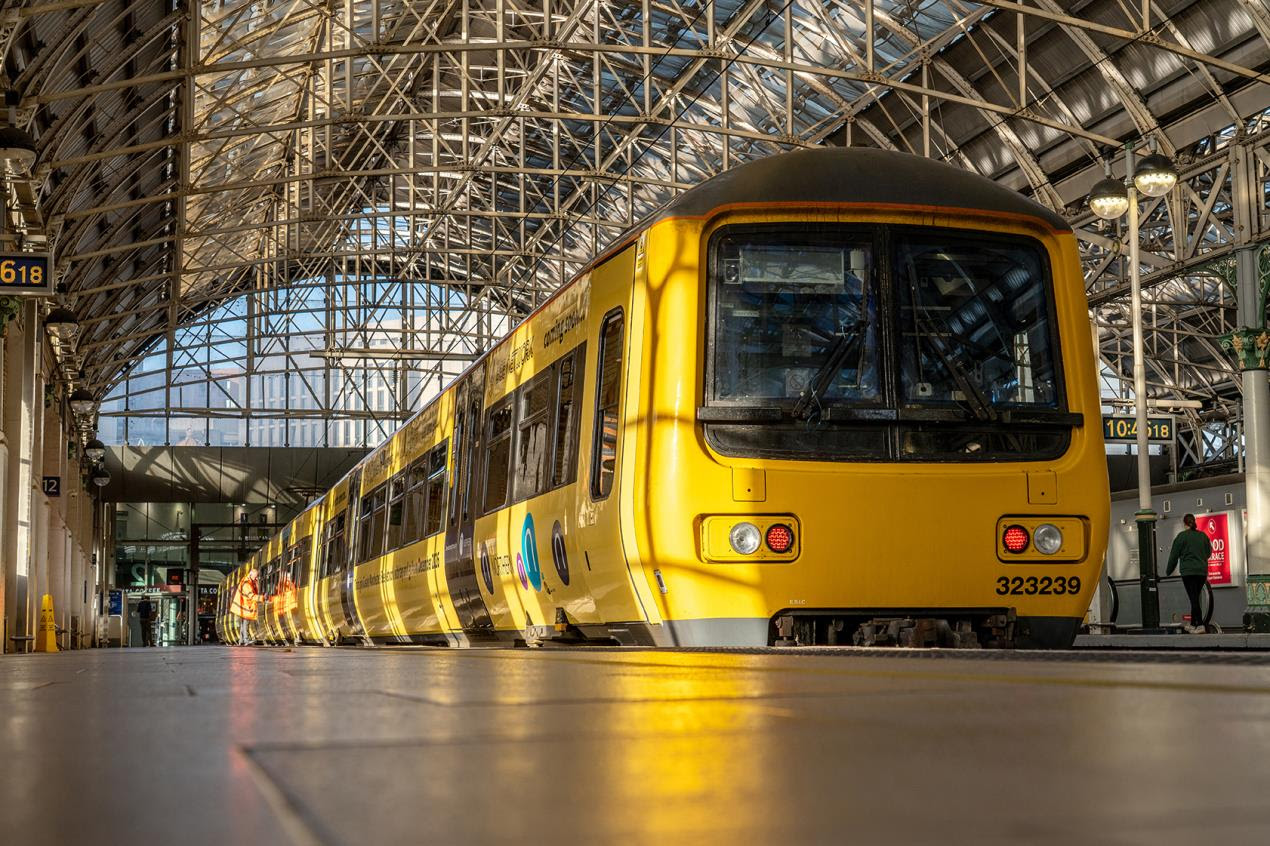
The first 14 train stations in Greater Manchester that are set to join Bee Network before the end of the year have been revealed.
In case you need bringing up to speed, back in December of last year, Andy Burnham – who was then Greater Manchester Mayor, at the time – announced a step-by-step plan for bringing the region’s rail lines into the Bee Network, all with the aim of creating the first truly integrated public transport system outside London.
Eight commuter rail lines will be brought onto the Bee Network in phases through to 2028, with the final additions expected by 2030, so passengers can enjoy all the benefits of joined up buses, trams, trains and active travel.
And now it’s been revealed which stations are set to be the first to join.
The first two lines – which will connect Manchester to Glossop and Stalybridge – will become part of the Bee Network from December 2026, with contactless ‘tap in, tap out’ ticketing also rolled out across 14 stations at the same time.
Here’s everything you need to know.
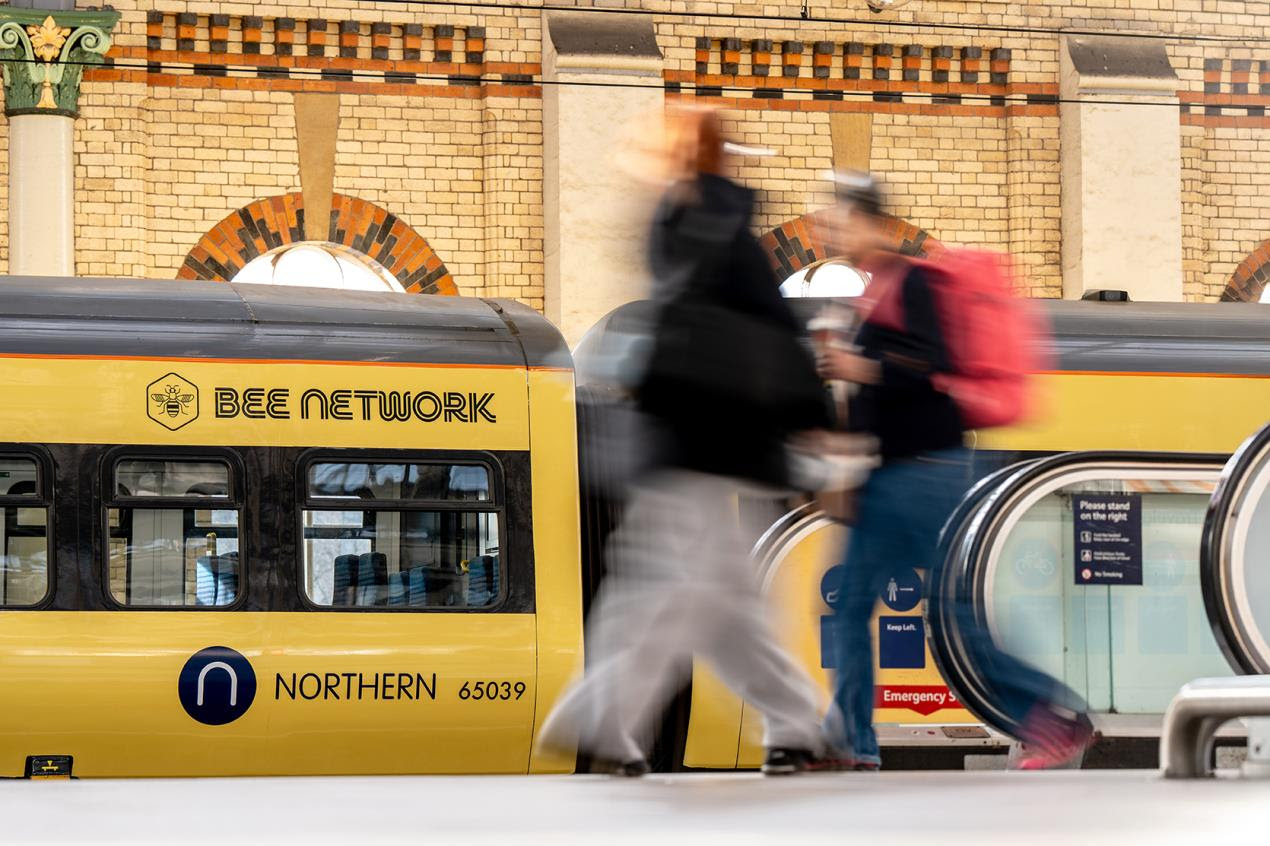
The first 14 Greater Manchester train stations set to join the Bee Network this year have been revealed / Credit: TfGM
The 14 Greater Manchester stations joining the Bee Network in December 2026
Ardwick
Ashburys
Broadbottom
Dinting
Fairfield
Flowery Field
Glossop
Godley
Gorton
Guide Bridge
Hadfield
Hattersley
Manchester Piccadilly
Newton for Hyde
The 15 stations planned to join the Bee Network in March 2027
Ashton-under-Lyne
Belle Vue
Bredbury
Brinnington
Hyde Central
Hyde North
Manchester Victoria
Marple
Reddish North
Romiley
Rose Hill Marple
Ryder Brow
Stalybridge
Strines
Woodley
The 43 stations planned to join the Bee Network by December 2028
Appley Bridge
Atherton
Bolton
Burnage
Castleton
Cheadle Hulme
Clifton
Daisy Hill
Davenport
Deansgate
East Didsbury
Eccles
Farnworth
Gathurst
Gatley
Hag Fold
Hazel Grove
Heald Green
Heaton Chapel
Hindley
Ince
Kearsley
Levenshulme
Manchester Airport
Manchester Oxford Road
Mauldeth Road
Middlewood
Mills Hill
Moorside
Moses Gate
Moston
Patricroft
Rochdale
Salford Central
Salford Crescent
Stockport
Swinton
Walkden
Westhoughton
Wigan North Western
Wigan Wallgate
Woodsmoor
The remaining 25 stations planned to join the Bee Network by 2030
Altrincham
Blackrod
Bramhall
Bromley Cross
Bryn
Chassen Road
Denton
Flixton
Glazebrook
Greenfield
Hale
Hall-i’-th’-Wood
Horwich Parkway
Humphrey Park
Irlam
Littleborough
Lostock Parkway
Mossley
Navigation Road
Orrell
Pemberton
Reddish South
Smithy Bridge
Trafford Park
Urmston
This means that contactless ‘tap and go’ payments with capped fares will be brought in across bus, tram and train services from 2030.
All timings are subject to ongoing work between Greater Manchester leaders and the Department for Transport (DfT), Network Rail, Shadow Great British Railways, and Train Operating Companies.
Featured Image – TfGM
News
Significant disruption in Manchester city centre as water pours down Portland Street
Daisy Jackson
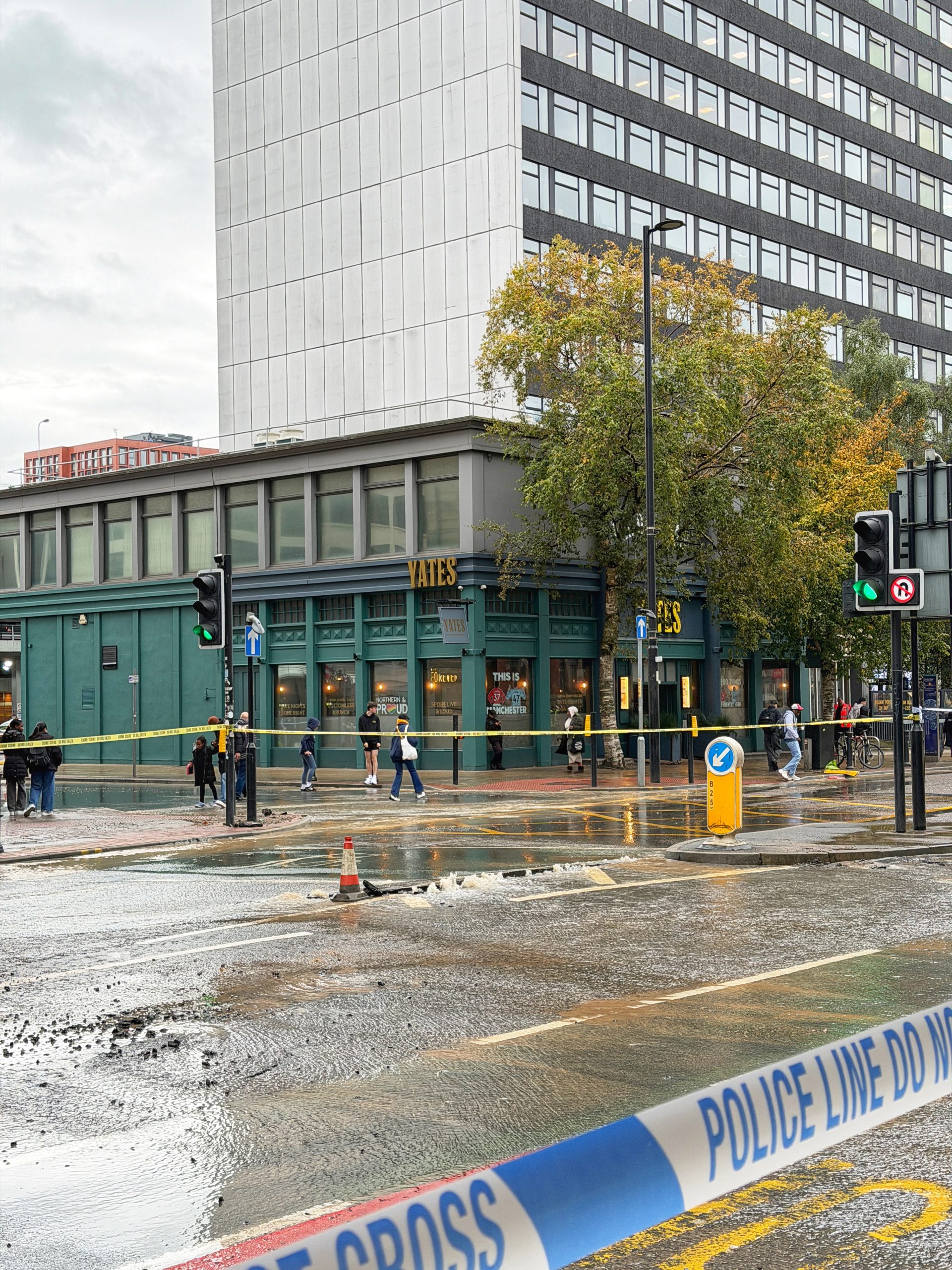
A burst water main in Manchester city centre is causing ‘significant disruption’ today, with Piccadilly Gardens and Portland Street both closed.
Water can be seen pouring down Portland Street with a large crack visible in the road’s surface.
As a result of the leak, Bee Network buses are having to be rerouted and a huge number of routes are disrupted.
Piccadilly Gardens – the city’s main hub for bus connections – has been closed until repair work on the burst pipe is complete.
TfGM said: “A water leak on Portland Street is causing significant disruption in the city centre.
“Portland Street and Piccadilly Gardens will be closed until further notice while work takes to repair the pipe.
“This is affecting bus services using Portland Street and Piccadilly Gardens.”
Bus routes affected are: 15, 18, 30, 33, 38, 41, 42, 42A, 42B, 42C, 43, 50, 85, 85A, 86, 101, 103, 111, 142, 143, 191, 197, 250, 255, 256, 263, Free bus 1 and Free bus 2.
The burst water main on Portland StreetBoth Portland Street and Piccadilly Gardens are closed
A United Utilities spokesperson said: “We apologise for any inconvenience caused by a burst water main on Portland Street.
“Customer water supplies have not been affected, and our teams are on site working to isolate the damaged main and complete repairs as quickly as possible.
“We are working closely with the police, TfGM and the council to manage disruption and reopen the road as soon as possible.”
Alison Chew, TfGM’s Network Director for Bus, said: “Due to a burst water main on Portland Street, buses in Manchester city centre are currently being diverted.
“Portland Street and Piccadilly Gardens bus station will be closed until further notice while utility companies carry out emergency repairs. We’ve also got our teams across the city centre to support passengers to make their journeys.
“Anyone planning to travel in or out of the city centre is advised to check the TfGM website or Bee Network app for the latest updates, including a list of affected services.”

 The Manc -
21st September 2020