The European Broadcasting Union (EBU) and the BBC have officially confirmed that the Eurovision Song Contest will be held in the UK in 2023.
It will be hosted in the UK on behalf of this year’s winning broadcaster, Ukraine’s UA:PBC.
The announcement that the UK will be the host country comes following the decision that next year’s event cannot be held in Ukraine for safety and security reasons, despite the EBU having already explored a number of options with the winning broadcaster.
As a result of discussions, the BBC, as runner up in the 2022 Contest, was invited by the EBU to act as Host Broadcaster for the 67th Eurovision Song Contest.
“We’re exceptionally grateful that the BBC has accepted to stage the Eurovision Song Contest in the UK in 2023,” said Martin Österdahl, the Eurovision Song Contest’s Executive Supervisor.
ADVERTISEMENT
“The BBC has taken on hosting duties for other winning countries on four previous occasions, and continuing in this tradition of solidarity, we know that next year’s Contest will showcase the creativity and skill of one of Europe’s most experienced public broadcasters whilst ensuring this year’s winners, Ukraine, are celebrated and represented throughout the event.”
The United Kingdom will host #Eurovision 2023! 🇬🇧🇬🇧🇬🇧
— Eurovision Song Contest (@Eurovision) July 25, 2022
The BBC has staged the Eurovision Song Contest more times than any other broadcaster – hosting in London in 1960, 1963, 1968 and 1977, Edinburgh in 1972, Brighton in 1974, Harrogate in 1982, and Birmingham in 1998.
ADVERTISEMENT
It’s been confirmed that representatives from UA: PBC will work with the BBC to “develop and implement” the Ukrainian elements of next year’s show.
“It’s a matter of great regret that our colleagues and friends in Ukraine are not able to host the 2023 Eurovision Song Contest,” added Tim Davie – Director-General of the BBC.
“Being asked to host the largest and most complex music competition in the world is a great privilege.
ADVERTISEMENT
“The BBC is committed to making the event a true reflection of Ukrainian culture alongside showcasing the diversity of British music and creativity, and the BBC will now begin the process to find a Host City to partner with us on delivering one of the most exciting events to come to the UK in 2023.”
The EBU has confirmed that next year’s host city will be chosen in the coming months following a bidding process, which is being launched this week.
The Leader of Manchester City Council, Bev Craig has taken to Twitter following the announcement today to confirm that Manchester will officially be joining the bidding race to host the 2023 contest.
A world class music city, brilliant venues, experience in hosting major events, and of course one of the UK’s largest Ukrainian populations- we are confident we will make it a #eurovision to remember. More to follow https://t.co/oTnvQZfDXf
She wrote: “Manchester will be bidding to host Eurovision.
“A world class music city, brilliant venues, experience in hosting major events, and of course one of the UK’s largest Ukrainian populations – we are confident we will make it a Eurovision to remember. More to follow.”
ADVERTISEMENT
The dates for the 2023 Eurovision Song Contest will be announced in due course.
Featured Image – BBC
News
No trams to run on three major Greater Manchester lines this Easter bank holiday weekend
Emily Sergeant
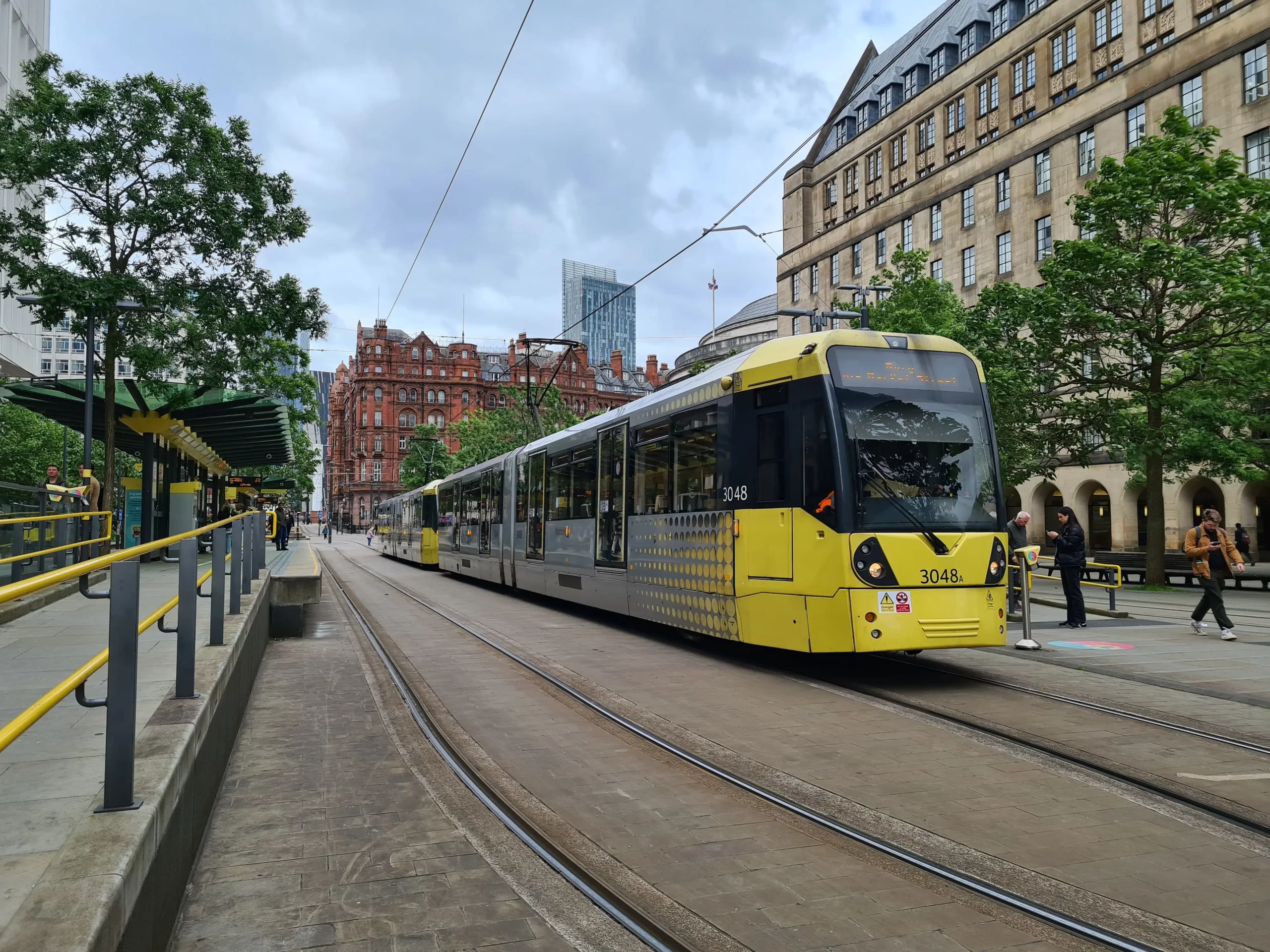
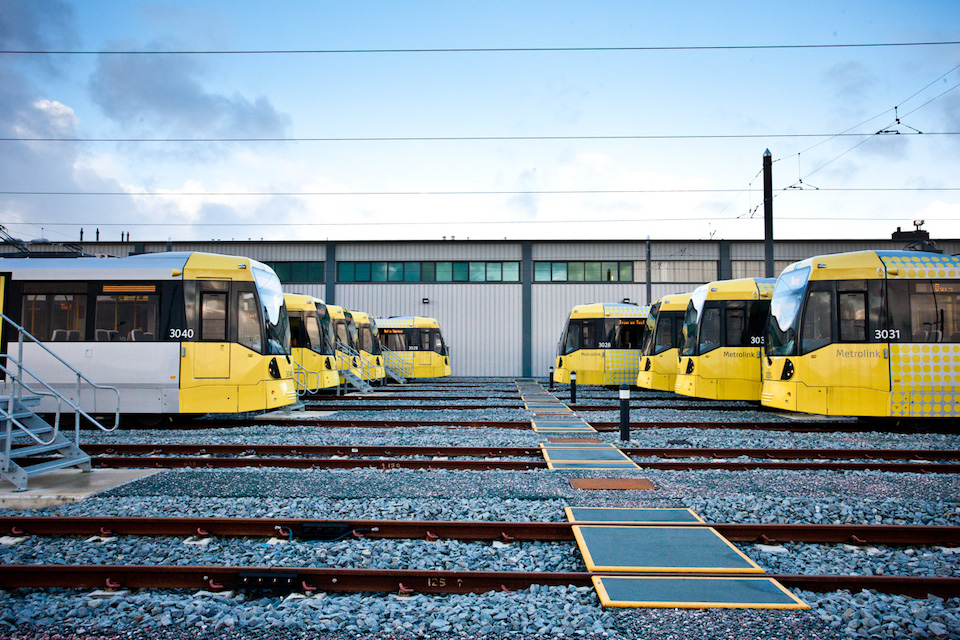
People are being urged to ‘plan ahead’ as no trams are set to run on three major Greater Manchester Metrolink lines this weekend.
As part of a continuing £150 million investment in the Metrolink network across the region, Transport for Greater Manchester (TfGM) has announced that more than 1km of track will be replaced on the Altrincham line, and work will also take place between Trafford Bar and Deansgate-Castlefield to prepare for full track replacement later in the year.
As a result, there will be no trams on the Altrincham, Eccles, and Trafford Park lines this Easter bank holiday weekend all day from Friday 3 to Monday 6 April.
On top of these line closures, there is also set to be disruption across other parts of the network too, as on the East Didsbury and Manchester Airport lines, trams will run to Firswood only, and services on the Rochdale line will terminate at Exchange Square.
To keep people moving over the four-day weekend, replacement buses will run between all the affected stops, TfGM has confirmed.
Anyone using a replacement bus, however, will still need a valid Metrolink ticket or a one-day Bee bus ticket to travel, and customers will be able to use all existing options to buy these, as they will not be able to buy a ticket or pay for the fare on the replacement buses themselves.
No trams will be running on three major Greater Manchester lines this Easter bank holiday weekend / Credit: TfGM
Replacement buses are said to be calling at ‘all affected stops’ along the lines, so customers are being told not to worry about that.
Speaking ahead of the improvement works being carried out this weekend, Ian Davies, who is the Network Director for Metrolink at TfGM, said: “The first main upgrades of the year get under way over the Easter weekend, as our £150m programme to improve our network continues.
“We’ll be doing everything we can to minimise disruption to passengers while we carry out this essential work to ensure our tram network remains reliable, resilient and safe for years to come.”
TfGM has assured that staff will be out and on-hand across the network this weekend, but is urging anyone travelling to plan for their journeys ahead of time to make sure they go as smoothly as possible.
Looking ahead to the rest of the month, no trams will run between Piccadilly Gardens and Ashton-under-Lyne on Saturday 11 and Sunday 12 April while the track is repaired, and a further weekend closure for track repairs on the Ashton line will take place on Saturday 25 April and Sunday 26 April.
Find out more and plan ahead on the Bee Network’s dedicated webpage here.
Featured Image – Janus Boye
News
Three men arrested after ‘shocking’ Salford pub fight leaves victim in life-threatening condition
Emily Sergeant
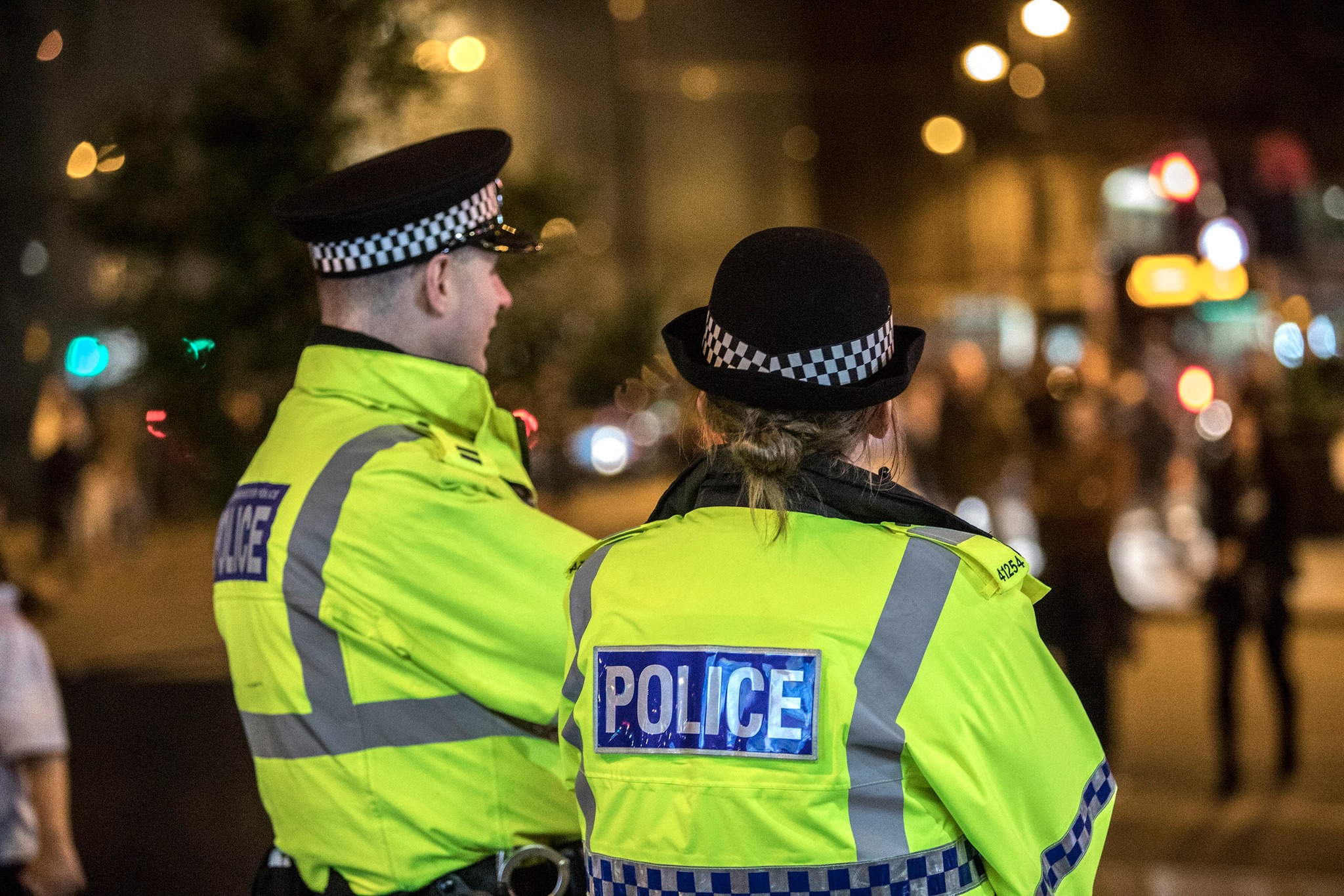
Three men have been arrested as police continue to appeal following a ‘shocking’ incident in Salford over the weekend.
Greater Manchester Police (GMP) explained that, at around 2:51am yesterday (Sunday 29 March), officers were called to reports of an assault at a pub on Liverpool Road in Irlam, where it’s understood that an incident involving several males took place.
Police quickly attended the scene, and one male was rushed to hospital.
The man sustained serious injuries and was taken to hospital for treatment, where he’s said to remain in a life-threatening condition.
While officers are working ‘at speed’ on their investigation to establish the full circumstances of this incident, a scene is currently in place, and road closures are affecting the immediate area.
At this time, it has been confirmed that three men – all in their 20s – have been arrested on suspicion of Section 18 assault, and they remain in custody for further questioning while GMP renews its public appeal for information.
“This is a shocking incident and our thoughts are firmly with the victim and his family during this extremely difficult time,” commented Detective Chief Inspector Helen Bagnall, from GMP’s Salford district. “We are working at pace and remain absolutely committed to identifying everyone involved and bringing those responsible to justice.
“Three arrests have been made in connection with this incident, and we are continuing to appeal for further information.
“Officers remain committed to understand the full circumstances and are urging anyone with information to come forward to support our investigation.”
Can you help? A dedicated online Major Incident Public Portal has been set up, and information, CCTV, dashcam, doorbell, and phone images and footage can be submitted here, or you can also contact police on 101, quoting log 256 of 29/03/26.
Alternatively, you can contact Crimestoppers, anonymously, on 0800 555 111.

 Emily Sergeant -
25th July 2022
Emily Sergeant -
25th July 2022