News
This drying rack on Amazon is uniting the internet
 The Manc -
24th February 2020
The Manc -
24th February 2020 
News
The Manc -
24th February 2020 News
 Thomas Melia

One of the 2020’s leading female artists, Doja Cat, is heading to the UK for a stop on her newest tour and has chosen to host it at Co-op Live in Manchester.
American recording artist Doja Cat is making her long-awaited return to Manchester and an arena debut, with this artist’s first and only visit to the city being back in 2024, headlining Parklife.
Heading to the UK as part of her Ma Vie World Tour, the California-born star is recognised for her spellbinding performances, extravagant outfits and array of UK Top 40 hits.
Not afraid to blend genres, Amala Dlamini, better known by artist moniker Doja Cat, has lent her voice to rap, hip-hop, pop, R’n’B, and now 80’s synths on her newest LP, Vie.

Do you ‘Need to Know’ about grabbing tickets to see this multi-hyphenate performer live? Well, you’re in luck…
After seeing this iconic ‘Woman’ live on stage in Manchester? Well, if I’ve got your ‘Attention’, you can find tickets and more info HERE.


Doors for Doja Cat’s Ma Vie Tour at Co-op Live in Manchester are set to open from 6:30pm with a kick-off time of 7pm from one very good warm-up act.
Supporting the rapper and performer on her UK and EU leg of the tour is alternative-r&b artist Naomi Sharon with singles like ‘Better Days’ and ‘Bittersweet’.
Tram
For those of you heading to Co-op Live, you’ll be glad to know it’s right next door to a rather famous big blue stadium and its integrated Metrolink stop.
Head along the light blue or orange lines directly to the Etihad Campus or Ashton-under-Lyne, and you can get off the tram literally spitting distance from the arena. You can find the full map HERE.
Trams run frequently on the Ashton-Eccles line to the Etihad stop, with services leaving every six minutes from the city centre and until 1am on Fridays and Saturdays.
Bus
You can find the full list of bus routes HERE, with the one in closest proximity to the venue being the 53 bus, which runs from Cheetham Hill through to Higher Crumpsall, Old Trafford and Pendleton, leaving just a two-minute walk to Co-op Live.
Getting there by car and parking
If you’re driving, there is limited parking available at the venue, but this must be pre-booked ahead of time, and there are designated drop-off areas.
The postcode is M11 3DU, and you can follow the signs towards the wider Etihad Campus as you get closer; directions to the adjacent drop-off points will also be signposted.
Keep in mind that congestion on the roads close to the stadium is expected to gather around two hours prior to any event, so if you are travelling on the road, these are the suggested times they provide on event day, though estimates will obviously vary:
There are also three park-and-ride facilities near Co-op Live, but be advised that the Velopark and Holt Town stops will be closed post-event to help safely manage crowds:
Walk/cycle
Lastly, Co-op Live is only a half-hour stroll from Manchester Piccadilly, and you could even walk along the canal all the way to the front door if you fancy taking the scenic route.
Greater Manchester now also offers the option to hire bikes on the Beryl app, with riders able to locate, unlock, get to their destination and then safely lock up the bike all through an easy-to-use app. There are hire points just near the south-west corner of the Etihad Stadium on Ashton New Road.
For more information on all travel options, you can check out the enhanced journey planner.
For all the latest news, events and goings on in Greater Manchester, subscribe to The Manc newsletter HERE.
Featured Image – Publicity Pictures
News
 Danny Jones
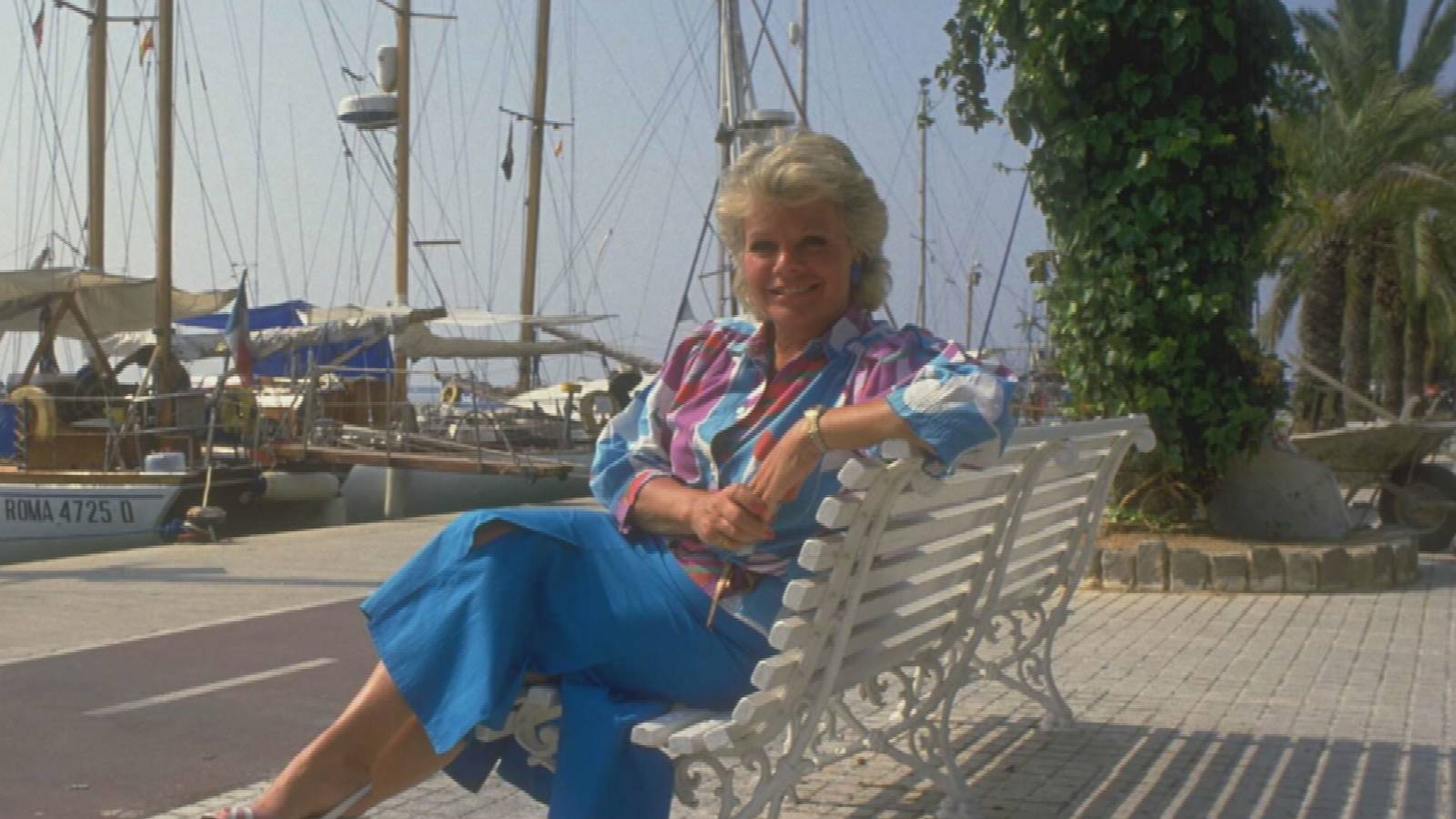
Well-known Greater Manchester native and beloved British TV presenter Judith Chalmers has sadly died at 90 years old.
The former Wish You Were Here…? host was known not only for the once smash-hit travel programme, which ran for the best part of three decades, but she also enjoyed a spot on BBC Radio 2, along with the Strictly forerunner, Come Dancing, among many other guest appearances over the decades.
Judith Rosemary Locke Chalmers OBE, to use her full title, was born in Stockport back in 1935 and is said to have passed away peacefully at home on Thursday evening, 21 May.
The tributes to the broadcasting legend are continuing to pour in online.
Judith Chalmers, host of ITV's Wish You Were Here…? has died aged 90https://t.co/DwDkLOaKIx
— ITV News (@itvnews) May 22, 2026
A familiar Northern face, Chalmers presented the primetime show from its inception in 1974 until 2003, and was made an OBE for her services to broadcasting in 1994.
The proud Gatley girl enjoyed a long and successful stint on screen before having to step away from her various duties in her later years due to declining health.
She leaves behind her husband, Neil Durden-Smith – himself a former sports commentator – along with two children, including Mark Durden-Smith, who has also gone on to a career in presenting
Unfortunately, Chalmers was diagnosed with Alzheimer’s a few years ago, meaning she gradually withdrew from the public eye even further; those around her have done plenty of important fundraising for the cause ever since.
Stopfordians have also been honouring the local lass’ legacy and much-admired reputation.
I met legendary broadcaster Judith Chalmers, who has died aged 90, when as a boy I won a competition to be VIP guest at a celebrity cricket match played at @StockportCounty Judith, who hosted the event, was happy to be home as she was raised in Gatley #SCFC #StockportCounty pic.twitter.com/58pcm39y3V
— Tony Bugby (@TonyBugby) May 22, 2026
In a statement issued to ITV (once her long-time employers), her family said: “After living an extraordinary life that involved over 60 years in broadcasting and countless adventures all over the globe, Judy sadly passed away last night, surrounded by the family she loved so much after suffering with Alzheimer’s for some years.
“We will miss her greatly, but she leaves behind a giant suitcase of the happiest of memories.”
Our thoughts are with her family, friends and long-established fan base up and down the country at this difficult time.
Rest in peace.
Featured Images — Thames TV/ITV (archive images)
Audio
Eats


