The latest reports suggest that the UK government could be close to introducing new local lockdown restrictions in some of the worst-affected regions imminently.
This could see pubs, bars and restaurants in many parts of the North of England – including Greater Manchester – forced to close premises for a period of time which is not yet understood.
There are also talks that there could be a ban on overnight stays away from home in these areas too.
It is believed that a decision on this could be reached at some point today, with a formal announcement not likely to come until Monday, although this has not been confirmed.
ADVERTISEMENT
This decision could be set to follow similar restrictions introduced by Scotland’s First Minister Nicola Sturgeon yesterday afternoon, which prohibits pubs, restaurants and cafes in most of the country from selling alcohol indoors for more than two weeks, and ordered pubs and restaurants in Greater Glasgow & Clyde, Lanarkshire, Ayrshire & Arran, Lothian and Forth Valley in the central belt to close for 16 days from Friday.
It’s thought that these potential restrictions could take effect from as early as Monday too.
ADVERTISEMENT
There are also strong suggestions that the government is likely to introduce a three-tier system for local lockdowns, which would see different parts of the country placed into different categories – although ministers are still believed to be discussing the precise details of the toughest level of restrictions over the next couple of days – but what does this really mean?
How could a potential “three-tier” restrictions system look if implemented in Greater Manchester?
Here is everything we know so far.
ADVERTISEMENT
The Department of Health confirmed last month that a potential new “three-tier” system was being considered, but the concept was signed off by government officials and politicians earlier this month and the roll-out of the new tiers is expected following imminent formal announcement.
As the name suggests – and as understood by the BBC – the system could see towns, cities and regions in England divided into three categories.
Tier 1
Areas that fall into tier one will have fewer than 100 cases per 100,000 of population and residents living in these areas would be required to adhere to national restrictions.
This would include the “rule of six” and social distancing measures.
Tier 2
Tier two would kick in where cases are above 100 per 100,000.
ADVERTISEMENT
Restrictions for these areas would be similar to those currently in place in large parts of Northern England – including Greater Manchester – such as prohibiting the mixing of households in indoor and outdoor settings.
Tier 3
Under the tightest restrictions, areas which are placed into tier three would have significantly higher infection rates and would face “full lockdowns”, although this would exclude the closing of schools and essential businesses – such as supermarkets and certain retail outlets – as well as places of worship.
This does however indicate that it would pertains to the closing of hospitality venues
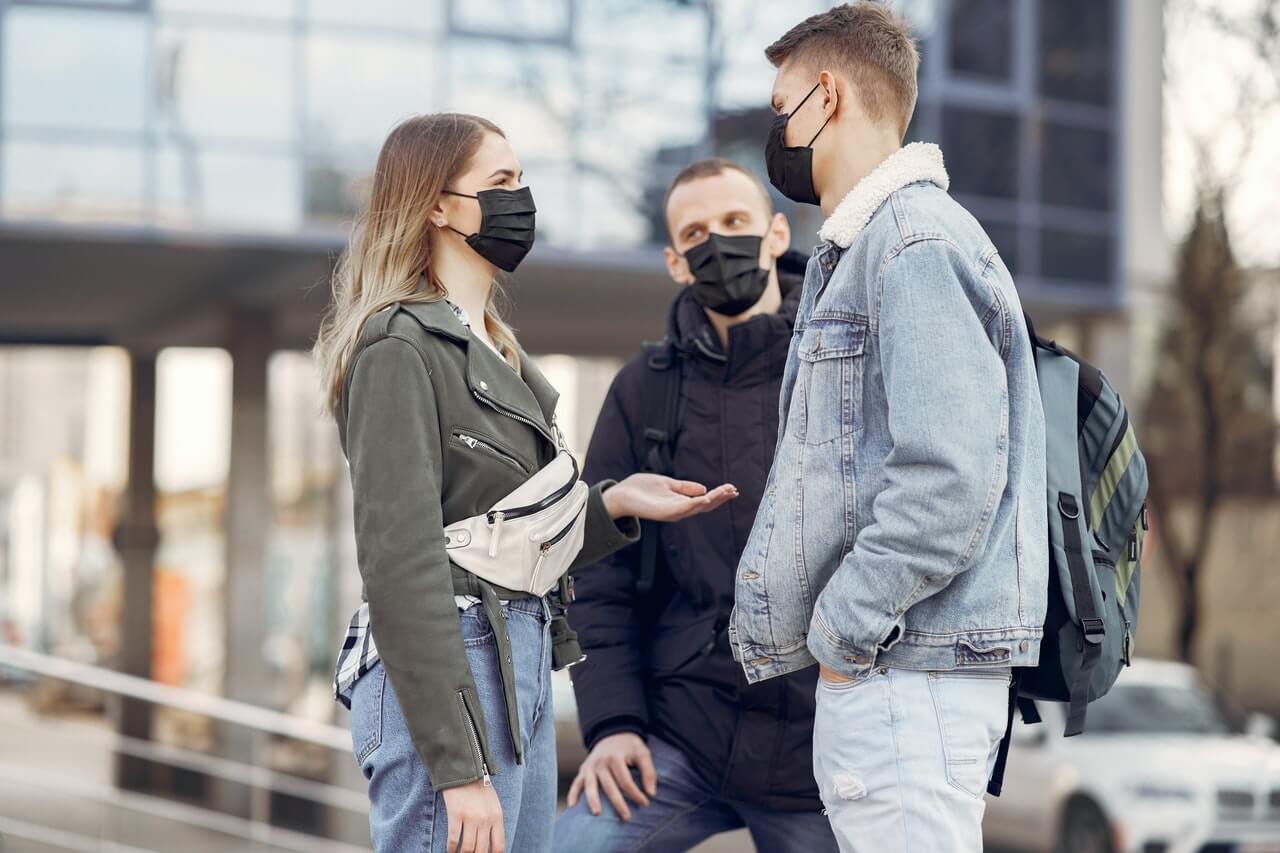
iStock
Information on the system – again as seen by the BBC – shows that there are plans for additional money to be distributed to local authorities which are placed into tiers two or three.
Local authorities would get £1 per head of population if placed into tier two, and £2 per head for tier three.
ADVERTISEMENT
There has been no formal confirmation at this stage as to which tier Greater Manchester would be placed into should the system be implemented in England, nor whether different areas / boroughs of Greater Manchester would be subject to different restrictions, or fall under different tiers.
More information is expected to be revealed to the public in due course.
___
For the latest information, guidance and support during the coronavirus (COVID-19) pandemic in the UK, please do refer to official sources at gov.uk/coronavirus.
#HandsFaceSpace
News
Dispute over Manichester now ‘resolved’, say Mounfield family
Danny Jones
The family of the late, great Manchester musician, Gary ‘Mani’ Mounfield, have said that the drama surrounding the highly-anticipated tribute festival in his name, Manichester, has now thankfully been settled.
Now the focus can once again return to remembering him as best as possible.
Following plenty of talk about the project following his passing late last year, a live music festival honouring Mani was finally confirmed in March, and the reaction following the event’s announcement has been unsurprisingly phenomenal.
Well, at least for the most part, as there was also some confusion over whether or not Manichester was still a charitable effort as advertised, with son Gene Mounfield disputing claims online. Fortunately, it all seems to have been put to bed now.
On behalf of the boys, and as their legal guardian, I want to thank everyone for the kind messages and concern for their wellbeing. There was a misunderstanding regarding the upcoming Manichester tribute concert, but we’re pleased to share that everything has now been resolved. pic.twitter.com/j8jEMrFzsD
Being organised by Madchester.com and locally-founded fashion label, GIOGOI, the debut edition was said to have the total blessing of Mani’s family, including his brother, Greg Mounfield.
It was also said that the funds raised by the show would be going to the legendary Stone Roses and Primal Scream bassists’ twins, George and Grene, but the latter recently argued that “nothing” was going to either him or his brother and that the news was “dropped” the plans just a fortnight prior.
He also said that “if it was a charity gig it would be at Co-op [Live] or Heaton Park, and it would be done by SJM [Concerts]”: a Manchester-based promoters and events company.
All of this was also wrapped up in ever more paper talk and sensationalism, as some were reporting that Noel and Liam Gallagher, as well as other members of Oasis, would be surprising fans as the still yet to be revealed ‘major headliner’.
These rumours have since been quashed, as has whatever miscommunication caused the misunderstanding between the parties concerned, and we are now back to simply looking forward to seeing an already stacked lineup here in the city centre this May.
As for the surviving Mounfields, they went on to add in an accompanying Instagram post: “We would also like to express our gratitude to PH.
“It means a great deal to all of us that so many people loved Mani enough to give their time and energy to honour his memory in this way. We are genuinely touched by the support.
“It has been an incredibly difficult few years for the boys and for our whole family. We hope this event will bring some much‑needed joy and create new, positive memories for everyone who cared about him.
“With love and thanks – The Family”
It goes without saying that we can’t wait for this city and Greater Manchester as a whole to honour a Manc icon and are looking forward to another year celebrating the thing that never fails to bring us all together: music.
Featured Images — livepict.com (via Wikimedia Commons)/Publicity pictures (supplied)
News
Rochdale is bidding to become the UK’s first-ever Town of Culture in 2028
Emily Sergeant
Rochdale has announced its intention to bid to become UK Town of Culture 2028.
Entering into the national competition launched by the Department for Culture, Media and Sport (DCMS), following on from the success of the already-existing City of Culture award, the Greater Manchester town is hoping to be the first-ever town to claim the title.
The Town of Culture competition invites towns across the UK to showcase their cultural story and develop ambitious programmes that celebrate local heritage, creativity, and communities.
The winning town receives a £3 million grant from the Government to deliver a major year-long cultural programme in 2028 designed to boost civic pride, attract visitors, and provide everyone with the opportunity to participate in cultural activities.
Rochdale’s bid is being led by Rochdale Borough Council and Rochdale Development Agency, alongside cultural groups, education providers, and community organisations.
The bid will build on the town’s history as the birthplace of the Co-operative movement, and a centre of political reform, collective action and working-class cultural innovation.
A town of national and international significance, whose people and ideas have shaped the social, democratic and cultural life of the UK and beyond, Rochdale Council says the town’s story is ‘distinctive’ and as highly relevant today as it ever has been, and this is a driving force behind its Town of Culture 2028 bid.
Not just historically, but over recent years too, the town has made a significant contribution to the UK’s popular culture, producing internationally recognised musicians, artists, writers, and performers.
Local leaders say the bid to become the UK’s first ever Town of Culture underlines Rochdale’s ambition after just completing a ‘hugely successful’ year as Greater Manchester Town of Culture for 2025.
Rochdale is bidding to become the UK’s first-ever Town of Culture / Credit: The Manc Group | Rochdale Council
“We have a strong foundation for a bold and future focused UK Town of Culture programme and an incredible story to tell,” commented Cllr Neil Emmott, who is the Leader of Rochdale Borough Council.
“We’ll be developing a fabulous programme of new events and activities as well as amplifying our existing offer and recently transformed town hall square and centre.
“As we have already seen during our year as Greater Manchester Town of Culture, we have an established infrastructure of creative partners ready to go, who have already expressed their support for our bid, providing significant capacity and scale to deliver a UK town of culture programme in 2028 that would leave a permanent cultural legacy.
“We have exciting and varied attractions and iconic venues that have seen significant investment, an array of creative talent and we’re very well connected.
“This bid will allow us to share this in new ways and invite others to experience it.”