It’s nearly time to go back to school, pupils are being told.
The Prime Minister has said a swift return in September is ‘vitally important‘ – and parents are now being urged to shop for shoes, buy new backpacks and grab the stationery kits.
Education facilities are all set to reopen as planned, and for many, this news will come as something of a relief.
Teaching effectively during coronavirus has been like trying to navigate choppy waters in a midnight storm, and both teachers and parents will be grateful for some stability that the school return will bring.
Nonetheless, the disruption of the past six months or so has led to new measures being introduced in schools and colleges.
ADVERTISEMENT
These are designed to support any pupils hoping to catch up on missed work, offer children opportunities to resit exams and, most importantly of all, keep everyone in education protected.
Here’s what families should know right now about going back to school.
ADVERTISEMENT
Exam resits
Any pupils who ended up with grades at GCSE or A Level they were ultimately unhappy with will be able to retake these tests in the autumn.
Pupils should speak to their teachers/schools as soon as possible in order to arrange resits.
The registration deadline for retaking A Levels is September 4, with resits taking place in October.
ADVERTISEMENT
Those wanting to retake GCSEs must register by September 18 (except English and Maths, for which the deadline is October 4) to resit in November.
New assessment for Year 6 pupils
New compulsory assessments are being introduced for all pupils starting Year 6 in September 2020.
Occurring in summer 2021, these tests aim to determine how much learning children have lost due to COVID-19 whilst also prepping them for the step up to secondary school.
The Government commented: “Children and young people have missed a critical period of their education due to schools having to close to the majority of pupils to control the spread of coronavirus.
“It is vital that we better understand the impact of coronavirus on children’s education and give support to schools that need it the most.”
ADVERTISEMENT
Classes and curriculum
On its website, the Government has stated that the school curriculum should ‘remain broad’ so that ‘the majority of pupils are taught a full range of subjects over the year, including sciences, humanities, the arts, physical education/sport, religious education and relationships and health education.’
COVID-19 measures however are likely to impact a number of classes, and the Government has published general guidance for education facilities on how to keep a full curriculum.
Regarding the subject of PE, which could potentially be seen as trickier to control, the Government added: “Schools have the flexibility to decide how physical education, sport and physical activity will be provided whilst following the measures in their system of controls.”
Face masks
Pikist
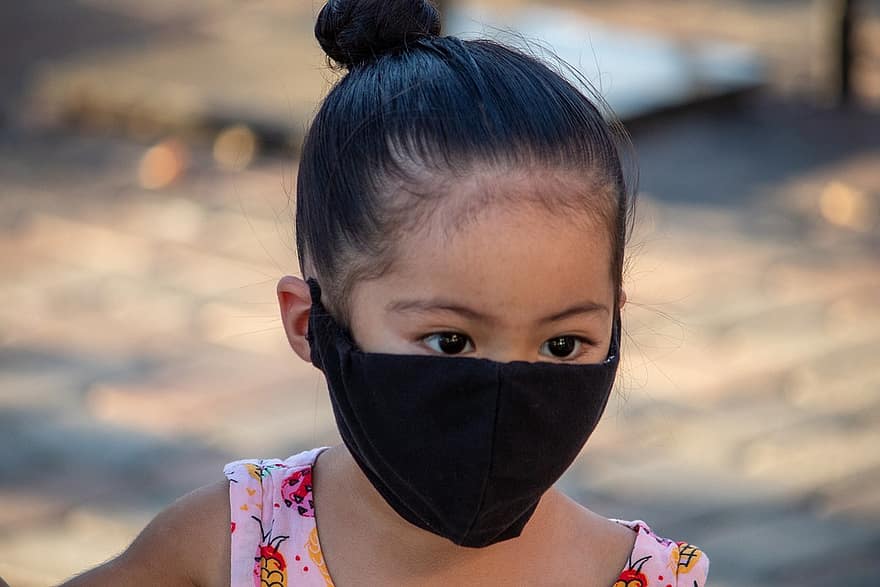
Face coverings have now been made mandatory for pupils Year 7 and above in schools in high-risk areas, such as Greater Manchester.
Pupils and staff will be asked to wear face coverings in corridors and other communal areas where social distancing is challenging.
Council announces return of FREE firework displays in Manchester parks
Emily Sergeant
The skies over Manchester will light up once again, as free firework displays are set to return to several of the city’s parks.
You may remember that major fireworks events throughout the city had been paused following the COVID-19 pandemic, due to funding challenges, with Manchester City Council choosing to invest in a range of other community-focused events across throughout the autumn season instead, rather than one-off firework celebrations.
But now, once this November rolls around, all of that is set to change.
That’s because, on Saturday 7 November, free fireworks events will return to Heaton Park, Wythenshawe Park, and Platt Fields Park.
First up, there will be a reduced-noise, low-impact display at 5pm for families and SEND audiences, and a main fireworks display then to follow a little later at 8pm.
The Council has announced the return of free firework displays in Manchester parks / Credit: Unsplash
Each of the three parks will host lantern making workshops in the weeks leading up to the events too, with family-friendly lantern parades taking place ahead of the 8pm firework shows.
The Council says that the return of the free fireworks events reflects residents’ recent feedback about what they want to see in their community and how they want funding to be distributed.
“It’s a chance, at the start of the shorter days and beginning of the dark winter months, to come together and resume a much-loved annual tradition as well as enjoying an evening of safe entertainment and spectacular fireworks displays,” Manchester City Council said in a statement.
Councillor Basat Sheikh, who is the Executive Member for Neighbourhoods, added: “We are delighted to announce and welcome the return of our much-loved fireworks celebrations.
It’s the first time they’ve returned since the COVID-19 pandemic / Credit: Elisha Terada (via Unsplash)
“Our parks should be shared spaces that create opportunities for Manchester people to gather, which is why bringing back the fireworks displays was top of our agenda. And we also recognise the importance of community which is why we will also continue to invest in a wide range of activities in our parks throughout the year.
“The return of these events is a wonderful opportunity for families and communities to create lasting memories and enjoy the long-standing tradition of fireworks in our parks in a safe way.”
Additional entertainment will be announced for each park in the coming weeks too, so keep your eyes peeled for more.
Featured Image – Alex Jones (via Unsplash)
News
Stockport man admits to drugging and raping his wife without her knowledge for more than 20 years
Emily Sergeant
A man in his 60s from Stockport has admitted drugging and raping his wife in a ‘horrific’ 20-year campaign of abuse.
According to Greater Manchester Police (GMP), the man – who cannot be identified in order to protect the life-long anonymity of the victim – previously admitted five counts of rape, three counts of sexual assault, six counts of assault by penetration, and one count of sharing intimate photos or film.
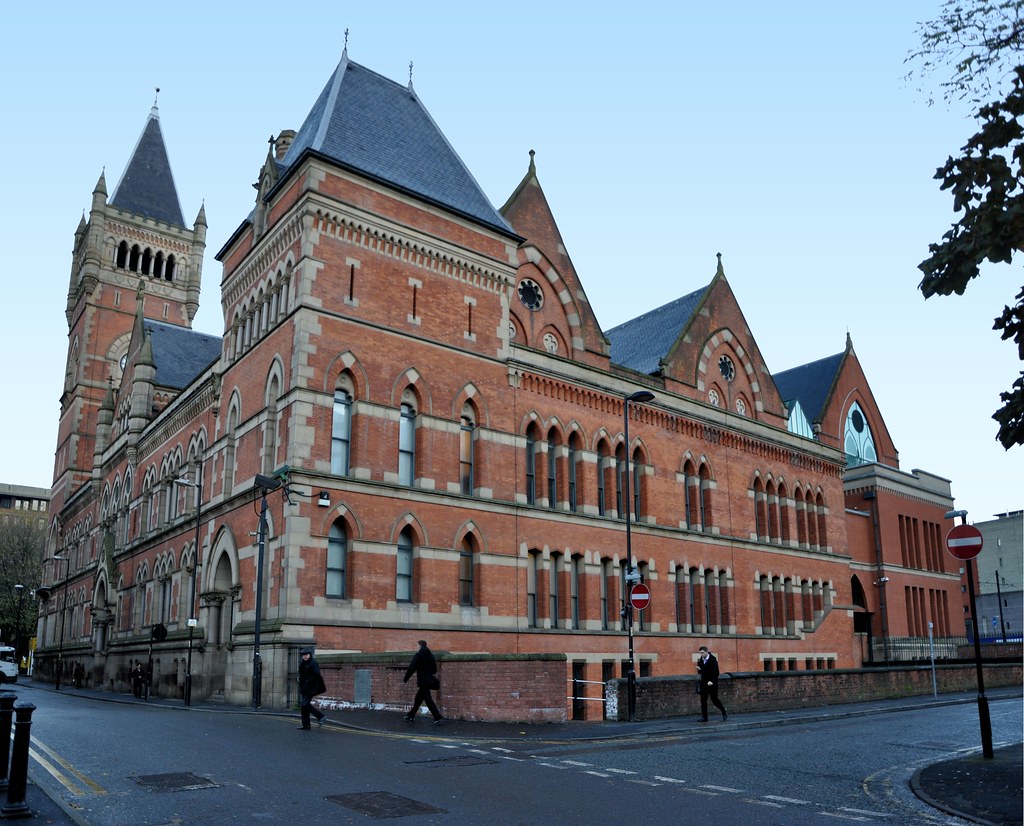
And now, during an appearance at Manchester Minshull Street Crown Court yesterday (14 September), he pleaded guilty to a further 45 charges.
This makes it 60 charges in total the man has now pleaded guilty to.
Some of the charges he pleaded guilty to yesterday include a further 16 counts of rape, nine counts of assault by penetration, seven counts of sexual assault, and four counts of attempted rape, amongst several others.
Speaking following the court appearance yesterday, GMP’s Assistant Chief Constable, Rick Jackson, said: “Our focus remains on supporting the victim of this horrific campaign of abuse through what is a very complex investigation.
“Specialist support continues to be provided to the victim at the centre of this case.
“If you are concerned you or someone you know may be affected by drug-facilitated sexual abuse, please know that you do not need proof, certainty, or a clear memory to be taken seriously.
“You are not expected to understand exactly what has happened or who was involved in order to be taken seriously. If you feel that something has happened, then please report it or ask for help.”
GMP reiterates that anyone who does choose to report sexual abuse does not need a full account or clear memory, can share as much or as little as they feel able, and will be supported by trained officers, as their ‘immediate’ safety and wellbeing will be the ‘priority’.
They may also speak to a support organisation first and decide later whether to involve police.
Saint Mary’s Sexual Assault Referral Centre – Services are available on a 24-hour basis, and can be accessed by calling 0161 276 6515.
Greater Manchester Rape Crisis – Call on 0161 273 4500 or email [email protected]

 The Manc -
25th August 2020
The Manc -
25th August 2020