Is Madchester Still Mad? Or Has Everyone Gone Mad?

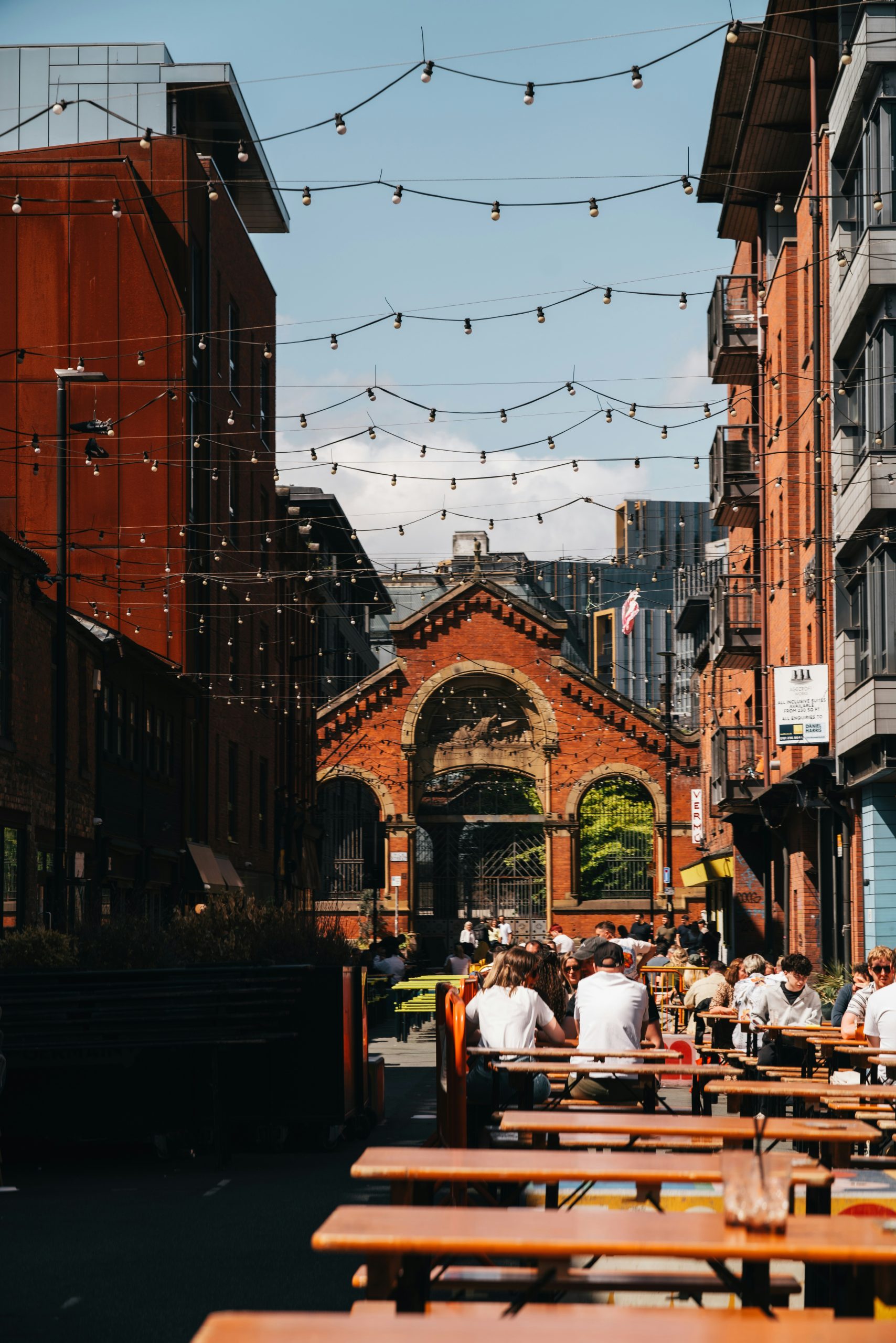
Walk through Manchester city centre and ask yourself: can you still feel that sense of community? You know the one… that famous Manchester spirit everyone’s mum, dad and Bob’s uncle seems to rave about.
When you wander through the Northern Quarter, are you taking in the independent shops, cafés and bars that gave the area its character? Or are you grabbing a picture in the latest trendy, edgy, painfully expensive garms that have just pushed you another 50 quid into your overdraft?
Let’s face it. Madchester is still mad, just not in the way it used to be.
“This is Manchester. We do things differently here.”
Do we really?
There’s a rat race unfolding across the city that nobody seems particularly keen to acknowledge. Manchester’s identity was forged through its working-class roots, becoming the world’s first industrial city and a powerhouse of the Industrial Revolution. Even the worker bee, now plastered across murals, tote bags, T-shirts and the walls of every other ‘trendy’ spot, represents the graft, industry and collective spirit that shaped this city.
But somewhere between celebrating that identity and selling it, have we forgotten what it actually means?
Manchester loves to celebrate its musical past, and rightly so. The Haçienda opened in 1982 and became one of the defining venues of the city’s club culture. But after closing in 1997, it was eventually demolished and apartments were built on the site – apartments that still carry the Haçienda name.
Then came places like Sankeys. Opening as Sankeys Soap in Ancoats in 1994, the former soap factory became another major part of Manchester’s underground club culture, particularly for house and techno. Its Manchester venue eventually closed in 2017 after the Beehive Mill was sold to developers for apartments.
And now another generation of Manchester venues is having to think about what happens when nightlife and residential development meet.
Stage & Radio, a grassroots venue on Port Street in the Northern Quarter, is currently raising concerns over plans for 126 flats proposed just metres from its doors. The venue supports emerging artists, DJs, promoters, musicians and community projects, but fears new residents could lead to future noise complaints, licensing restrictions and pressure on the venue.
Manchester City Council has insisted Stage & Radio is not under threat, arguing that the Agent of Change principle places responsibility on the new development to protect the existing venue.
But the fact that the conversation is happening at all feels strangely familiar.
Music venues helped build Manchester’s reputation as one of the world’s great music cities, while another glass-fronted block of flats seems to appear every other week, feeding into the glossy Manchester city-living dream.
Luxury apartments, rooftop bars and a lifestyle increasingly designed to be looked at rather than lived in.
Peter Hook once said of Manchester: “While it’s gentrified on the outside, it still holds and beats a very rough heart.”
That was more than a decade ago and I wonder if he’d still say the same today.
Even something as Mancunian as going for a quick pint after work doesn’t feel quite so simple anymore. Before you know it, a few drinks have swallowed a decent chunk of a day’s wages. And before anyone starts, I’m talking about the living wage.
Speaking of raves, when was the last time you actually lost yourself in one?
Dancing, sweating, staring into your mates’ eyes as the BPM rattles through your body. Or are you reaching for your phone, capturing the exact moment you’d already anticipated posting later, proof that “you was living in the moment”?
There are people who love Manchester and people who pose Manchester.
People who want to contribute to its culture, and people who simply want to consume the version of it they’ve been sold.
“The new London,” people joke. Well, Andy Burnham’s bringing Number 10 up North now, so maybe the punchline isn’t as ridiculous as it once sounded.
When are we going to admit that Madchester is still mad, but perhaps for entirely different reasons?
It shouldn’t take a major incident or a tragic passing for Manchester to remember what community feels like. Nor should our identities within the city be reduced to whichever side of town we happen to drink in.
“Oh, I’m Deansgate.”
“Oh, I’m Northern Quarter.”
When did Manchester get its own Berlin Wall?
There’s only one divide acceptable in this city, and that’s red and blue on derby day.
Yet somehow, I can walk through the city I was born in and still feel like an imposter simply because I don’t quite fit the version of Manchester being sold back to me.
But it would be unfair to pretend everything has disappeared.
People still dance. People still create. People still bond. People still love this city fiercely. Behind the glass towers, expensive pints and Instagram stories, there are still people fighting to preserve the very things that made Manchester worth shouting about in the first place.
So perhaps the question isn’t whether Manchester still has a community.
It’s whether that community is still authentic, or whether we’ve become so obsessed with recreating the mythology of Madchester that we’ve forgotten how to create a culture of our own.
“This is Manchester. We do things differently here.”
Maybe we still do.
Maybe Madchester is still mad.
But in a city increasingly conscious of how it looks to the rest of the world, there’s one question worth asking:
Are we living Manchester, or are we just performing it?
Featured image: Konrad Nowacki on Unsplash