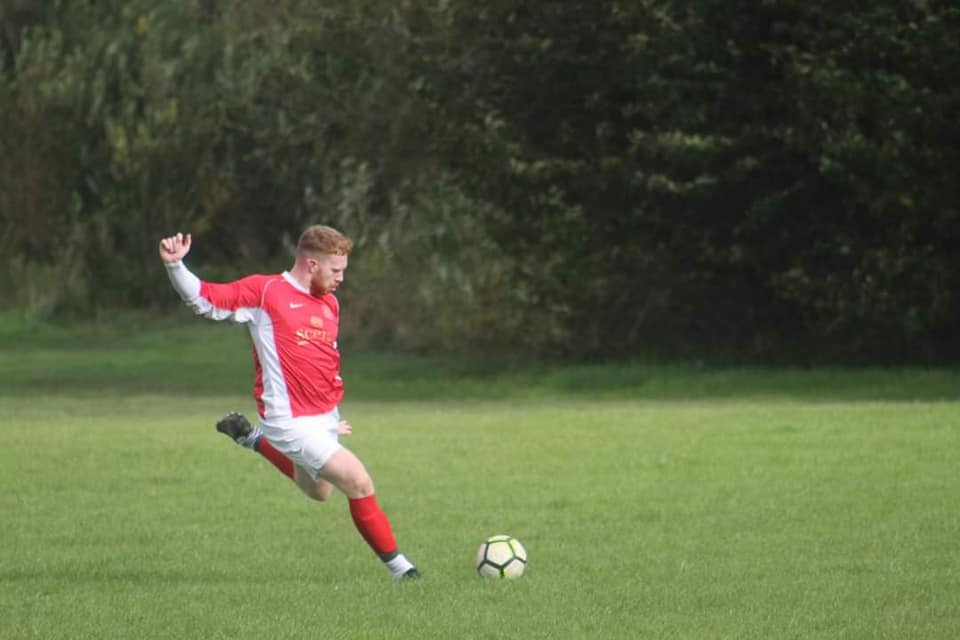
Greater Manchester Football Club (GMFC) is a new club in the region who you might not have heard about yet. But they are hoping to become the third most-recognised club in Manchester – and the most inclusive in Britain.
The club’s goals are ambitious at first glance, but Mohammed Harron – CEO and founder of the club – is optimistic they can hit their targets.
Being inclusive, Mohammed says, “isn’t hard; it’s natural.”
“It takes much more effort to create divide and animosity than it does to be inclusive,” he tells us.
GMFC may have only launched in 2018, but the core message of inclusivity is already apparent across their men’s and women’s team – with over 50 players representing 30 different nationalities at the club.
The mission of the club is primarily built on making the game accessible for everyone who wants to play, regardless of their race, religion, sexual orientation or economic circumstance.
Mohammed is particularly concerned with the way in which football has moved away from it’s working class roots.
ADVERTISEMENT
“Its a game you first played on the street or in gardens and parks and that is where your love for the game started,” he explains.
“If you were good there were always clubs that would help and develop young talent and if you were better still you were picked up by bigger clubs.
“In more recent times though, football has become all about the business and the vast finances that go with it.”
ADVERTISEMENT
Mohammed believes it’s much harder for children and teenagers to be accepted into special academies because some families may not have the money to afford the fees, travel and equipment that is needed.
Ultimately, he thinks the luck has become more important than ‘raw talent’.
The CEO hopes that by focusing on the ability of players during recruitment, GMFC can be competitive while also “fielding a naturally inclusive team.”
The club have recently been nominated for the ‘Kick It Out Promoting Inclusion Award’ at the Pitching In North West Football Awards, sitting alongside the likes of Manchester United and Everton on the shortlist.
While Mohammed is excited to be have been shortlisted, particularly as a Mancunian and a Manchester United fan, he knows that this nomination is only a “small step on a very long journey”.
ADVERTISEMENT
On a weekly basis clubs across the world have been supporting the Black Lives Matter movement by taking the knee or displaying anti-racism messaging on their shirts, but Mohammed is concerned that “the initial will and determination to do something to fundamentally change the game is starting to fade” and there is little evidence that anything has really changed.
There might be something in that. A recent report released by the Digital, Culture, Media and Sport Committee (DCMS) in July 2020 pointed out that there was a continued lack of diversity in the boards and management structures of football clubs.
The report, ‘Impact of COVID-19 on DCMS sectors’, reads: “The fact that no Premier League club and virtually no English Football League club has a black owner, chair or chief executive, is a fundamental inequality at the heart of the game.”
The Premier League itself admitted, after initially refusing to release their diversity figures, that only 12% of their staff were from BAME backgrounds, which is much lower than the 30% proportion of players who make up the game from BAME backgrounds.
The report also emphasised that more still needs to be done to tackle homophobia in the game, to “understand what barriers stand in the way of gay footballers, and how much of the responsibility lies with clubs and how much with fans”.
ADVERTISEMENT
https://www.instagram.com/p/CGhVpaXjQeB/
Exactly 30 years ago, footballer Justin Fashanu hit the headlines as the first professional player to come out as gay. His story is a reminder of why inclusion in sport is so important & why we are committed to making sport everyone’s game. Rest in power. https://t.co/ieJWUNG86Hpic.twitter.com/n7CfcRuiNk
Further, the committee recommends the government that “men’s elite sports are not further prioritised at the expense of the women’s game”, in regards to the way in which women’s football was “disproportionately affected” in the initial months of the pandemic.
Despite widespread discrimination in the game and unequal representation, Mohammed believes that those who may feel maginalised in the sport must not “fall into the trap of being angry or resentful in return to those that marginalise you.”
“Beat hatred through love and overcome discrimination by being a living, breathing example of someone who treats everyone with love, honour and respect,” he says.
“Greater Manchester FC is a club for everyone and anyone.”
“Thats the way it should be. The way it needs to be.”
ADVERTISEMENT
welcomes anyone who wants to play for the club or volunteer their time to get involved.
You can found out more about the club on their website and stay tuned for videos on their Youtube channel for match highlights and interviews from players and staff.
The road to the Super League Grand Final at Old Trafford has been confirmed
Daisy Jackson
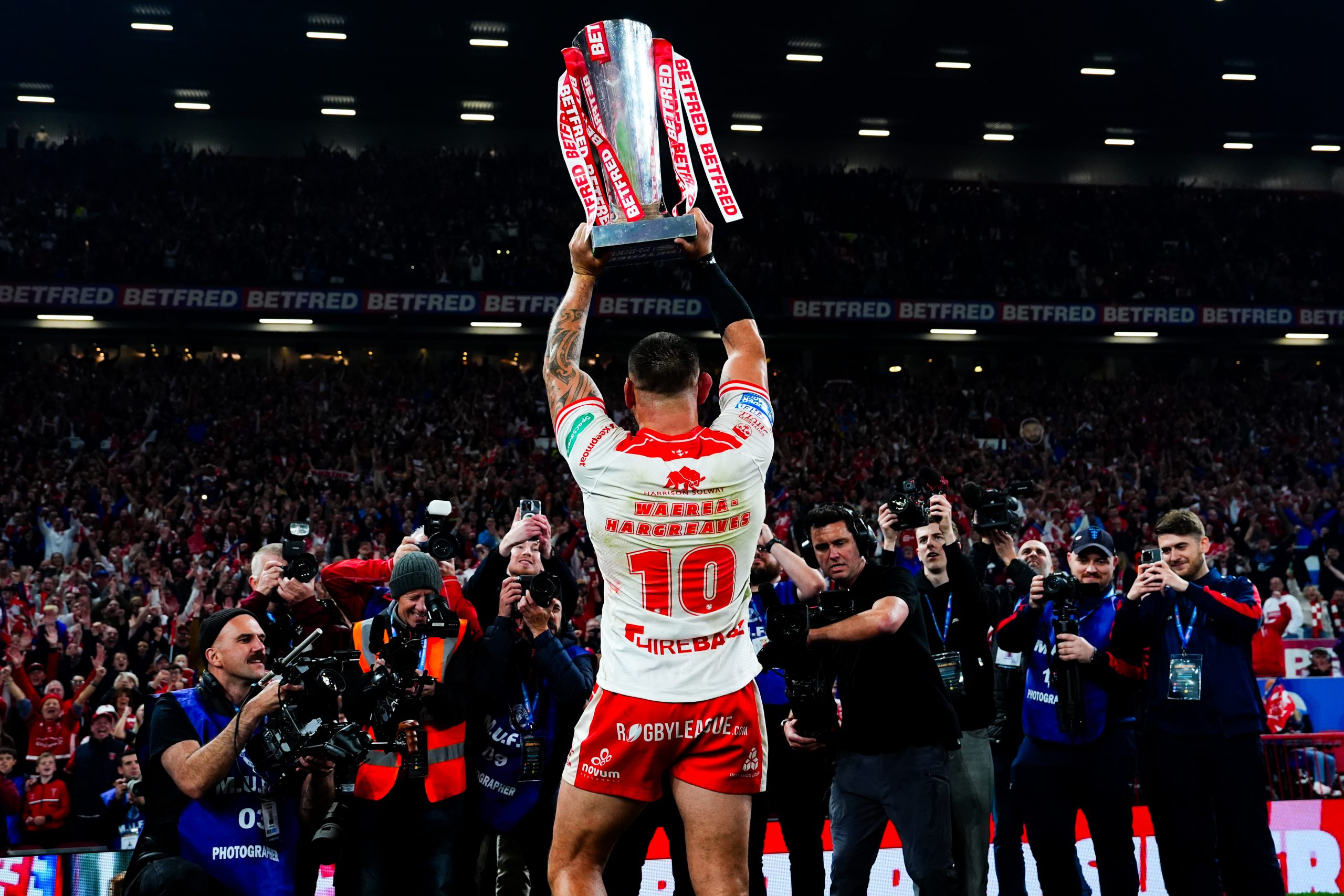
The road to one of the biggest nights in rugby league has officially been mapped out, with the 2026 Betfred Super League Grand Final set to return to Manchester’s Old Trafford this October.
Following the final round of regular-season action, the four play-off ties have now been confirmed as the battle for a place at the home of Manchester United enters its final stages.
And there’s plenty for Greater Manchester sports fans to get excited about.
Wigan Warriors have secured the League Leaders’ Shield after an emphatic 50-12 victory over Catalans Dragons, with Matt Peet’s side running in nine tries to finish top of the table.
The result keeps Wigan’s hopes of an incredible treble alive, having already lifted the Betfred Challenge Cup back in May.
They’ll now have a week off while the opening play-off ties take place, as will second-placed Leeds Rhinos.
The first eliminator sees Wakefield Trinity welcome Leigh Leopards on Friday 18 September, with kick-off at 8pm.
Then, on Saturday 19 September, Warrington Wolves take on Hull KR at 5.30pm.
The winners of those games will progress to the semi-finals, while the losing sides will face the two highest-ranked teams in the competition.
The road to the Super League Grand Final at Old Trafford has been confirmed. Credit: Simon Wilkinson/SWpix.com
Leeds will host the highest-ranked eliminator loser on Friday 25 September at 8pm.
Then, 24 hours later, Wigan will welcome the lowest-ranked loser to the Brick Community Stadium for their semi-final, with that one kicking off at 5.30pm on Saturday 26 September.
For Wigan, it represents a huge opportunity to take another step towards an historic treble – and ultimately a return to Old Trafford.
The Grand Final itself takes place on Saturday 3 October, with the action getting underway at 6pm.
As ever, the biggest prize in Super League will be decided under the lights at Old Trafford, with the two remaining sides battling it out in front of what is expected to be another huge crowd in Manchester.
Both Manchester United and Manchester City named as teams with the least amount of local fans
Emily Sergeant
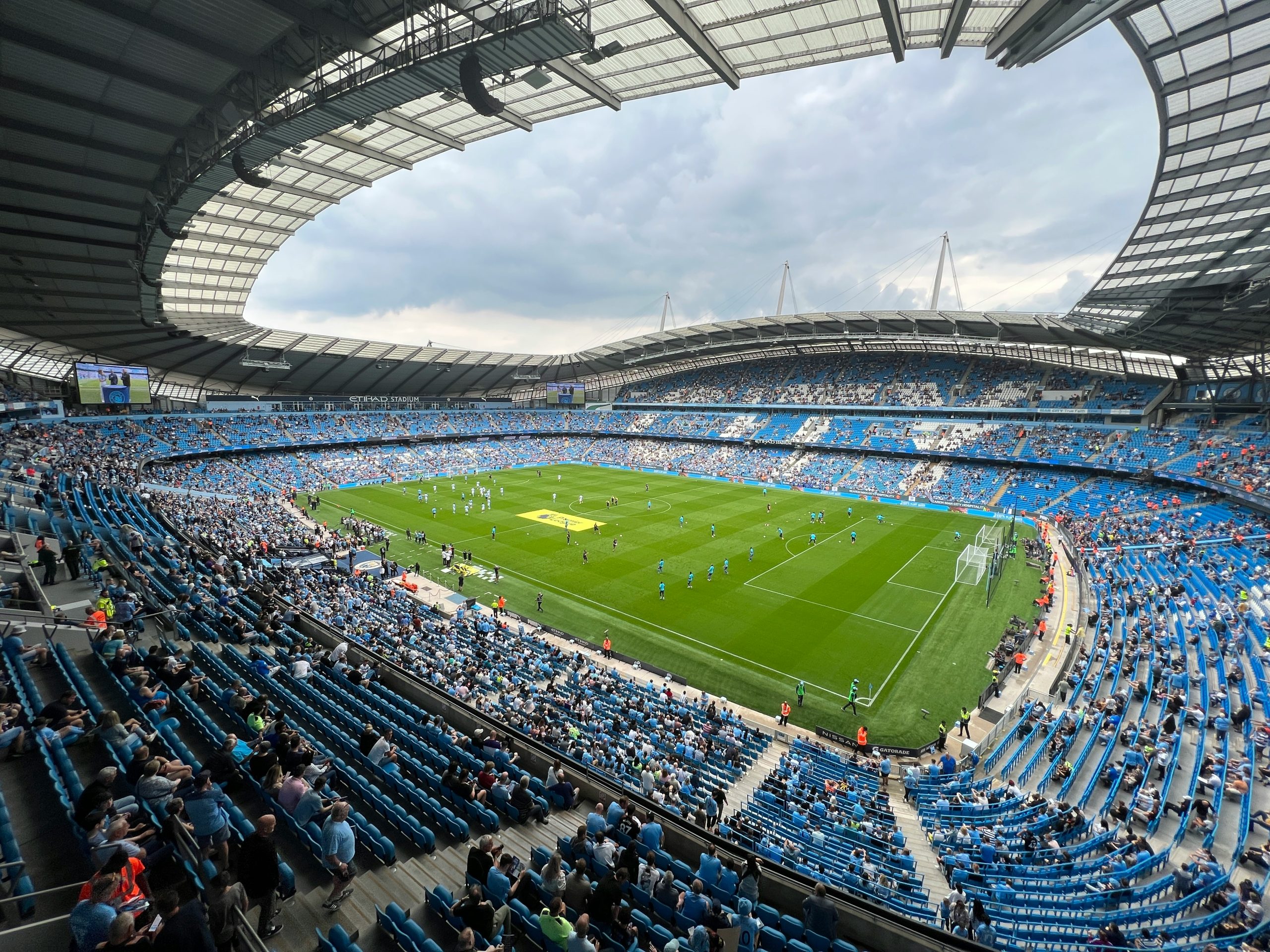
Both Manchester United and Manchester City have been identified as being teams with the least amount of local fans, according to a new survey.
We all know that supporting a local team can be seen as a mark of credibility among a certain kind of football fan, while on the flip side of that, not following a local team is often associated with being a ‘glory hunter’. But which Premier League clubs have the highest – and lowest – proportion of supporters living close to home?
Well, YouGov decided to use its profiles data to analyse the fanbases of all 20 Premier League clubs for the 2026-27 season to get the answer to this once and for all.
And it’s fair to say that it’s not looking the best for the Manchester teams.
The study found that, overall, Brighton & Hove Albion is the Premier League’s most local team – with 56% of fans based in the South East.
Sunderland (50%) and Nottingham Forest (49%) supporters are the next-most likely to live in the same region as their teams, followed by Aston Villa, Brentford, Ipswich, Leeds, Fulham, Hull, and Crystal Palace fans rounding out the top 10.
At the other end of the table, Manchester United has the second-lowest proportion of local supporters, with only a quarter based in the North West (23%), with one in six (17%) actually living in London instead.
And then as for Manchester City – who are widely considered to be the most successful team of the modern era – it has ranked fourth-bottom for local fans, as a quarter of the club’s supporters are based in the North West, with a fifth based in London (19%).
But although both United and City have found themselves towards the bottom end of the ranking, they are not the worst offenders.
That title, unfortunately, does belong to another North West team though – Liverpool.
Liverpool is the club with the lowest proportion of ‘local’ supporters, as just a fifth are based in the North West (21%) with the next highest concentration of fans can being found in London.

 Kate Jackson -
23rd October 2020
Kate Jackson -
23rd October 2020