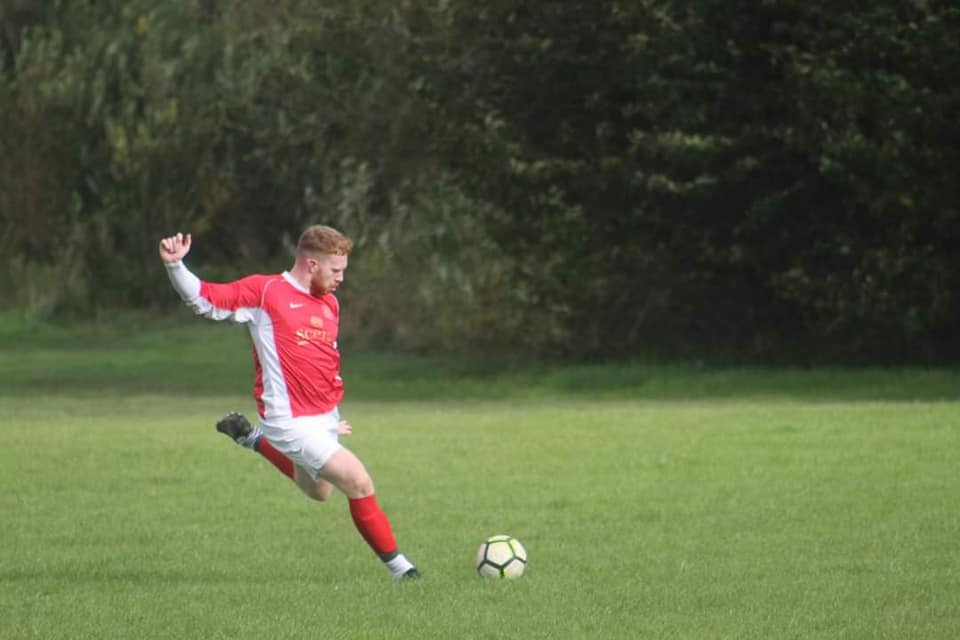
Greater Manchester Football Club (GMFC) is a new club in the region who you might not have heard about yet. But they are hoping to become the third most-recognised club in Manchester – and the most inclusive in Britain.
The club’s goals are ambitious at first glance, but Mohammed Harron – CEO and founder of the club – is optimistic they can hit their targets.
Being inclusive, Mohammed says, “isn’t hard; it’s natural.”
“It takes much more effort to create divide and animosity than it does to be inclusive,” he tells us.
GMFC may have only launched in 2018, but the core message of inclusivity is already apparent across their men’s and women’s team – with over 50 players representing 30 different nationalities at the club.
The mission of the club is primarily built on making the game accessible for everyone who wants to play, regardless of their race, religion, sexual orientation or economic circumstance.
Mohammed is particularly concerned with the way in which football has moved away from it’s working class roots.
ADVERTISEMENT
“Its a game you first played on the street or in gardens and parks and that is where your love for the game started,” he explains.
“If you were good there were always clubs that would help and develop young talent and if you were better still you were picked up by bigger clubs.
“In more recent times though, football has become all about the business and the vast finances that go with it.”
ADVERTISEMENT
Mohammed believes it’s much harder for children and teenagers to be accepted into special academies because some families may not have the money to afford the fees, travel and equipment that is needed.
Ultimately, he thinks the luck has become more important than ‘raw talent’.
The CEO hopes that by focusing on the ability of players during recruitment, GMFC can be competitive while also “fielding a naturally inclusive team.”
The club have recently been nominated for the ‘Kick It Out Promoting Inclusion Award’ at the Pitching In North West Football Awards, sitting alongside the likes of Manchester United and Everton on the shortlist.
While Mohammed is excited to be have been shortlisted, particularly as a Mancunian and a Manchester United fan, he knows that this nomination is only a “small step on a very long journey”.
ADVERTISEMENT
On a weekly basis clubs across the world have been supporting the Black Lives Matter movement by taking the knee or displaying anti-racism messaging on their shirts, but Mohammed is concerned that “the initial will and determination to do something to fundamentally change the game is starting to fade” and there is little evidence that anything has really changed.
There might be something in that. A recent report released by the Digital, Culture, Media and Sport Committee (DCMS) in July 2020 pointed out that there was a continued lack of diversity in the boards and management structures of football clubs.
The report, ‘Impact of COVID-19 on DCMS sectors’, reads: “The fact that no Premier League club and virtually no English Football League club has a black owner, chair or chief executive, is a fundamental inequality at the heart of the game.”
The Premier League itself admitted, after initially refusing to release their diversity figures, that only 12% of their staff were from BAME backgrounds, which is much lower than the 30% proportion of players who make up the game from BAME backgrounds.
The report also emphasised that more still needs to be done to tackle homophobia in the game, to “understand what barriers stand in the way of gay footballers, and how much of the responsibility lies with clubs and how much with fans”.
ADVERTISEMENT
https://www.instagram.com/p/CGhVpaXjQeB/
Exactly 30 years ago, footballer Justin Fashanu hit the headlines as the first professional player to come out as gay. His story is a reminder of why inclusion in sport is so important & why we are committed to making sport everyone’s game. Rest in power. https://t.co/ieJWUNG86Hpic.twitter.com/n7CfcRuiNk
Further, the committee recommends the government that “men’s elite sports are not further prioritised at the expense of the women’s game”, in regards to the way in which women’s football was “disproportionately affected” in the initial months of the pandemic.
Despite widespread discrimination in the game and unequal representation, Mohammed believes that those who may feel maginalised in the sport must not “fall into the trap of being angry or resentful in return to those that marginalise you.”
“Beat hatred through love and overcome discrimination by being a living, breathing example of someone who treats everyone with love, honour and respect,” he says.
“Greater Manchester FC is a club for everyone and anyone.”
“Thats the way it should be. The way it needs to be.”
ADVERTISEMENT
welcomes anyone who wants to play for the club or volunteer their time to get involved.
You can found out more about the club on their website and stay tuned for videos on their Youtube channel for match highlights and interviews from players and staff.
Location for new Manchester United stadium announced after club secures land for the build
Danny Jones
The location for Manchester United’s brand-new stadium has been officially revealed just over a fortnight on from the football club securing the land after more than a year of disputes.
Man United’s ‘New Trafford’ is set to be a state-of-the-art sporting ground with a roughly 100,000-seater capacity, not only becoming the largest in the UK but rivalling all other industry-leading arenas around the world.
While there’s been plenty of speculation about funding for the redevelopment, the proposed designs, and the aforementioned plot for the massive project, serious forward momentum can finally begin now that the latter has been resolved.
That being said, the INEOS ownership group, board of executives and partnered Greater Manchester Combined Authority (GMCA) have now confirmed where exactly the site for Old Trafford 2.0 will be situated, not to mention some new CGIs.
Put in the simplest terms, the work will be centred around the Wharfside area, with the native council and Freightliner both having, at long last, greenlit the plans in principle.
The Old Trafford Regeneration Mayoral Development Corporation (OTRMDC) and dedicated Taskforce – on which Mayor and seemingly soon-to-be Prime Minister Andy Burnham has served since its inception – are set to create a fresh ‘Stadium District’ across the 150 hectares of space in Stretford.
Revolving not only around the current Metrolink tram stop and other accessible Bee Network routes, but sitting approximately just 350 metres North of the existing ‘Theatre of Dreams’, the blueprints go far beyond just creating newer and bigger stands that are easily reachable.
As per an official MUFC statement, “the vision is for a diverse neighbourhood creating 48,000 local jobs and 15,000 new homes, with the new stadium as the catalyst. Together, the mixed-use developments across 150 hectares have the potential to offer a £7.3bn-per-annum boost to the UK economy.”
Promising to maintain key aspects of nearby heritage, traditions and matchday rituals, be a walk from Pomona to a favourite food truck, or supporters making their way down the Quays and the River Irwell, they’ve even put together a video of what they hope this next chapter for Trafford will look like.
Safe to say, the GMCA, United and everyone involved have pretty ambitious ideas when it comes to a fresh era for the borough and the surrounding section of Stretford and bordering Salford.
Local Council Leader Tom Ross, Leader of Trafford Council, said of this most recent update: “We are delighted to introduce the masterplan which starts a long journey to piece together what could happen where, to bring this world-class cultural and sporting destination to life.
“We want to create a great place to be, not just on matchdays but every day – and we’re looking for as many residents and businesses as possible to help us to shape this vision, through our forthcoming consultation process.
“Wharfside will become a network of attractive neighbourhoods in which to live, work, wander, explore, relax with family, enjoy nature and wildlife, meet friends, eat out, have a drink, shop and be entertained.”
He goes on to add that besides the obvious additions to the matchday experience, this will effectively become the city region’s latest neighbourhood, delivering new parks and waterside spaces, housing including affordable options, and even new health and educational facilities.
Twinned with the obvious transport links and proximity to other key parts of Greater Manchester, this could be one of the biggest overhauls the North West has seen in decades; you can see more down below. What do you make of it all?
Our proposed new home will sit at the heart of a new stadium district ❤️🏟️
Featured Images — Publicity pictures via Manchester United Football Club
Sport
Prime Minister set to announce extra bank holiday if England win the 2026 World Cup
Danny Jones
Prime Minister Keir Starmer is reportedly set to announce an extra bank holiday if England win the 2026 FIFA World Cup.
What a way to sign off from the highest office in Great Britain, eh?
According to Sky News journalist Beth Rigby, the outgoing PM is expected to reveal an extended period of celebration across the country if/should/WHEN (you’ve got to believe) the Three Lions reach this year’s World Cup final and lift the biggest prize in global sport.
Starmer may be gearing up to leave No. 10 Downing Street soon, but he can certainly earn himself a few more points in the pros column should this familiar rumour come to fruition.
The PM is planning to announce a bank holiday if England win the World Cup. Final is the day before handover of power day on July 20. PM expected to confirm bank holiday if England reach the final, with the likely date set to be July 24. Dare to dream!
As Rigby states in her post on X, this decision would fall just before the transition in leadership, with Greater Manchester’s own Mayor Andy Burnham all but confirmed at the head of the table already within the Labour Party cabinet.
Regarding the still only potential bank holiday – Thomas Tuchel’s side still need to make it through the quarter-final and the semis, remember – the Sky reporter states that the following Friday, 24 July, is the most likely date.
Understandably, plenty on social media are already rejoicing over the prospect, but some aren’t content with waiting a week to carry on the post-trophy lift party, with many arguing that it should be the Monday morning immediately after the final next Sunday (19/2/2026).
Let’s be honest, there’ll be lots of people pulling sickies regardless of whether or not their bosses are left to grant a day off.
Many have already rightly argued that such decisions should have been made in the past after the Lionesses won not just one but two back-to-back European Championships; we’re willing to forgive and move on if the powers that be make it happen this time.
Starmer recently said that despite always believing England will “go all the way”, he didn’t want to jinx anything, simply telling the BBC’s Chris Mason: “Ask me again if we make the final.”
Either way, the general jubilation should England end 60 ‘years of hurt’ will be nothing short of colossal, and it would only feel right given the sheer gravity of the would-be achievement.
We’re even getting excited merely by the idea of some additional and, at present, strictly hypothetical pre- and post-match entertainment…