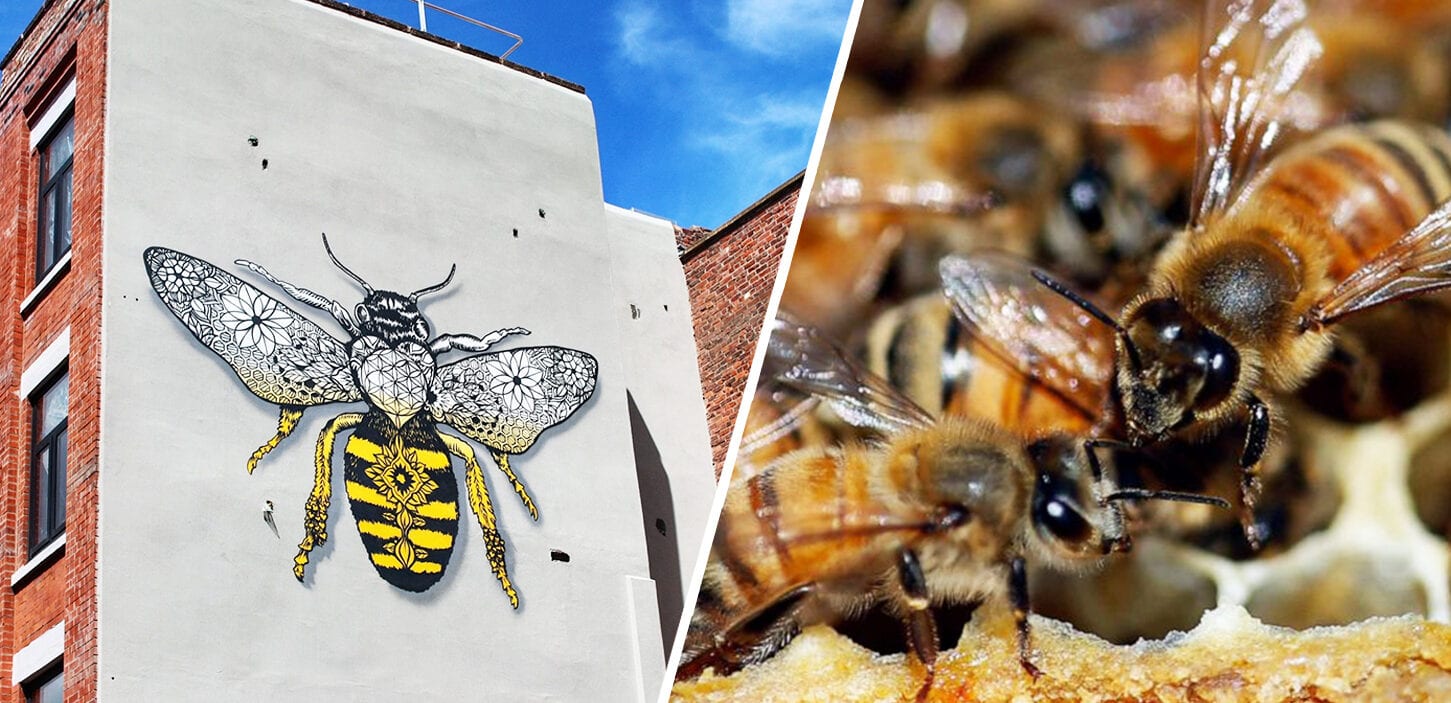
We all know that Manchester and bees go hand in hand.
Bees have been an emblem for our city for over 150 years, so it’s fair to say that we’re quite-rightly proud of our links to this hard-working insect.
It all started in 1842 when, as part of a traditional Victorian branding exercise, the early city fathers had to decide on a coat of arms that would tell the world who Manchester was, so they settled upon including a globe with seven worker bees in to show how hard Mancunians worked, and then traded it across the seven seas.
The Manchester bee was born of industry, and the city’s people have fought to make this place thrive.
While there is said to be over 250 species of ‘solitary bee’ buzzing around in Britain, Manchester’s worker bee reflects the city as a hive of activity, and represents a sense of unity at times when it’s needed most.
ADVERTISEMENT
Mancunians are pretty fond of our bees, which is why when it was announced last month that the UK government had bowed to pressure from the National Farmers Union and agreed to authorise the use of the highly-damaging neonicotinoid thiamethoxam – also known as bee-killing pesticides – for the treatment of sugar beet seed in 2021, it got many up in arms.
Prior to this decision, bee-killing neonicotinoids had been banned across Europe since 2013.
ADVERTISEMENT
Environment Secretary George Eustice made the decision to authorise the use of the neonicotinoids in response to the potential danger posed from beet yellows virus, but this was despite a similar application being refused in 2018 by the UK Expert Committee on Pesticides due to “unacceptable environmental risks”.
In 2018, the UK government supported restrictions on the neonicotinoid pesticides across the European Union, due to the very clear harm that they were causing to bees and other wildlife, with the then-Environment Secretary, Michael Gove, promising that the government would maintain these restrictions, unless the scientific evidence changed.
But the evidence has not changed, and this has lead to many campaigners speaking up and taking action.
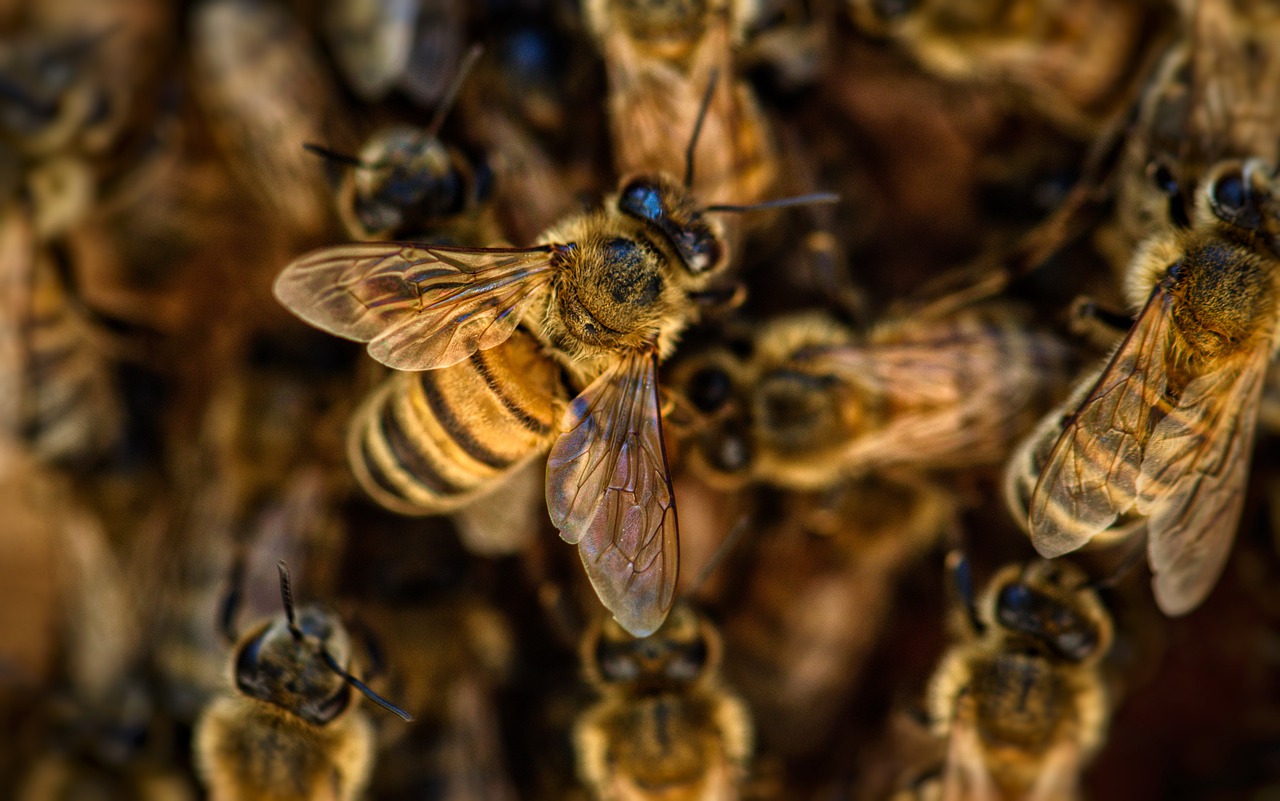
The Wildlife Trusts have spoken out against the approval, saying: “The devastating impact this group of pesticides is having on our wildlife has increased, and hardly a month goes by without yet more evidence of the wider ecological crisis”.
Joan Edwards – Director of Public Affairs at The Wildlife Trusts – also personally added that: “The Secretary of State’s decision to authorise the use of an environmentally devastating chemical to increase production of a crop with no nutritional value is madness… [and] the UK Government cannot claim to be a ‘world-leader’ on protecting and restoring nature, whilst supporting the use of these damaging pesticides.”
Academic and author, Professor Dave Goulson, has warned that one teaspoon of neonic is enough to kill 1.25 billion honeybees, which is equivalent to four lorryloads.
And Greenpeace UK has branded the decision as “posing a lethal threat to bee populations”.
The latter of the those parties has taken it once step further though – and this is where Mancunians can step in to help save the insects that mean so much to our city.
ADVERTISEMENT
The UK arm of global non-governmental environmental organisation Greenpeace – who’s aim is to “defend the natural world, and stand for a green and peaceful future” – has launched a petition to urge Environment Secretary George Eustice to reverse this decision.
The government has given the green light for bee-killing pesticides to be used in the UK.
George Eustice has the power to change all of this.
The petition description reads: “Bees are essential for our survival.
“They pollinate much of what we eat and play a critical role in sustaining ecosystems around the world, but the last decade has been devastating for insect populations, and bees have been hit hard – with populations shrinking by a third in the UK.
“Bee-killing neonicotinoids have been banned across Europe since 2013, but the UK government has just approved these deadly chemicals for emergency use, posing a lethal threat to bee populations.”
It continues: “George Eustice has the power to change all of this.”
ADVERTISEMENT
“As Environment Minister, he can show he’s on the side of nature by enforcing a total ban on bee-harming pesticides. He’s approved this emergency use of a deadly pesticide, but we need to remind him that we’re in the middle of a climate and nature emergency [so] if lots of people sign this petition, we can pile pressure on the government to quickly reverse its decision and keep bee-killing pesticides away from our environment”.
The organisation is fighting to “enforce a total ban on bee-killing pesticides”, and is therefore encouraging both Mancunians and people all across the UK to “get the Environment Minister to act fast” with their signatures.
New survey reveals Britain’s ULTIMATE Christmas dinner combo – including ‘surprising’ sides
Emily Sergeant
A new survey of the British public has revealed what our ultimate Christmas dinner combination is, including some very surprising sides.
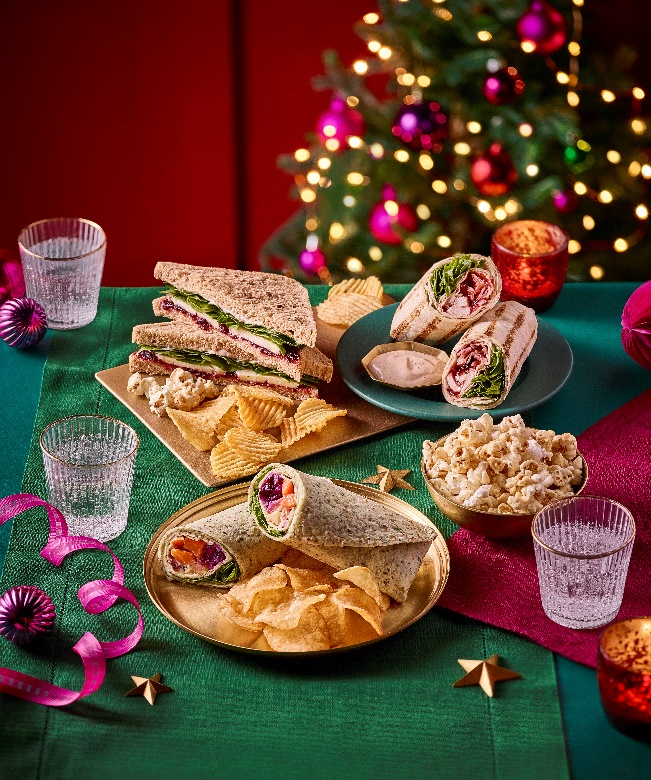
With December now well underway and the festive feasting season already thriving, it won’t be long until the big day is here and lots of Brits sit down to tuck into the heartiest meal they’ll likely have all year – their Christmas dinner, of course.
But do we all like to eat the same things? Apparently not.
You may remember that a survey conducted a couple of years back found that a good chunk of Brits would prefer to eat a curry over a traditional Christmas dinner, but now, a big new survey by YouGov has revealed what the nation’s ultimate Christmas dinner combination would be in the year 2025 – all the way from mains, to sides, to dessert.
A new survey has revealed Britain’s ultimate Christmas dinner combo / Credit: PickPic | Pxhere
When it comes to mains, it’s no surprise (or maybe it is?) that turkey still rules the roost at the Christmas dinner table, with 57% of Brits having it as part of their main meal.
On the other hand though, chicken or beef are not uncommon, with just under a quarter (24%) having either as part of their Christmas dinner, while one in seven(15%) tuck into some Christmas ham, and 10% of festive dinner tables feature other joints of pork.
Vegetarian or vegan alternatives, such as the ever-popular nut roasts, were found to feature on the Christmas dinner table for 13% of Brits.
When it comes to sides, it really is no surprise this time that roast potatoes and gravy take the crown, with around eight in 10 Brits (79-81%) accompanying their roasts with the duo.
Everything from mains, to sides, to desserts are on the menu / Credit: Realmac Software (via Unsplash)
Carrots will be on the table at 76% of Christmas dinners, while just over two thirds (70%) will feature stuffing, pigs in blankets, or Brussels sprouts, 62% typically have parsnips, and half (49%) add Yorkshire puddings to their plate.
Roughly four in 10 (40-42%) include cranberry sauce or broccoli, and 51% of us lot in the North will include mashed potatoes in the mix too.
Surprisingly, 16% add bread sauce to their plate, and 5% even opt for potato dauphinoise.
Ready to chat sweet treats? When it comes to dessert to finish things off, traditional classics like Christmas pudding (41%) and mince pies (31%) come out on top, but a little lower down the list you’ll also find trifle (18%), sticky toffee pudding (9%), and even stollen (5%).
On the flip side though, the survey also found that a traditional roast dinner doesn’t feature in everyone’s festive seasons, with 7% of Brits saying they have something else as their main meal on Christmas Day.
Featured Image – Nicole Michalou (via Pexels)
Trending
The nominees for the Critics’ Choice award at the 2026 BRITs in Manchester have been revealed
Danny Jones
With the upcoming BRITs ceremony coming to Manchester, we’re more all over the nominations than ever, especially now that the Critics’ Choice nominees for 2026 have been confirmed.
2023 was the annual Chanel ‘Metiers D’Art’ show, 2024 was the MTV EMAs, and next summer will see the BRITs; gosh, Manchester really is in vogue, isn’t it?
Commenting on the nomination, he told the BRITs: “Ya beauty! Tapadh leibh [‘thank you’ in Gaelic] for recognising my work for this award, you legends! Even though I’m Scottish and Irish before I’m British, I appreciate the BRITs critics for this recognition.
“I really care about and believe in this music, and it makes my world brighter every time it reaches someone else. Hopefully, this nomination means some more beautiful people might find something in this wee album. ‘Mon the gays!”
Rose Gray
Next up in the nods is London’s Rose Gray – a solo star who has developed a cult following thanks to songs like ‘ATTENTION!’, ‘Wet & Wild’, ‘Angel of Satisfaction’ and more.
Also the long-time partner and childhood sweetheart of Babygirl, Iron Claw and The King’s Man actor, Harris Dickinson, Gray has been riding a particular wave of popularity over the past year or so, especially after the release of her A Little Louder, Please (Deluxe) double album this past October.
She said in a statement: “I’m so excited for this nomination! This moment feels like a special reminder of how far this journey has carried me and what a crazy year it’s been. One year ago, I was manifesting so hard for my album to travel, to find its people, to really get its light. And it did. Releasing this record has genuinely changed my life…”
Lastly, in at number three is the 20-year-old singer-songwriter, Sienna Spiro, whose soulful voice sounds like one with much more life experience and years of emotion under its belt; it’s no wonder that she’s resonated with multiple generations, let alone been recognised by the panel.
With big theatrical ballads like ‘Die On This Hill’, ‘You Stole The Show’, as well as heavily-streamed songs like ‘MAYBE.’, ‘BACK TO BLONDE’ and more in her impressive and fast-growing discography, we know she’ll go far even if she doesn’t win – you can bank on that.
She added: “So beyond honoured and grateful to be nominated for this year’s Critics’ Choice BRIT Award! To think I started releasing music last year, I would never have expected this at all. Thank you so much!”
Having looked again at the list of people who’ve been both shortlisted and those who have gone on to win it, trust us, you’ll want to be paying attention to this one…
For context:
Past BRITs Critics’ Choice / Rising Star winners and nominees
2008 – Adele (Duffy, Foals)
2009 – Florence + The Machine (Little Boots, White Lies)
2010 – Ellie Goulding (Delphic, Marina and the Diamonds)
2011 – Jessie J (James Blake, The Vaccines)
2012 – Emeli Sandé (Michael Kiwanuka, Maverick Sabre)
So yeah, it’s fair to say that anyone even in the running for this accolade tends to go on to do even more bigger and better things than they already have.
Tickets to be at the 2026 BRIT Awards at Co-op Live in person for whoever picks up the Critics’ Choice gong, as well as all the other categories, are live now.