70 locations across the country were chosen by a team of expert judges, who considered the local high street, cultural scene, transport links, broadband speed, schools and green space.
It’s the first time that Prestwich has been included in the Sunday Times Best Places to Live list.
The Times described it as ‘Manchester’s funkiest family suburb’ and praised it for its leafy streets and parks.
The paper spoke to Jane Thomson, the DJ behind the Take Me To Church events, who told them that locals don’t like the town to be compared to Didsbury.
ADVERTISEMENT
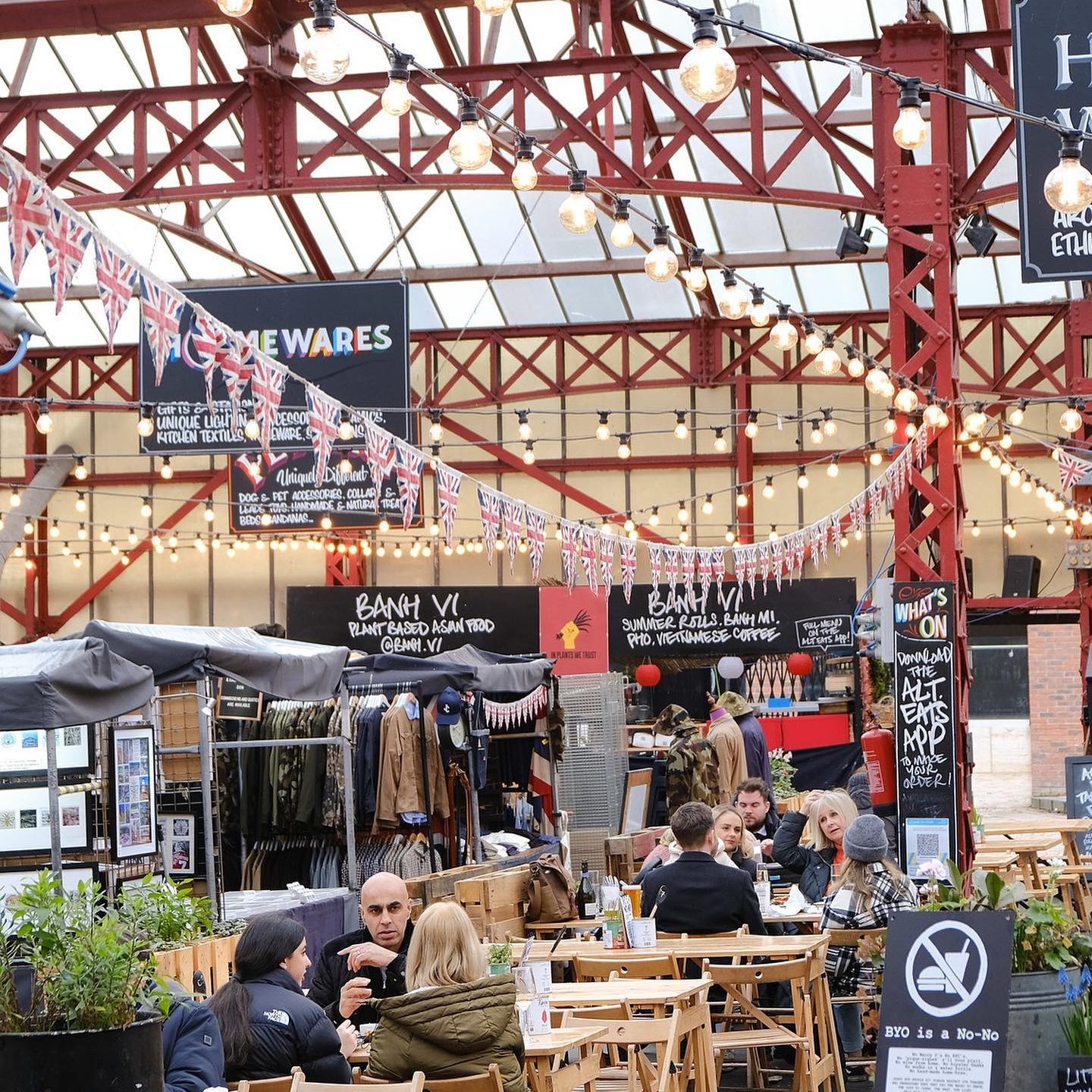
Of Altrincham, The Times was full of positivity for its ‘magical market’ and ‘enviable green spaces’.
Prestwich countryside. Credit: The Manc Group
Prestwich countryside. Credit: The Manc Group
Prestwich was praised for its parks.
The Times and Sunday Times Property Editor Helen Davies, said: “The Sunday Times Best Places to Live list is necessarily subjective. Leave it just to statistics and you will never capture the spirit of a place.
“For that, you need to visit to take into account that ‘you have to be here’ feeling. Is the pub dog-friendly, for example? Can you live car-free?
ADVERTISEMENT
“What are the schools and houses like? Is it multicultural and multigenerational, and can it offer a good way of life to lots of different sorts of people?
Credit: Facebook, Altrincham Market
“Ten years ago, when we launched the inaugural list, London’s gravitational pull was strong, the WFH revolution had not yet reached our doorstep and high streets were stacked with chains. How times have changed — and how welcome that change is.
“This year we have discovered new best places to live, from resurgent city centres in the North, rejuvenated suburbs across the country, hidden villages in the Southwest, and a commutable Scottish island.
“We hope there is something to suit everyone.”
Featured image: The Manc Group
Trending
Both Manchester United and Manchester City named as teams with the least amount of local fans
Emily Sergeant
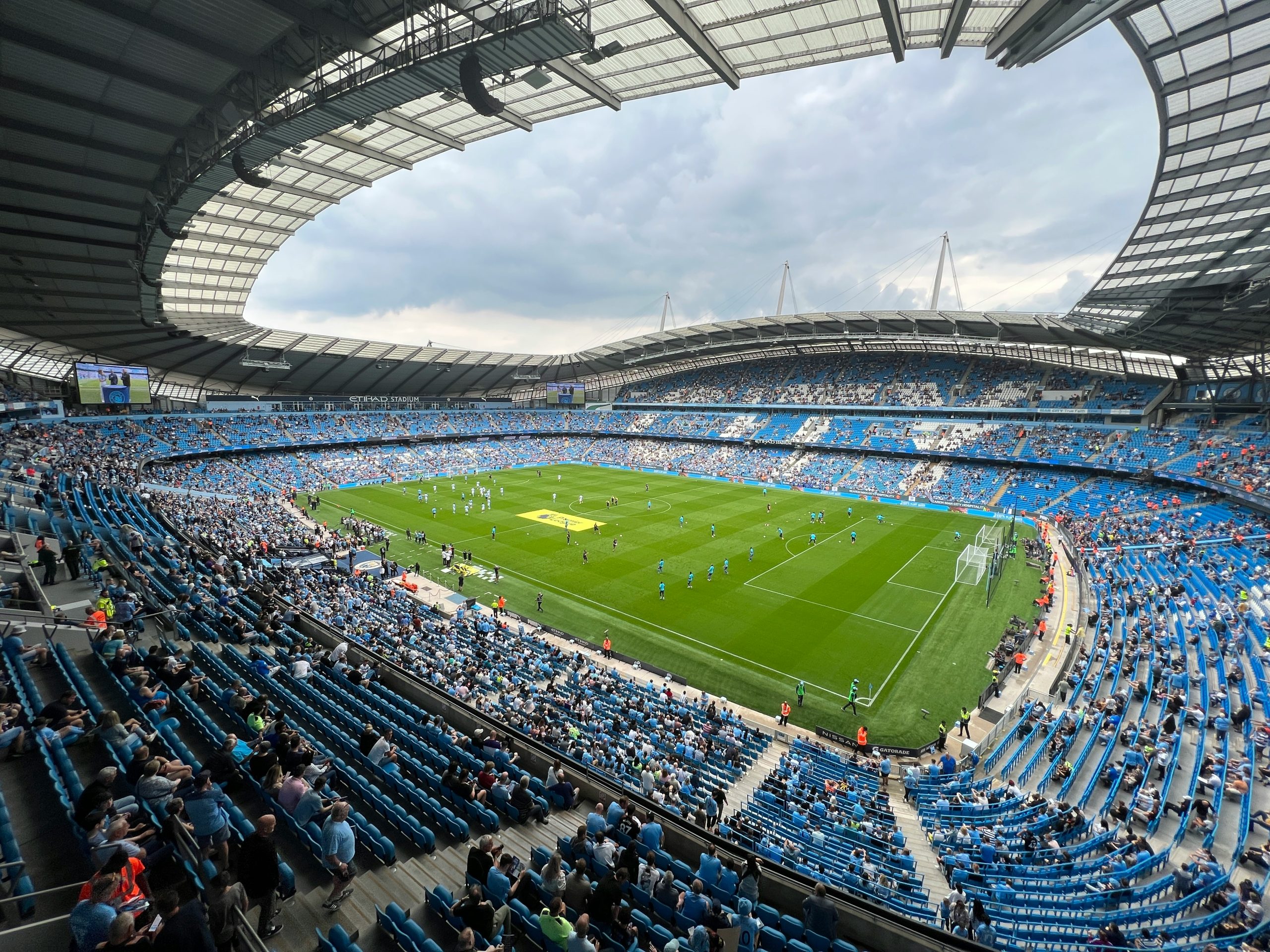
Both Manchester United and Manchester City have been identified as being teams with the least amount of local fans, according to a new survey.
We all know that supporting a local team can be seen as a mark of credibility among a certain kind of football fan, while on the flip side of that, not following a local team is often associated with being a ‘glory hunter’. But which Premier League clubs have the highest – and lowest – proportion of supporters living close to home?
Well, YouGov decided to use its profiles data to analyse the fanbases of all 20 Premier League clubs for the 2026-27 season to get the answer to this once and for all.
And it’s fair to say that it’s not looking the best for the Manchester teams.
The study found that, overall, Brighton & Hove Albion is the Premier League’s most local team – with 56% of fans based in the South East.
Sunderland (50%) and Nottingham Forest (49%) supporters are the next-most likely to live in the same region as their teams, followed by Aston Villa, Brentford, Ipswich, Leeds, Fulham, Hull, and Crystal Palace fans rounding out the top 10.
At the other end of the table, Manchester United has the second-lowest proportion of local supporters, with only a quarter based in the North West (23%), with one in six (17%) actually living in London instead.
And then as for Manchester City – who are widely considered to be the most successful team of the modern era – it has ranked fourth-bottom for local fans, as a quarter of the club’s supporters are based in the North West, with a fifth based in London (19%).
But although both United and City have found themselves towards the bottom end of the ranking, they are not the worst offenders.
That title, unfortunately, does belong to another North West team though – Liverpool.
Liverpool is the club with the lowest proportion of ‘local’ supporters, as just a fifth are based in the North West (21%) with the next highest concentration of fans can being found in London.
Featured Image – Johnny Gios (via Unsplash)
Trending
Data reveals Manchester hotel prices have ALREADY surged by 462% on rumoured Oasis tour dates
Emily Sergeant
Manchester hotel prices have apparently already surged by 462% on rumoured Oasis tour dates, some new data has revealed.
Of course, absolutely nothing is set in stone yet and we are still yet to receive any form of announcement.
But with rumours having been swirling for months now that Oasis will be touring again in 2027, and several videos shared on the band’s social media platforms this week also hinting at that, it’s been revealed that searches for ‘when are Oasis tickets going on sale?’ have soared by 5,000% in the last seven days alone.
After recent data has pointed towards soaring searches for tickets, the experts at SeatPick decided to analyse the average cost of accommodation in Manchester on the suspected concert nights in June 2027 to uncover if prices have surged along with the searches.
Data reveals that Manchester hotel prices have already surged by 462% on rumoured Oasis tour dates / Credit: The Manc Group | Simon Emmett (Press Picture)
And lo and behold, it appears that they have.
The ticketing platform has revealed that hotel prices have surged by up to 462% during Oasis’ rumoured concert nights in Manchester.
The rumoured weekend date of 19 and 20 June has experienced the most noticeable price surge – with a two-star hotel costing an average of £216 for just one overnight stay.
The data also reveals that the rumoured finale on the 27 June has just a £95 difference between two-star hotels (£200) and five-star hotels (£295).
“Our analysis uncovered an enormous markup for local accommodation on nights that Oasis is rumoured to perform in Manchester,” explained Gilad Zilberman, who is the CEO at ticket platform SeatPick.
“Being aware of these accommodation costs and additional expenses can help fans plan and avoid being caught off guard by inflated prices on concert nights.
“To find the best deals on hotels, concertgoers should scan budget chains in the city or look slightly outside of the centre in hotspots served by local bus routes or regional trains, such as Salford and Trafford.

 Daisy Jackson -
8th April 2022
Daisy Jackson -
8th April 2022