The arrival of Storm Christoph in January 2020 put Greater Manchester under its greatest threat of catastrophe for some time.
Over2,000 homes were evacuated as the region was battered with ice and snow, and water levels in the River Mersey reached their highest levels. According to the Environment Agency, the waterway was just 2cm away from disaster.
Still, if the local situation appeared perilous then, it’s hard to imagine what was running through the minds of residents in 1852 – when parts of Manchester were left submerged in water rising up to bedroom windows.
169 years ago, on February 5, the North-West fell victim to days of torrential rainfall – causing a number of rivers and streams in Manchester to burst their banks.
Peel Park, which runs right alongside the River Irwell, was completely swamped during the bout of adverse weather – plunging the green space 4-6ft underwater.
ADVERTISEMENT
The flooding was so bad that it left some residents stranded from their homes – with locals forced to create makeshift boats and float down the roads to get back to their properties instead.
Ben McGarr, in The Manchester Book of Days, writes: “Those living beyond Strangeways and Salford were forced to find alternative ways to travel home; some sailed up the flooded Great Clowes Street, Lower Broughton Road, and Hough Lane.”
ADVERTISEMENT
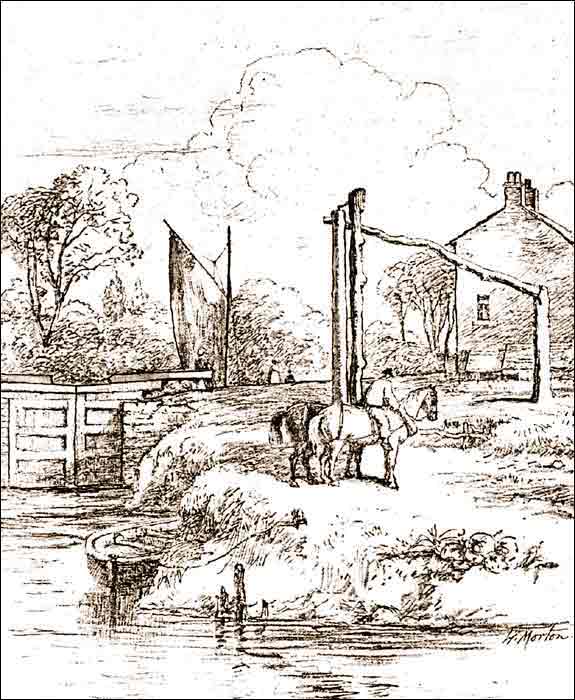
Stickings Lock on the Mersey and Irwell Navigation, c 1850 / Image: Wikipedia
The River Irk, Mersey, Goyt and Black Brook all spilled out onto surrounding areas, with data from the British Hydrological Society confirming an overflow from the River Medlock causing “flooding with some damage”.
It was some of the worst weather to befall the city and and a natural crisis the likes of which many had never seen before.
Indeed, many residents were apparently left frozen in fear by the sight of water gushing out onto the grasslands, not knowing what to do.
ADVERTISEMENT
In Shock Cities, Harold L. Platt explains that some of the homes and farms in Broughton were 6ft below water by the evening of Feb 5, but miraculously, there were no recordings of loss of life. Whilst the residents riding boats back to their homes may not have thought it at the time, things could have actually been much worse.
On the same date, much graver consequences occurred further north in Holmfirth, Yorkshire.
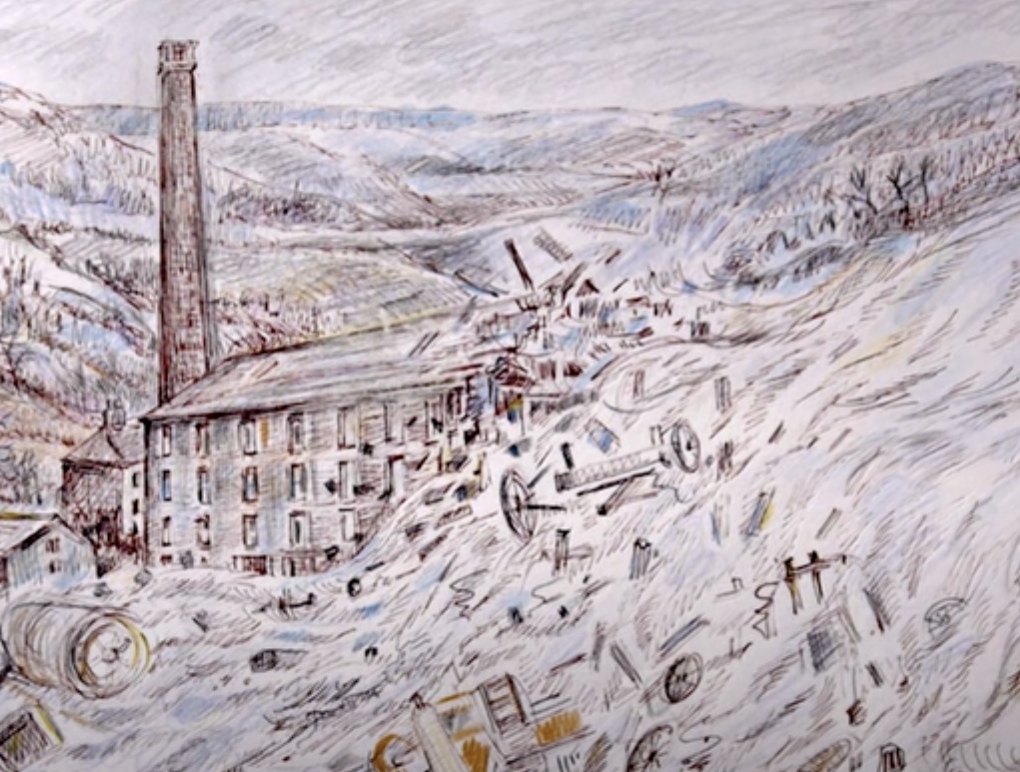
After weeks of rain, the area’s Bilberry reservoir eventually burst open on Feb 5 and released 86 million gallons of water into Holmfirth itself – decimating homes and farms and killing at least 81 people (although contemporary newspaper reports may have underestimated the total number of deaths).
The flooding was so bad that it made national headlines – appearing on front pages of newspapers beyond the north.
An inquest found poor construction work on the reservoir to be the culprit – and it still ranks to this day as one of the worst disasters to hit the north of England.
ADVERTISEMENT
Despite its relative obscurity in the modern era, the disaster received renewed attention in 2016 – when the 1852 floodings became the subject of a film titled: Twelve Pounds and Ten Shillings would have Sufficed.
The Peak District walk with amazing views, a cosy cafe, and a great pub at the end
Daisy Jackson
If you’re looking for a country walk that’s got a bit of everything – we’re talking views, lakes, history, picturesque villages and, crucially, pints – this is the one.
Step across the Greater Manchester border into High Peak, and you can take on a circular walk that’s got it all.
The walk takes in all the best bits of the English countryside, from rolling hills to proper pubs.
Park in the village of Hayfield, then head out west to join the Sett Valley Trail, which joins Hayfield and New Mills.
The trail itself is 2.5 miles and follows a former railway line – but now it’s a tree-lined trail that’s perfect for a gentle stroll, cycle or even horse ride.
You’ll pass the Birch Vale reservoir, but won’t be following the trail all the way to New Mills.
Get as far as Emma’s Sett Valley Cafe and stop for an early break – indulgent hot chocolates, great bakes, and a decent amount of brunch dishes beneath colourful festoon lighting.
Emma’s Sett Valley Cafe. Credit: The Manc Group
Once you’re fuelled, head slightly back on yourself to skirt Birch Vale Reservoir, cross the River Sett, and walk towards Sitch Lane.
The road will take you to the very edge of the Peak District ready for an uphill climb to the peak of Lantern Pike.
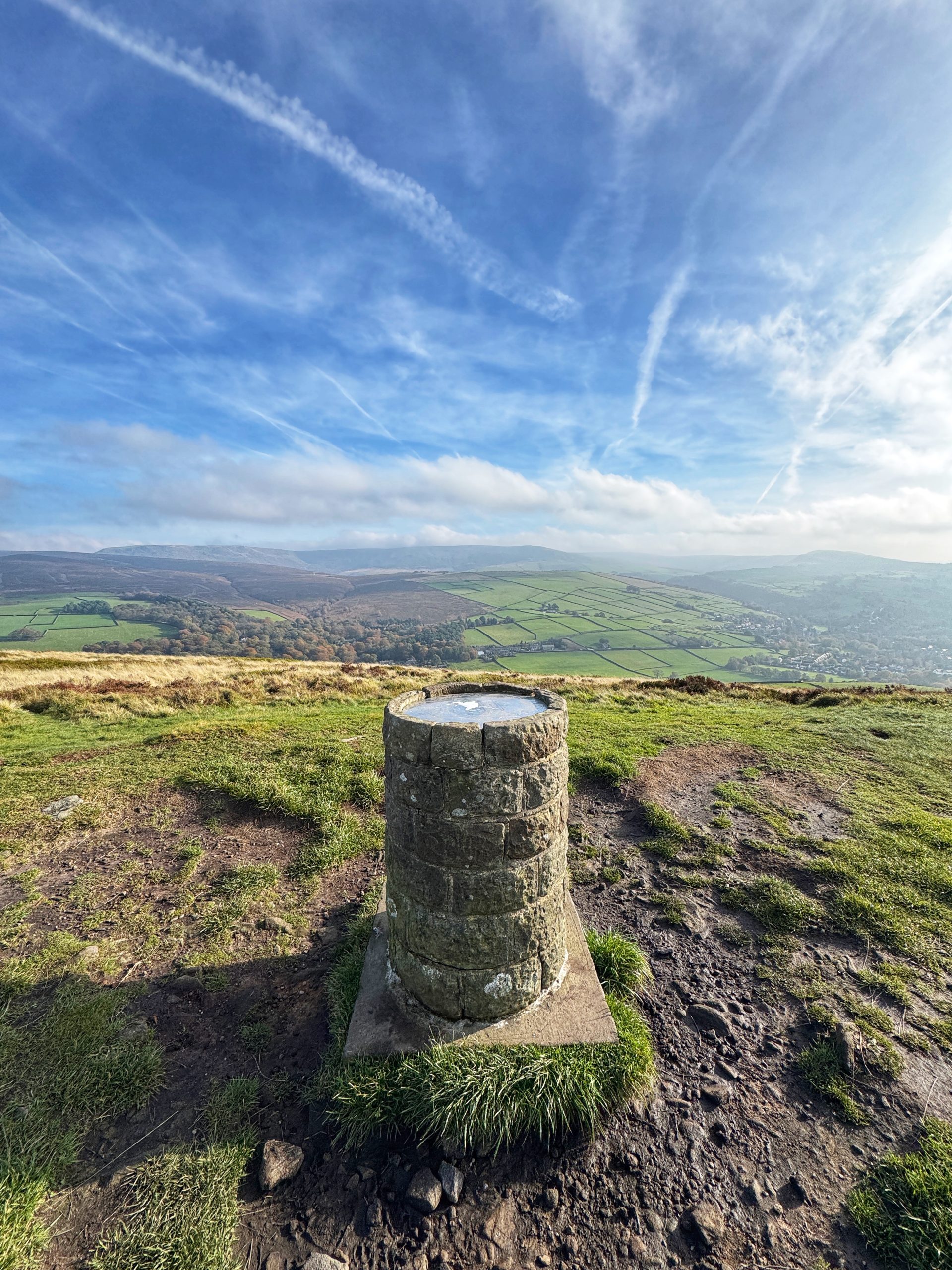
It’s not a giant by Peak District standards (373m compared to Kinder Scout’s 636m) but the views are 360 degrees – fields on all sides and the incredible Manchester skyline in the distance.
Walk straight over the summit and down the other side, walking along the edge of Hey Wood and across fields full of friendly cows, past Little Hayfield and back into the main village of Hayfield.
Views from the Sett Valley trailSummiting Lantern PikePretty views near Little Hayfield
Here you’ll find The Pack Horse, a country pub that’s gained some serious accolades in recent years.
Famed for its seasonal, locally-sourced menu, at this time of year you can expect hearty post-hike lunches like sharing pies, Manchester eggs, and incredible Sunday roasts.
Despite a top-notch menu, the pub is more than happy to welcome in customers (and dogs) who are covered in mud – as all good countryside boozers should.
Sharing pie at The Pack Horse in HayfieldThe Pack Horse in HayfieldTheir famous Manchester egg
You can see a map of the circular walking route at AllTrails HERE.
Mercury Prize 2026 review: RAYE takes home the crown as Newcastle celebrates the very best in music
Clementine Hall
One of the biggest nights in music kicked off last night as the Mercury Prize 2026 was awarded.
If there was ever a night to fall head over heels in love with British and Irish music, the 2026 Mercury Prize made a very convincing case.
Bringing together some of the country’s most exciting artists under one roof in Newcastle, this year’s ceremony was a reminder of just how much talent is packed into the current music scene.
From established legends to the names shaping what comes next, it was an absolute belter.
Images: Audio North
Held at the Newcastle Utilita Arena for the second year running, I think everybody in that room felt very lucky to be there to see firsthand who took home the coveted prize.
The shortlist brought together an impressive mix of artists, with Florence + The Machine, Olivia Dean, JADE, Suede, Pulp, Dave and Sir Paul McCartney among the big names making the lineup very star studded indeed.
Suede kicked things off with ‘Dancing With The Europeans’, bringing their unmistakable energy to the ceremony, while Pulp delivered ‘Begging For Change’ as part of the HELP(2) charity compilation.
It was a line-up that demonstrated the sheer range of music being made across the UK and Ireland, from contemporary pop to established rock and even jungle thanks to Bradford’s own Nia Archives.
And of course, there was one woman who had every reason to leave with a smile on her face.
RAYE took home the coveted Mercury Prize for THIS MUSIC MAY CONTAIN HOPE., an ambitious, genre-hopping album that blends jazz, soul, R&B and classical influences into something so fabulously unique.
Image: Audio North
Newcastle’s own Knats performance was definitely a highlight of the evening, combining slick jazz with spoken-word poetry against a projection of The Tyne Bridge.
A fitting image, and one that underlines the importance of holding such huge events in the north and highlighting the obvious talent that thrives here.
The 2026 Mercury Prize was a brilliant showcase of the country’s music at its best.
And with RAYE taking home the trophy, it’s clear there is plenty of ‘hope’ left in British music.

 The Manc -
3rd February 2021