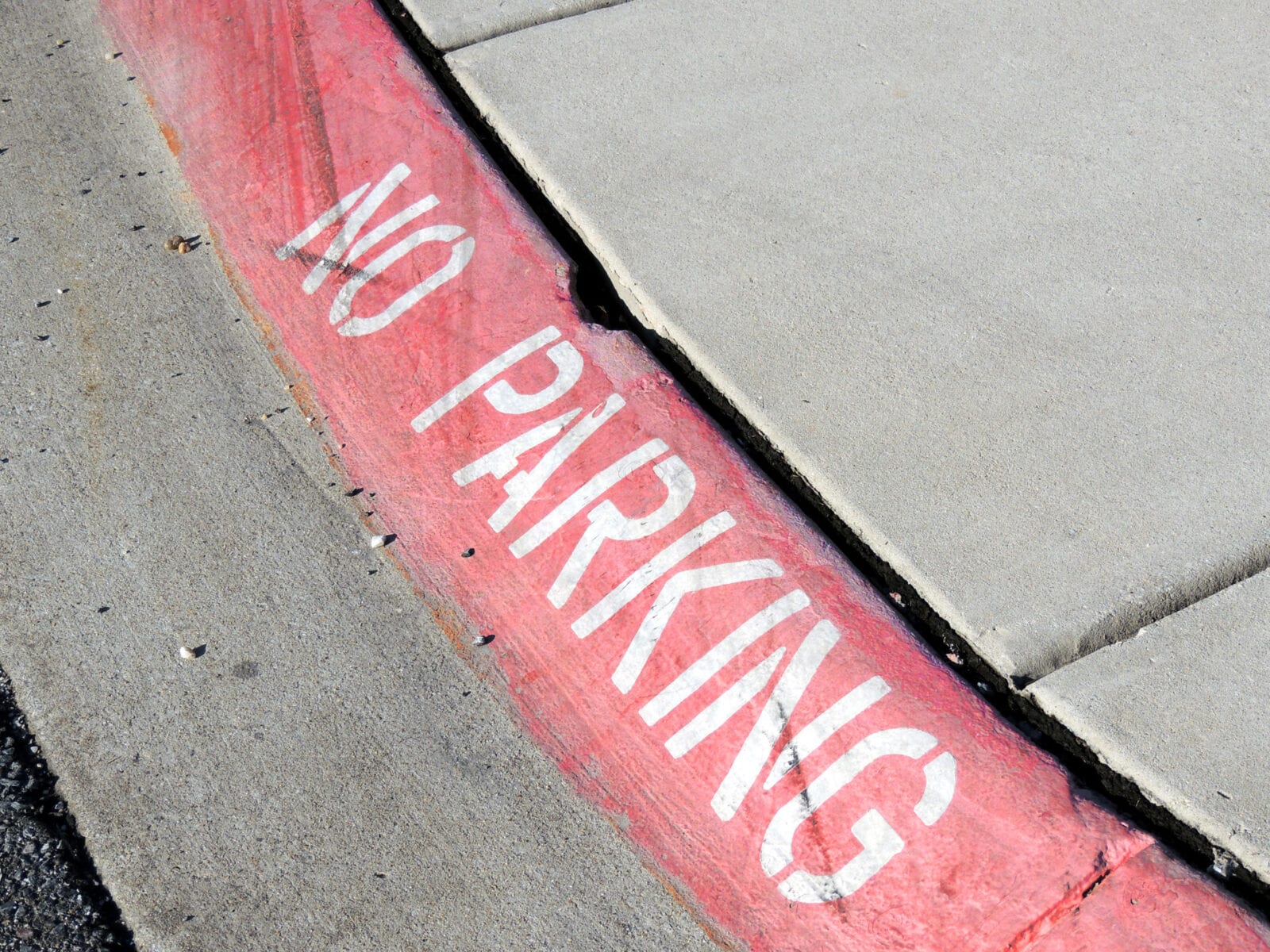
A ban on pavement parking could soon be introduced in England under new laws expected to be rolled out this year.
Drivers who fail to comply could be hit with £70 fines as a result.
In response to complaints about the issue and the increased risks it poses, this new legislation would ban antisocial parking to make pavements safer for families, and crucially, for people with disabilities and visual impairments.
Following an already-in-place ban in London – where fines range from £80 to £130, depending on the seriousness of the offence – the UK government and Department of Transport (DfT)’s consultation on whether “a change of existing pavement parking legislation should occur” introduced last year posed the idea of banning pavement parking nationwide, or awarding local councils more power to tackle the issue.
ADVERTISEMENT
The consultation proposed three options:
Improving the Traffic Regulation Order (TRO) process, under which local authorities can already prohibit pavement parking.
A legislative change to allow local authorities with civil parking enforcement powers to enforce against ‘unnecessary obstruction of the pavement’.
A legislative change to introduce a London-style pavement parking prohibition throughout England.
The public consultation period ended on 22nd November 2020, with an outcome expected imminently following an “overwhelming” response.
ADVERTISEMENT
It comes after recent research by blind and visual impairment charity Guide Dogs indicated that 32% of people with visual impairments and 48% of wheelchair users are less keen to go out on their own because of antisocial pavement parking.
PublicDomainPictures
Rule 244 of the Highway Code currently states: “You must not park partially or wholly on the pavement in London, and should not do so elsewhere unless signs permit it”, and if the rest of the UK is to follow the capital following the consultation, parking on grass verges and ramps linking private property to roads would also be prohibited too.
Mark Tongue – Director of Select Car Leasing – has said that: “The guidelines are currently quite confusing for motorists”.
ADVERTISEMENT
The motoring company conducted a report, which discovered that local authorities would have the power to dish out £70 fines if a vehicle was considered an obstruction, even if it was parked outside the driver’s house.
“A pavement parking ban is 100% needed nationwide [as] anything that puts pedestrians at an increased risk requires action,” Tongue said.
“However, the information given so far is slightly confusing for drivers.
“At the moment, there’s no clear guidelines for those who park on the pavement due to having no room on their own drive [and] most households have more than one car, so it will be interesting to see where motorists are expected to park if not on the pavement outside their homes.
“Clear guidance is required for drivers so they know the correct location to park in order to avoid a fine”.
Featured Image – IPTC / Ronald Hudson
News
Firefighters to now wear cameras after Manchester Arena Inquiry recommendations
Emily Sergeant
Firefighters in Greater Manchester are to now start using body-worn cameras following recommendations from the Manchester Arena Inquiry.
Greater Manchester Fire and Rescue Service (GMFRS) has says the Inquiry ‘highlighted the importance’ of capturing clear information and recording decision-making during major incidents, particularly when multiple emergency services are required to respond to ‘complex and fast-moving’ situations, as was, of course, the case with the Manchester Arena attack back in 2017.
The introduction of body-worn cameras will support this by providing a real-time record of what crews see, hear, and communicate while attending incidents.
A total of 233 cameras will be rolled out across the service, giving firefighters the ability to record high-definition video and audio while attending incidents.
We’re rolling out body‑worn video cameras across our Service following Manchester Arena Inquiry recommendations.
The technology will support operational learning, transparency and real‑time decision‑making – helping our firefighters and officers provide the best possible… pic.twitter.com/aoHezIXWEv
— Greater Manchester Fire and Rescue Service (@manchesterfire) April 11, 2026
The devices can also livestream footage in real time, so that senior officers can view incidents as they unfold and provide additional support when it’s needed most.
Frontline officers who attend incidents will be the first to receive the cameras, followed by prevention and protection teams, and then the incident command academy as the rollout continues.
Following a successful pilot trial back in May 2025, when the cameras were tested in real incident conditions, the cameras will now be used at a wide range of incidents – from house fires and road traffic collisions, to larger and more complex emergencies.
Firefighters to now wear cameras after Manchester Arena Inquiry recommendations / Credit: GMFRS
Footage will help crews to review how incidents were handled, improve training, and strengthen safety for both firefighters and the public.
“Introducing body worn cameras is a significant step forward for our service,” commented Deputy Chief Fire Officer, Carlos Meakin. “It’s about giving firefighters the tools they need to work safely and effectively at complex or fast-moving incidents, while also helping to protect our crews by providing a clear record of the challenges they face on the frontline.
“The ability to livestream footage and review it afterwards will strengthen how we support crews on the ground, improve training, and enhance how we respond to major emergencies.
“This investment reflects our commitment to learning from the Manchester Arena Inquiry and continuing to strengthen how we respond to incidents across Greater Manchester.”
Featured Image – GMFRS
News
Endangered baby giant otter triplets have been born at Chester Zoo
Emily Sergeant
This calls for celebration, as Chester Zoo has welcomed baby giant otter triplets in what is huge news for the endangered species.
It’s been a really exciting start to 2026 at Chester Zoo, as it was only a couple of days ago we got to see Dotty the baby Kirk’s dik-dik – which is one of the smallest antelopes in the world – take her first steps, and now it’s time to say hello to three new arrivals in the form of giant otter pups.
The trio are the first of their kind to be born at the zoo in several years, and arrive as part of an international conservation effort to boost numbers.
Arriving to first-time parents Bonita and Manu, up until now, the three giant otter pups have remained tucked away in their cosy holt with mum feeding them regularly until they more than tripled in size – but now, they’ve officially entered into the big wide world.
Following their first health check-up with the zoo’s veterinary team, conservationists have revealed the sex of the pups to be two males and a female
Their names are yet to be chosen, so keep your eyes peeled.
Endangered baby giant otter triplets have been born at Chester Zoo / Credit: Chester Zoo
Chester Zoo has described this triple birth as a ‘rare boost’ for one of the world’s most endangered species, as there are thought to be fewer than 5,000 giant otters surviving in the wild right now.
Giant otters are the world’s largest species of otter, with a powerful build, sharp teeth, and a highly social nature. As one of the apex predators in the waterways where they live, they play a crucial role in maintaining the health and balance of freshwater ecosystems.
But sadly, experts say the species faces ‘an uncertain future’, with their decline largely driven by deforestation, water pollution, and illegal hunting, leading them to be listed as endangered by the International Union for the Conservation of Nature (IUCN), meaning they face a very-high risk of extinction without urgent conservation action.
“The arrival of these three giant otter pups is a hugely special moment and marks the first time the species has been born here in seven years,” explained Rachael Boatwright, who is the Assistant Team Manager of carnivores at Chester Zoo.
“The pups recently had their very first health check-up at eight weeks old, where they were weighed and had their heart, teeth and overall condition assessed by the zoo’s vets. We’re delighted to confirm that all three are healthy and thriving – and that we have two males and one female pup.
“At eight weeks old, the pups will now start to venture outside alongside parents Bonita and Manu, who will start introducing them to the water and all of the essential skills they’ll need as they grow.”