The UK government is said to be seeking advice on whether to make the possession of laughing gas a criminal offence.
Following what has been described as a “concerning” rise in the use of nitrous oxide, the Home Office has asked the independent Advisory Council on the Misuse of Drugs (ACMD) to analyse the harm caused by the substance.
According to the Crime Survey, nitrous oxide – also known as laughing gas, “hippie crack” balloons, and nos – is now the second most-used drug among 16 to 24-year-olds in the UK – with more than half a million people in this age group in England and Wales using the drug in 2019-2020.
Its popularity is believed to be due to the fact that it is cheap and easy to get hold of.
A report by experts from the British Medical Journal (BMJ) released last June had revealed that there was “a visible mark of the increasing incidence of nitrous oxide (N2O) misuse” since the first COVID-19 lockdown began.
ADVERTISEMENT
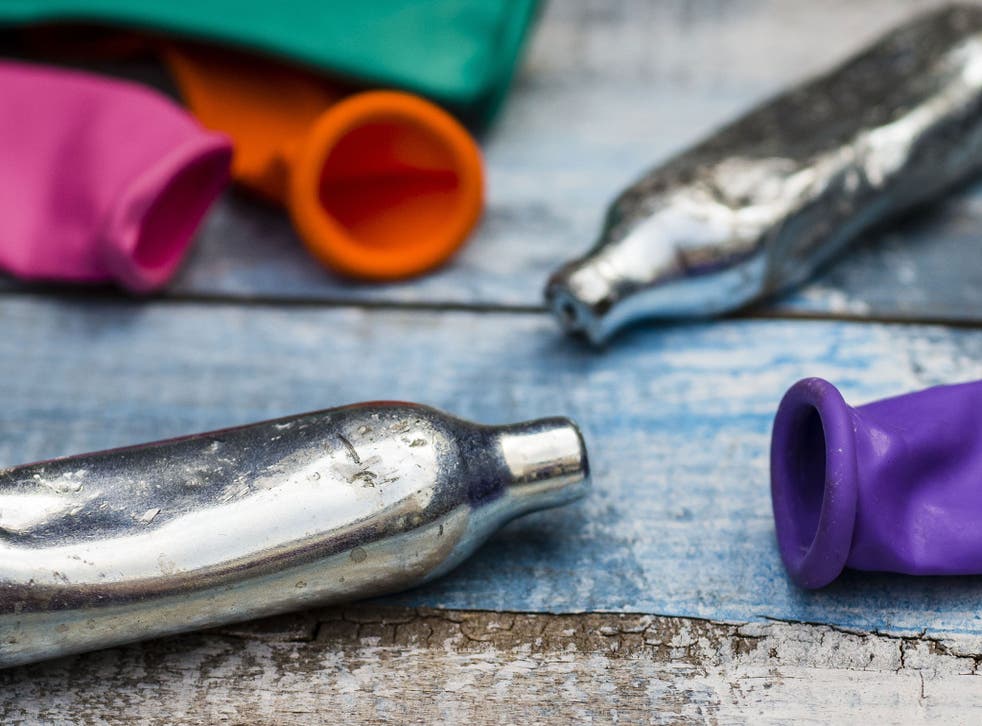
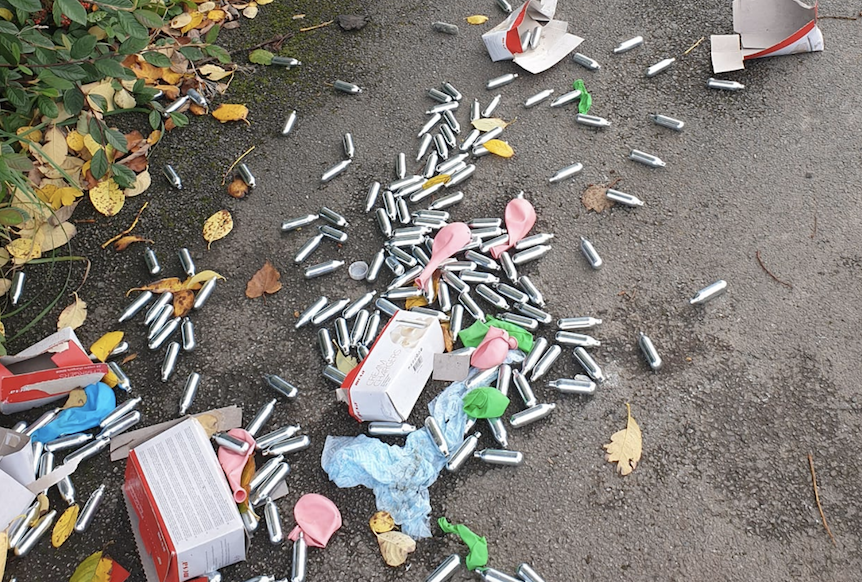
As defined by FRANK, nitrous oxide is “a colourless gas most commonly found in pressurised metal canisters [which] you may have seen lying around in streets outside bars and nightclubs”.
It is often consumed by “transferring the gas into a container (usually a balloon), then inhaling from the balloon” and this is because “inhaling nitrous oxide directly from the canister is very dangerous [as] the gas is under such high pressure, which can cause a spasm of the throat muscle and stop a person breathing.”
ADVERTISEMENT
Laughing gas is now the second most-used drug among 16 to 24-year-olds in the UK / Credit: Drugwise
Nitrous oxide slows down brain and body responses and the effects of the drug is known to vary depending on how much has been inhaled.
Negative side effects of the inhalation of nitrous oxide include severe headaches, dizziness, inability to think straight, and short-lived, but intense feelings of paranoia. Regular use can stop you forming white blood cells properly and heavy regular use can result in deficiency of vitamin B12. Severe B12 deficiency can lead to serious nerve damage, causing tingling and numbness in the fingers and toes – which can be very painful and make walking difficult.
More serious side effects range from the risk of falling unconscious and/or suffocating from the lack of oxygen, which can and has lead to death, and according to the Office for National Statistics, there were 36 deaths in Britain associated with laughing gas between 2001 and 2016.
ADVERTISEMENT
While the sale of nitrous oxide is illegal, it is not a crime to possess the drug at present, and the government believes this could also be a “significant factor” in its increasing use in recent years, alongside its prevalence.
While the sale of nitrous oxide is illegal, it is not a crime to possess the drug at present / Credit: Facebook
Home Secretary Priti Patel said government ministers “stand ready to take action” if the ACMD recommends further restrictions on the drug.
Nitrous oxide was last reviewed by the ACMD six years ago.
The body concluded at the time that it did not warrant control under the Misuse of Drugs Act 1971, but the ACMD’s new review could recommend more education on the substance for young people, or tougher punishments for those who supply it.
“We are determined to do all we can to address this issue and protect the futures of our children and young people,” Priti Patel concluded.
Featured Image – Geoff Davies
News
Six GMP officers dismissed following racial discrimination allegations
Emily Sergeant
A number of police officers have been dismissed following an internal investigation, Greater Manchester Police (GMP) has confirmed.
Following the internal investigation into alleged racial discrimination against an officer on the Bury district – which was launched by GMP‘s Professional Standards Directorate in July 2024 – six officers and two former officers were found to have committed gross misconduct, and a ninth officer was found to have committed misconduct.
The investigation came after a report was made that an officer had been subjected to ‘racist behaviour’ by colleagues in December 2023.
The panel heard how PC Y – who has African heritage and has been granted anonymity – made a complaint after her accent was mimicked by a group of officers. She was also compared to a suspect with similar skin colour, and one of the dismissed PCs made a derogatory comment about her hair.
PC Y was supported and kept updated throughout the investigation, GMP assured, as well as providing evidence at the hearing.
The misconduct hearing lasted just over two weeks, with the panel concluding that the officers breached the Standards of Professional Behaviour relating to Equality and Diversity, Authority, Respect, and Courtesy.
The six officers who have been dismissed are PC Demi Green, PC Heena Rani, PC Lucy Granby, PC Matthew Barlow, PC Matthew Hill, and PC Mohammed Abid, while the former officers who were found to have committed gross misconduct are PC Jake Holt, and former Officer A – who has been granted anonymity.
The panel also found that Sergeant Adrian Bick’s actions amounted to misconduct, as there was no breach of the standard of equality and diversity.
As a result, the six serving officers have been sacked without notice, while the two former officers would have been dismissed had they not already left the force, and Sergeant Bick was issued a written warning.
“No officer or member of staff should have to come to work and experience discriminatory behaviour from the people they serve alongside,” declared Deputy Chief Constable, Terry Woods.
“Everyone has the right to feel respected, valued and part of the same team with a shared commitment to serving our communities and keeping people safe.”
‘There must be a way’ – Andy Burnham vows to save Jodrell Bank after funding cuts
Emily Sergeant
Prime Minister Andy Burnham has vowed to save the UK’s largest telescope at Jodrell Bank.
In case you hadn’t heard, back in July, theUK Research and Innovation (UKRI) announced that the Jodrell Bank Observatory – which is home to the Lovell Telescope – will not be prioritised for further funding after its current agreement ends in March 2028, despite the telescope standing in its Cheshire home since 1957.
The UKRI said the decision not to continue funding priority was ‘the result of a comprehensive, evidence-based prioritisation process’.
Since the news broke, however, it has been a topic of national uproar and discussion as to how to ensure its legacy lives on.
A proud part of the University of Manchester (UoM), Jodrell Bank had a pioneering role in the development of radio astronomy, and has evidence from its emergence as a new science in the 1940s through to the present day, making it an outstanding part of scientific heritage.
The Prime Minister was pressed to address concerns surrounding the future of the site by Sarah Russell, Labour MP for Congleton, in the House of Commons yesterday (1 September 2026).
Mr Burnham replied: “Every one of my generation went on a school trip to Jodrell Bank, and there is no way that we can see its demise – it won’t happen under my Government.
“I know there’s changes that have been made in relation to research funding, but Jodrell Bank is a heritage asset for the country, as well as a research asset.

 The Manc -
3rd September 2021
The Manc -
3rd September 2021