Manchester’s nightlife scene is world-famous for good reason – we’re not known as the 24 hour party people for nothing.
As the years have gone on, our city’s nightclub industry has evolved and changed beyond recognition.
The world-famous Hacienda days are long gone, but now Manchester is famed for huge clubnights like Warehouse Project and its under-the-radar events at venues like Hidden and The White Hotel.
We asked our readers which venues they miss dancing the night away in.
ADVERTISEMENT
Here’s what you had to say.
Paradise Factory
25 years ago I walked through these doors and into my first gay club – Paradise Factory. I was excited, terrified, turned on and overwhelmed, and this mix of emotions inspired a key scene in my novel #TheMadonnaOfBolton. It’s great to be back + once again I’m feeling overwhelmed. pic.twitter.com/PuRSiz4r1W
On the corner of Princess Street and Charles Street stands a venue that’s been an integral part of Manchester’s music scene for decades.
ADVERTISEMENT
Initially the headquarters of Factory Records, in the 90s it became the Paradise Factory, a lively gay club.
Alexier Mayes said the Paradise Factory was the ‘best nightclub ever’, and dozens have agreed with her.
Cedna Jo said: “No other club like it.”
ADVERTISEMENT
Maria Telford added: “Indeed! Where else could you bump into the iconic Sue Pollard and Paul Nicholls together in the toilets?”
The Boardwalk
The Boardwalk Climbed the steep narrow stairs in there a lot in the early/mid 90s to see bands play. First visit was in Jan 1990 to see an outfit, The Charlatans who were about to release a debut single. I liked what I saw. They quickly became quite successful
The Boardwalk was a mecca for fans of alternative music, and an iconic live music venue in the 1980s and 1990s.
Its stage was graced by the likes of Oasis, The Stone Roses, Happy Mondays, James and The Verve.
These days it’s an office block, but back then the action took place well outside the hours of 9-5.
Jim Covert-lly remembers it as a ‘great live venue and indie joint’.
ADVERTISEMENT
He wrote: “Bit more effort to reach than its rivals and felt like more for those there for the good tunes than to just get battered.”
Janine replied: “I worked there and loved Molotov pop. Great night which luckily moved to the music box.”
Marvin Deans also posted: “Yellow on a Friday night was my first experience of clubbing regularly. When we were allowed in of course. Got turned away a few times.BUT also saw my favourite ever concert there…Maxwell ‘96 and cost £7”
Brahms & Liszt
The old site of Brahms & Lizst on Brown Street, Manchester. Credit: Google Maps
A lot of Mancs seem to remember the trip to the toilets in Brahms & Liszt the most, describing it as the ‘staircase of doom’.
But the venue was also a popular bar in the 1980s, named after Cockney rhyming slang rather than the classical composers.
ADVERTISEMENT
In the space that is now Habas, and was previously Panama Hatties, The Manc readers remember some ‘strangely good nights’.
Julie wrote: “Oh the hangovers after the beer kellar… But brahms and list was a little less crowded, so it gets my vote”
Jilli added: “Brahms & Liszt with that very dodgy spiral staircase to the loos”
DeVille’s
They just don’t make nightclubs like this anymore.
DeVille’s and its neighbouring bar Lazy Lil’s were a staple of the Madchester days, but at the heart of the bar was something a bit more unusual.
ADVERTISEMENT
The nightlife spot was home to an actual bucking bronco that would fling revellers around regardless of alcohol consumption.
Mike King said: “Devilles with the bucking bronco – great fun when you were hammered”
Damian added: “Devilles, more for the people than the club”
Sankeys is one of those nightclubs that everyone remembers, even if you never stepped foot inside.
The super club was in Ancoats, before the area was filled with the apartments and restaurants.
ADVERTISEMENT
Over the years of openings and closures, the venue expanded across several floors of Beehive Mill and added features like a beach (with 50 tonnes of sand), a glowing ceiling, and a non-stop roster of huge names in the world of dance, techno and house music.
Carrie Caffrey said: “Water dripping off the ceiling, bodies tightly packed, bass thumping in your chest and no mobile phones sucking the joy out of living in the moment. Excellent memories”
Will added: “Hadmy best nights in that place! Absolutely rocking”
Michael remembered: “Sankeys – nothing compared to those resident Kaluki parties around 2010 when the basement was only half full but full of absolutely sound heads and not a single d*ck head in sight. Unreal times. We didn’t know how good we had it.”
Adam wrote: “Sankys with resident DJ Avicii RIP! The sad thing is, there really isn’t another superclub in Manchester anymore?!”
ADVERTISEMENT
Chris posted: “Met my beautiful GF in Sankey’s in 1996, 26 years later we’re still joined at hip!!!! Forever old house cats!!”
The Hacienda
The Hacienda was arguably Manchester’s most famous nightclub of all time
This one’s pretty obvious – even 25 years after the Hacienda shut down, its traces linger in the city.
The venue was the cornerstone of the Madchester era and credited with changing the face of rave forever.
Lee Berry commented: “The Hacienda was the mecca of house music in Manchester and i had some amazing nights there.”
Nicola said: “The hac, hands down, but I expected most answers wld be, but lots of others named! Just shows how fantastic Manchesters club scene was!”
ADVERTISEMENT
Rhys wrote: “we use start at the Athenaeum than workaway along all the bars up to the hacienda … cheerleaders before before the hacienda and then big jugs of beer. Thursday nights were good”
Caravan added: “Hacienda, only went a handful of times but was banging everytime.”
Jilly’s Rockworld
Jilly’s Rockworld shut down in 2010. Credit: Google Maps
Jilly’s Rockworld was one of Manchester’s best nightclubs, a haven for indie rock and alternative music.
The legendary Oxford Road venue shut down for good in 2010, but Mancs will never forget the friendly, welcoming vibe of the venue.
Ursula Tucker wrote: “Jillys. Used to love it. Always felt safe in both and had a great night out.”
ADVERTISEMENT
Natalie Power said: “Easily Jillys rockworld! Such an awesome place filled with amazing people, it was the heart of the rock/alternative culture in Manchester, so many good memories from there! Miss it nowhere else compares”
Gavin added: “Jillie’s rock world by far. Everyone was respectful of each other, and in general people would be more than happy to help each other. It wasn’t just a club, it was a community hub.”
Featured image: Flickr
Audio
The Strokes at Co-op Live, Manchester – stage times, setlist, tickets and more
Lydia Mastrolonardo
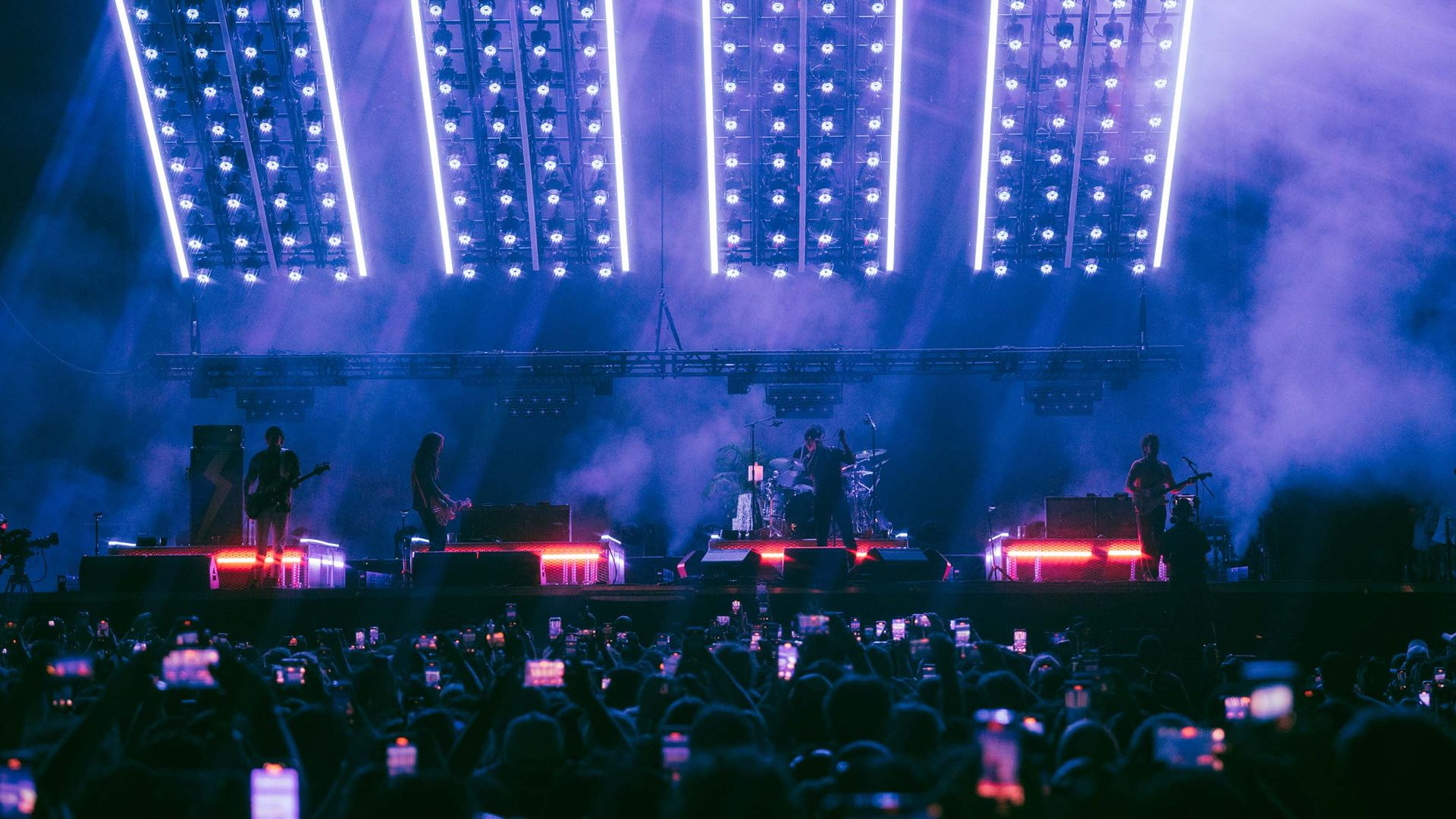
This Autumn, everybody’s favourite New York-based indie band The Strokes have been treating fans across the globe to their energetic live shows – and Monday is finally Manchester’s turn.
That’s right – one of the most iconic indie rock bands of the era are set to bring their Reality Awaits tour to the Co-op Live for the first ever time, with their decade-spanning catalogue of indie anthems purely for our listening pleasure.
The Strokes formed back in 1998 and soon earned attention from major labels after becoming known for their intense live shows and with the release of their 2001 EP The Modern Age. This was closely followed by their first album, ‘Is This It,’ and ever since they’ve had fans absolutely transfixed.
These American rockers have dominated the charts with four Top 10 albums over the last decade, earning numerous awards along the way and even landing a spot on Rolling Stone’s Top 10 Debuts of All Time list. Now it’s our time to see them in the flesh – we absolutely can’t wait.
Here’s everything you need to know about the Manchester night, including dates, tickets, support, setlist, and how to get to the arena.
Gig Guide | The Strokes at Co-op Live, Manchester
Stage times for The Strokes at Co-op Live, Manchester
These are the only times that are confirmed, but it’s expected that support acts will begin around 8:00pm, followed by The Strokes on stage around 9:00pm.
For the Manchester gig, The Strokes will be joined by special guests, Alex Cameron and Fat White Family.
Alex Cameron is an Australian singer-songwriter, specialising in synth-pop and soft rock, joining us all the way from Sydney. He also has an impressive history having written for the likes of The Killers.
Fat White Family are and English rock band, which formed in 2011 in Peckham, London. The band are set to provide one of their typically high energy performances, which will be sure to get the crowd warmed up for The Strokes.
What songs can fans expect to hear?
It is set to be an unmissable show with frontman Julian Casablancas’ distinct vocals on albums containing crowd favourites like “Reptilia” and “Last Nite,” as well as material from their most recent album ‘The New Abnormal,’ and upcoming album ‘Reality Awaits.’
Based on the reported setlist from their Paris show on 22 October, Manchester fans can look forward to a strong selection of familiar hits, however as always it is subject to change.
The suspected set list goes as follows:
Going to Babble On
Reptilia
Hard to Explain
Dine N’Dash
Soma
Lonely in the Future
Juicebox
The Adults Are Talking
Heart in a Cage
Going Shopping
You Only Live Once
Meet Me in the Bathroom
One Way Trigger
Automatic Stop
Someday
Tyrants of the Mellow Moon
Take It or Leave It
Last Nite
Encore
New York City Cops
Threat of Joy
Ode to the Mets
Encore 2
Selfless
How to get to Co-op Live
Tram
For those of you heading to Co-op Live, you’ll be glad to know it’s right next door to a rather famous big blue stadium and its integrated Metrolink stop.
Head along the light blue or orange lines directly to the Etihad Campus or Ashton-under-Lyne, and you can get off the tram literally spitting distance from the arena. You can find the full map HERE.
Trams run frequently on the Ashton-Eccles line to the Etihad stop, with services leaving every six minutes from the city centre and until 1am on Fridays and Saturdays.
Bus
You can find the full list of bus routes HERE, with the one in closest proximity to the venue being the 53 bus, which runs from Cheetham Hill through to Higher Crumpsall, Old Trafford and Pendleton, leaving just a two-minute walk to Co-op Live.
Getting there by car and parking
If you’re driving, there is limited parking available at the venue, but this must be pre-booked ahead of time, and there are designated drop-off areas.
The postcode is M11 3DU, and you can follow the signs towards the wider Etihad Campus as you get closer; directions to the adjacent drop-off points will also be signposted.
Keep in mind that congestion on the roads close to the stadium is expected to gather around two hours prior to any event, so if you are travelling on the road, these are the suggested times they provide on event day, though estimates will obviously vary:
Alan Turing Way (both directions): plan an additional 20 minutes into any journey by road.
Hyde Road (eastbound): expect an additional 15 minutes to be added to your journey.
Mancunian Way (westbound): plan for an extra 10 minutes of travel time.
There are also three park-and-ride facilities near Co-op Live, but be advised that the Velopark and Holt Town stops will be closed post-event to help safely manage crowds:
Ashton West (Ashton line) – 184 spaces and 11 disabled spaces
Ladywell (Ashton-Eccles line) – 332 spaces and 22 disabled spaces
Walk/cycle
Lastly, Co-op Live is only a half-hour stroll from Manchester Piccadilly, and you could even walk along the canal all the way to the front door if you fancy taking the scenic route.
Greater Manchester now also offers the option to hire bikes on the Beryl app, with riders able to locate, unlock, get to their destination and then safely lock up the bike all through an easy-to-use app. There are hire points just near the south-west corner of the Etihad Stadium on Ashton New Road.
For more information on all travel options, you can check out the enhanced journey planner.
Mercury Prize 2026 review: RAYE takes home the crown as Newcastle celebrates the very best in music
Clementine Hall
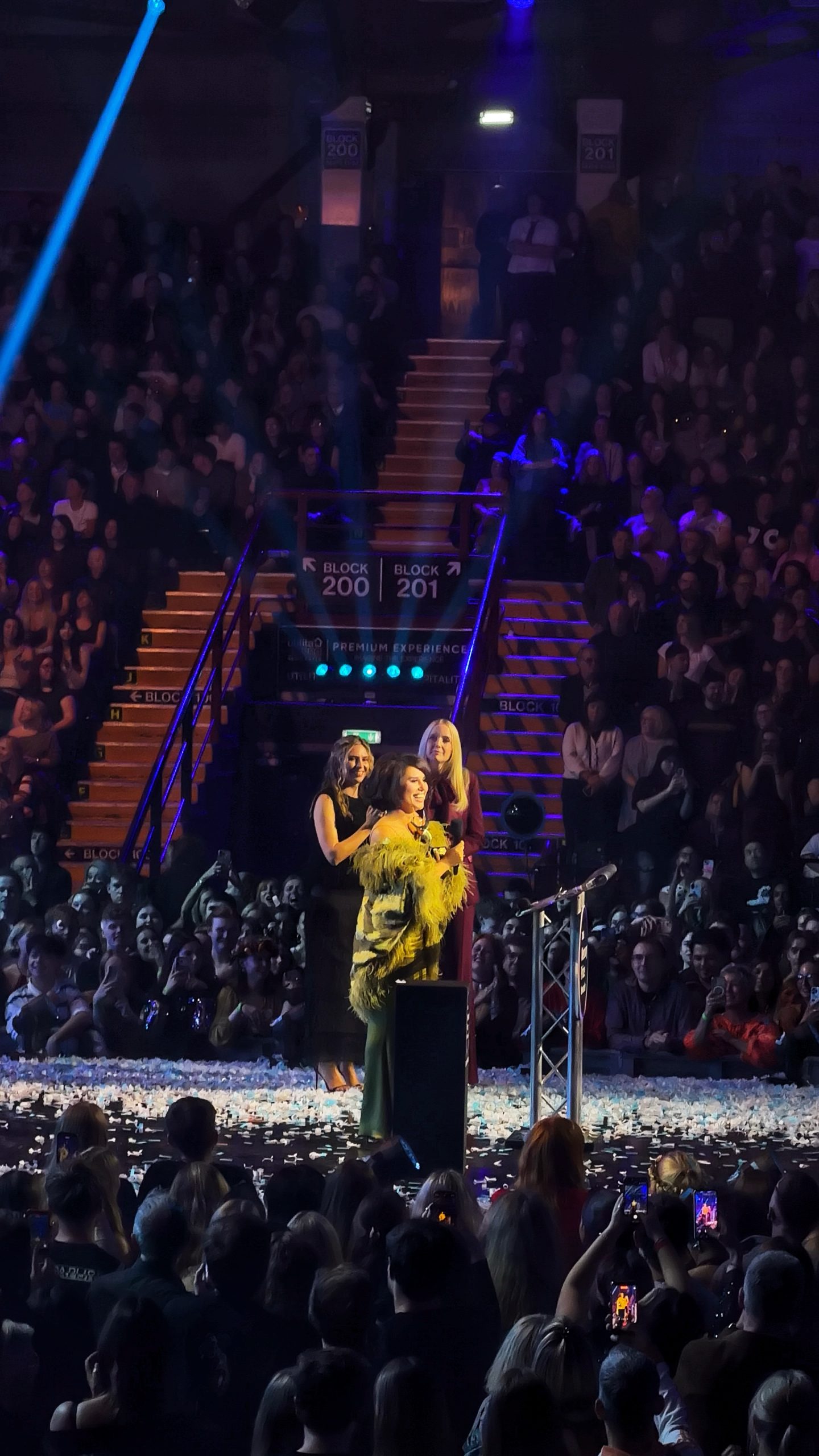
One of the biggest nights in music kicked off last night as the Mercury Prize 2026 was awarded.
If there was ever a night to fall head over heels in love with British and Irish music, the 2026 Mercury Prize made a very convincing case.
Bringing together some of the country’s most exciting artists under one roof in Newcastle, this year’s ceremony was a reminder of just how much talent is packed into the current music scene.
From established legends to the names shaping what comes next, it was an absolute belter.
Images: Audio North
Held at the Newcastle Utilita Arena for the second year running, I think everybody in that room felt very lucky to be there to see firsthand who took home the coveted prize.
The shortlist brought together an impressive mix of artists, with Florence + The Machine, Olivia Dean, JADE, Suede, Pulp, Dave and Sir Paul McCartney among the big names making the lineup very star studded indeed.
Suede kicked things off with ‘Dancing With The Europeans’, bringing their unmistakable energy to the ceremony, while Pulp delivered ‘Begging For Change’ as part of the HELP(2) charity compilation.
It was a line-up that demonstrated the sheer range of music being made across the UK and Ireland, from contemporary pop to established rock and even jungle thanks to Bradford’s own Nia Archives.
And of course, there was one woman who had every reason to leave with a smile on her face.
RAYE took home the coveted Mercury Prize for THIS MUSIC MAY CONTAIN HOPE., an ambitious, genre-hopping album that blends jazz, soul, R&B and classical influences into something so fabulously unique.
Image: Audio North
Newcastle’s own Knats performance was definitely a highlight of the evening, combining slick jazz with spoken-word poetry against a projection of The Tyne Bridge.
A fitting image, and one that underlines the importance of holding such huge events in the north and highlighting the obvious talent that thrives here.
The 2026 Mercury Prize was a brilliant showcase of the country’s music at its best.
And with RAYE taking home the trophy, it’s clear there is plenty of ‘hope’ left in British music.

 Daisy Jackson -
4th March 2022