Sport
Erik ten Hag opens up on Man United’s failed Harry Kane and Frenkie de Jong transfers
We'll never know where the club would be right now if he'd secured their signatures.
 Danny Jones -
3rd May 2024
Danny Jones -
3rd May 2024 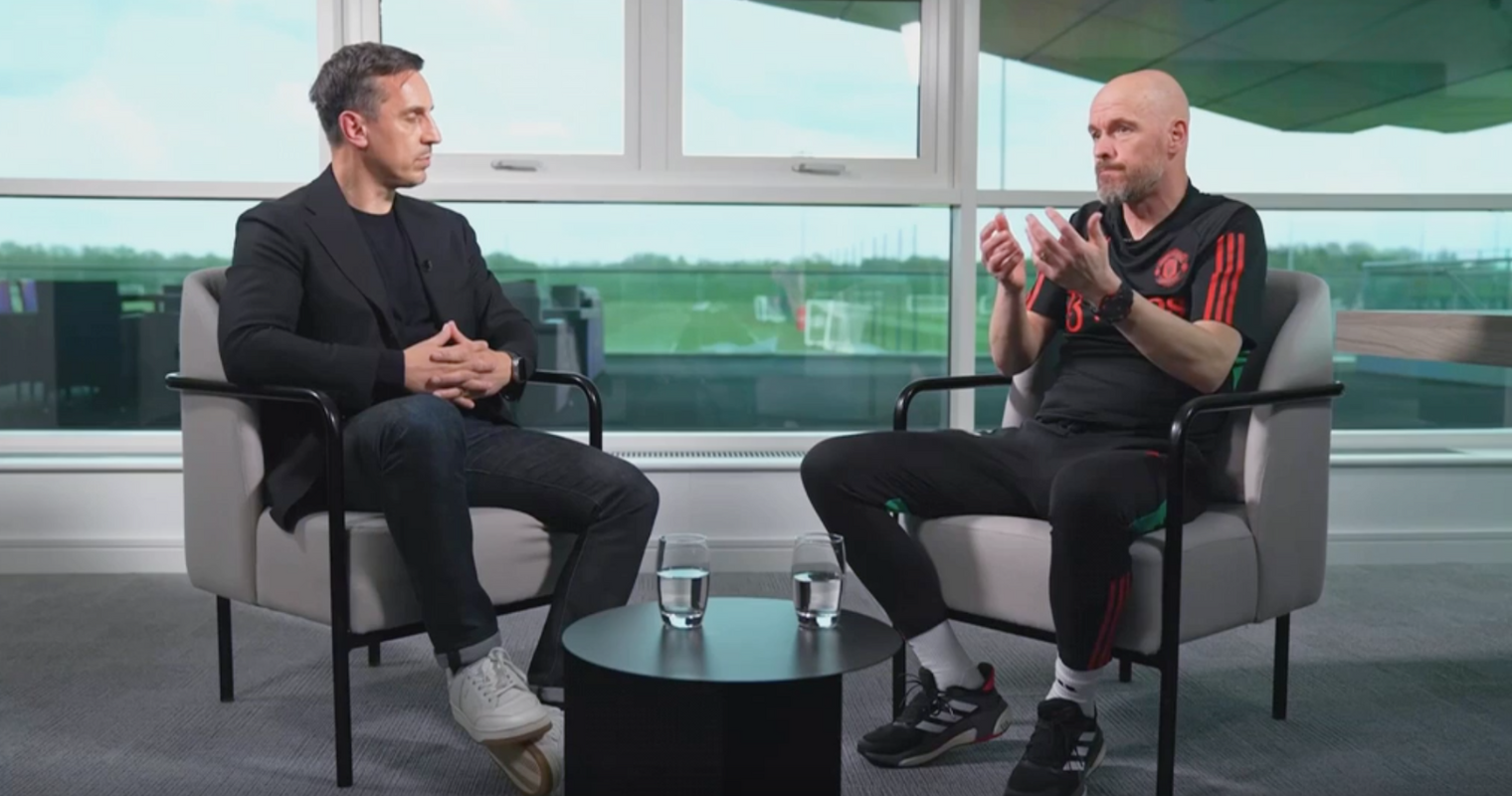
Manchester United manager Erik ten Hag has shed more light on his club’s failure to sign two key transfer targets in previous transfer windows, Harry Kane and Frenkie de Jong.
With Man United‘s interest in the proven Premier League star and England captain along with the former Ajax star turned Barcelona midfielder having been widely publicised last year, it was no secret that they were top of the wish list at Old Trafford but nothing concrete ever came of it.
Now, addressing the Kane and de Jong transfers directly for the first time, ten Hag not only admitted that he wanted to sign them but that he wasn’t given the full backing of the board to do so, suggesting that his squad therefore missed out two key talents that he hoped to build the playing style around.
Speaking to club legend Gary Neville in a Sky Sports exclusive, the 54-year-old was careful not to outwardly criticise the previous executives – the majority of whom have now departed – but confessed that they weren’t able to get either deal across the line.
As you can see, ten Hag revealed that he quickly identified Kane as the ‘proven’ striker who could have brought “30 goals” to the team but that they simply couldn’t get him, presumably down to the potential transfer fee and wage expectations.
The 30-year-old striker obviously went on to sign for German giants Bayern Munich and has now broken the record for the most goals in a debut Bundesliga season, not mention being on the verge of surpassing the highest-ever tally in a single campaign, held by Robert Lewandowski (41).
He went on to express that he has every faith in the striker they did manage to sign, insisting that 21-year-old Rasmus Højlund “will get there [to that level] but needs time” and was offered some of “the biggest potential” on the market when they snapped him up.
As for his fellow Dutchman, de Jong – who he previously coached as part of the hugely talented Ajax which impressed so many in 2018/19 – ten Hag hinted at the failure to sign him as being a key factor in why he couldn’t implement his tactics at United, telling Neville: “you have to bring in [the right] players”.
The three-time Eredivisie winner went on to explain, “You need the player with those typical assets and you can’t bring a player, say, here who has a [certain] style of play I don’t want to change his nature.”
With Neville naming de Jong specifically, ten Hag confirmed the name by adding that he envisioned a partnership between him and Casemiro or, indeed, Kobbie Mainoo eventually, adding: “They would have been really complimentary with each other, absolutely. That is the [type of player you need] if you want to play the Ajax style.
However, despite having reportedly agreed on a sizeable fee with Barcelona (the number of which has been much disputed), it came to be that de Jong seemingly didn’t want the move and preferred to stay with the Catalan club.
As a result, this meant that United had to continue experimenting with different midfield combinations and signing alternatives like Christian Eriksen and Mason Mount, who perhaps weren’t as high up on the list of transfer targets or as well suited to ten Hag’s desired approach on the pitch.
Read more:
- Man City stars Phil Foden and Khadija ‘Bunny’ Shaw win 2024 FWA Footballers of the Year
- Salford MMA star Tom Aspinall slams ‘unfair’ start times for UFC 304 at Co-op Live
- Sean Dyche randomly pops up in the music video for Blossoms’ new single – and he’s great
ten Hag ultimately went on to add that a laundry list of injury problems this season has also derailed the progress of his squad as a unit, with the Red Devils having been forced to utilise 31 different back-four combinations so far.
There have been some rumblings that de Jong could be open to another potential move elsewhere again this summer, but it’s fair to say that even if they were in the running it will take more than one player to get his side back on track.
You can watch the interview with Gary Neville in full HERE.
It remains to be seen how well ten Hag will be backed by the new footballing administration this summer but it is said United are willing to consider serious offers for several members of their first-team squad as they look to raise funds for any prospective incomings.
For all the latest news, events and goings on in Greater Manchester, subscribe to The Manc newsletter HERE.
Featured Images — Wikimedia Commons/Sky Sports (via YouTube)/Frenkie De Jong (via IG)