For any bloke who’s ever wondered about their fertility and considering grabbing a quick test, you can now get what’s being called a quick sperm ‘MOT’ right here in Manchester– and it’s free.
As well as the obvious importance of regular sexual health checks, many people understandably worry about their virility as they get older and there’s no harm in just giving yourself that piece of mind.
That’s why one Manchester-based sperm and egg bank is expanding its already wide range of services to offer quick and easy tests to locals.
We’re all adults here: if your car’s MOT is considered an essential check, then why not take a little look under the hood to see how your little swimmers are getting on?
Credit: Cryos International (supplied)
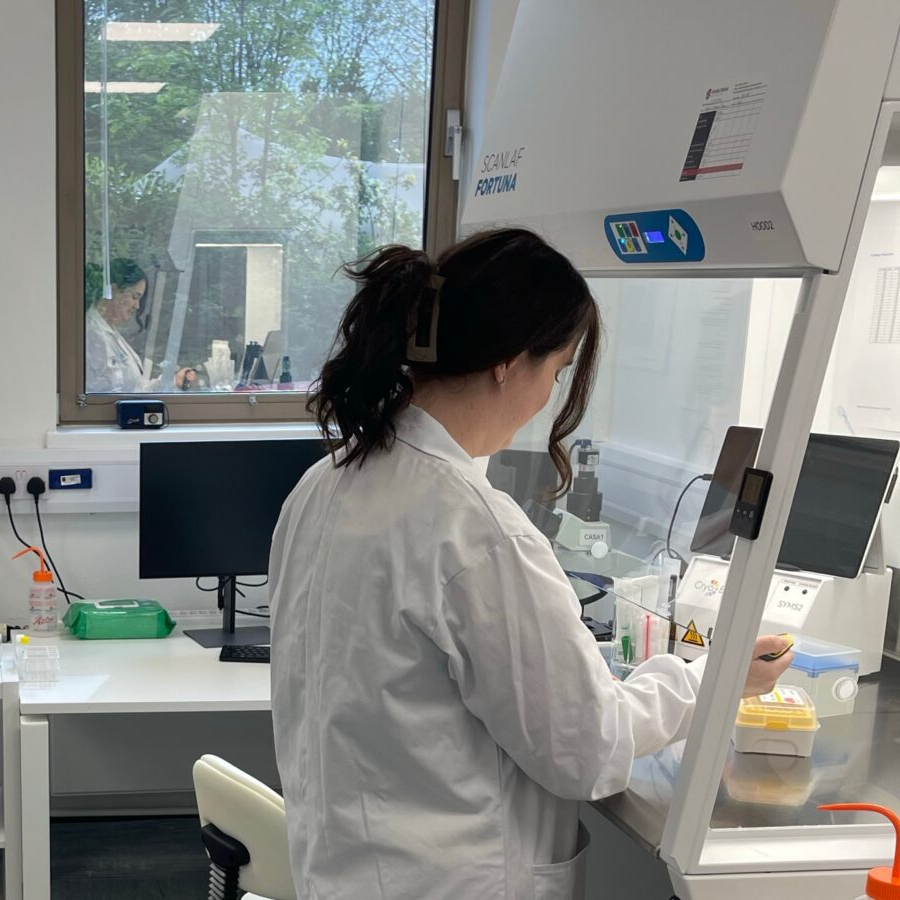
Cryos International, located over at Rutherford House on Manchester Science Park, is a quick and confidential clinic that specialises in sexual wellness and reproductive health.
ADVERTISEMENT
The industry-leading sperm and egg bank remains at the forefront when it comes to various different areas of the sector but now they’re taking one field even further by offering men aged 18-45 an unprecedented level of service.
While sperm tests and egg checks are nothing new, Cryos are the UK clinic to offer rapid detailed analysis that will see your results returned to you the same day.
ADVERTISEMENT
Better yet, this initiative is completely free of charge and provides a non-diagnostic assessment of key sperm quality criteria, including sperm count and how effectively the sperm moves.
It’s part of Cryos’ commitment to demystifying male reproductive health and demonstrating how lifestyle factors can impact male fertility, while at the same time breaking the stigma around sperm donation, and helping more people on their journey to parenthood.
The launch comes at a time of unprecedented demand for fertility services in the UK, with births from sperm donation tripling since the turn of the millennium.
Sadly, donor numbers here in Britain have hit an all-time low and similar struggles are being seen all over Europe even despite the growing population.
To combat this, the UK government has actually increased its standard compensation fee by £10 as of October 2024, rising to £45 a pop.
Of course, your sperm needs to be in good health before you can donate, not to the obvious benefits for couples trying to conceive and, as lab Manager Samantha Duffy-Olive explains, even “simple lifestyle changes can have a huge impact on sperm quality.”
With that in mind, Manc males are being encouraged to make the most of this free semen test and in addition to the analysis service, they will also offer helpful advice that could make a real difference to improve your reproductive health. You can book HERE.
This isn’t the first time we’ve clocked Cryos pioneering the sperm donation and sexual health space…
Featured Images — Cryos International Sperm & Egg Bank (supplied)
News
Plans unveiled to deliver 50,000 council and ‘genuinely affordable’ homes in Greater Manchester
Emily Sergeant
Plans to deliver 50,000 council and ‘genuinely affordable’ homes in Greater Manchester have been unveiled.
By removing ‘blockers’ to development and transforming disused public land into new housing schemes, Greater Manchester Mayor Bev Craig has set out her plan to tackle the housing crisis and deliver ‘a new generation’ of homes – with 50,000 new ‘genuinely affordable’ homes to be available across the city region by 2039.
It’s expected that 10,000 of these homes will either be built, on site, or in the pipeline with planning permission ready to go by May 2028.
To meet the scale of this ambition and deliver the homes the region needs, Greater Manchester Combined Authority (GMCA) says it will need to ‘pull every lever at [its] disposal’, from remediating brownfield land, to bringing forward dormant sites in public ownership.
That’s why the Mayor will be asking Greater Manchester‘s public bodies to carry out a public land review and identify sites that could be brought forward to deliver homes.
GMCA has already used its Brownfield Housing Fund to support several schemes that are delivering thousands of affordable homes – including social rent homes – as part of the £2 billion Good Growth Fund.
If you’re unfamiliar, the Good Growth Fund is investing in a pipeline of projects to deliver new homes, regenerate town centres, create jobs, and build infrastructure to connect people and places.
“When I was Manchester City Council Leader, I built more council and social homes than Manchester had built in 25 years,” Bev Craig declared. “But we need to go further and faster in every bit of Greater Manchester.
“We will be leading by example when it comes to freeing up disused and dormant public land for development and I’m calling on other Government bodies to join us.
“I know first-hand the security that a Council house brings, and that’s why I am absolutely committed to delivering the Council and social homes that people here in Greater Manchester need, so everyone can have the foundation of a good life in our city region.”
Currently, land supply for 78,585 new homes of all tenures up to 2030 has been identified.
Greater Manchester is in line to receive an initial £1.8 billion from the Government’s Social and Affordable Homes Programme, and the Mayor will meet with Government in the coming weeks to set out joint plans to achieve these ambitions.
Featured Image – Benjamin Elliott (via Unsplash)
News
Government sets out multi-million-pound plan to move UK away from animal testing in science
Emily Sergeant
A £22m push to ramp up the UK’s move away from animal testing in science is set to bring together cutting-edge tech and research.
The latest figures show there were 2.54 million animal testing procedures in Great Britain in 2025, which is down 3.8% on 2024, but with a further update due to be released later this year, the Government is now moving to ‘capitalise’ on that momentum with funding to shift the nation onto alternative testing options.
A dedicated national research hub and nine new high-tech projects are planned to develop ‘better ways’ to test medicines on human biology rather than animals.
According to the Government, this means treatments for conditions like cancer and inflammatory bowel disease (IBD) could be developed ‘faster’ and ‘more precisely’ to not only help patients but crucially also move science away from traditional animal testing.
At the heart of the plans is a new Pre-clinical Translational Models Hub – based in Cambridge and backed by £20 million in Government funding, which will work to build and share models of human tissue, grown from NHS patients, to test new treatments.
The new hub will accelerate the development of testing on ‘organoids’ – tiny, simplified versions of a human gut, tumour or brain, using cells donated by patients.
From beating heart cells in a dish to AI that can predict how drugs move through the body, exciting alternatives to animal testing are transforming medical research.
We're investing £22m to help scientists develop the next generation of life-saving treatments. pic.twitter.com/1EWRQvwySa
— Dept. for Business, Innovation, Science and Trade (@biztradegovuk) August 12, 2026
Because these ‘organoids’ retain crucial features of a patient’s own biology, they will help researchers learn how a real person may respond to a drug and provide additional insights that can complement information that is currently obtained from animals.
Scientists will then be able to use these cutting-edge techniques in their own labs to work out which medicines are worth pursuing.
Overall, it’s hoped that the move will slash the time it takes to get ‘potentially life-changing’ treatments to market.
Alongside the funding for the new Hub, nine cutting-edge projects aimed at identifying new methods of animal-free scientific testing – from beating heart cells in a dish, to lab-grown human ear models, and AI that predicts how medicines move through the body – are being funded.
Sadly, many of these still rely on testing on dogs and monkeys, as it stands.
“This marks another significant step forward in the UK’s move away from animal testing in science and research,” commented Science Minister Chris McDonald.
“This is all about backing our world-leading researchers and innovators to improve lives, giving them the tools they need to deliver more effective treatments for horrendous diseases like cancer, while also preventing the need for animal testing wherever possible.
“It’s also a boost for our life sciences sector, fuelling opportunities for new investment and new jobs, and ensuring Britain is better off.”