The COVID-19 pandemic has been tough on the economy – and businesses of all types have felt the strain.
In April 2020 alone, a quarter of UK companies closed and May saw the country enter its worst recession for many years.
Various levels of restrictions, ranging from lockdowns to the tier system, have resulted in businesses struggling to stay afloat.
However, one Manchester-based firm has set a mission to change all that: Areande.
ADVERTISEMENT
How Areande is making a difference
Areande helps businesses across Manchester and beyond to claim research and development tax credits.
This incentive – also known as innovation tax relief – was introduced by the government in 2000 to encourage companies to innovate.
ADVERTISEMENT
R&D tax credits allow businesses to claim a cash payment or a reduction in their tax bill for a variety of costs spent on innovative projects.
Founded during the pandemic, Areande’s singular goal is to “simplify the claims process and help as many firms as possible”.
As multiple sectors started being squeezed by the pandemic and social distancing measures, Areande was set up to provide innovating businesses with a “vital lifeline”.
ADVERTISEMENT
Spending money developing or improving new products, services, or processes qualifies you for tax relief – with many companies eligible for cash payments or tax bill reductions.
You can determine whether you’re eligible for tax relief for your innovation here.
Partnering with Areande
Scott Graham / Unsplash
Areande also runs a partnership programme for individuals and businesses searching for an additional source of income during a financially challenging time.
Areande offers a lucrative referral programme for their partners, allowing companies to make money for sending potential claimants their way.
Explaining the partnership programme, Areande stated: “We use a rigorous approach with a built-in quality assurance system, ensuring we uncover all eligible R&D costs. Our experts do all the hard work; partners need only send clients our way and wait for their reward.
ADVERTISEMENT
“As a partner, you’d also have access to a dashboard where you can monitor earnings in real-time and easily export data for reporting. You would also have the pleasure of seeing your clients power their businesses forward, achieving – and even exceeding – their growth plans by claiming Areande. Partnering with Areande could provide many benefits to both you and your clients.”
Research and Development Expenditure Credit (RDEC), also known as above the line R&D tax credit, allows larger companies to reclaim tax for their innovation.
This incentive is worth 11p for every pound spent on qualifying R&D activities.
Areande saves its clients from having to deal with HMRC and pledges support for almost all industries; with members of its team from agriculture, pharmaceutical, medical supplies, research, property, construction, financial and technology backgrounds.
ADVERTISEMENT
The company stated: “We use a streamlined and technology-driven process that can take businesses from claim to cheque in a matter of weeks SMEs, whether they are profit or loss-making, can claim up to 33p for each £1 they’ve spent on innovation.
“We have helped thousands of businesses across the country claim back millions from HMRC, with an average claim value of £53,714 for SMEs and £600,977 for large companies. We have a streamlined process; we handle everything so you can focus on innovating.”
With the money received from Areande claims, businesses have managed to increase their incomes, expand their operations and recoup some of their COVID-19 losses.
In the current climate, local businesses need a boost – and Areande is providing exactly that.
You can apply for R&D tax credits online here.To learn more about what Areande are doing to support the local economy, visit their website. You can sign up and see if you’re eligible online.
Business
Family-run Greater Manchester business calls out customers for punching cakes
Thomas Melia
A well-known independent Greater Manchester business has taken to social media to call out customers who were caught on CCTV punching their cakes.
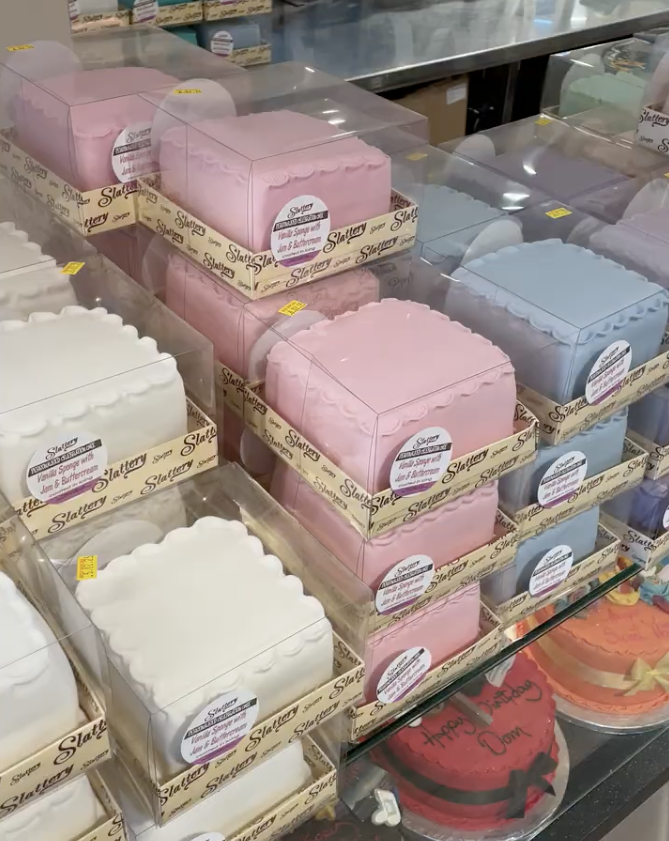
Known for everything from cakes and pastries to hot baked goods and custom chocolate designs, Slattery’s in Whitefield has been serving up their gorgeous cake and chocolate creations for over 50 years, all while keeping the business family-run.
Unfortunately, the reason they’re receiving lots of attention at the minute is due to two customers resorting to violence on their pre-packaged sweet-treat products.
The social media account for this Greater Manchester chocolatier has uploaded two images which show the outcome of the fatal blows which struck two of their Victoria Sponge cakes.
Although this punch may have cost them the price of two of their delicious traybakes, later on in the post, Slattery’s issues a big thanks to “All the wonderful families who’ve visited so far this summer.”
“We know cake can be exciting, but a gentle reminder that little bakers should remain under adult supervision at all times – Thank you.”
This third-generation family-run “chocolate wonderland” has brought a smile to many locals’ and tourists’ faces alike with their wide variety of unique-shaped chocolate bars, lollies, grab bags and more.
All throughout 2021, Slattery’s were serving up their moreish Slattery’s Chocolate Lockdown Platters consisting of shortbread, brownies, fudge, pretzels, marshmallows and Oreos, helping Mancs continue to get our sugary fix even during one of the country’s toughest times.
Just look at them – they do the lord’s work:
Slattery’s chocolate shop and bakery has called out customers on social media for punching their pre-packaged cakes / Credit: The Manc Group
As well as attracting visitors with its grand three-storey bakery and chocolate shop, Slattery’s also has its very own restaurant, Mason’s Dining Room, where people flock to attempt the ‘Chocolate Challenge’.
To win, two chocoholics must team up to finish an American-style chocolate fudge cake with chocolate ice cream, a portion of fresh cream and two chocolate pots filled with liquid chocolate sauce – oh and two delicious hot chocolate drinks too.
Any sweet tooth successor will bag themselves one of Slattery’s chocolate medals and a box of handmade chocolates too – in case you needed chocolate anymore.
Lastly, anyone after supporting this Greater Manchester sweet-treat provider can find the chocolatier and cake makers on 197 Bury New Road in Whitefield or via Slattery’s official website HERE.
Featured Images – The Manc Group/Slattery’s (via Instagram)
Business
Plans to build tower next to Manchester’s historic Britons Protection pub scrapped
Danny Jones
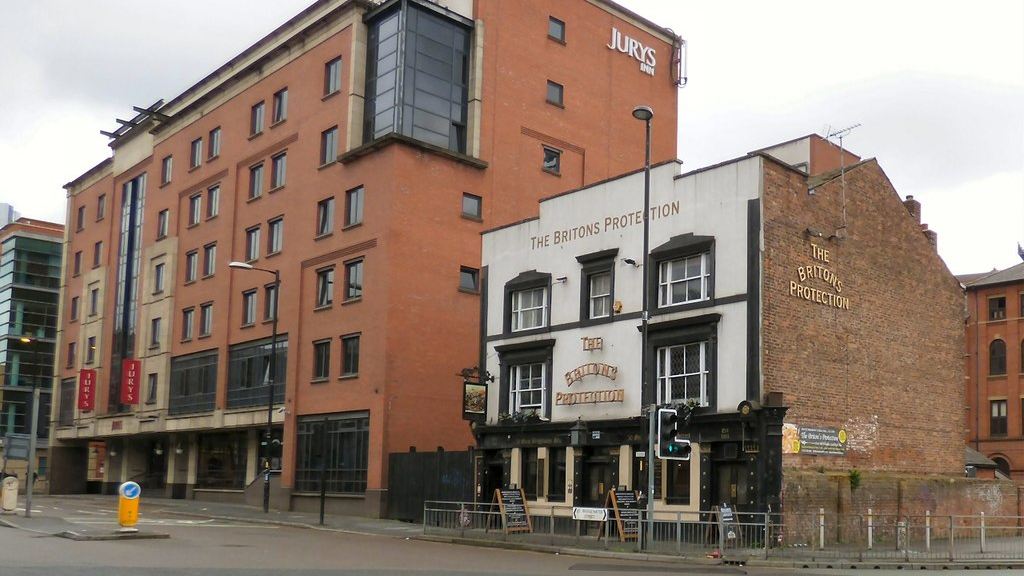
Punters, rejoice: plans to build a large apartment tower next to Manchester’s Britons Protection pub have reportedly been scrapped after a long, drawn-out process and widespread protests.
What a relief.
One of the city’s oldest boozers, the Britons Protection was due to be dwarfed by a large development reaching 26 storeys tall, which not only would have encroached on the cultural landmark and storied watering hole, but also blocked out its popular beer garden to the rear.
We’ve seen a similar loss of outdoor drinking space with the recent St Michael’s development, which has essentially removed the equally historic Sir Ralph Abercromby pub – though it is at least getting a refurb – but in truth, the ‘Protect the Protection’ fight has been going on much longer.
As per a notice published on Manchester City Council’s website this week, it now appears that the plans for 72 new flats have been cancelled, with developers Arrowsmith Management having officially withdrawn their application.
Run by Bahraini businessman Mohamed Abbas Haji, the company is now said to be reassessing its options for the ‘Apex Tower’ proposals.
Speaking to the BBC, Mark Brennan – who took over the pub back in January 2025 – said: “I’m quite happy to be honest, a lot of people say the pub might be busier with more people about, but that doesn’t necessarily translate to people coming in here.”
“It would have looked horrendous… It’s Grade II-listed, so the pub should always be here. It wouldn’t have been a good look, having a big ugly building on top of our building.”
Countless Mancunians have echoed the sentiment over the past few years, with appeals dating back to post-pandemic and a big awareness push in 2021.
Standing for more than two centuries and holding countless awards, it was never going to go quietly.
It also happens to be quite comfortably on our list of the cosiest pubs in Manchester and has been since day dot.
Anyone who’s been in will know the sense of a warm welcome the place always puts out, and we’re overjoyed to hear that years of petitions and campaigning to save it have paid off.
These stories don’t always end with the right outcome (not often enough, anyway), so we’ll definitely be raising a glass to the Britons Protected this weekend.
Unfortunately, we do still have some other sad news from the hospitality sector, as our oldest Manc publican has passed away at a fellow favourite pub.

 The Manc -
25th January 2021
The Manc -
25th January 2021