Greater Manchester – home of world-famous music, Corrie, two of the world’s biggest football clubs, and, er, Uncle Joe’s Mint Balls.
We can shout about a lot of things here in the north west, but our local delicacies really are in a league of their own.
Everything from pastry sweets to meaty treats crop up in Greater Manchester’s menu of mouth-watering regional dishes that everyone should try out at least once in their lifetime.
They’re not for everyone, and there’s a good chance that for some of them, the first time you them will be the last, but we’re proud of them all the same.
Here’s some of the best the region has to offer.
ADVERTISEMENT
___
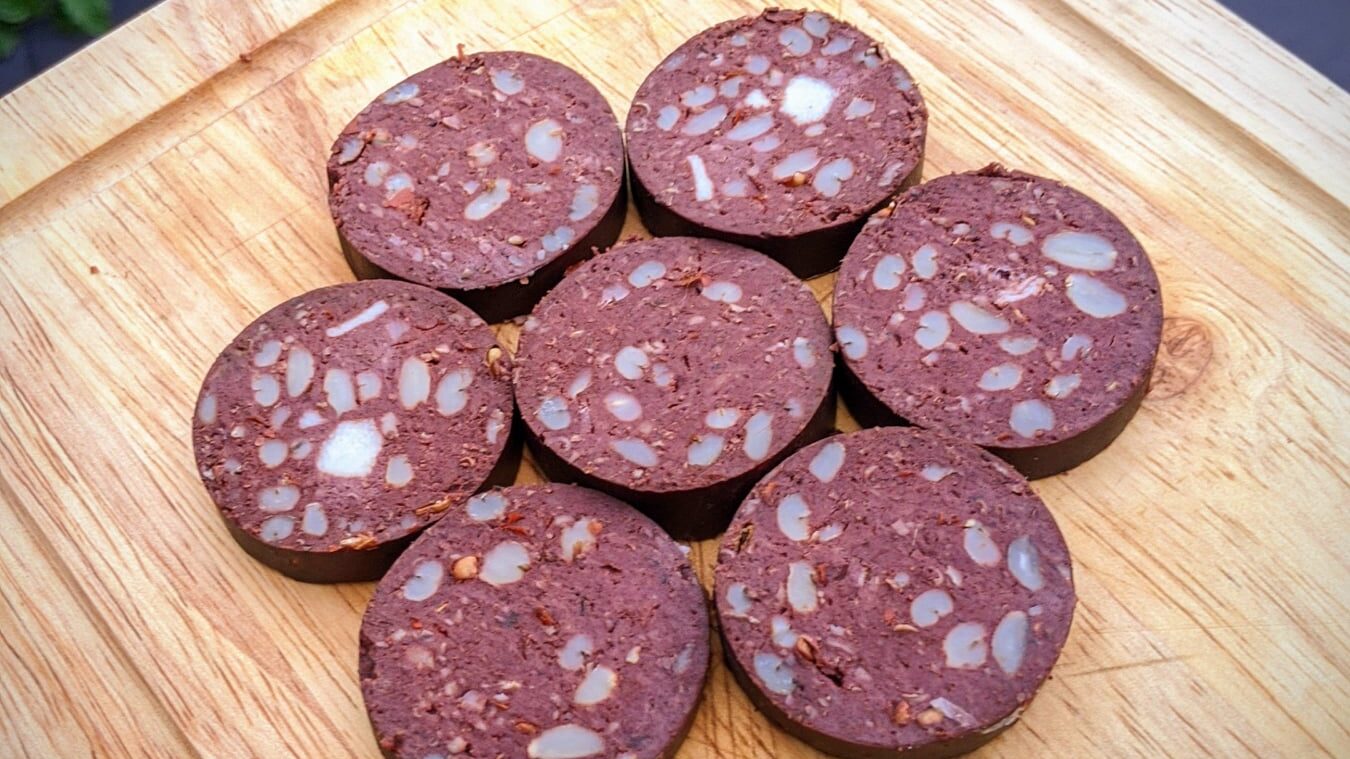
Black Pudding
Credit: Bury Black Pudding Company
A somewhat polarising delicacy, black pudding is a dark sausage made from pig’s blood and fillers such as barley, oats, and suet.
ADVERTISEMENT
Sure, black pudding may not have wholly originated in Greater Manchester, but there’s definitely a strong argument to be made for Bury black pudding being some of the best, or at least the most celebrated and appreciated, there is out there.
You can get your hands on some hot boiled black pudding from many local markets in the region,
Or you can buy it fresh from the regional produce section at most supermarkets, and you can even eat it locally as a takeaway snack dowsed with malt vinegar.
ADVERTISEMENT
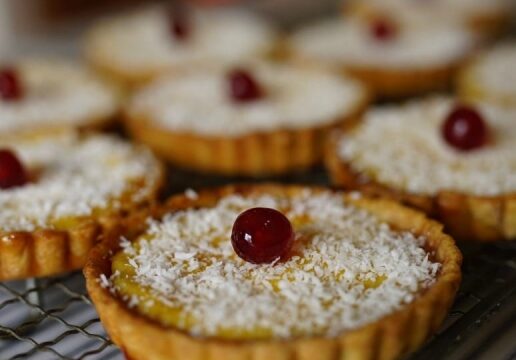
Manchester Tart
Credit: Jon Hillyer
Something for those with a sweet tooth and an appetite for coconut, Manchester Tart is a traditional English baked tart made up of a shortcrust pastry shell spread with raspberry jam inside, covered with a custard filling, and topped off with flakes of coconut and a cherry.
This was a staple of the 1940s and 50s school dinner, but it’s not as beloved as it once was nowadays.
If you are looking for a blast from the past though, you may be lucky enough to spot it on a specials menu at one of the many British-themed restaurants in the city centre and wider region, or in local supermarkets if you keep your fingers crossed.
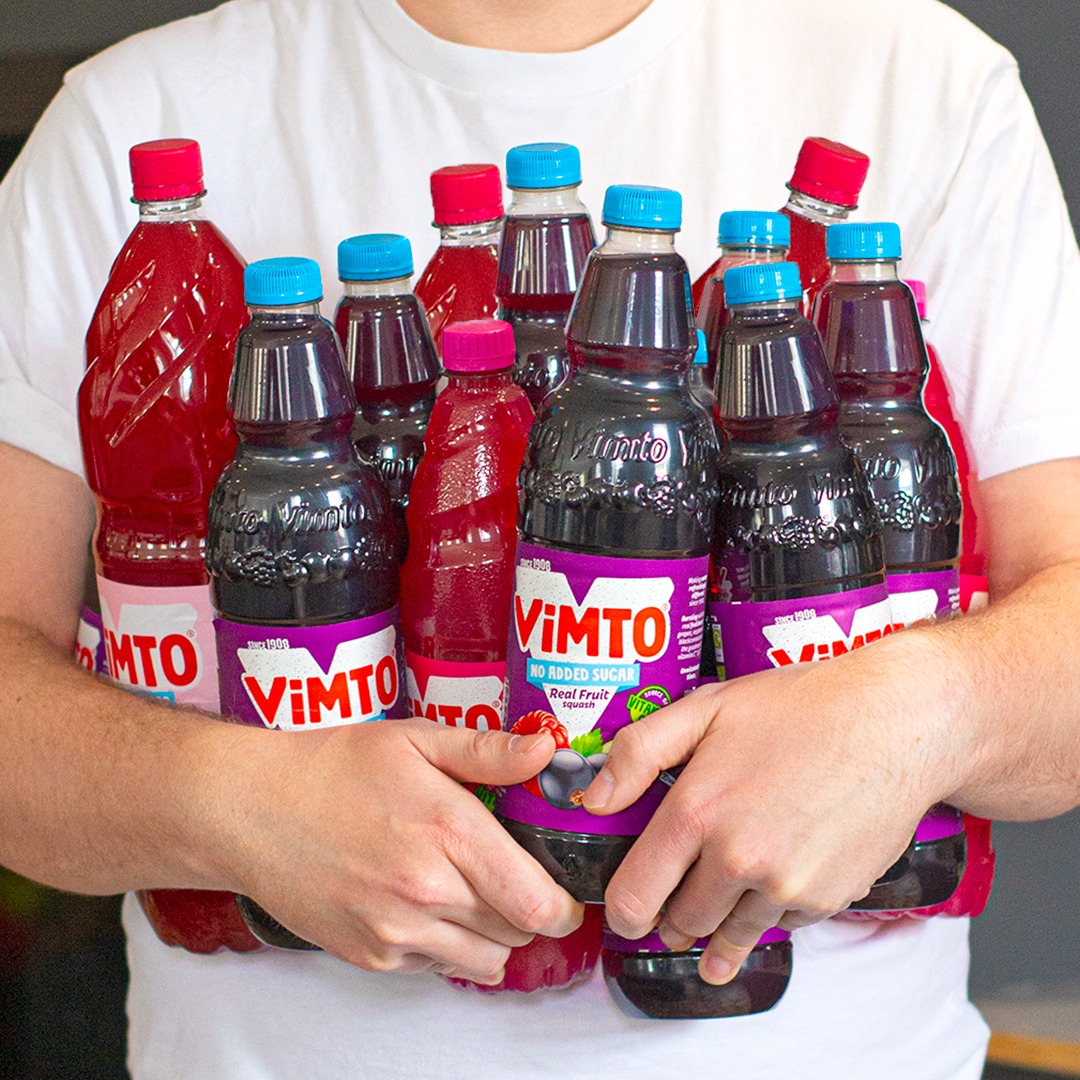
It contains the juice of grapes, raspberries and blackcurrants – each in a 3% concentration – which is then flavoured with a selection of delicately-balanced herbs and spices.
ADVERTISEMENT
It was created by John Noel Nichols in 1908 at 19 Granby Row in Manchester city centre under the name Vim Tonic and even though it’s hard to believe it now, Vimto was originally registered as a health tonic or medicine when it was first created, but was then re-registered as a cordial in 1913.
Nowadays, it’s taken on a life of its own spawning many variations, it’s sold internationally in over 40 countries, and you can get your hands on it at just about any local shop, supermarket, and chippy or takeaway.
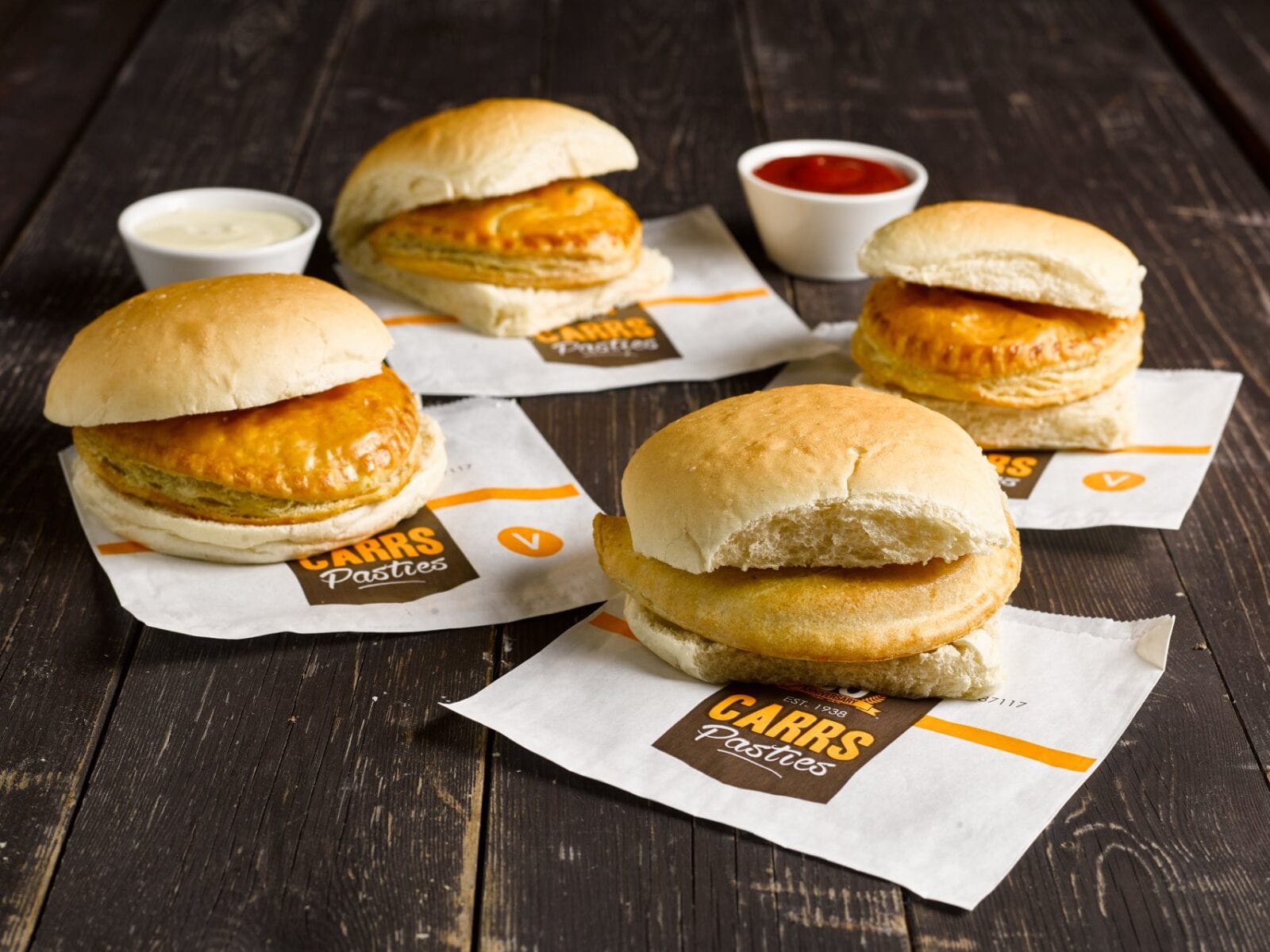
Pasty Barm
Credit: Carr’s Pasties
Fancy an absolute carb overload?
You can’t go wrong with carbs in the north, and over in Bolton, they’re really taking that statement to heart with this staple delicacy that sees a pasty – preferably meat and potato, and really preferably from the town’s iconic Carr’s Pasties, which’s been “baking perfect pasties since 1938” – and putting it inside a bread roll, also known as a barm cake.
It sounds a lot, but all we can say is just don’t knock it until you’ve tried it – and maybe just make sure you’ve got a glass of Vimto on hand to wash it down with.
ADVERTISEMENT
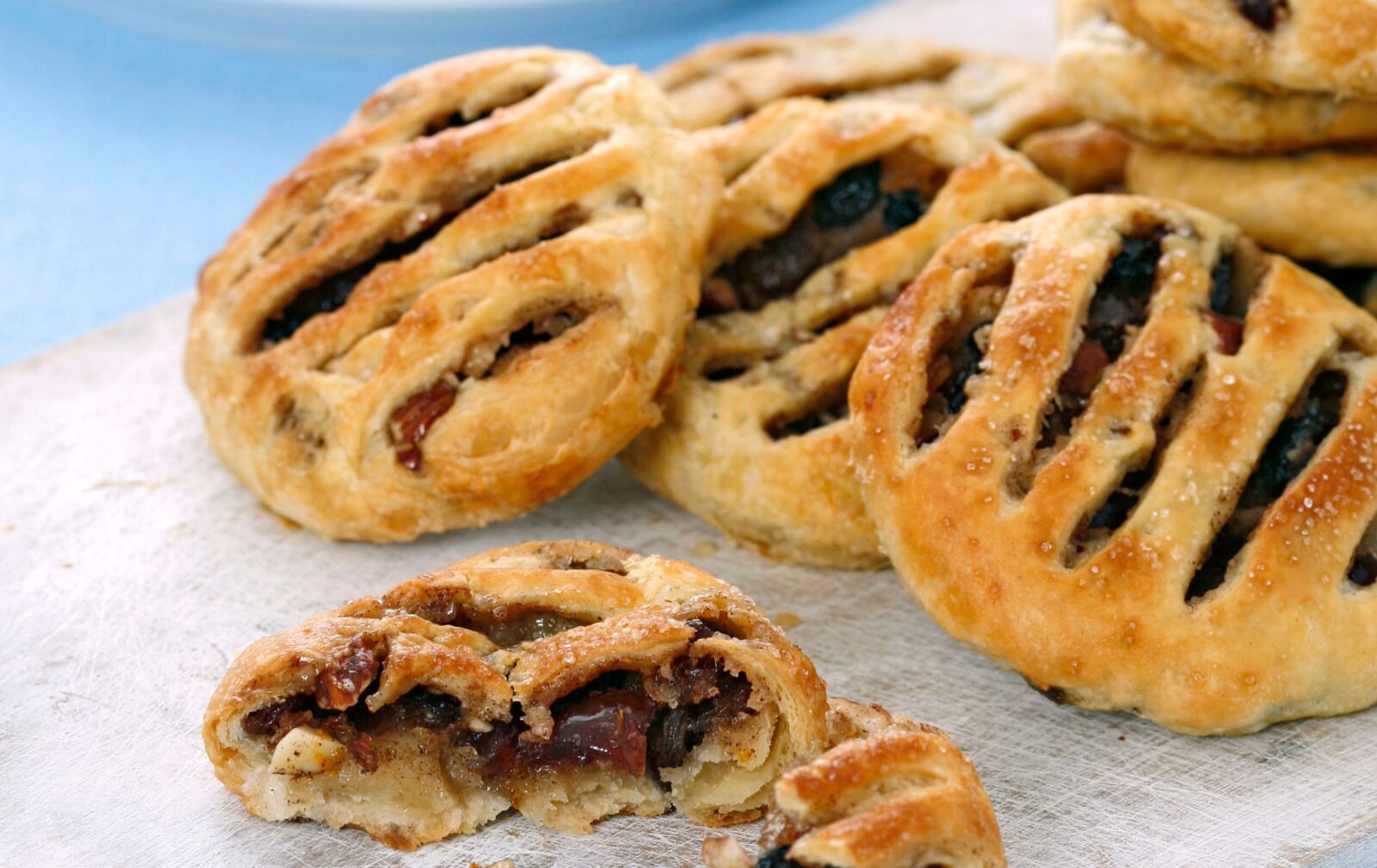
Eccles Cake
GoodtoKnow
Another one for those with a sweet tooth, the Eccles cake – sometimes down as a “squashed fly pie” or “fly cake” – is a centuries-old pastry, of course taking its name from the town of Eccles in Salford, that’s a staple often sold at bakeries and supermarkets around Manchester and Lancashire.
It’s made up of a flaky pastry dough filled with currents, and it’s often topped with a sugary crust.
While it is a sweet pastry, the Eccles cake is actually traditionally eaten with Lancashire cheese to provide a unique sweet and savoury experience, but it’s just as nice however you chose to serve it.
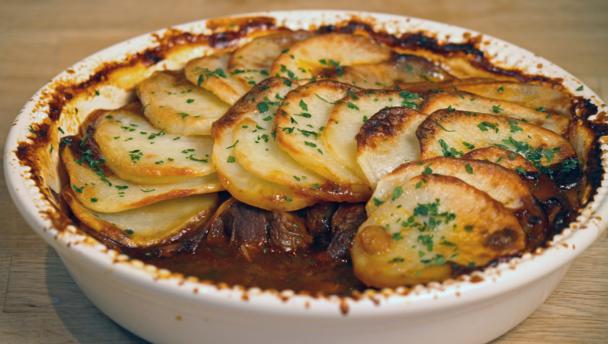
Lancashire Hotpot
BBC Food
This is probably one of the most famous delicacies on the list.
Mostly associated with the iconic Manchester-based soap Coronation Street, thanks to the fictional Betty Turpin’s hotpot beloved by all the Rovers Return regulars, the Lancashire hotpot remains a hot food staple on tables not just in the region, but right across the UK.
ADVERTISEMENT
Paying resemblance to a casserole or stew, a Lancashire hotpot is traditionally made with lamb or mutton, onions and stock, and is topped with sliced potatoes, before being cooked low and slow until the potatoes on top go crispy.
If you’re looking for the best hotpot in town, then on over to Annie’s on Old Bank Street.
Rag Pudding
The rag pudding may have been invented in Oldham, but it’s now considered a specialty all over Greater Manchester, particularly in its hometown, and in Bury and Rochdale
A hearty and meaty dish, with a flavour that’s similar to a meat pie, just minus the crust, a rag pudding is made up of ground beef and onion gravy wrapped in suet, and cooked in a piece of muslin – also known as a rag – to give it its distinct and recognisable shape.
Did you know that the most notable producers of the rag pudding, Jacksons Farm Fayre in Milnrow, still lovingly hand-fold 15,000 of the puddings each week to be dished out to local butchers, delis and chippies across the region?
ADVERTISEMENT
That’s how popular it is.
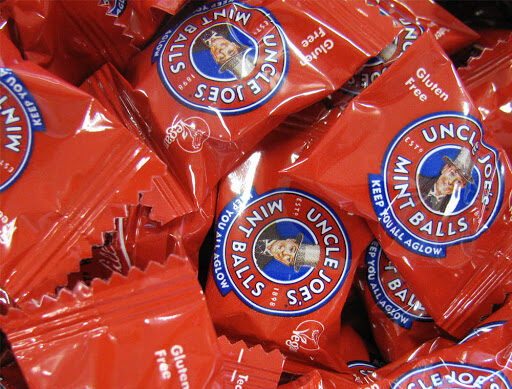
Pinterest / Uncle Joe’s Mint Balls
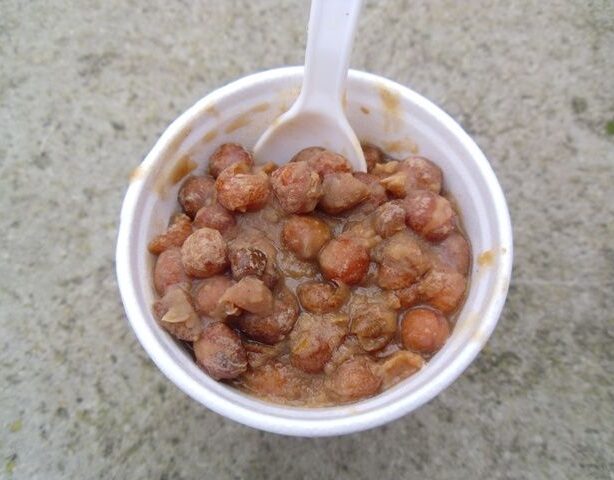
Parched Peas
Also known as black peas, black eyed peas (no, not the music group), dapple peas, maple peas, and probably more depending on where you come from, parched peas are dried and cooked purple podded peas, which are then soaked overnight and simmered to produce a type of mushy pea.
It’s a delicacy often served with lashings of malt vinegar, and most-commonly served in autumn and winter time, especially known to be a staple on or around Bonfire night.
The dish is popular in Bury, Rochdale, Oldham, Wigan, Bolton, Tyldesley and Heywood.
Uncle Joe’s Mint Balls
Uncle Joe’s Mint Balls are (sort of) spherical mints produced by Wm Santus & Co. Ltd in Wigan, which are made from pure cane sugar, oil of peppermint and cream of tartar.
ADVERTISEMENT
Originally made for miners and ideal for “coughs and sniffles”, they have remained one of the region’s pride and joys for years on end, helping to keep the population “all aglow” since 1898, with it said that around 160,000 mint balls are still made every day, which is around 35 million per year.
They also have their own catchy jingle, which, if you say the name of them to a Mancunian, you’ll likely get a dodgy rendition of sang back to you.
“Suck em’ and see, you’ll agree, they’re the best in all the land”.
Eats
First look inside Locker and In Hand, a brand-new music venue and gig-friendly food concept at New Century
Lydia Mastrolonardo
There are two fresh new concepts taking over the ground floor of our well-known and loved New Century, serving up a brand new menu of gig-night bites as well as grassroots music events.
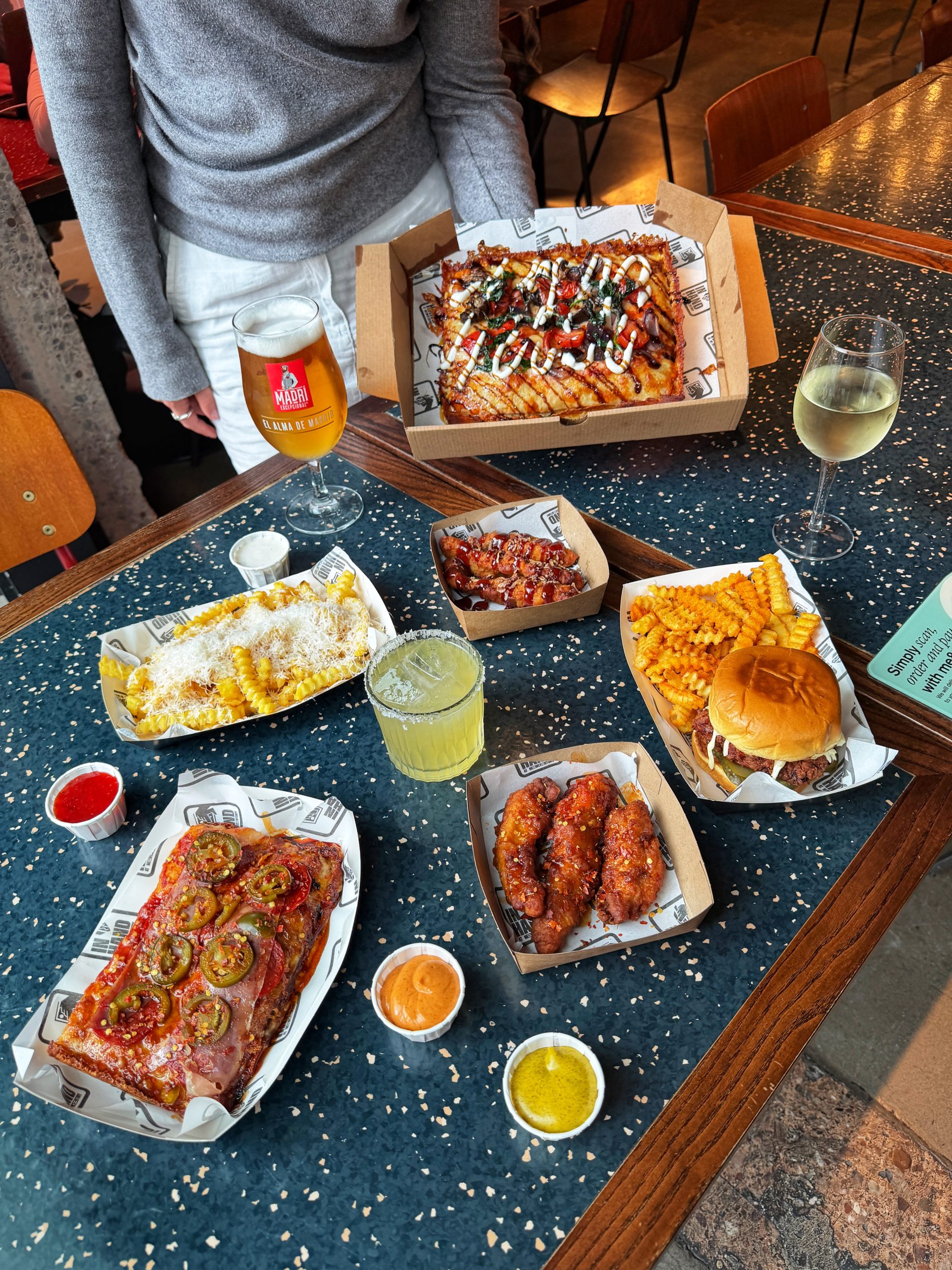
Launching side-by-side are Locker, a 450-capacity grassroots live music venue, and In Hand, a food offering that promises ‘gig-friendly’ food like Detroit-style focaccia pizza pies, 24-hour brined chicken tenders, sandos and sides.
Both concepts will launch in sync today, marking a significant new chapter for the restored venue, which has pivoted away from its previous New Century Kitchens food hall concept.
With the previous food traders moving on to fantastic new ventures, this new chapter allows one sole food offering to sit alongside the beloved bar area, keeping simplicity at the forefront of the concept.
The menu is designed for speed and ease, ensuring you can grab a quick bite in between sets at Locker or New Century Hall without missing out on the music, whilst still holding your drink of choice in your other hand. Perfect for keeping the night going, instead of having to leave mid-event to get some food to fuel you.
This no-mess menu is serving up deep pan Detroit-style focaccia pizza slices or 8×10″ full pies, featuring everything from a classic margarita or pepperoni through to a chicken parm, mushroom and truffle or Detroit hot loaded with jalapenos and ‘nduja hot honey. Oh – and every pizza comes with their signature caramelised cheese crust – have we said all of your buzz words yet?
Detroit-style pizzas at In Hand at New CenturyThe main bar at New Century will serve Locker and In HandIn Hand food is designed to be gig-friendly
If it’s more just a bite you’re after, there’s a wide selection of grab and go sides. Our personal favourite were the 24-hour brined, double fried chicken tenders, available in a range of flavours such as lemon pepper, garlic parmesan, ‘nduja hot honey, smokey BBQ and masala mayo.
Though if it’s something more filling you’re seeking, then there’s their delicious selection of sandos, all served with seasoned fries, like the classic chicken sando, prosciutto and ricotta on focaccia, chilli cheese chicken sando and a roast harissa halloumi.
In Hand will also be open during the day, making it the perfect spot for a post work pint, to quench your thirst and refuel after a shopping spree or as a new lunch spot if you work in and around the Northern Quarter, especially with their lunch time deal.
Inside gig venue Locker at New Century. Credit: The Manc Group
The deal consists of any chicken tenders or a quarter Detroit pizza, plus a side and a soft drink, all for just £10 – it would be rude not to.
Matt Harvey, Head of Food and Beverage at New Century, commented: “The menu is built around what people actually want when they’re at a gig, something that tastes great, travels well and doesn’t slow you down.
“We’ve spent a lot of time getting the foundations right, from developing the dough recipe for the Detroit base through to the brining process for the chicken tenders. Every element has been thought about to ensure In Hand is comfort food done properly, and we think people are going to love it.”
Locker and In Hand are both open at New Century in Manchester today.
23 of the very best burgers in Manchester city centre and the boroughs beyond
Danny Jones
Like any normal human being, we Mancs love a good burger and, luckily for you, Greater Manchester has some of the best burgers you’ll find anywhere in the country – even if we do say so ourselves.
With tonnes of brilliant burger spots dotted all over Manchester city centre and the surrounding region, whether you’re into the high-end offerings at Hawksmoor or the outrageous towers at Almost Famous and Yard and Coop, 0161 has you covered.
There’s even room for some solid chains on this list as well, and while the likes of Maccies and Burger King might not have me the cut, we’re not going to pretend we don’t indulge in the odd big-name brand from time to time; we still consider some to be among the best burgers in and around Manchester.
Manchester is chocked full of an endless list of eateries serving up some of the most impressive patties you’ll quite possibly ever see in your life, and we’re really not exaggerating, so no matter if you’re a meat lover, chicken fanatic, veggie or vegan, there truly is something for everyone to tuck into in our city.
The best burger places Greater Manchester has to offer
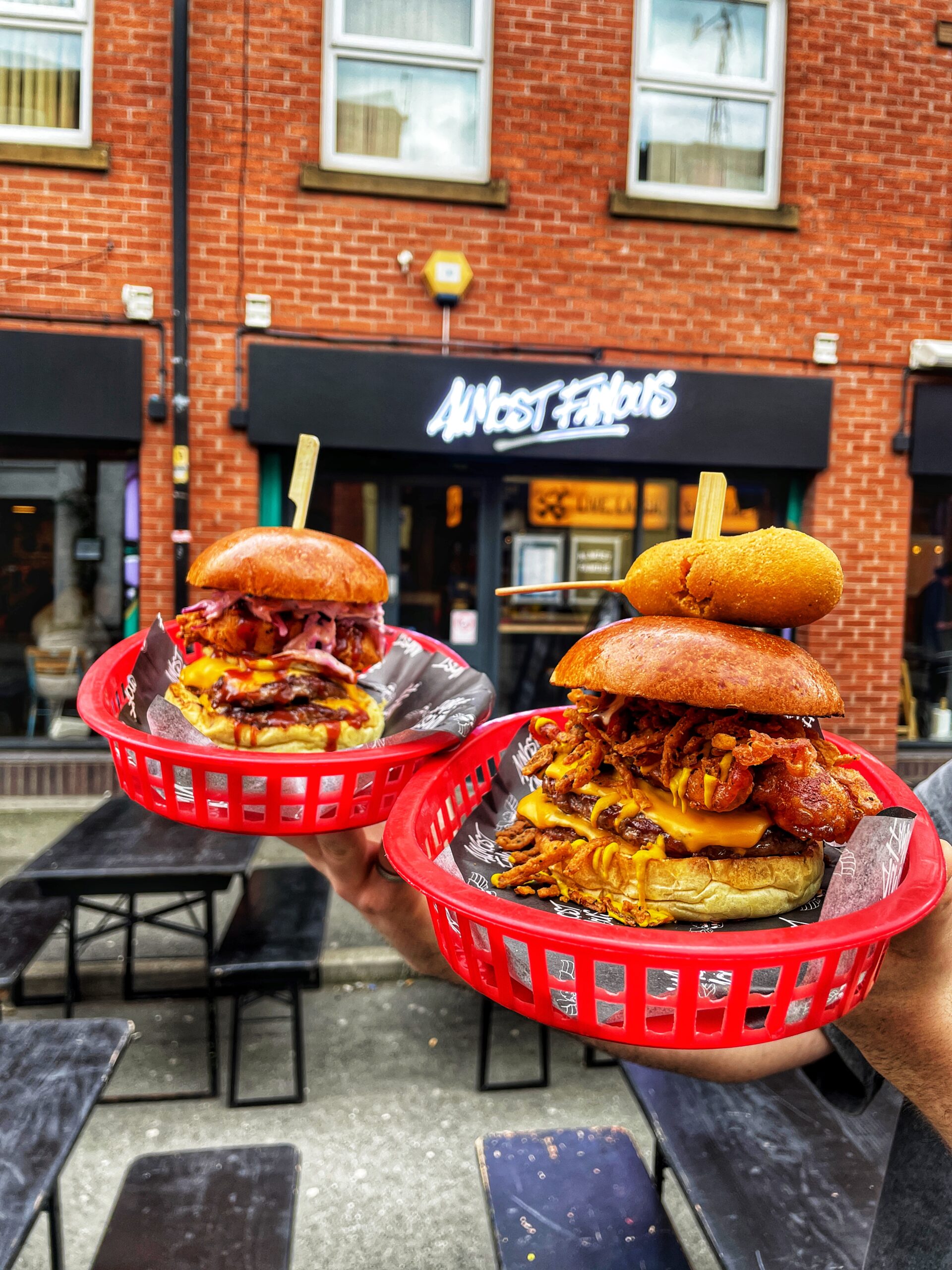
1. Almost Famous – Northern Quarter
Almost Famous undoubtedly offers up some of the best burgers in Manchester (Credit: The Manc Eats)
Almost Famous is a name that’s pretty much synonymous with burgers here in Manchester, and as the name would suggest, it’s now so well-known it would be daft not to start off this list with one of the first burger spots that comes to mind.
Fan-favourite burgers include the ‘Unabomber’ double cheeseburger with chorizo, the ‘Awesome HQ’, which has two beef and two chicken patties, as well as our personal favourite: the ‘Butter, Blood and Blue’ with ‘wonderbuttered’ steak and peppercorn sauce.
Very few frills, just plenty of flavour. (Credit: The Manc Group)
Not just one of the best-named burger places ever, but genuinely one of our favourite arrivals in Manchester city centre of late, Slap and Pickle is a very solid entry on this list.
Serving up their burgers from Manc favourite food hall Society, S&P don’t just offer great choices for the carnivores but some pretty bloody good plant-based options as well.
From classics like the ‘Personal Cheesus’ and ‘Baconator’ to the ‘Double Double Trouble’ (yes, four patties) and the sweet but fiery ‘Smokin’ Bun’, we haven’t tried a single one we didn’t like yet.
3. Honest Burgers – Spinningfields
It doesn’t matter how big they get, Honest Burgers will always be one of the best in the UK, in our opinion (Credit: The Manc)
While this rapidly growing chain may be a very quick answer whenever someone asks you to think of somewhere to grab a good burger, it’s for a very good reason: franchise or not, they’re still very, very good, and anyone pretending otherwise is just lying.
Honest Burgers have found a real home here among the people of Manchester, so much so that they even created their own Mancunian special: a beef burger with smoked bacon, cheddar, Honey Rum BBQ Sauce, oh-so-crispy shoestring fries, yellow pepper mayo, tomato, lettuce and onion.
That’s a bit of us, alright, and it isn’t just the fresh patties made by their own in-house butchery, those DAMN rosemary-salted chips have us smacking our lips and crawling back every single time.
4. Little Brewski – central
Credit: The Manc Group
If you like your meals meaty, you’ll already know Brewski – and now the team have launched a brand-new concept in Manchester city centre.
At Little Brewski you’ll find just five burgers on the menu, all made with top quality British Wagyu beef, with simple toppings chosen to show off the quality of the meat.
Inspiration comes from across the US, like the California-inspired The Bear, and the Ode to Cheval from Chicago.
5. Yard & Coop – NQ
Yard & CoopWe still have days when we dream about that Great Kathmandu special — bring it back!
If it’s a chicken burger you’re after, then you can’t beat another NQ staple in Yard and Coop. A local institution for many years now, this absolute mecca of all things chicken, unsurprisingly, is just as good at sandwiching said chicken between bread as well.
Home to cult classics like the ‘I Don’t Like Spam’ (we do) and, of course, the aptly named and even more ridiculously-sized ‘Massive Cock’ — which has now been reworked as a spicy offering — we have never left this place without feeling like we haven’t been absolutely stuffed. Why are you laughing?…
Never mind, just shut up and get your mouth around a load of cock and tasty buns.
We will literally NEVER get tired of eating at Brewski, and while we’ll scran everything from their burritos and deep dish pizza to their succulent ribs and devilish desserts, their burgers really are the stuff of legend too.
Name another place that does Korean fried chicken burgers with salt and pepper chips and an extra tub of katsu curry sauce for you to drizzle all over the gaff, or giant smash burgers with garlic parmesan fries and lashings of peppercorn sauce — we’ll wait.
Better still, this place’s menu is always changing, which means two things: you’ll never get bored of the food and, regardless of whether it’s new or not, we can guarantee it’ll be banging.
7. Archie’s – Oxford Road, Arndale, Piccadilly Station, Trafford Centre and Palazzo
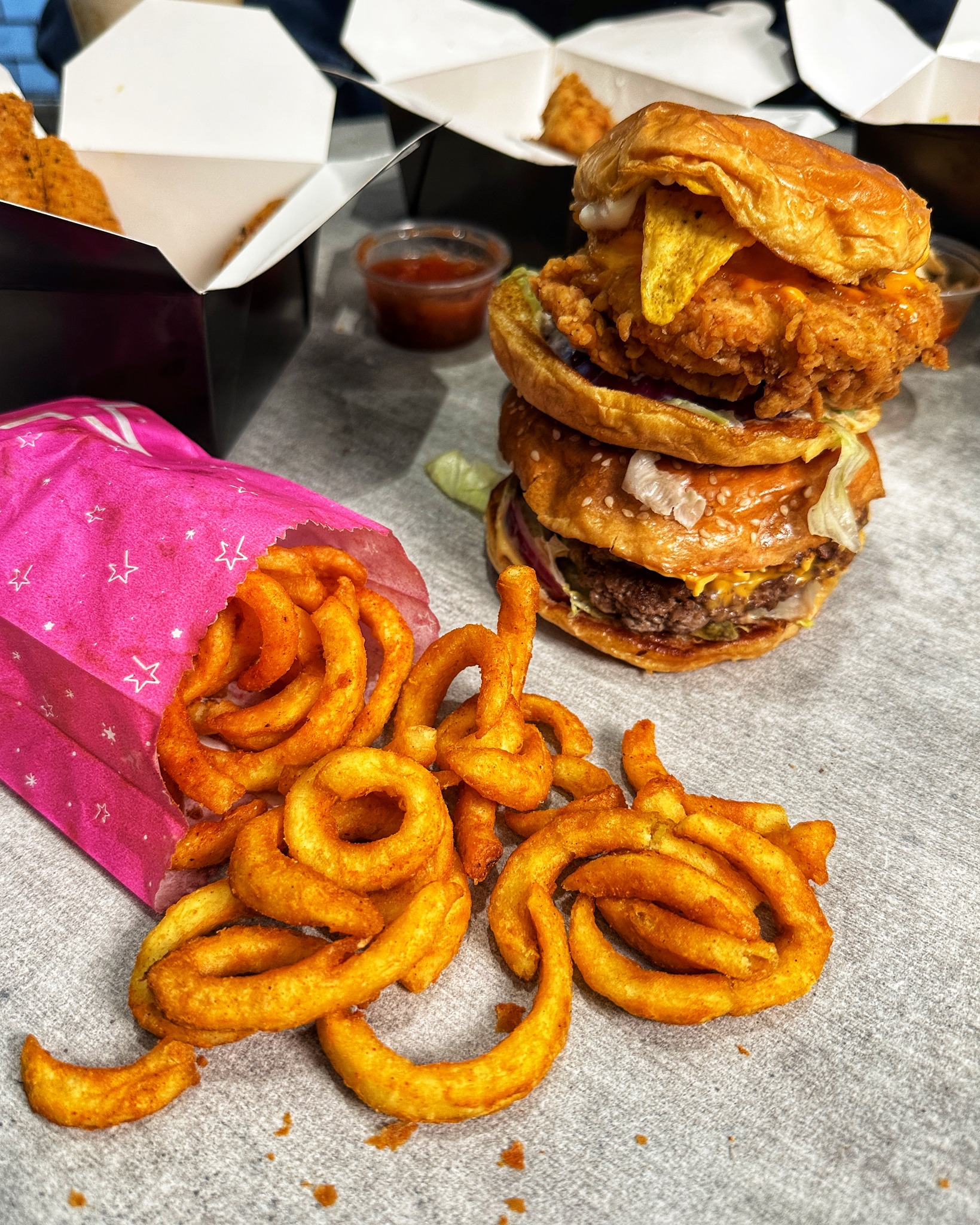
We’re dipping our toes back into burger chains and comfortably one of Manchester’s most famous: the pretty pink neon-tinted cholesterol party that is Archie’s. Still, at least you can now burn off those calories in a roller rink…
Started here in 0161 back in 2010, Archie’s has gone on to be one of the biggest takeaway names in the UK and, despite how big they’ve gotten, they still cook up some of the best burgers you’ll find in Manchester — and plenty of them, too, boasting several sites, including a cool subway-style venue.
Be it their very strong breakfast menu, classic burgers like ‘The Superstar’ and ‘The Daddy’, or their take on the Nashville hot chicken sandwich, there’s a reason people keep coming back to their ever-expanding menu: it’s absolutely mint.
8. Burgerism – Piccadilly Gardens, Salford, Freight Island, Gatley, and Denton
From a burger joint that has already been fully franchised to one so good it is well and truly on its way, Burgerism genuinely might be one of the very best all-around burger places in Manchester and Britain, for our money.
Starting out in Salford, there are now sites in Gatley and Denton, and they even offer a special delivery service around Manchester city centre from their purpose-built delivery-only kitchen over in Ardwick.
We could bang on and on about how much we love this place, but we’d be here all day; we reckon being officially voted one of the best in the country will do for now.
Next up is one that we’re always baffled that more people don’t know about it. We ordered one time on a drunken night in with mates and thought it was amazing, but had to go back to sober to confirm it was as good as we remembered: it was.
Situated not far from the Trafford Bar tram stop, MLK Burgers‘ frontage alone stands out from most of the stuff around it as a place that puts thought into its food and its presentation — a first impression that is quickly confirmed the second you take a bite.
From their no-nonsense ‘Classic Angus’ and popular ‘Anday Wala’ with a juicy shami kebab and omelette filling, to their signature MLK Burger with Black Angus beef, turkey bacon, a Nashville chicken fillet, hash browns and cheese, this lot push the boundary on burger combos and always deliver a good product.
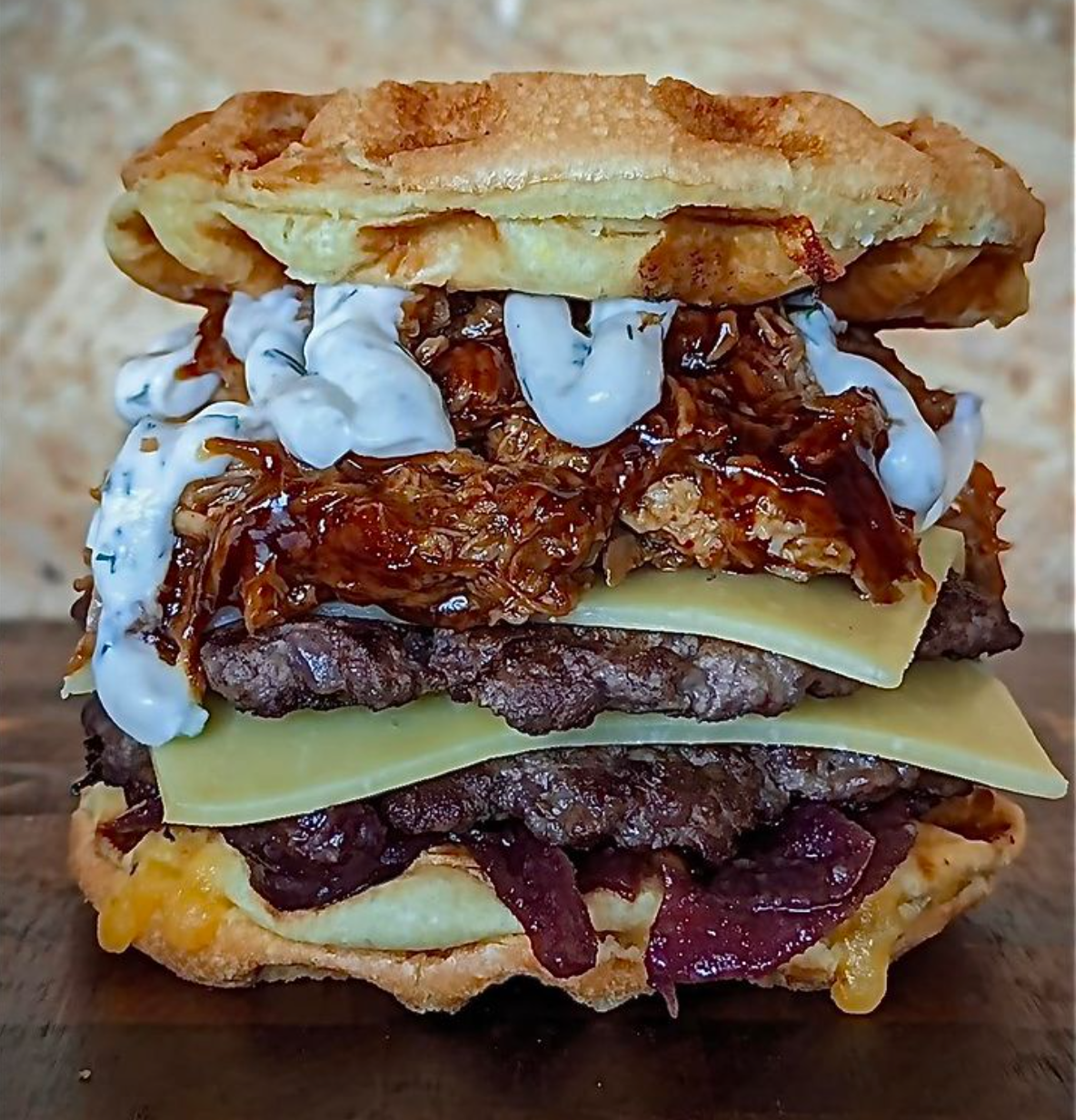
10. The Bun and Bones Club – Stockport
Yes, that’s a waffle burger…These folks love mixing things up (Credit: The Bun & Bones Club via Instagram)
This is another spot that doesn’t get talked about enough, but thankfully, we have a couple of people in the office who know a thing or two about Stockport and can gladly vouch for Bun and Bones being not only some of the best burgers in the town but also one of the best burger places in Greater Manchester.
Known for ever-changing and highly experimental weekly specials, B&B over in Hazel Grove isn’t just a staple in the SK fast food scene, but they even won Best Takeaway in the North West back in 2021, which came as anything but a shock at the time.
Since then, their success has even helped them spawn sister spot Dough and Bones, but they’ll forever be known as the kings of unique and clever burger creations. They’ve put everything from steak and ale pie filling and crispy potato cakes, to pulled treacle ham, toffee apple chutney, Asian roast pork belly, homemade schnitzel and more on their burgers — and that was in the space of a month!
Venturing even further out into Greater Manchester in search of the best burger places, we’ll confess that we hadn’t tried much-loved local eatery Smashville Burger UK until very recently, but it’s safe to say we’ve been sleeping far too long on this one.
Having recently opened a second site in Bolton following the rave reviews from their first over in Oldham, the name is getting bigger and bigger, but the unique selling point of this brand is that it started out… in a petrol station.
That’s right, building on the gas station food culture that is so commonplace in America, Smashville made its name by serving as somewhat of a drive-thru whilst still slinging some of the most authentic smash burgers you’ll find anywhere in the region. They do more than that, too, but we say start simple.
A burger’s dozen! That’s the right phrase, right? But on a serious note, there aren’t many places that take lifting the humble cheeseburger into a gourmet dining experience like the Hawksmoor.
Literally world famous for their meat-crafting expertise, it’s no surprise that Deansgate‘s culinary cornerstone is really, really good at crafting the highest quality beef into perfect little patties and slapping them between perfectly baked brioche buns.
Having collaborated with everyone from Burgerism here in Manchester to the very best food brands all throughout the nation, the Hawksmoor burger is a perfect example of it taking great skill to not just do the classics really well, but to master them and raise the bar extremely high.
This list is feeling very red meat-heavy at the moment, so let’s take a look at one of the very best places to get a chicken burger anywhere in Greater Manchester: Bird of Prey.
When this place first opened, we remember how mad the queues were and it didn’t take long for us to figure out why. BoP, as it’s affectionately known to us these days, are self-confessed ‘chicken freaks’ and we’re happy to say we share their foodie affliction.
Tucked just off the Oxford Road Corridor on one of Manchester’s newest city squares, the ‘PFK’, ‘smokestack’ and ‘the halloumi one’ are still some of our go-to choices when we fancy a cheeky treat for lunch or a treat on the way home from the pub.
14. Bird at Public – Northern Quarter
Public took over a prime spot on the corner of Stevenson Square a couple of years ago, and more recently launched its Bird concept.
There’s all sorts of ‘clean’ battered and fried chicken in both box meal and burger format.
ADVERTISEMENT
The chicken here sits between tempura and classic southern-fried styles, with maximum crunch guaranteed.
Grab yourself a box with chicken salt crinkle fries, plus a side of frickles and some smacked cucumber, and you’ll be ready to box off a few more happy hour cocktails.
15. What’s Your Beef – Kargo MKT (Salford) and Bolton Food Hall
WHAT a feast this was.So many different options vying for the top spot.Ridiculously good – our fave has always been the spicy ‘Freebird’ with a side of those ridiculously good duck fries. (Credit: The Manc)
We can’t keep prattling on about the simple pleasures of a proper good beef burger without talking about one of the GOATs, and What’s Your Beef is certainly up there.
After enjoying a spell at Calcio! on Dale Street, WYB has now truly hit its stride at Kargo MKT inside Salford Quay’s newest food and drink trader destination, Central Bay.
In case you need an idea of just how good these guys are at what they do, their ‘Stateside Deluxe’ made it into the top five best burgers at The National Burger Awards back in 2019, and they’ve been building a stellar reputation ever since.
Whilst we’re on the subject of food markets, any local knows that the Arndale Market has some of the best food spots you’ll find anywhere in the city and, as it just so happens, one of those spots serves up some seriously good burgers.
It’s easy to find Dunkin’ Burgers: all you need to do is follow the massive queue that wraps around the indoor market — funnily enough, it’s right next door to the other massive queue for Viet Shack.
We’ve tried this menu from start to finish multiple times over now, but we’ve found anything quite as delicious as ‘The Manc’ burger (for obvious reasons): a breakfast butty-style burger with two beef patties, bacon, sausage, a fried egg, cheese and sauce to be dunked in a pot of gravy. Perfection.
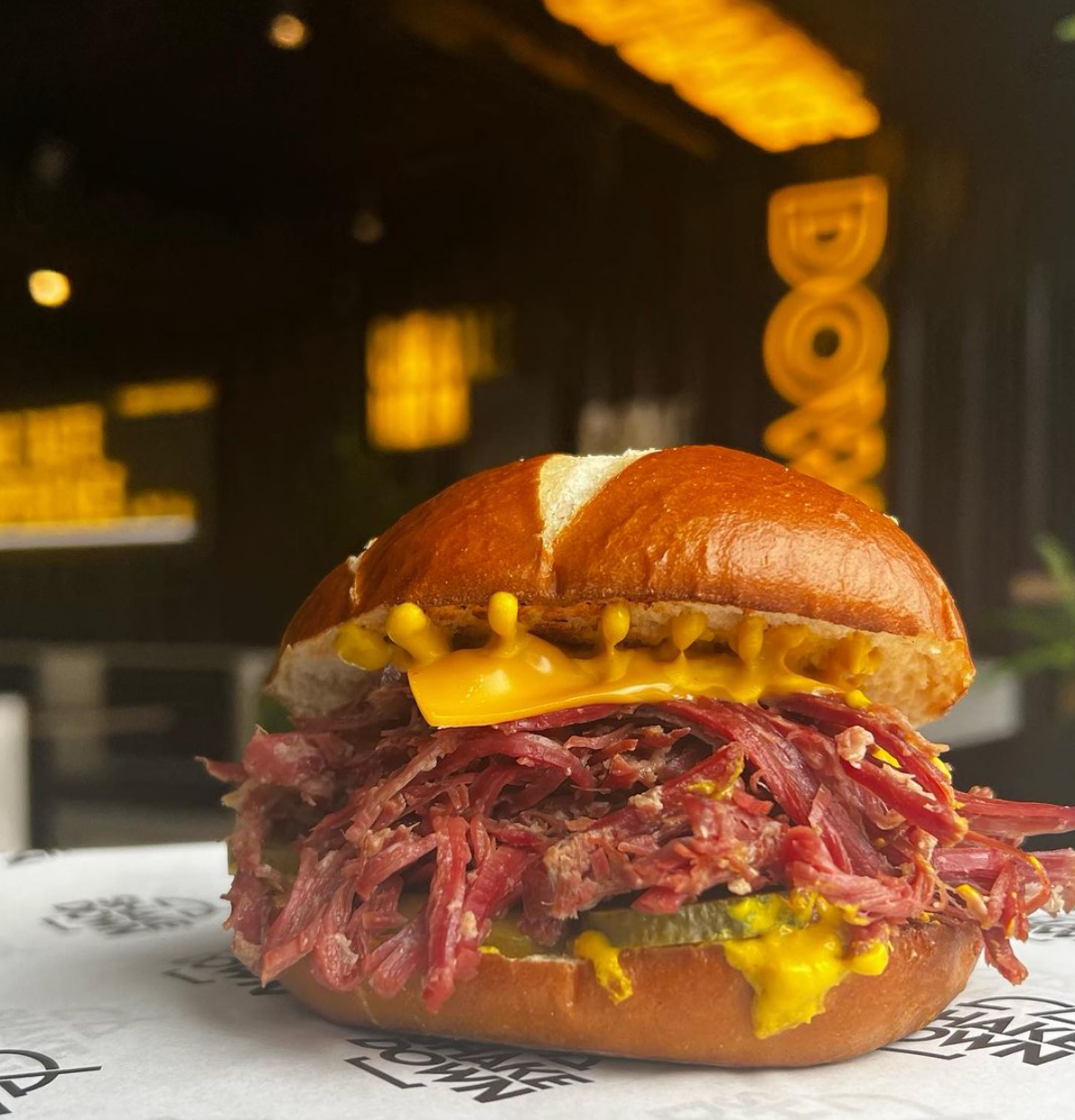
17. Shakedown – Withington, Wythenshawe and Cheadle Hulme
We’re getting towards the business end now, and once again branching further out into various parts of the region: three, to be specific, and the one thing they all have in common is the almighty Shakedown.
Discovered during a takeaway night while at a mate’s house, we’ll admit we’ve never heard of this place up until that point, but since then we’ve ordered from here a few times and it’s come to feel like a bit of underdog on the Manc burger scene; a cult favourite to those who know it but no way near as reputed as it should be.
ADVERTISEMENT
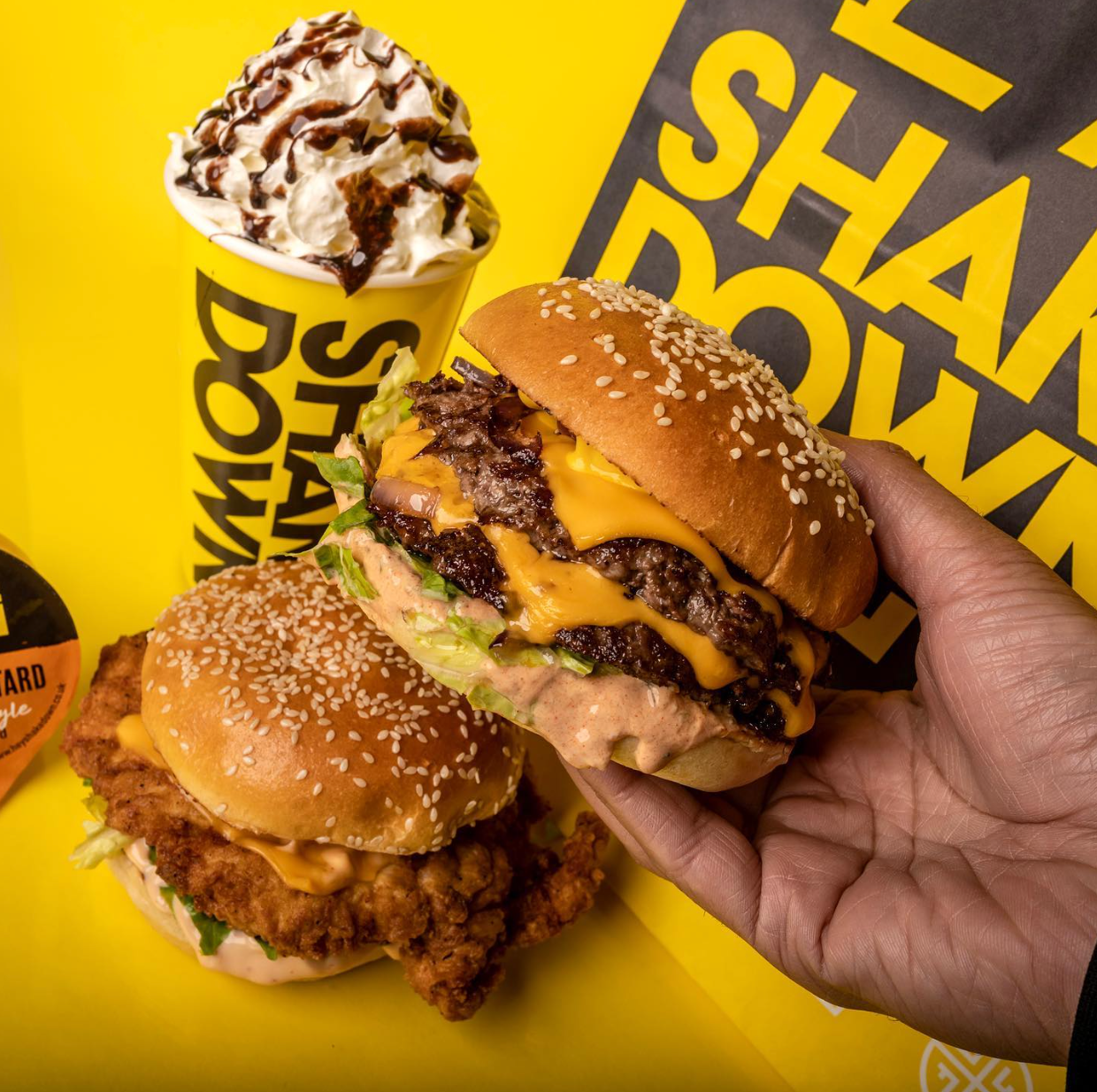
Known for sumptuous shakes, sides, crispy quesadillas and some fat ol’ burgers, be it ‘The Super Beefed Up!’, ‘The Zesty Chicken Burger’ or even the grilled cheese toastie, they’re all solid options and turn up just as paper and foil and they do there in the brick-and-mortar — which isn’t always the case.
18. That Burger Place – Ape & Apple, city centre
You already know them for their burgers, but now the couple behind That Burger Place have taken on a new job as pub landlords.
Ryan and Megan are now behind both the taps and the fryers at the Ape & Apple pub in Manchester city centre, in a unique new partnership between them and Joseph HOlt.
Now you can get their California-inspired smash burgers, wings and loaded fries, alongside a great pint.
19. Burger Box – Fallowfield and Longsight
For the penultimate stop on our burger-based tour of Greater Manchester, we thought we’d pick out an affordable, uni-friendly pair of accessible eateries which do exactly what they say on the tin: deliver solid burgers, often in a box. There’s a place for those stumbling home fast-food takeaway vibes, and we can definitely make room for this one.
ADVERTISEMENT
Sky-rocketing in popularity thanks to putting in the graft as a late-night favourite in Fallowfield, a.k.a. student central, Burger Box opened up a second store down the road in Longsight not long ago, and now more Mancs are getting a taste; it helps that they serve from two entrances as well.
Located on Stockport and Wilbraham Road, respectively, this place might be the relatively new boy on the block, but staying open until 3am is a huge perk, and the regular footfall alone should assure you of the quality. Also, the loaded boxes with your burger of choice, four wings, fries and a drink are a real value-for-money option in a cost-of-living crisis.
We sadly had to say goodbye to leading veggie and vegan burger spot, The Vurger Co., a little while ago, and while it’s definitely a big loss to Manc plant-based eaters and beyond, what has taken its place is, rather fortunately, an absolute belter.
Landing in Manchester city centre direct from London, Smoke and Pepper impressed us from the moment it opened and didn’t take long to begin queuing out the door, thanks to its varied and flavourful menu that’s reputation clearly preceded it.
In complete honesty, we often just find ourselves ordering chicken tenders from this place sometimes when we’re passing, but in terms of recommendations, we genuinely want you to try the divisive ‘Flying Dutchman’, which has an onion instead of a bread bun, for yourselves and let us know what you think.
ADVERTISEMENT
21. So Famous – Piccadilly Trading Estate
Credit: The Manc
We’re nearing the finish line now; next up is So Famous – not to be confused with Almost Famous – which is based behind the main bustle of Piccadilly, where they’re quietly nailing the patty game.
They’ve featured on our Takeaway Champions (TC) series over on The Manc Eats in the past and proved to be one of our most popular episodes for good reasons: because the burgers are really, really good – not to mention being pretty well-priced too.
You can’t go wrong with whatever you order here, to be honest, but what we will say is that we’re a little obsessed with their onion rings, which seem to achieve that perfect balance of light, crispy, almost Cajun-style batter, whilst still giving you that deep-fried satisfaction.
22. DRIP – Burnage
From one delivery delight to another. Our belt loops are being sufficiently tested now, but before they drop, we urge you to try DRIP, a.k.a. another one of the best takeout burgers in all of Manchester, as far as we’re concerned.
They’ve also featured on TC before, and we’ve ordered them even more often in our own private time (you don’t want to see how piggy that gets), and we only reiterate how much they scratch that same itch of a naughty late-night scran, even if you grab one during the day.
As for what to choose, their Nashville fillet gives Drake’s new and viral Dave’s Hot Chicken a very good run for its money. We’ll leave it up to you to decide which one comes out on top.
Our penultimate pick is one we think is still criminally underrated when it comes to the burger scene in Manchester city centre, maybe because they’re arguably better-known for their ice cream and dessert selection.
Nevertheless, Big Licks – who have relocated to the Printworks from their old Liverpool Road location – do bloody good burgers and big ones, at that. They’re not exactly known for portion control here, and we’re glad, because if we’re eating a burger, we tend not to be thinking about the ol’ waistline.
Again, perhaps another reason they’re not so regularly associated with burgers is that they only have two fixed options on their menu: the smashed Angus beef burger and the buttermilk chicken version, but trust us, that 100% grass-fed meat and the signature ranch sauce on the poultry one are top quality.
As always with these lists, please don’t ask us to put them in order; it’s simply too hard, and there’s enough room for all of them in this big burger-loving corner of the world we call Greater Manchester.
It goes without saying that there are dozens of other burger places that could rightly be considered among the best: Shack, Grand Daddy’s, Fat Hippo, and now even Popeye’s, just to name an unfairly small few. It was a real Sophie’s Choice this, but you’ll have to forgive us if your favourite isn’t on here.
Or, you know, you can always just argue with us in the comments – we’ll try not to take offence.
Nevertheless, if you’re looking for something city-centre-based or a lesser-known burger spot further out into the reaches of our 10 beautiful boroughs, we promise it won’t be hard for you to find your favourite burger.

 Emily Sergeant -
19th August 2022
Emily Sergeant -
19th August 2022