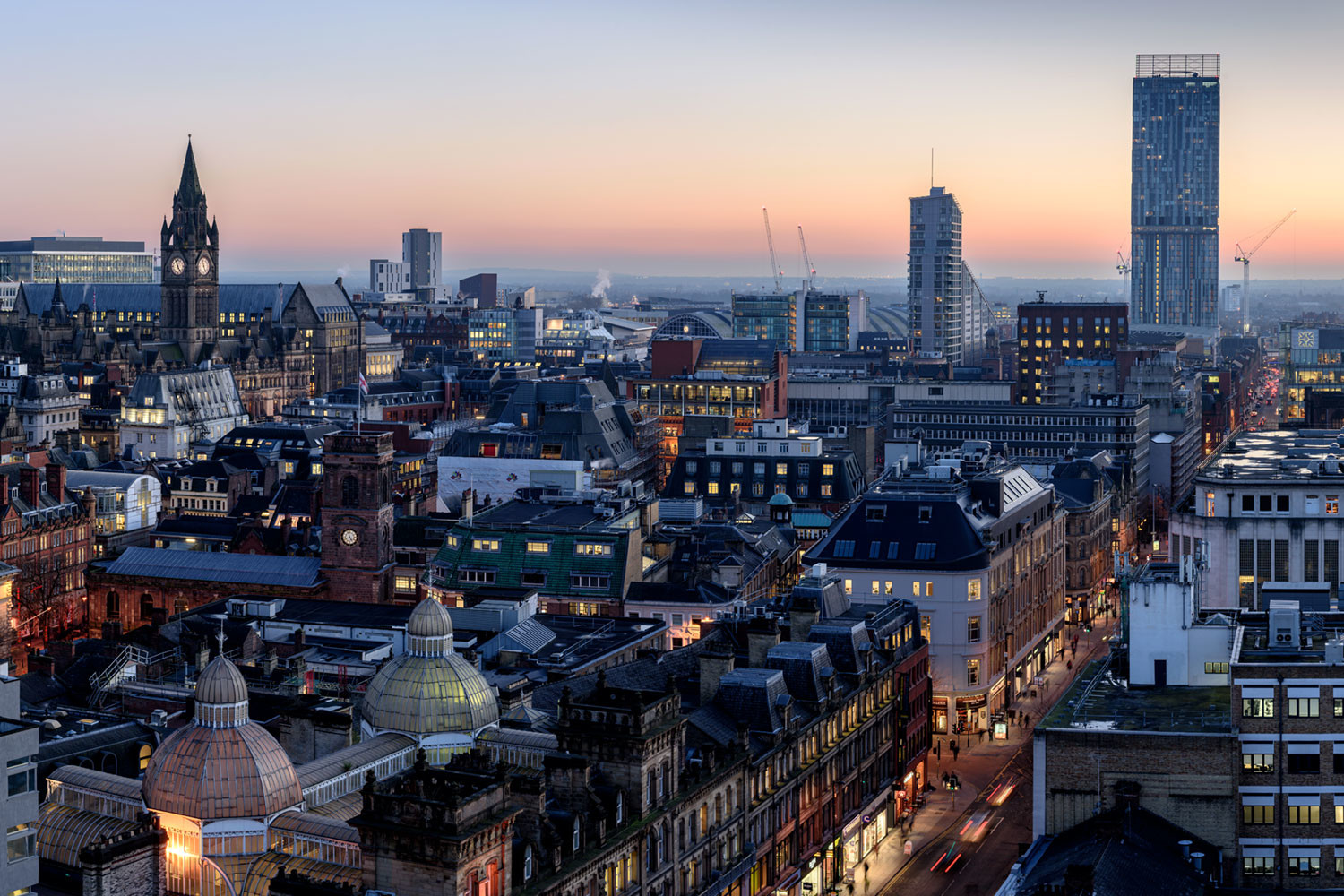
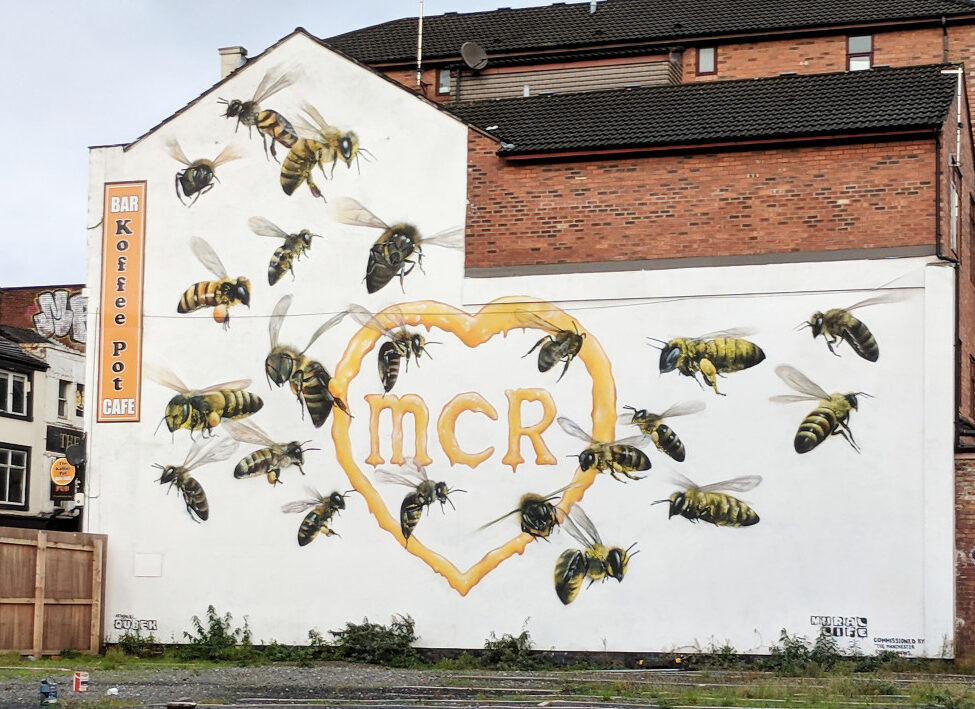
A global powerhouse of a city that’s instantly-recognisable for its rich industrial and historical background, its impressive architecture, vast cultural landscape, musical exports, media links, scientific and engineering output, social impact, sports clubs, famous faces, transport connections, and so much more.
Not to mention, it’s also home to a growing population of more than 2.8 million people – the best people in the world, we might add.
But what does the word Manchester actually mean?
And how often do Mancunians genuinely stop to have a think about where our city’s name comes from?
ADVERTISEMENT
Our guess is probably very rarely.
Perhaps it’s a thought that pops into your head once every blue moon (or red moon, if you’re from that side of town), but you never think to act on finding out the answer, and then before you know it, you’ve forgotten about the thought entirely and you end up carrying on with your life none the wiser.
ADVERTISEMENT
Even if you do have a vague idea about its origins, there’s a good chance you don’t know the full story behind it, so let’s get the the bottom of it then, shall we?
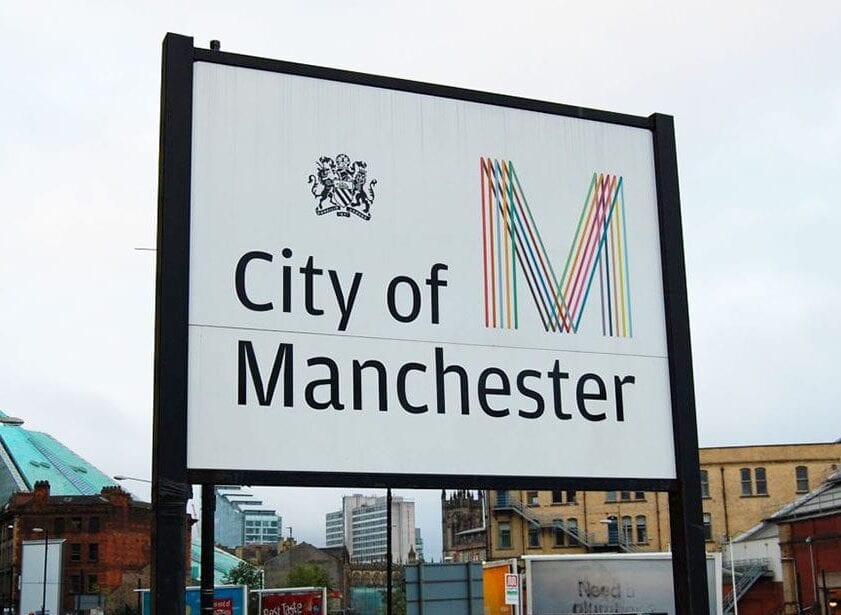
Geograph
The history of the Manchester name began during the Roman conquest of Britain.
If we’re explaining it in simple terms, it all started when a simple timber fort – constructed to help defeat a local Celtic tribe named the Brigantes – was built sometime between AD 78-86 on a rocky outcrop at the place where the River Irwell and River Medlock met.
ADVERTISEMENT
This fort was then rebuilt in stone at the beginning of the third century and was given the Latinate name Mamucium (also known as Mancunium).
Mamucium means ‘place of the breast-like hill’, and was named for the mound on which it stood.
While these names are generally thought to represent a Latinisation of the original Brittonic word mamm – meaning ‘breast’ – and have become known as the accepted etymology for Manchester, more recent work does however suggest that it could come from mamma – meaning ‘mother’ – which is in reference to a local river goddess.
The ‘place of the breast-like hill’ definition is the first reference of occupation of the area, although the fort and small village that sprung up beside that breast-shaped sandstone bluff are understood to have been abandoned after the fourth century, with the next settlement being situated just a mile away at the site where Manchester Cathedral now stands on Victoria Street in the city centre.
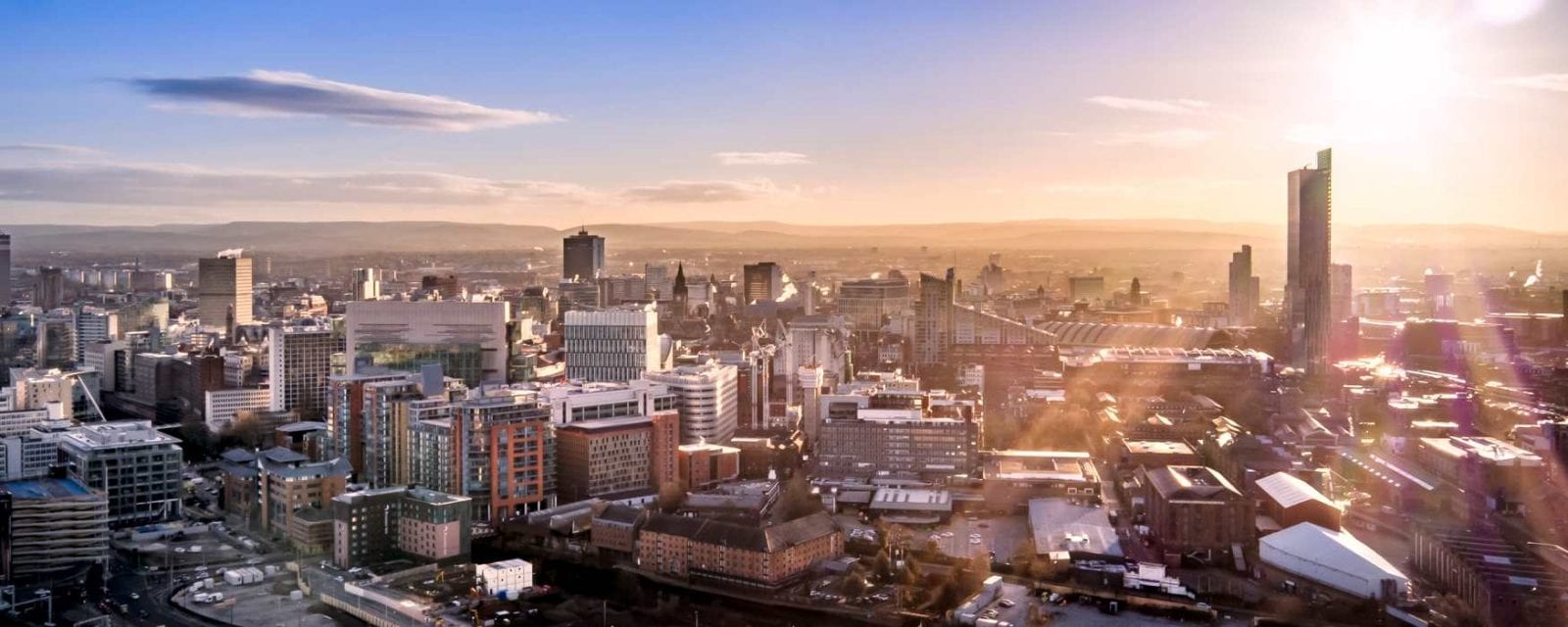
It didn’t quite end there though, as the evolution of the settlement continued over the centuries, with the Anglo-Saxons changing the fort’s name to Mameceastre in 1086.
ADVERTISEMENT
This is believed to have come from the Old English word ceaster – which means a ‘Roman fortification / Roman town or city’ and itself being loanword from the Latin castra, also meaning ‘fort or fortified town’ – which you may also recognise as being similar to the name of the nearby city of Chester.
And as the years went by and the usage became more frequent and widespread, the name Mameceastre gradually evolved to be known as the name we so proudly use today – Manchester.
But what about the adjective to describe the city’s brilliant people?
Well, this one’s a little easier to work out.
The word has directly evolved from the medieval Latin form of the place-name, Mancunium, with linguists and historians believing ‘Mancunian’ was most likely a neologism (new word) coined in the Victorian times, before eventually being shortened to Manc
So, there you have it.

Feature
Grounded MCR – the Levenshulme community cafe crafting coffee and comfort food for a great cause
Emily Sergeant
Over within the grounds of one of Levenshulme’s most popular parks is a community cafe that’s doing things a little differently.
Starting off life as a little coffee trike back in 2021, and now based inside a bright-yellow shipping container in Levenshulme‘s Cringle Park, Grounded MCR CIC is a social enterprise that does more than just make you a brew.
Set up with the idea of creating a welcoming space for the whole community to gather, with a key focus on sustainability, Grounded serves up specialty coffee, lots of other hot and cold drinks, and yummy homemade food – much of which is grown by hand, on and around the container.
This is Grounded MCR / Credit: The Manc Group
Coffee beans sourced from a local roaster that pays farmers properly, tasty bakes on offer from a handful of local makers – including bread from the incredible Stockport-based charity, Pure Innovations – and dozens of free community events organised throughout the year are just a few of the reasons why Grounded goes above and beyond your typical cafe.
Sustainability – and affordability, especially amid the ongoing cost of living crisis – are two huge driving factors for Grounded, especially through their partnership with FareShare Greater Manchester and utilising the ‘Too Good To Go’ scheme.
By delivering and using surplus food that would’ve otherwise gone to waste, Grounded is able to keep their prices low whilst still creating some delicious scran.
The Levenshulme community cafe crafting coffee for a great cause / Credit: The Manc Group
Their ‘FareShare Fridays’ are hosted each week, where that morning’s delivery is dedicated to one specific dish and served up for just £1.
To top it all off, Grounded also works with vulnerable adults in honing their barista and hospitality skills, and is also in partnership with ‘Women in Probation’ too to ensure their impact goes further than just what comes in a cup or on a plate.
”We’ve worked hard to create a space that feels safe and welcoming for all,” Grounded declares in a statement on it’s website – and we think they’ve succeeded.
Finding Emily – the hit new romcom that really romanticises Manchester
Daisy Jackson
When news broke of a new romcom filmed and set in Manchester, forgive us for an eyebrow raise.
You see, when TV shows and films choose our city as a backdrop, it can sometimes get a little slapstick, a bit gimmicky, riddled with stereotypes (see: Jack Whitehall’s BRITs gags).
Either that, or the local sets are so aggressively styled for the screen, they’re barely recognisable as Manchester anymore (see: every Harlan Coben drama).
But then we kept catching glimpses of the Finding Emily cast and crew around town a couple of years ago, taking over iconic boozers and milling around legendary gig venues, and that sceptical eyebrow came down a peg or two.
So imagine our delight after seeing the film and finding a well-researched, authentically Manc, love letter to our city that actually romanticses what it’s like to live here in the present day – not a Hacienda stripe in sight.
The plot of Finding Emily follows Owen (Spike Fearn) on his mission to track down ‘Emily’, a girl he met on a night out who mistakenly wrong-numbered him, with the help of another Emily (Angourie Rice).
Throughout the film, the duo drink, dance, and dig for clues in all corners of the city, with backdrops that will be very familiar to those of us who live here.
There’s a bar crawl all along Canal Street, including a drag cabaret show at VIA; a job hunt in Piccadilly Records; a queue joined outside Rustica.
We see scenes set inside some of Manchester’s most beautiful spaces, like the Whitworth Cafe and the Sackville Street Building, and plenty of iconic cityscapes like the view from Deansgate station and the backdrop of the University of Manchester.
They even play darts in the Peveril of the Peak.
Finding Emily romanticises the less glamorous, more authentic side of the city too – Northern Quarter alleyways, a Fallowfield house party, a proper kebab on the Curry Mile, and an all-nighter in the Central Library.
While a lot of film crews hop over to leafy Didsbury to house their characters, our lead figures in the film instead live in terraces beneath the viaducts in Smedley, or in a converted mill apartment in Chorlton Mill.
It’s not only the location scouts that put in the work on Finding Emily – there’s also a respectable number of local characters and artists who pop up with cameos.
Antony Szmierek features heavily on the soundtrack, and appears in-person in the closing credits.
There’s a video game played by Owen’s brother with graphics designed by celebrated local artist Stanley Chow.
Anna Phylactic performs on stage on Canal Street, W.H. Lung headline a gig at Night & Day, Luke Una stands behind the decks as a disgruntled ‘No requests’ type of DJ, and Stockport’s beloved Blossoms perform at the cast’s graduation ball.
I’m not sure we’ve ever seen a film or TV show so perfectly capture Manchester before, celebrating all its beauty and all its edges. It’s not performative at all.
If you’re a Manchester local, Finding Emily is a must-watch. But even if you’re not, this is a modern romcom with likeable characters and plenty of charm.