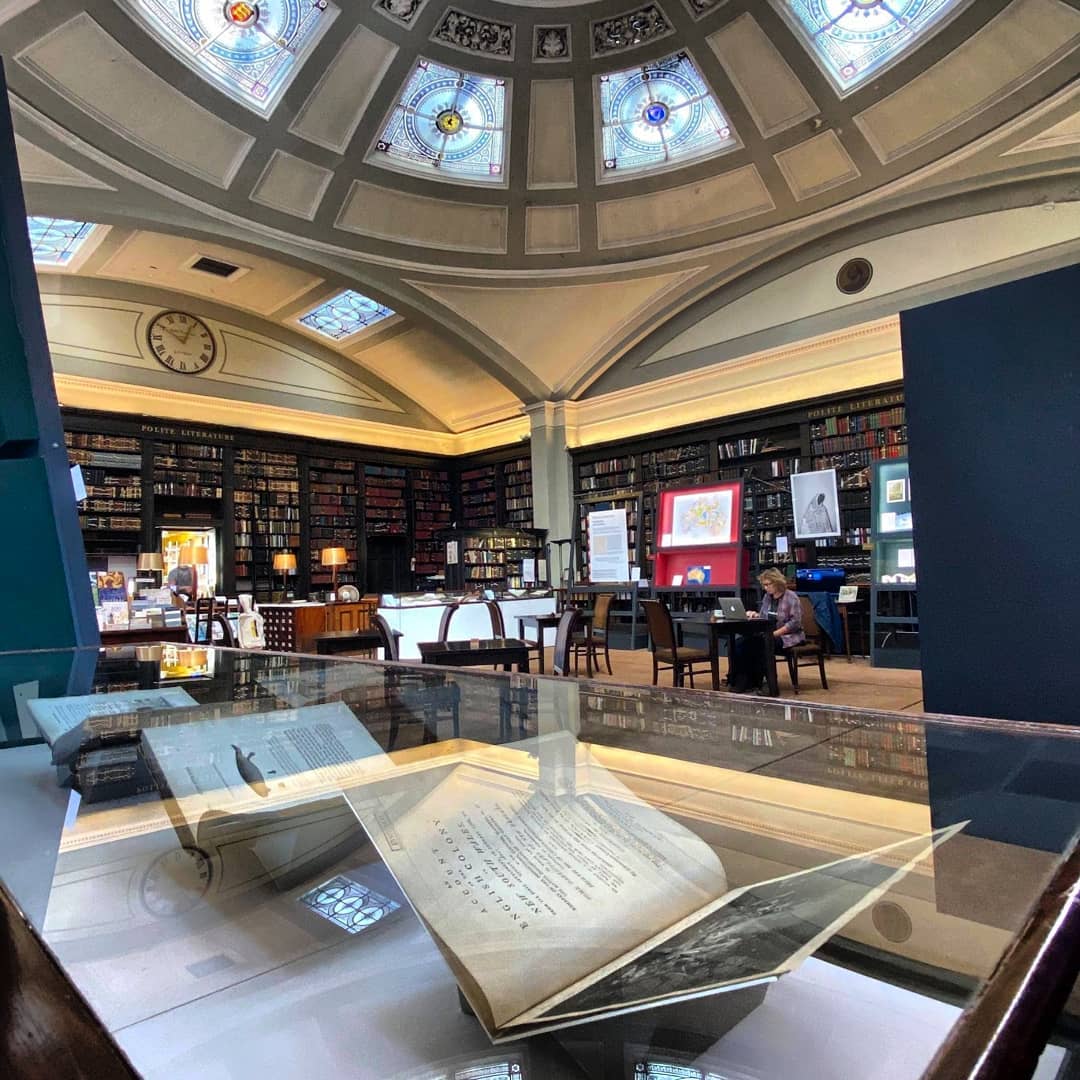
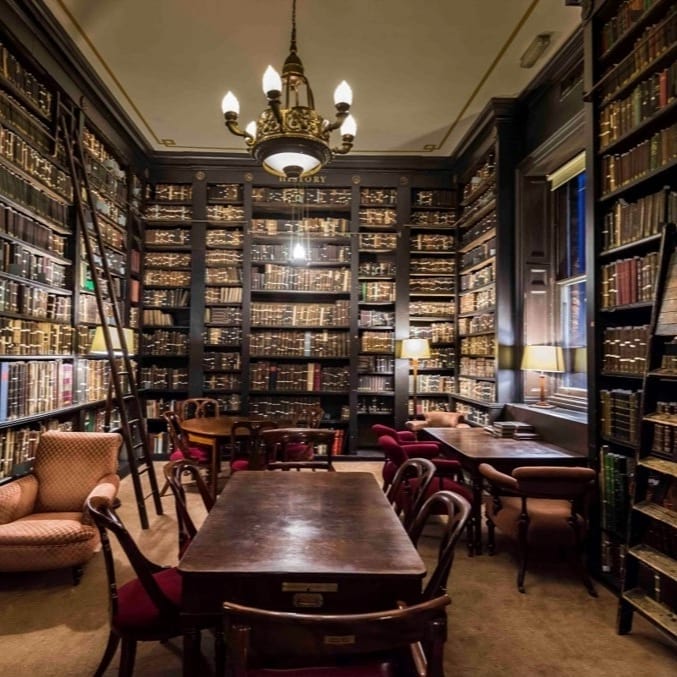
Hidden above The Bank pub on Mosley street lies one of Manchester’s better-kept secrets, the stunning Portico Library.
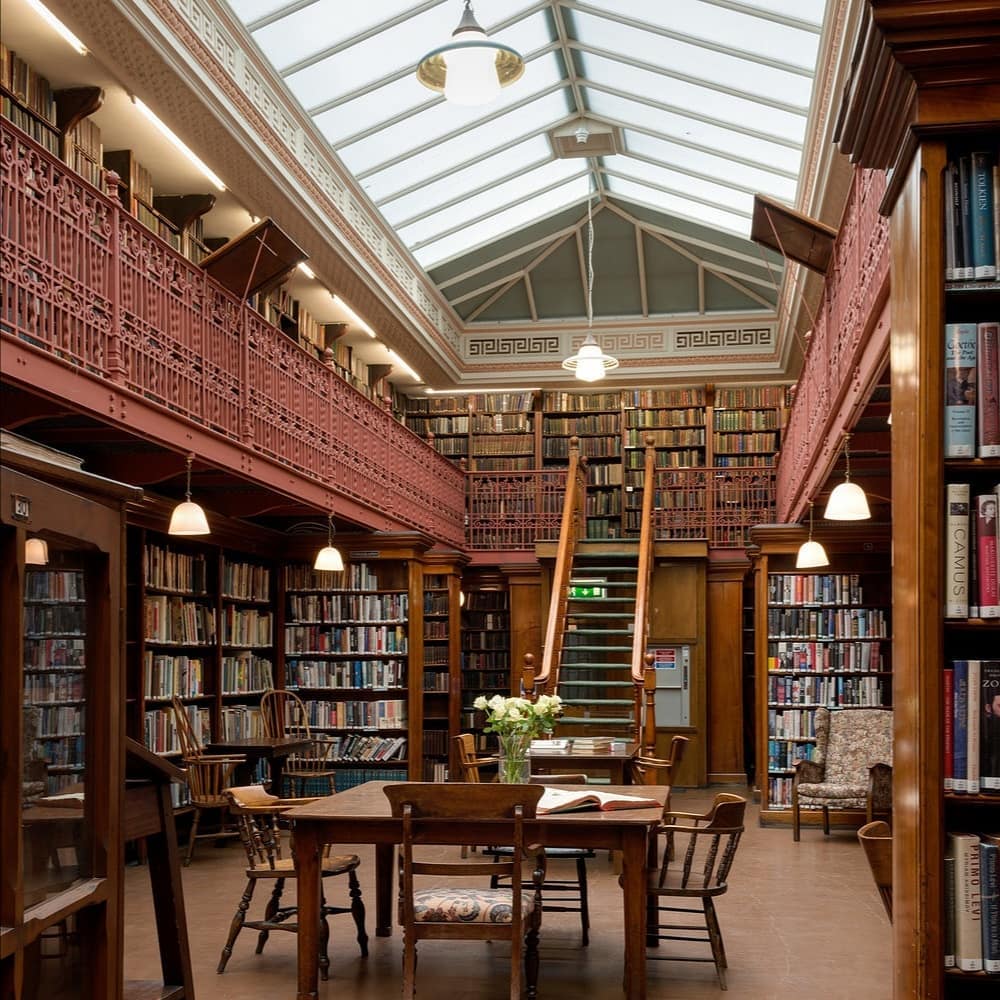
Accessed via a blink-and-you’ll-miss-it buzzer on Charlotte street, the solid door opens onto a winding staircase, in turn leading to a beautiful hidden library filled with floor-to-ceiling shelves stacked with rows of rare books.
Run using a membership format for over 200 years, it opened its gallery space up to the public in 2017 meaning you can visit and explore some parts of the impressive building – however, unlike your local library, you cannot browse the shelves as the books are very fragile.
There is an annual subscription available for those who want to support the library’s preservation and charitable activities and use the reading room and newspapers (with 70% off for 18-26-year-olds and students of any age) / Image: The Portico Library Sadly, a number of books in the library’s 19th-century collection are damaged to the extent that the team has created an endangered books list / Image: The Portico Library
The second oldest library in the city after Chetham’s, the Portico is home to over 25,000 books and has a long literary history. First established in 1806, its early members included world-famous authors, future Prime Ministers, and leading scientists.
Despite running on a membership format, according to the library’s Events and Programme’s Co-ordinator James Moss, the general public have been encouraged to come in since the 1980s.
ADVERTISEMENT
“It was initially a members institution but guests were welcome since the very early days of the library,” he added.
Founded at a time when Manchester was becoming the world’s first ‘modern’ city, the Portico was built with wealth amassed by titans of industry involved in colonialism and the industrial revolution.
ADVERTISEMENT
However, its early members – all men until the Married Women’s Property Act of 1870 – included people from all political perspectives, ranging from radical and liberal abolitionists and anti-poverty campaigners to exploitative factory owners.
The second oldest library in the city after Chetham’s, the Portico is home to over 25,000 books and has a long literary history / Image: The Portico Library Open to the public five days a week, the Portico library also hosts an eclectic calendar of events and exhibitions as well as welcoming guests to visit its cafe and shop / Image: The Portico Library
Once frequented by such famous names as author Elizabeth Gaskell, founder of atomic theory John Dalton, and Peter Mark Roget (who wrote the first English thesaurus), today it is run by a charity and is home to the prestigious Portico Prize, promoting writing and publishing across the north.
The library is also behind the Sadie Massey Awards which nurture literacy and learning among young people.
ADVERTISEMENT
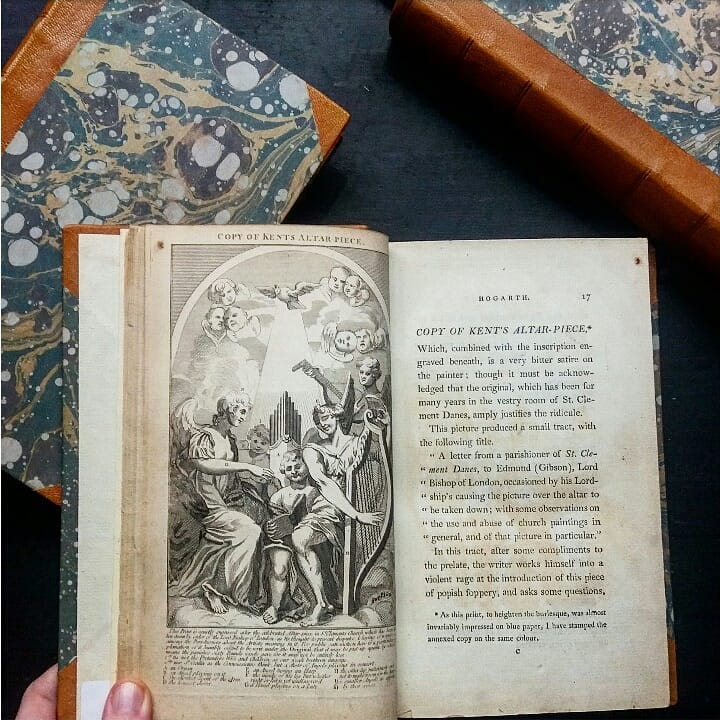
Within lies a veritable treasure trove of historic literature and rare 19th-century books, including a first translated edition of Goethe’s influential work about how humans perceive and interpret color that is in desperate need of repair.
Sadly, a number of books in the library’s 19th-century collection are damaged to the extent that the team has even created an endangered books list to catalogue those that urgently need restoring.
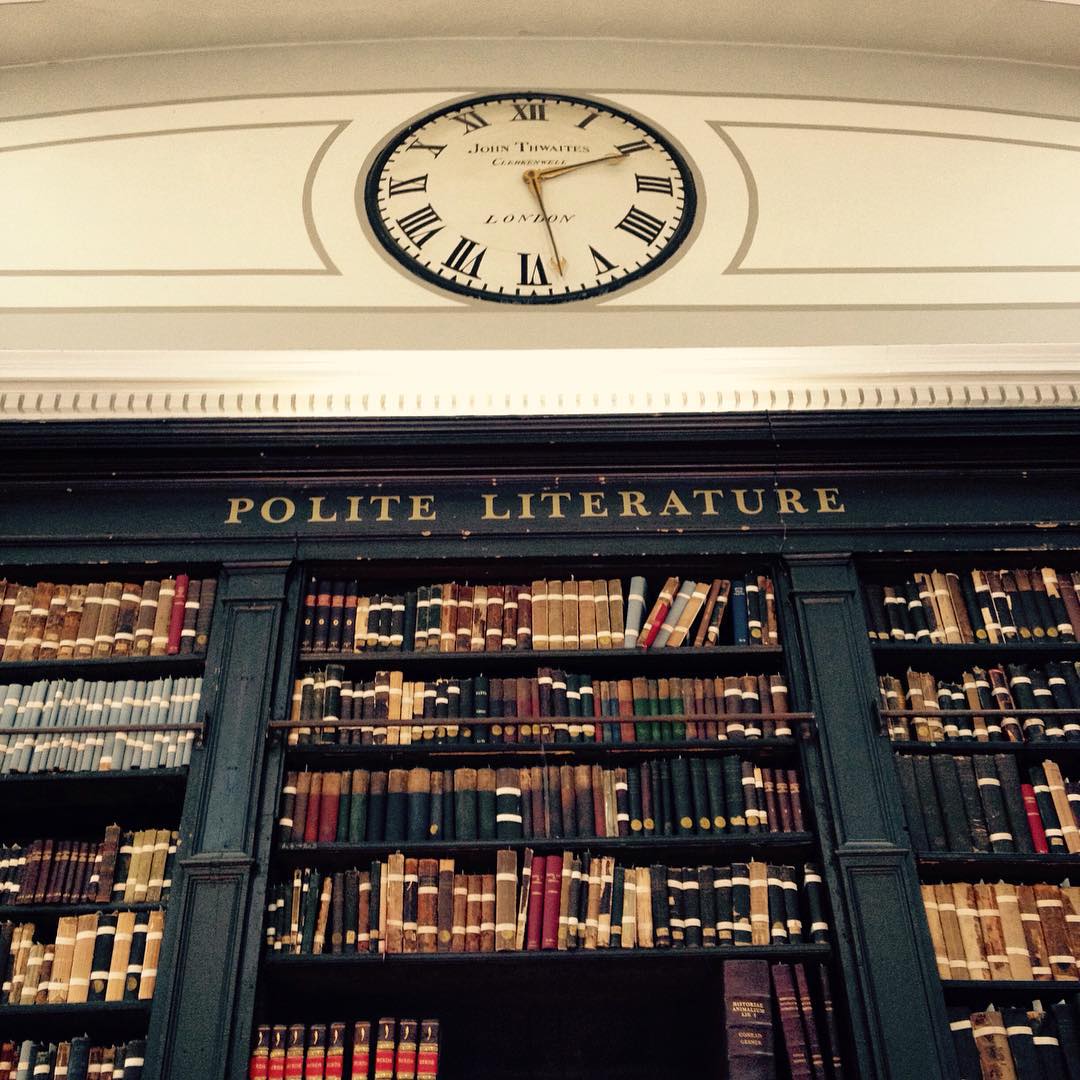
From historical records, ranging from books of proprietors to minutes books, issue books, and strangers books, to works of poetry and missives on travel, there are some incredible texts stored within its walls.
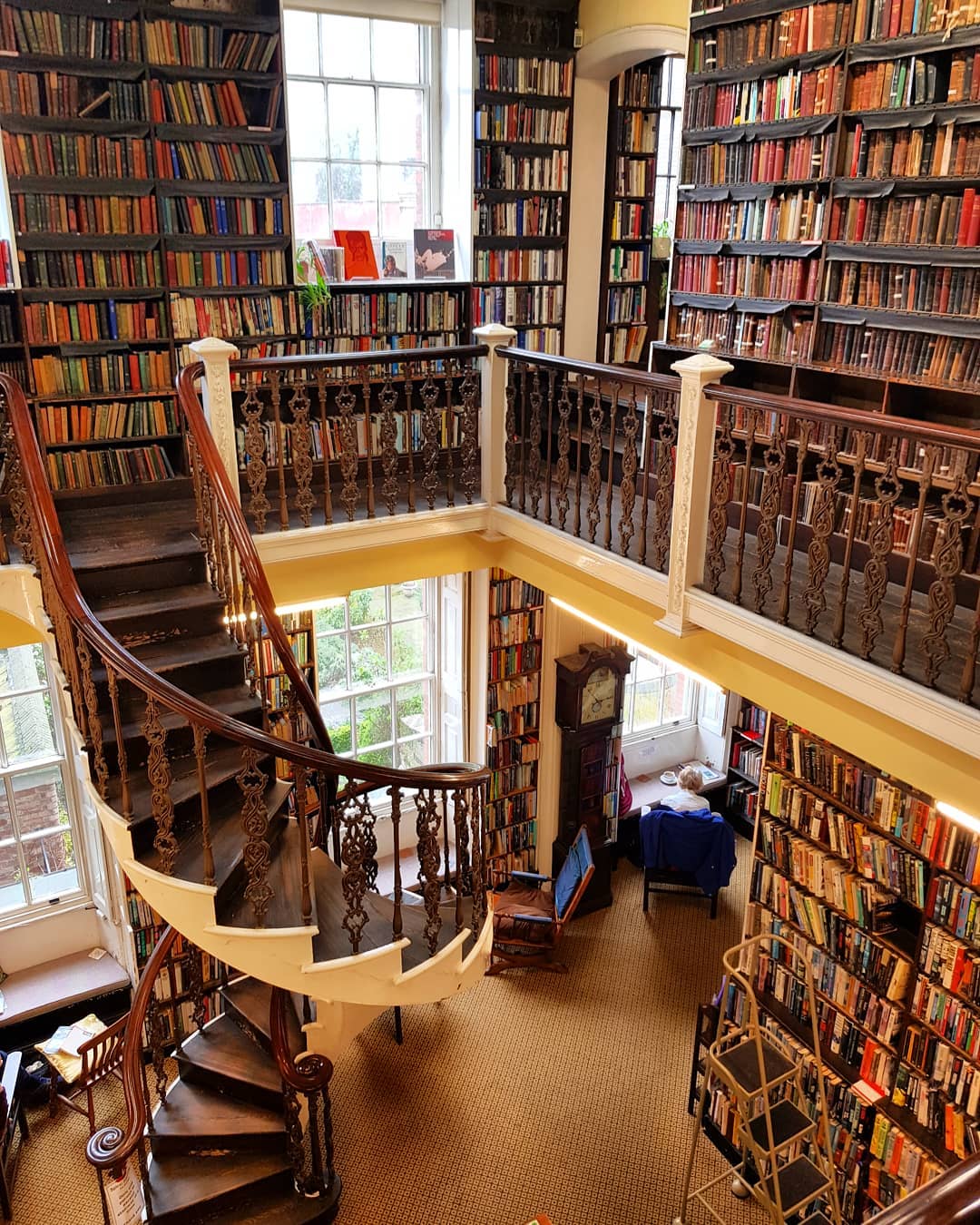
The Portico Library’s gallery space is open to the public, whilst its reading room is used by researchers, subscribers, volunteers, invited groups, event attendees, and anyone with a reader card (£5 a week) / Image: The Portico Library Originally, the library occupied the whole of the Grade II-listed Mosley street building but today it is constrained to the building’s top floor / Image: The Portico Library
Open to the public five days a week, the Portico library also hosts an eclectic calendar of events and exhibitions as well as welcoming guests to visit its cafe and shop.
The library’s gallery space is now home to a cute cafe where you can dine in on tea, sandwiches, and cake, however, its gorgeous private reading room remains off-limits – with private tours available to those looking to pursue membership to arrange on request.
ADVERTISEMENT
To find out more about the Portico, visit its website here.
Feature image – The Portico Library
Manchester
30 years ago, the IRA detonated a 1,500kg lorry bomb on Corporation Street in the heart of Manchester – here’s the story
Georgina Pellant
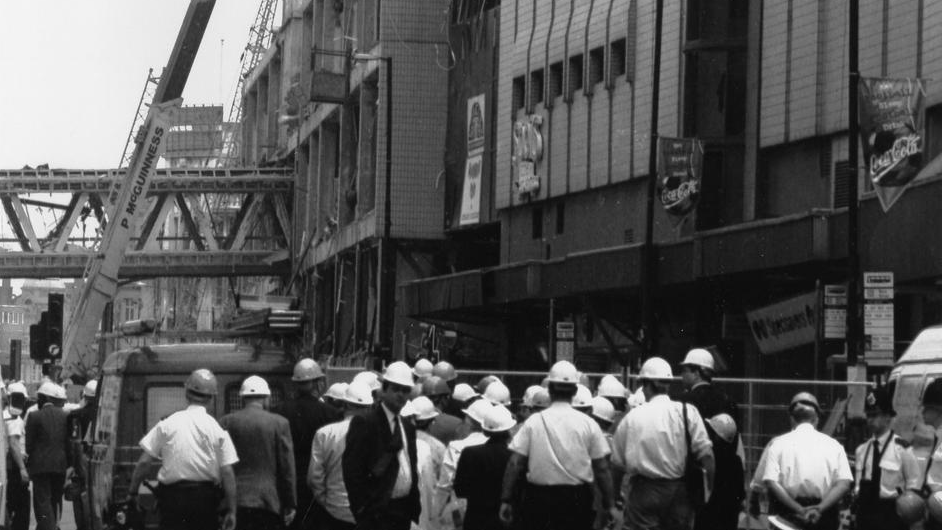
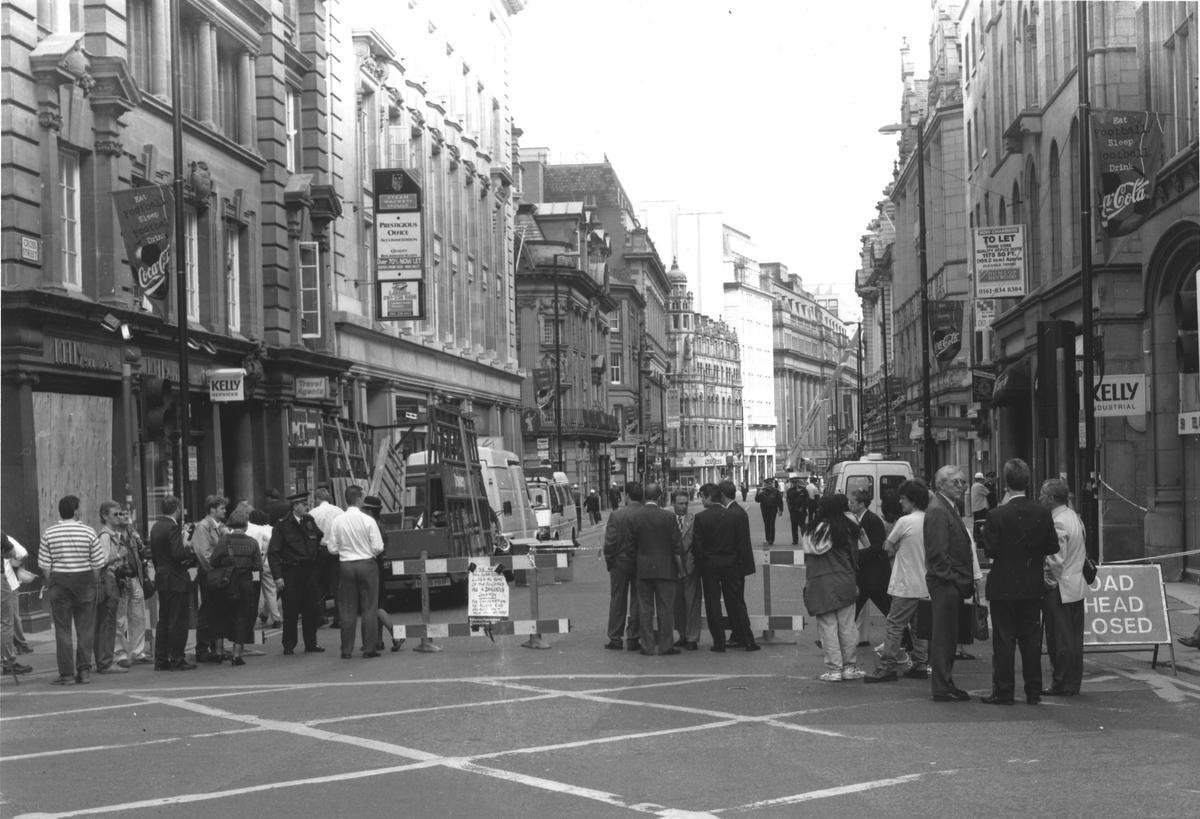
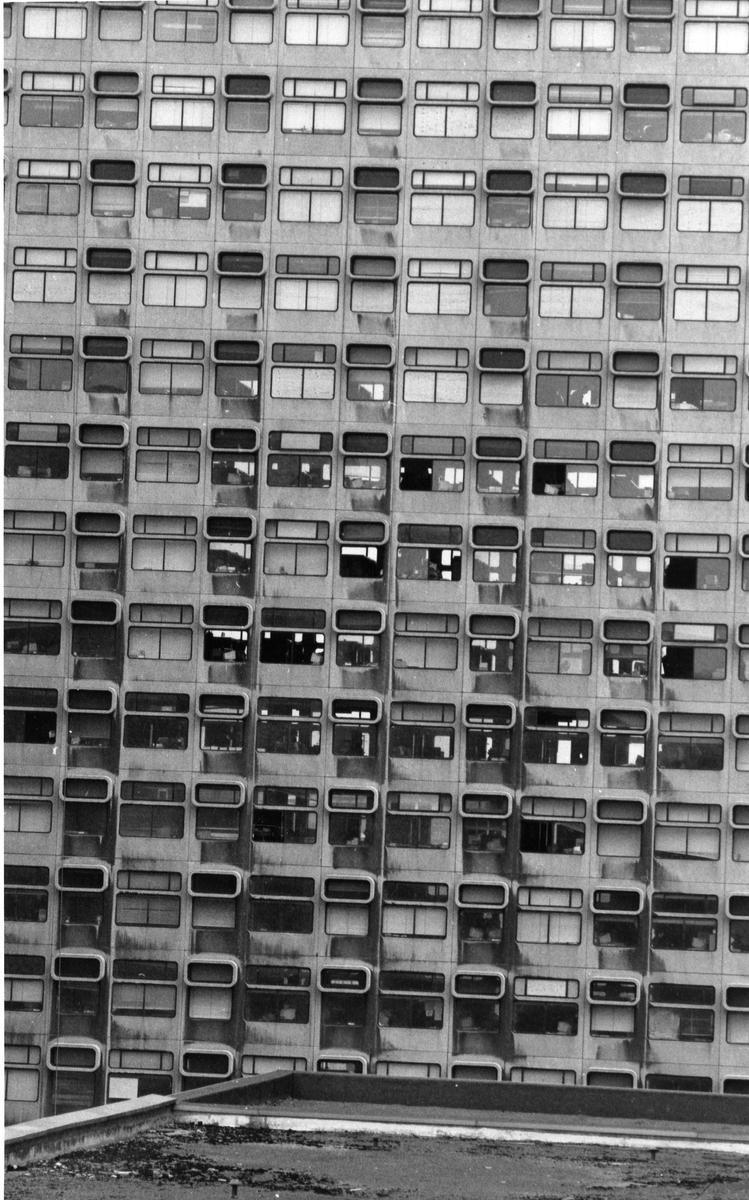
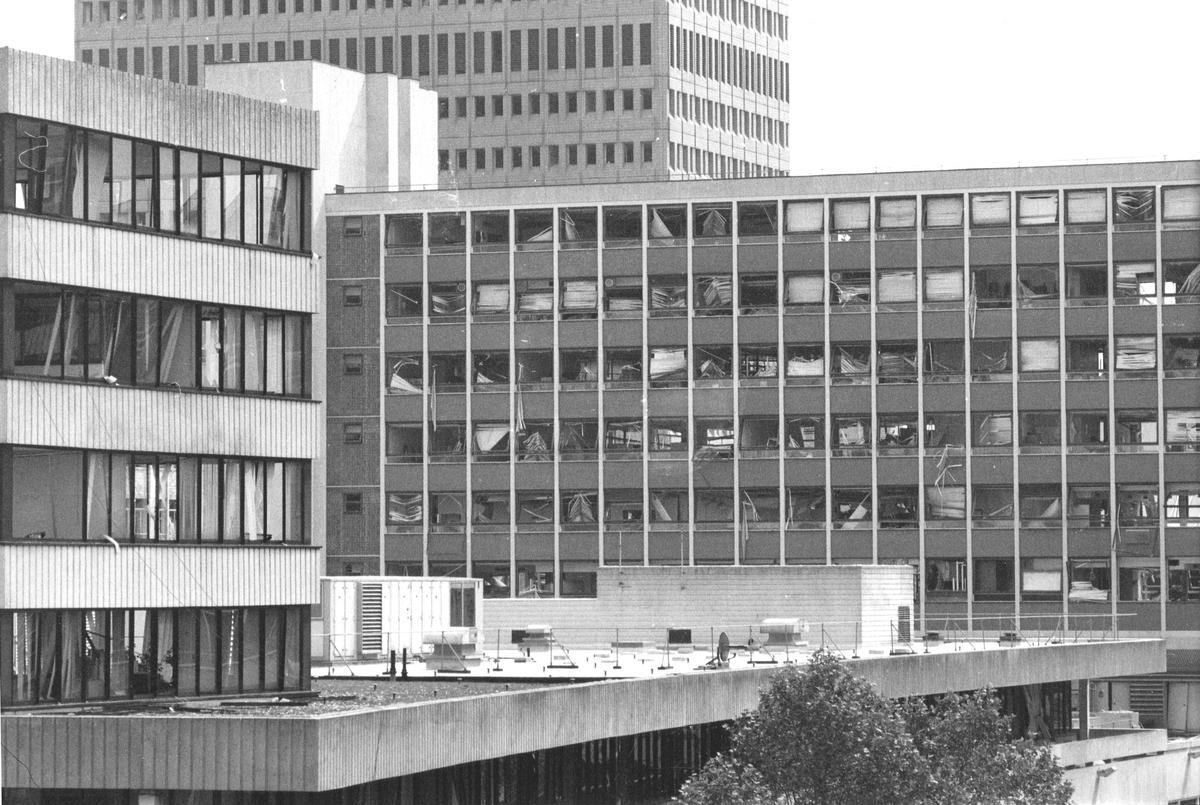
Today marks three whole decades since an explosion from the inside of a lorry parked on Corporation Street shattered windows and destroyed buildings across the city centre.
Causing an evisceration that stretched for miles, when the 1,500 kilogram IRA bomb went off in 1996, it was the biggest detonation in Great Britain since the Second World War.
Following the explosion, the city fell silent – leaving rack, rubble and ruin in its wake. Famously, one red post box was left standing – today fitted with a memorial plaque in remembrance of the tragedy.
It seems scary to think that back then, most people could only stand there, watch on and worry.
The bomb caused an estimated £700 million worth of damage to Manchester’s infrastructure and economy, and over a quarter of a century later, locals still tell the stories of where they were when it went off – and of the devastation it left behind.
Notably, one resident of the Cromford Court maisonettes on top of the Arndale – a 77-year-old RAF veteran suffering from the flu – didn’t even bother to get up when the telephone warning to evacuate hit, considering himself to have survived much worse feats during his time in military service.
Having been a rear gunner in a Lancaster in the war, he reportedly told police and authorities “he was buggered if he was going to let a small bomb affect him.”
In subsequent years, Danny O’Neill has become a part of an urban legend surrounding the bomb as his staggering story has been told time and time again.
Around 90 minutes prior to the detonation, the Provisional Irish Republican Army had telephoned in warnings – meaning that around 75,000 people were able to be evacuated from the area before the bomb went off from the back of a van.
However, the bomb squad were unable to defuse it in time, leading to over 200 injuries from people still left in the area.
Thankfully, despite those injuries, there were no fatalities, and many of those reported traumas came from the shattering of thousands of windows and other damage to buildings in which unsuspecting people were getting on with their days.
Several buildings near the explosion were damaged beyond repair and had to be demolished, while many more were closed for months for structural repairs, and this prompted the biggest regeneration of Manchester city centre ever – something that is still continuing to this day, arguably at a more rapid rate than ever.
The city lay dormant for days after the explosion, as people came to terms with what had happened and kept their distance. Many moved out of the centre for a period of time, while many more simply decided not to visit for fear of another incident.
It was a desolate place, eerily quiet, and in need of some serious TLC.
According to Home Office statistics, an estimated 400 businesses within half a mile (0.8 km) of the 1996 blast were affected, 40% of which did not recover.
Credit: Manchester Libraries
Market Street – near the explosion and at that time the second-busiest shopping street in the UK – was considered by some a “fearful” place, and one that was to be “avoided like the plague”.
The prospect of pulling Manchester’s bustling city centre out of its darkest depression was not casually approached by those in charge.
It was acknowledged as a mammoth task from the get-go, but Greater Manchester has never let anything get in its way. Despite how steep the hill is that we’re standing at the base of, we always manage to reach the peak, ready to go again.
Manchester City Council green-light new venue at Medlock Square, with Mamma Mia! The Party to open the immersive space
Danny Jones
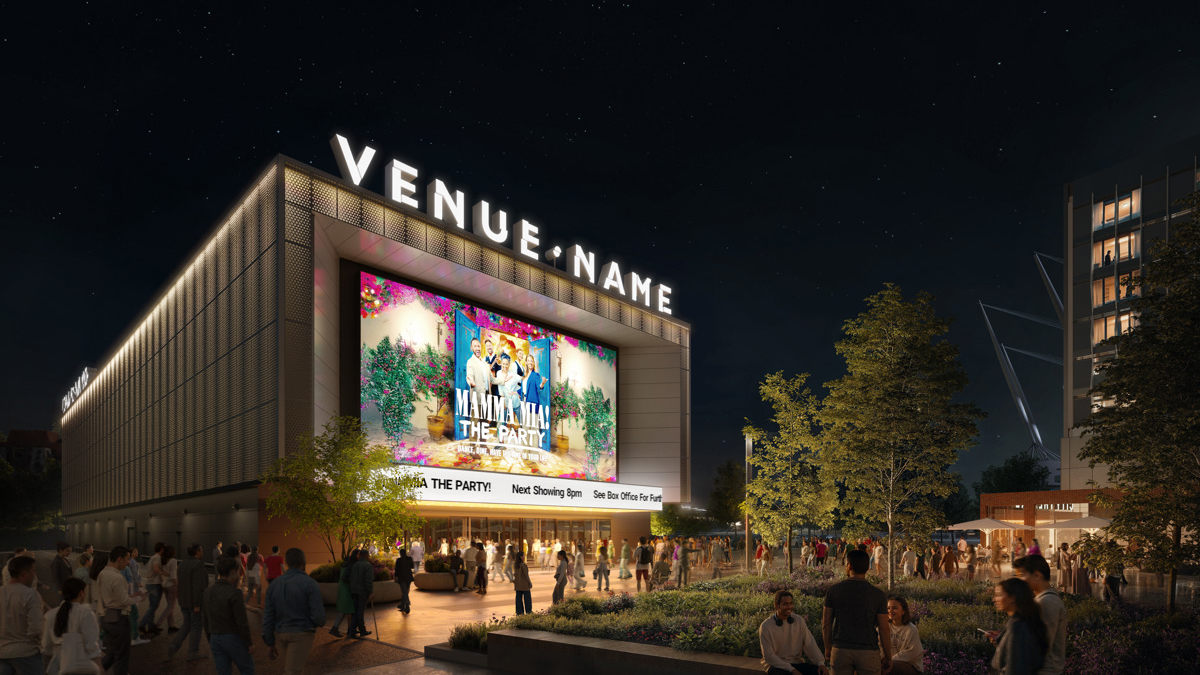
The smash-hit ‘Mamma Mia: The Party’ is set to land in Manchester next year as the maiden event of another brand-new space set to open as part of the upcoming Medlock Square development.
Etihad Campus has seen a lot of moving pieces over the past few years, be it the building of Co-op Live, the ongoing expansion of Man City’s home ground, the soon-to-launch hotel attached to the stadium and now Medlock.
But those in control of the land are content with stopping there; this looks to be just the start of a whole new evolution for the East Manchester area, with an as yet untitled new immersive arts, experience and events venue also set to join the new slate of projects.
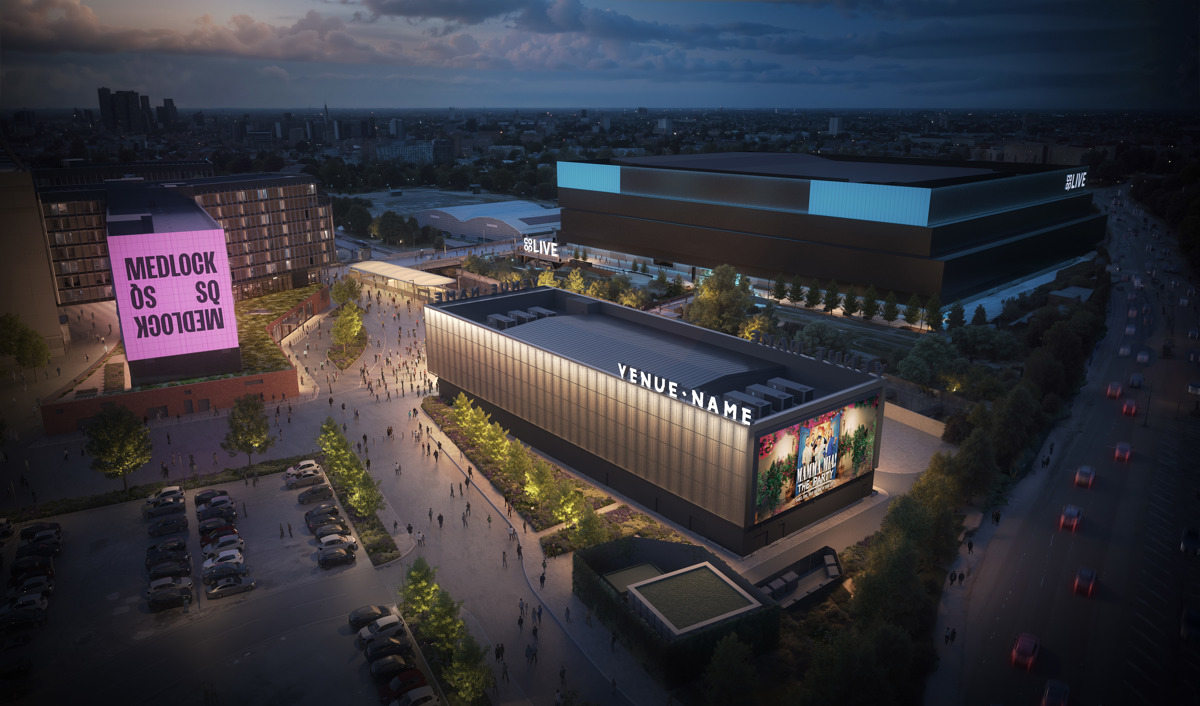
You see another glimpse of the purpose-built mini arena, of sorts, down below.
With plans having now been approved by the City Council, the ‘immersive’ space will be situated between the Etihad, Co-op Live and Medlock Square itself, holding up to 600 guests per performance.
Currently set to open in late 2027, following the rest of the square’s launch window being fully rolled out, we still don’t know the name of this next addition, but the structure itself will dovetail with the surrounding buildings and areas as part of seasonal activations, live shows and sports screenings, as well as pop-ups, brand collaborations and more.
Looping back, the interactive, multimedia extravaganza that is ‘Mamma Mia! The Party’ will finally be making its Manc debut as part of the 10th anniversary of the all-singing, all-dancing and even all-dining in-demand production.
As per an official press release from the Medlock Square media team, the show will combine “live music, theatre, food and storytelling” and “offer visitors an unforgettable night out.”
The original UK production at The O2 in London has now surpassed more than 1,500 performances, with a total of 700k guests attending these shows in 110 countries across the globe. Safe to say it’s rather popular.
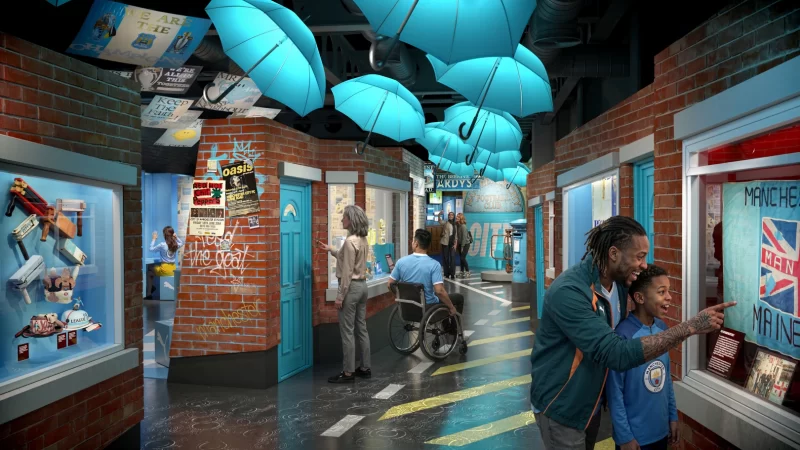
As for Medlock Square and the surrounding Etihad Campus, Manchester City supporters have also been given another look at the soon-to-open, immersive hotel tie-in experience.
With a skywalk, rooftop bar, a new MCFC shop and various other bits set to spill out onto Medlock Square, it all feels like a period of wholesale changes over in the blue half of the city – especially with the football club bidding farewell to their manager Pep Guardiola after more than a decade.
Following the new and improved North Stand being named after him in the first of many tributes, the City Football Group (CFG) are also set to commission a statue in his honour over the coming months.
Meanwhile, Medlock Square is also due to open later this year, although an official completion date has not been confirmed.
You can stay up to date with all the latest on Mamma Mia! The Part’s Manchester shows right HERE.
Not forgetting a brand-new women’s football facility, too, there is so much stuff going on over at the Etihad that it can be hard to keep track, but here’s the latest look at some of the rooms set to feature in the hotel of the same name.

 Georgina Pellant -
8th October 2021
Georgina Pellant -
8th October 2021