The legal requirement to self-isolate will be removed from Thursday, and the end of free mass testing from 1 April are among the changes announced in England’s plan for “living with COVID”.
After almost two years living amid the COVID-19 pandemic, Prime Minister Boris Johnson confirmed that all remaining restrictions are to come to an end and unveiled the government’s plan for “living with COVID” to MPs in the House of Commons yesterday in a bid to move from “government restrictions to personal responsibility”.
Speaking at a Downing Street news conference on Monday evening, Mr Johnson said “today is not the day we can declare victory over COVID”, but admitted that the nation had passed the peak of Omicron, with falling cases and hospital admissions.
He described the pandemic as “two of the darkest, grimmest years in our peacetime history”, but now is the country could complete the “transition back towards normality”.
All the changes announced will be subject to approval by Parliament.
ADVERTISEMENT
Announcing the changes yesterday, the Prime Minister said: “Because of the efforts we have made as a country over the past two years, we can now deal with it in a very different way, moving from government restrictions to personal responsibility, so we protect ourselves without losing our abilities and maintaining our contingent capabilities so we can respond rapidly to any new variant.”
Here’s all the changes announced yesterday.
ADVERTISEMENT
Covid-19 has not gone away, but because of the efforts we have made as a country over the past two years we can now move from government regulations to personal responsibility.
From today, the government is dropping its guidance for staff and students in most education and childcare settings to undertake twice weekly asymptomatic testing.
From Thursday 24 February
ADVERTISEMENT
The legal requirement to self-isolate for those who test positive will end.
Vaccinated contacts of positive cases will no longer be asked to test for seven days.
There will no longer be a legal requirement for close contacts who are not vaccinated to self-isolate.
Contact tracing and venue check-ins on the COVID-19 app will also end.
The £500 self-isolation support payment for people on low incomes who test positive for COVID will no longer be available
COVID provisions for increased statutory sick pay will apply for a further month
On Thursday 24 March, it is expected that the government will issue and update wider guidance on workplace safety that had been changed for COVID.
From 1 April
Free universal testing for symptomatic and asymtomatic people will be scrapped and will instead be targeted at the most vulnerable.
The use of voluntarily COVID status certification will also no longer be recommended.
Remove the health and safety requirement for every employer to explicitly consider COVID-19 in their risk assessments.
People with COVID symptoms will be asked to exercise “personal responsibility” when deciding whether to stay at home.
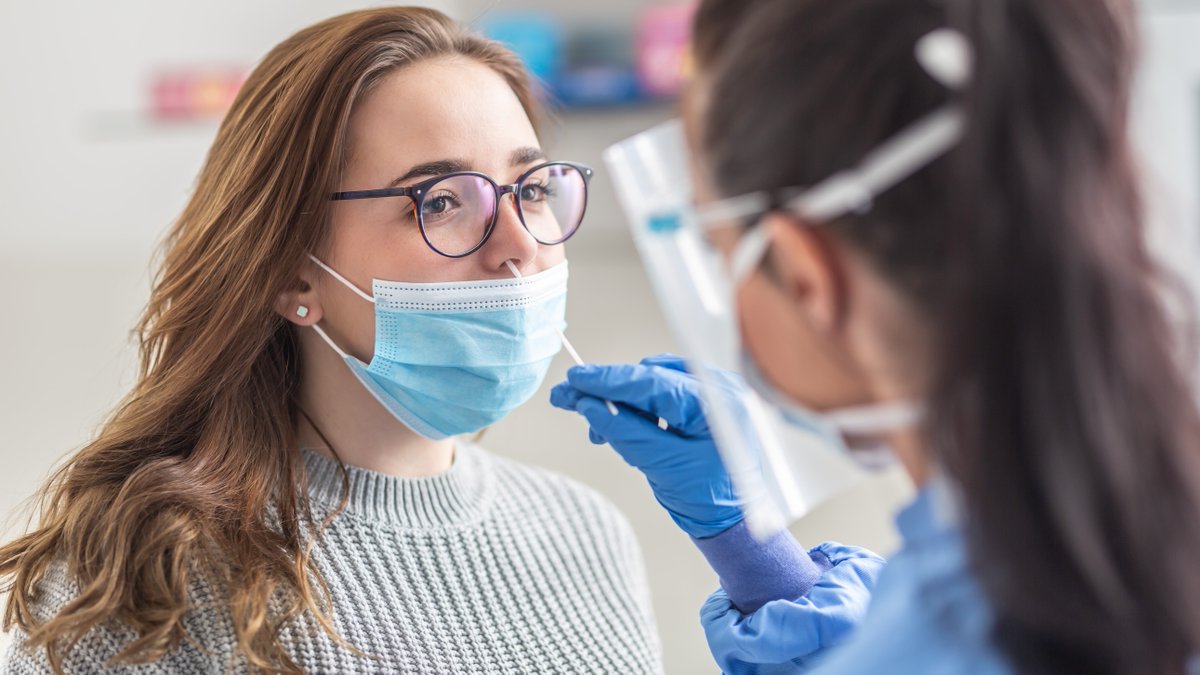
The government says the country is ready to complete the “transition back towards normality” / Credit: Twitter (@manairport)
Speaking on the decision to end the legal requirement to self-isolate, Mr Johnson continued: “Until 1 April, we will still advise people who test positive to stay at home but after that we will encourage people with COVID-19 symptoms to exercise personal responsibility, just as we encourage people who may have flu to be considerate to others.”
On the end of universal free testing, the prime minister told MPs that the “biggest testing programme per person of any large country in the world” came “at vast cost”.
In an attempt to ensure people do not build up personal stockpiles of free lateral flow tests before the 1 April cut-off, individuals can now only order a box every three days, instead of every 24 hours.
ADVERTISEMENT
Mr Johnson added that it is “only because levels of immunity are so high” that the remaining restrictions can be lifted.
He said “vaccines and treatments” must now been seen as “our first line of defence”.
The government says ministers and scientific experts will continue to “track the virus in granular detail”, and that it remains “ready to respond” if a new variant emerges and places unsustainable pressure on the NHS, through surveillance systems and contingency measures such as increased testing capacity or vaccine programmes.
We have come so far as a country and today we are setting out our plan to live with COVID. pic.twitter.com/invJTnKEu5
The government’s plan for “living with COVID” has drawn criticism from opposition and a growing number of medical professionals, including Chaand Nagpaul – Chair of the British Medical Association – who said the decision is “premature” and “not based on current evidence” or “guided by data”.
He said the strategy neglected some of society’s most vulnerable, and instead of giving people more freedom, it was likely to cause “more uncertainty and anxiety”.
ADVERTISEMENT
Dr Nagpaul also called for “urgent clarity” on testing for NHS workers to protect staff and patients, and that “protections must be maintained for the most vulnerable, including the provision of enhanced face masks, and clear guidance for both patients and clinicians”.
The government’s scientific advisers on its SAGE committee also emphasised that there is “considerable uncertainty about the path the pandemic will now take in the UK”.
Chris Hopson – Chief Executive of NHS Providers, which represents hospital trusts – said many NHS figures were “concerned about the potential impact of these decisions”, and that it was “vital” the government was ready to restore phased out testing and surveillance systems should they be needed.
Endangered baby giant otter triplets have been born at Chester Zoo
Emily Sergeant
This calls for celebration, as Chester Zoo has welcomed baby giant otter triplets in what is huge news for the endangered species.
It’s been a really exciting start to 2026 at Chester Zoo, as it was only a couple of days ago we got to see Dotty the baby Kirk’s dik-dik – which is one of the smallest antelopes in the world – take her first steps, and now it’s time to say hello to three new arrivals in the form of giant otter pups.
The trio are the first of their kind to be born at the zoo in several years, and arrive as part of an international conservation effort to boost numbers.
Arriving to first-time parents Bonita and Manu, up until now, the three giant otter pups have remained tucked away in their cosy holt with mum feeding them regularly until they more than tripled in size – but now, they’ve officially entered into the big wide world.
Following their first health check-up with the zoo’s veterinary team, conservationists have revealed the sex of the pups to be two males and a female
Their names are yet to be chosen, so keep your eyes peeled.
Endangered baby giant otter triplets have been born at Chester Zoo / Credit: Chester Zoo
Chester Zoo has described this triple birth as a ‘rare boost’ for one of the world’s most endangered species, as there are thought to be fewer than 5,000 giant otters surviving in the wild right now.
Giant otters are the world’s largest species of otter, with a powerful build, sharp teeth, and a highly social nature. As one of the apex predators in the waterways where they live, they play a crucial role in maintaining the health and balance of freshwater ecosystems.
But sadly, experts say the species faces ‘an uncertain future’, with their decline largely driven by deforestation, water pollution, and illegal hunting, leading them to be listed as endangered by the International Union for the Conservation of Nature (IUCN), meaning they face a very-high risk of extinction without urgent conservation action.
“The arrival of these three giant otter pups is a hugely special moment and marks the first time the species has been born here in seven years,” explained Rachael Boatwright, who is the Assistant Team Manager of carnivores at Chester Zoo.
“The pups recently had their very first health check-up at eight weeks old, where they were weighed and had their heart, teeth and overall condition assessed by the zoo’s vets. We’re delighted to confirm that all three are healthy and thriving – and that we have two males and one female pup.
“At eight weeks old, the pups will now start to venture outside alongside parents Bonita and Manu, who will start introducing them to the water and all of the essential skills they’ll need as they grow.”
Featured Image – Chester Zoo
News
Hordes of people dressed as giant poos run through Manchester for bowel cancer awareness
Danny Jones
If you happened to be in town on Thursday and noticed a bunch of people dressed as giant poos running through the city centre and wondered, ‘What the hell is going on?’, it was this…
We know Manchester has a serious case of the runs, what with the annual Marathon and Great Manchester race, both just around the corner (one literally just next week), but this takes the cake.
On a more heartfelt note, although there is an obvious and innate silliness to this now annual get-together, it’s all for a very important and worthwhile cause.
Uniting for a fourth time, the Pall Mall Medical team (along with a couple of us here at The Manc) are hoping to flush out the stigma and silence surrounding bowel cancer awareness.
Credit: The Manc Group
Starting from Pall Mall’s very own clinic on King St, more than 105 runners laced up their shoes and popped on emoji suits, toilet costumes, daft poo hats and more for a 5k jog around the city centre alongside local run club, Blaze.
They even tried to make the route in the shape of a poo, too.
Why such a specific number, you ask? Well, that’s the exact number of people who are sadly diagnosed with bowel cancer across the North West every single week.
It’s an alarming statistic, but once you pair it with the fact that they make up the rising number of new cases being reported in the country – more than a whopping 41,000 each year – you can see why they’re desperate to get more people talking about the disease.
Moreover, the rate among under 50s has also seen a concerning rise since the 90s, but this also means that the earlier it’s caught, the better people like Pall Mall can help with treatment.
The sooner it’s spotted, the greater the chance of survival, with 90% of those diagnosed at the earliest possible stage surviving for five years or more; that’s why these lot are hoping to better the discourse around bowel-related issues.
Besides offering important scans and blood tests for numerous health conditions, they also boast the dedicated and revolutionary ColoAlert® testing service, which is a German import that’s more accurate (around 85%) and effective than most others here in the UK.
It has quite literally proved to be a life-changing bit of kit for so many, and for Pall Mall’s Dr Chun Tang, this whole initiative has a deep personal connection.
Having sadly lost his father to the illness, as well as his brother being diagnosed with bowel cancer, he knows all too well how important increasing the conversation is – bowel cancer being the second biggest killer in the UK after lung conditions.
Even before you book in a check-up, Dr Tang says it’s simple to spot noteworthy signs at home: “Any blood in the stools, streaks in your poo, on the pan or on the paper; any changes in your digestion such as diarrhoea, constipation and [continued] fatigue, then see your GP or come visit us at Pall Mall.”
Best of all, the money raised with the latest ‘Poo Protest’ all goes towards Bowel Cancer UK, so well done to everyone involved.
For once, we couldn’t be happier to hear so many people talking sh**.
Throughout April, Pall Mall are offering £75 off the ColoAlert® Bowel Cancer stool test, and 20% off the Virtual Colonoscopy in Aprilo. To find out more about the event and book an appointment, you can click right HERE.