A student accommodation platform is calling on the government to provide urgent financial aid to students and halls during the national lockdown.
Housemates – backed by Allied Students and Herbal Hill Studios – is arguing for more support at institutional and private levels; enabling rebates for any students who’ve paid for accommodation they’re not allowed to use.
The platform stated that university students are already facing “an extremely difficult start to their working life due to the pandemic and recession” and that immediate government intervention is required to remedy the situation.
Lydia Jones, founder and CEO of Housemates, said there is real risk of “a knock-on effect that will impact the higher education and PBSA sectors, local university towns and greater economy for years to come.”
Lydia stated: “Students have been blamed and dismissed a lot during the pandemic by Government and higher education institutions, often being described as irresponsible, immature or childish, and with some institutions suggesting they should treat lockdown as a ‘retreat’.
ADVERTISEMENT
“Yet, when it comes to attending university, they are adults – they leave their homes to travel hundreds even thousands of miles to make a life choice and commitment to education. They are then asked to sign contracts and take on huge debts and legal liabilities.
“It is unacceptable for them to be treated differently from other consumers, especially when they are crucial to the future of our economy and need urgent support to enter the working world.”
ADVERTISEMENT
UoM Rent Strike
Danielle, studying at UWE, said she has spent a total of 16 days in her halls but is still being overcharged.
“They are offering students two weeks of a rent refund, but have phrased this as 50% off of four weeks rent,” explained the student.
“We won’t get any actual money back too – only credit for our last instalment and that discount won’t apply until around April anyway.
ADVERTISEMENT
“It’s simply not enough and I feel like we are being treated like cash cows rather than humans.”
Housemates said it is hoping to improve the situation by launching a new service in March 2021 – whereby students can request and pay for their selected accommodation dates at a time that suits them.
The company said the solution will provide flexibility for students whilst helping operators fill occupancy for the academic year despite low consumer confidence.
IMAGE: David Dixon / Geograph
Meanwhile, rent protests are still continuing across the UK – with UoM Rent Strike holding a national rally earlier this week.
ADVERTISEMENT
The series of protests have been described as “the largest student rent strike(s) in 40 years”.
According to protestors, campaigns are due to take place across 55 university campuses throughout 2021 – with £2,000 already raised via JustGiving for resources.
Uom Rent Strike – alongside Students Before Profit and 9K4WHAT – took up residence in the deserted Fallowfield Owens Park tower block back in November to campaign for a rent cut after problems experienced in semester one.
The University of Manchester’s initial peace offering – a two-week rent reduction – was dismissed as “a slap in the face“.
But the students finally left after settling on a 30% rent reduction for the period up to Christmas.
ADVERTISEMENT
University of Manchester admitted that 2020 hadn’t been the year “any of us would have planned and we know we haven’t got everything right” – publishing a five-point accommodation pledge to students in response.
UoM also stated: “Students living in University accommodation who have not returned to that accommodation since the national lockdown announcement on 5 January will not pay any rent until the end of the current restrictions or the date that they return to their accommodation in Manchester.”
News
Victim named and murder investigation launched after young woman is killed in Newton Heath stabbing
Emily Sergeant
The victim of a street stabbing in Newton Heath this week has been named for the first time as a murder investigation continues.
It comes after officers from Greater Manchester Police (GMP) responded to reports of a disturbance at around 2am yesterday (Thursday 15 October) on Dorking Avenue, in the Newton Heath area of Manchester, and when they arrived on the scene, they found a woman in her 20s with serious injuries that were ‘consistent with a stabbing’.
Despite best efforts of all emergency services involved, the young woman was sadly pronounced dead at the scene.
As the murder investigation progresses, the woman has now been publicly named and a photo of her has been released for the first time.
She has been named as 26-year-old Alisha Samuels.
At this time, one man, aged 25, has been arrested on suspicion of murder, and a man and woman, aged 61 and 38, have been arrested on suspicion of assisting an offender, and they all remain in custody – with officers continuing their enquiries to establish the full circumstances of this incident.
Alisha’s family have asked for privacy whilst they deal with the devastating loss of their loved one, GMP has stated.
“We are continuing to urge people who may have information in relation to this incident to please come forward to support our investigation and bring justice for Alisha,” the police force said in a public appeal.
Anyone who may have witnessed the incident, or has mobile phone, CCTV, or doorbell footage, is urged to call GMP on 0161 856 5464, or contact them via the Major Incident Public Portal here.
Alternatively, you can contact Crimestoppers on 0800 555 111
Featured Image – GMP (Family Handout)
News
Former supply teacher jailed for multiple upskirting and AI sex offences across Greater Manchester
Emily Sergeant
A former supply teacher has been jailed for multiple upskirting and AI sex offences in schools across Greater Manchester.
Abusali Rahman – a British national of Bangladeshi ethnicity from Salford – appeared in Bolton Crown Court this week for his sentencing after first being charged with, and then pleading guilty to, several offences.
The offences are including, but not limited to, 12 counts of taking an indecent photograph/pseudo-photograph of a child (images obtained by upskirting), three counts of making indecent photograph / pseudo-photograph of a child (making AI-generated images), and one count of attempting to meet girl under 16 following sexual grooming.
The offences are alleged to have taken place between December 2023 and June 2025, according to Greater Manchester Police (GMP).
Twelve girls have been identified in relation to the upskirting offences – aged between 13 and 16 at the time of the alleged offending – at seven high schools in three Greater Manchester boroughs (Bury, Bolton, and Salford).
GMP says it has remained in close contact with the schools, local authorities, and other partners throughout the investigation to ensure all appropriate support is in place for those who need it.
Additionally, the court also heard how Rahman amassed a collection of images of young girls, using AI and other methods to sexualise them.
The images numbered more than 300 in total, ranging from Category A to Category C classifications, and Rahman would post these on social media, often alongside humiliating and disgusting captions.
Rahman was sentenced to six years in prison, and will also be subject to a 20-year Sexual Harm Protection Order.
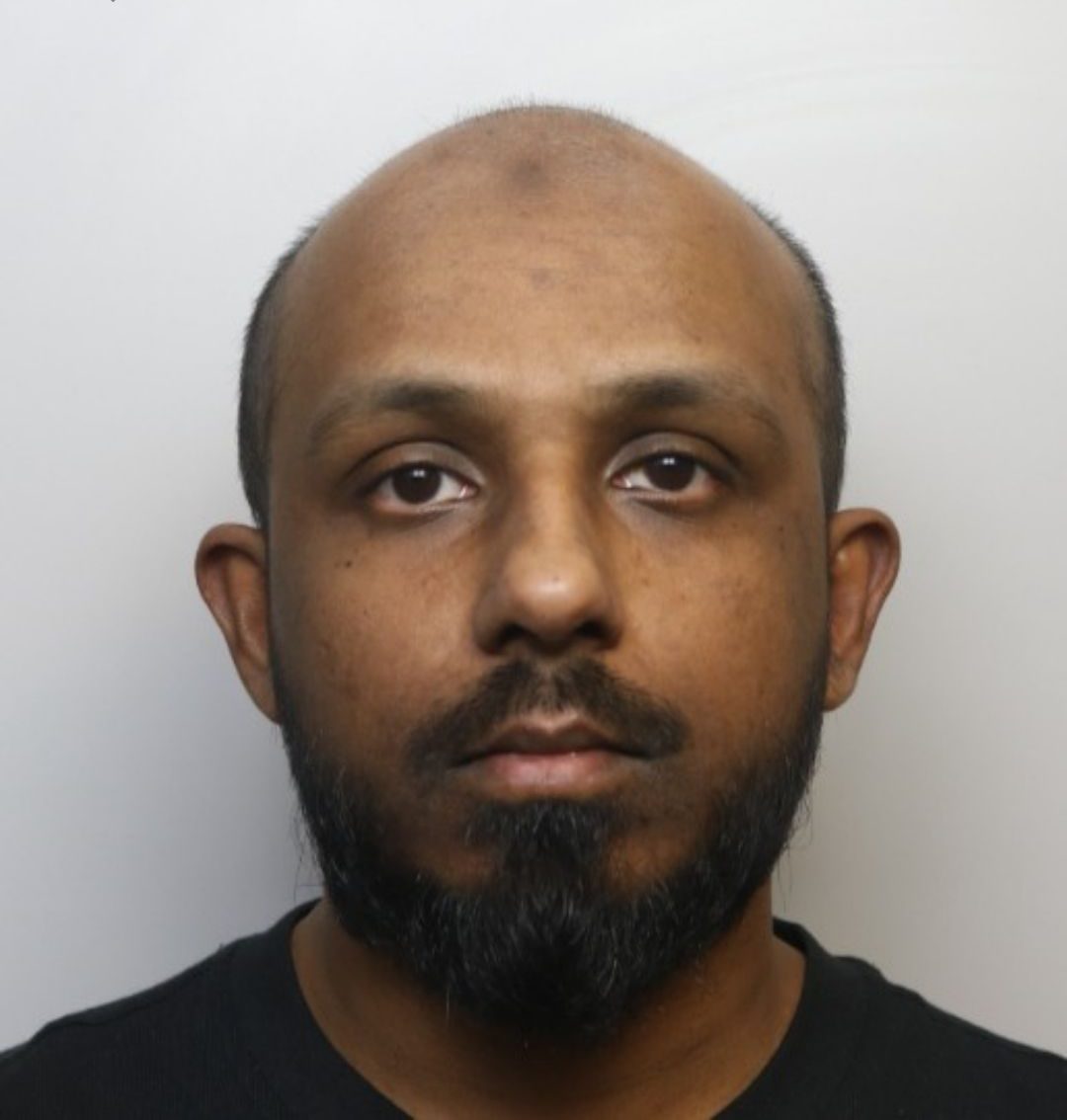
A former supply teacher has been jailed for child sex offences in schools across Greater Manchester / Credit: GMP
Detective Constable Lisa McGaffin, from GMP’s Bolton Child Protection Team, described Rahman’s crimes as ‘absolutely abhorrent’.
“My thoughts throughout this process have always been with the young girls who have been subject to such indignity,” DC McGaffin said following the sentencing this week. “Their welfare and support will always be a priority for us.
“While working as a teacher – someone who young children should trust and be safe with – Rahman repeatedly took secret photos for his own sick gratification, before posting images online which showed his total disregard for the girls’ respect and dignity.

 The Manc -
28th January 2021
The Manc -
28th January 2021