Channel 4 is to avoid privatisation and remain under public ownership, the government has confirmed today.
After what has been years of talks to sell the broadcaster for a reported possible £1.5 billion, which had faced strong opposition from executives at Channel 4 itself and throughout much of the TV industry, the Department for Digital, Culture, Media and Sport has today confirmed a U-turn on such privatisation plans and announced that the channel will stay under public ownership.
The government says Culture Secretary Michelle Donelan has “decided not to privatise Channel 4 after reviewing the business case for its sale”.
This means that the broadcaster will remain in public ownership, but now with what the government is calling “greater commercial flexibility”, an “increased investment in skills and jobs”, as well as new production arrangements to “support” the channel’s “long-term sustainability and growth”.
Ms Donelan has called Channel 4 “a British success story” and “a linchpin of our booming creative industries”, but says she has decided that pursuing a sale is not the best option to “ease the challenges” the broadcaster is facing, nor to support growth in the UK’s creative economy – especially the independent production sector.
ADVERTISEMENT
The government says that doing nothing, however, also “carries risks”.
As @Channel4 faces increasing competition from global streaming platforms, it's more important than ever to ensure its success
We're working together to ensure it has the freedom to generate income and remain a sustainable business
— Department for Culture, Media and Sport (@DCMS) January 5, 2023
This is why it says it believes change is necessary to ensure the broadcaster can thrive, both “now and long into the future” in what is a rapidly-changing media landscape.
ADVERTISEMENT
Following discussions with Channel 4 and the independent production sector, the government has also confirmed an “ambitious package of measures” as an alternative to a sale.
“The package will ensure the broadcaster remains focused on sustainability and has new opportunities to grow while serving audiences in the decades to come with high-quality, innovative and distinctive content,” the government explains.
In addition to the package of measures, the government says Channel 4 has also committed to increasing the number of roles outside London – which is set to provide more opportunities for people from across the UK to gain experience in the broadcast media sector.
ADVERTISEMENT
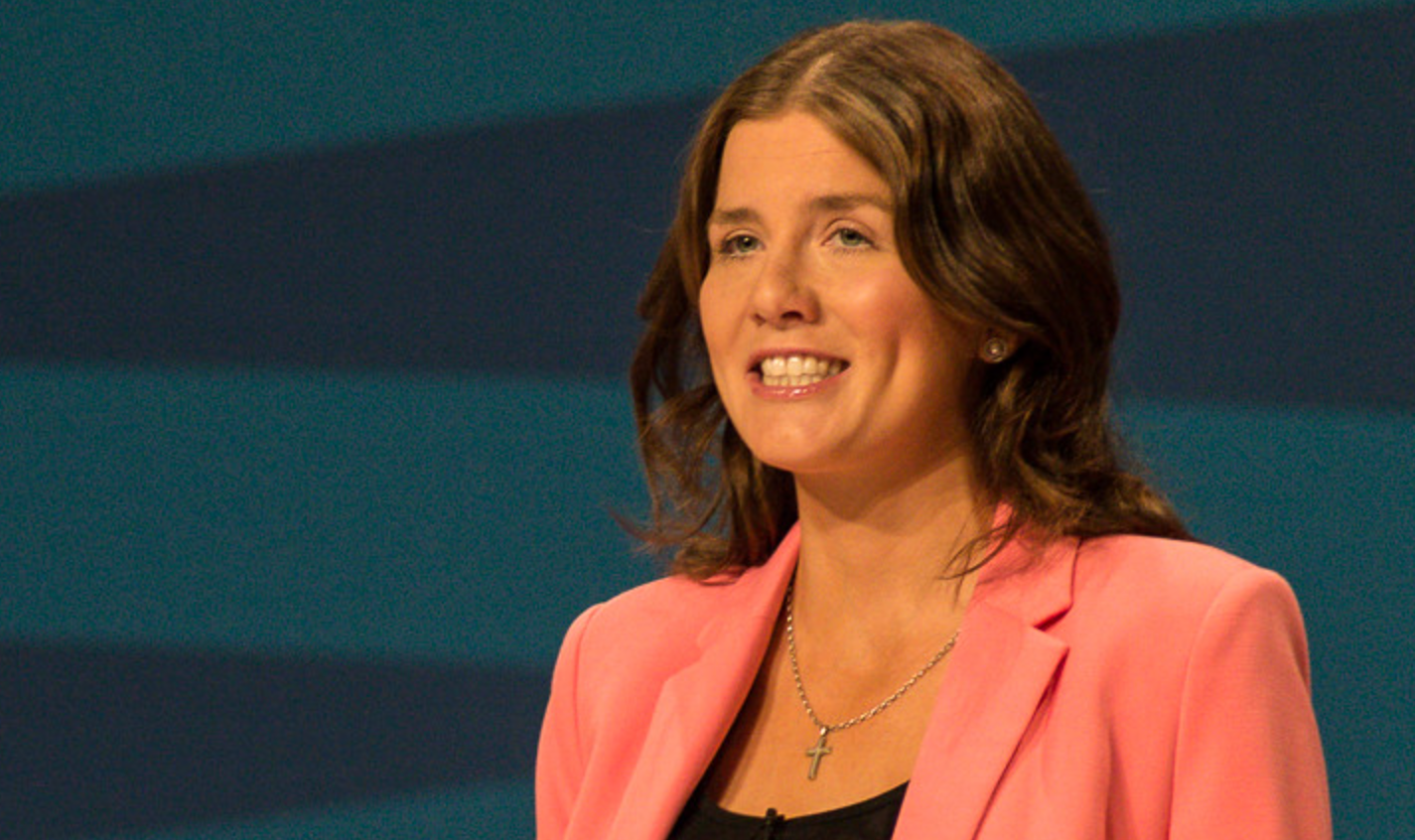
Culture Secretary Michelle Donelan “decided not to privatise Channel 4 after reviewing the business case for its sale” / Credit: Gareth Milner (via Flickr)
Channel 4 – which was created in 1982, and has been funded entirely by advertising out of public ownership for the last 40 years, with everything it airs is commissioned from external production companies – has welcomed the decision to ditch privatisation plans for it to remain “safely in the hands of the British people”.
The broadcaster said in a statement: “For over 40 years, Channel 4 has been a keystone of Britain’s universal, free, public service broadcasting architecture.
“We have spoken up for diverse and young audiences across the UK, nurtured new talent and held power to account, but standing still has never been an option for Channel 4 throughout our history.
“Indeed, our next stage of evolution is already well under way.”
Featured Image – Wikimedia Commons
News
NHS to begin offering new one-minute jab to women with ‘aggressive’ form of cancer
Emily Sergeant
The NHS is set to begin offering new immunotherapy for hundreds of women with aggressive cervical cancer across the country.
Pembrolizumab – which experts have described as being able to ‘take the handbrake off’ the body’s immune system to target cancer – will now be presented as a new treatment option for women in England with locally-advanced cervical cancer, which means the cancer has grown beyond the cervix to regions such as the pelvic wall, but not yet spread further around the body.
Trials found that adding pembrolizumab to standard chemoradiotherapy helped keep cancer ‘at bay’ for longer, and improved survival rates overall.
Two years after starting the treatment, nearly seven in 10 patients (68%) were still living without their cancer progressing, compared with 57% for those receiving chemoradiotherapy alone, according to NHS figures.
The trial also found that 82.6% of patients were still alive three years after treatment with pembrolizumab and chemoradiotherapy, compared with 74.8% with chemoradiotherapy alone.
Hundreds of women with aggressive cervical cancer are to be offered a new immunotherapy treatment.
It marks one of the biggest improvements in treatment for the disease in years, and could help more women survive and stay cancer-free in the long term.
The drug is either given every three or siz weeks via an infusion, or as a ‘one-minute’ injection, alongside chemoradiotherapy.
The NHS estimates around 550 patients in England will be eligible for the treatment – which has been approved this week by the National Institute for Health and Care Excellence (NICE) – over the next two years.
Patients will now receive fast-tracked access, funded by NHS England’s Cancer Drugs Fund.
“This is great news for women facing a diagnosis of aggressive cervical cancer, and represents one of the biggest improvements in treatment for this disease in recent years,” commented Professor Peter Johnson, who is the NHS National Clinical Director for Cancer.
“Combining this immunotherapy with existing treatment has had very positive effect for patients in trials, helping the body’s immune system to target cancer more effectively.
“We’re delighted it will be available for patients on the NHS as it could help hundreds more women survive and stay cancer-free in the long-term.”
Featured Image – NappyStudio (via Unsplash)
News
Andy Burnham wants to bring the ‘Greater Manchester way’ to Westminster
Emily Sergeant
Andy Burnham has set out his vision for the country if he is to become Prime Minister.
In case you need brining up to speed first, after it was announced earlier this month that Andy Burnham had clinched the victory in the crucial Makerfield by-election, winning 24,927 votes (54.8% vote share) and a majority of 9,231, he then went onto announce his intention to run for Labour Party leader, and therefore Prime Minister, after Keir Starmer confirmed he would be stepping down.
And this week, Mr Burnham has now delivered his first speech as part of his ongoing campaign, addressing how he plans to give the country a ‘new direction’.
Burnham says that he wants to bring the ‘Greater Manchester way’ to Westminster.
A lot has been discussed and reported on when it comes to Burnham’s intentions to create a so-called Number 10 North here in Manchester, but what exactly does it mean to take the ‘Greater Manchester way’ to the capital?
“The Greater Manchester way is based on strong partnership between all sectors: public, private, community, voluntary, academic, faith, and our trade unions,” Burnham said in his speech.
He continued: “When I started as Mayor in 2017, we set about building a new approach, a new politics based on the exact opposite of the Westminster approach.
“Place-first, not party-first. Problem-solving, not point-scoring. Long-term, not short-term.
“A decade on, it’s incredible how much we’ve been able to achieve by working together instead of fighting against one another.”
Burnham said he feels the truth is that the country spends ‘too much time arguing and not enough time doing’ and that for Britain to get back where it ‘should be’, his Government would ask everyone to ‘face the same way’ and then ‘pull in that same direction together’.
He declared that No 10 North will be the ‘nerve centre’ for a rewired Britain.
“It will be the conduit through which we redistribute power and resources across the UK,” he concluded. “It will coordinate all parts of Government, at national and local level, to agree a long-term economic strategy and help all places set new growth ambitions.”