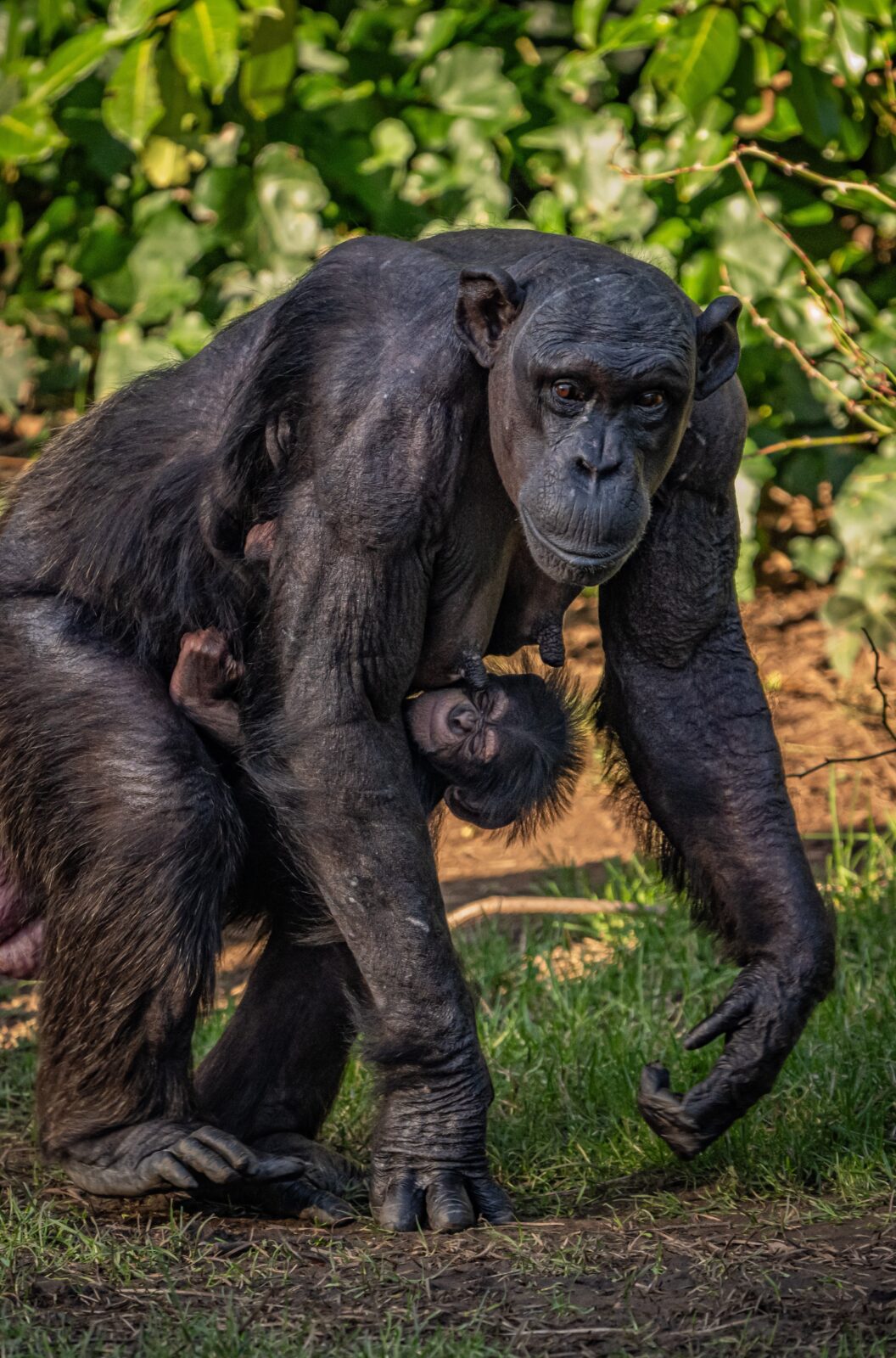
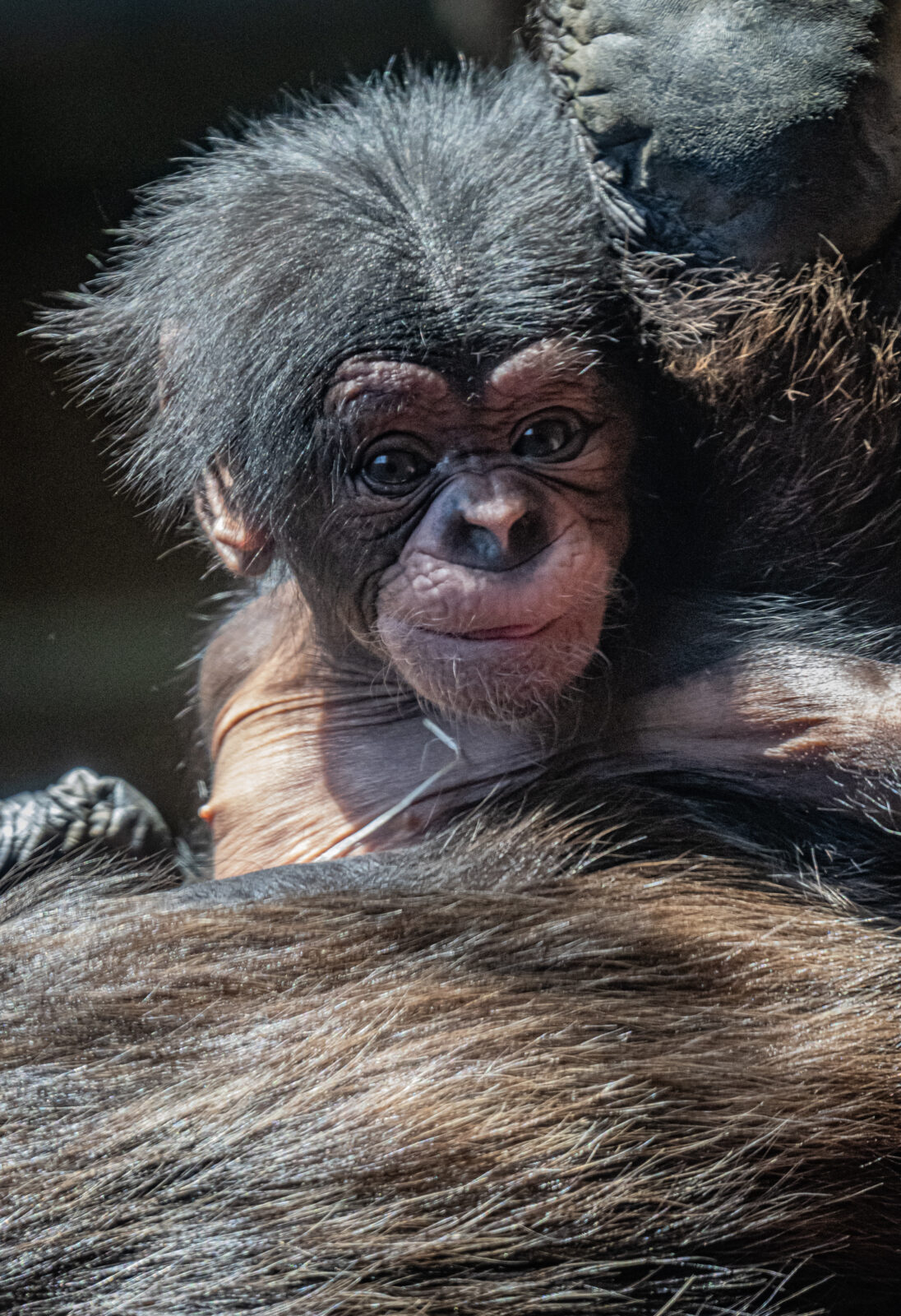
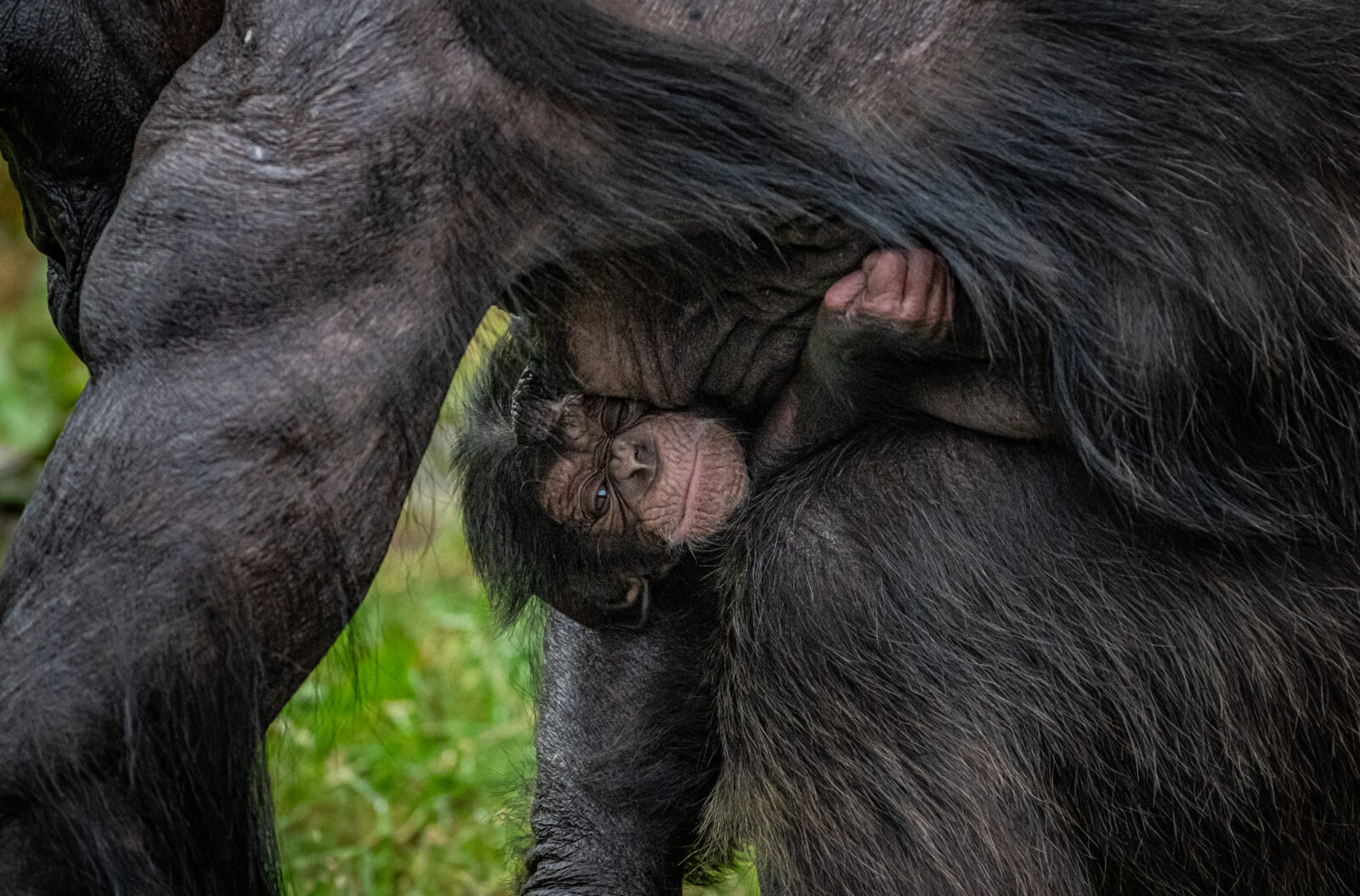
A rare baby chimpanzee has just been born at Chester Zoo, and there’s no denying he’s really flipping cute.
Conservationists at the UK’s largest charity zoo are quite-rightly celebrating their newest arrival, and have shared some seriously-adorable footage of the new baby bonding with his mother as he makes his way around his new home.
The new male infant arrived to mum Alice in front of astonished zoo visitors following an eight-month pregnancy.
Newly-released images and video of the tiny newborn – who is yet to be given a name, as far as we know – show him being carefully cuddled and cradled by his mum and some of the other female relatives in the zoo’s 21-strong group.
In case you didn’t know, the chimpanzees at Chester Zoo are part of an international conservation breeding programme.
ADVERTISEMENT
The breeding programme sees a bunch of different European zoos working together and using the latest scientific technologies to determine the genetic makeup of each chimpanzee, all in a bid to create a safety-net population to help prevent the primates from disappearing altogether.
Human-related activities, such as the illegal wildlife trade and poaching, have severely impacted chimpanzee populations in many parts of Africa, and on top of this, deforestation driven by agricultural expansion and logging has also significantly reduced their natural habitats into smaller and more-fragmented territories.
ADVERTISEMENT
A rare baby chimpanzee has just been born at Chester Zoo / Credit: Chester Zoo
Mike Jordan, who is the Animal & Plant Director at Chester Zoo, says a new birth “always sparks some real excitement” within the chimpanzee group.
Giving an insight into the new baby chimpanzee’s first few days on earth, and explaining just what makes his birth so important to the species, Mike said: “While Alice and her new baby are certainly centre of attention among the other chimpanzees, they’re still finding some quiet time to get to know one another and can often be seen cuddled up together.
“What’s also great to see is that some of the others in the group, especially the younger females, are really intrigued by the new baby and are learning all about motherhood from Alice.
ADVERTISEMENT
The new arrival has been spending time bonding with his mother, Alice / Credit: Chester Zoo
“This is an important learning curve for them and this experience can be really useful for when they hopefully go on to have babies of their own.
“A thriving conservation breeding programme is key to the long-term protection of these animals.
“For nearly 30 years, our teams have worked on the ground in Uganda, Nigeria, and Gabon in Africa, working hand-in-hand with wildlife authorities, in-country partners, and local communities in an effort protect some of the world’s rarest wild chimpanzee populations and their forest homes.
“These collective efforts, paired with the conservation breeding programme in zoos, gives us hope that we can create a future where chimpanzees thrive long into the future.”
Featured Image – Chester Zoo
News
Referees admit Manchester City’s derby-winning goal over Manchester United was a VAR ‘error’
Emily Sergeant
Referees have admitted that Manchester City’s winning goal during yesterday’s Manchester derby was a VAR ‘error’.
In case you didn’t tune into the Manchester derby yesterday – which was held at Manchester United’s home ground, Old Trafford – star striker Erling Haaland’s goal handed Manchester City a 1-0 victory – in the end, even after fellow City player Phil Foden was given a straight red card and sent off in the twenty third minute.
Haaland‘s goal was initially deemed offside on the pitch, before VAR overruled the decision.
New City signing Enzo Fernandez was in an offside position as he attempted to play the ball before Haaland scored.
Fernandez appeared to impact the defending of Manchester United‘s Lisandro Martinez by attempting a diving header, despite not touching the ball.
Erling Haaland has put Manchester City ahead in the derby after a VAR check ⚽️ pic.twitter.com/V0DCwryhFy
Following the full-time whistle, United’s manager Michael Carrick said it was ‘worrying’ that the goal was allowed to stand, claiming that there was no ‘grey area’ when it came to determining whether Fernandez had interfered with play.
“It’s worrying if that’s how the game is seen by those who are officiating it,” he commented.
Pundit and former Manchester United star, Gary Neville, also expressed confusion at the decision, declaring on Sky Sports after the game: “I’m going to need the offside law explaining to me, because that has lost me, I have to say. I do think when they look back on this, they will recognise they got it wrong.”
Neville said he thinks that referee Michael Oliver will be ‘nervous’ about the goal yesterday, as will the rest of the officials.
Pro Ref has admitted an 'error of judgement' in awarding Manchester City's winner at Manchester United in their 1-0 victory at Old Trafford.
Erling Haaland's goal was initially disallowed for offside on the pitch before VAR overturned the decision. pic.twitter.com/ZF76Qwz4Ib
And now, less than 24 hours after the match ended, refereeing body Pro Ref has since made what Sky Sports is calling an ‘unusual intervention by confirming that a review of the goal will take place.
A spokesperson for Pro Ref said in a statement: “It was established that Enzo Fernandez did not play the ball and therefore that makes any offside offence subjective, however, on this occasion, the VAR did not recognise the likely impact of his position and should have recommended an on-field review.
“Contact has been made with Manchester United to acknowledge what we deem is an error of judgement.
Charli XCX announces massive Manchester arena gig as part of long-awaited UK and European tour
Emily Sergeant
Charli XCX has finally given UK fans the news they’ve been waiting for.
After the genre-bending popstar announced back in June a series of US gigs this autumn to support and celebrate the release of her eighth studio albumMusic, Fashion, Film – which was met with critical acclaim following its release in late July – fans in her home country were wondering when she would announce UK dates to accompany these.
The 34-year-old been had hinting at a UK and European leg of the Music, Fashion, Film Tour on social media over the past couple of months, but nothing was set in stone as of yet.
Then last night, Charli took to Twitter to announce that she ‘finally’ had some information coming today (11 September), and then followed it up with a teaser video – sending fans into a frenzy.
And now, it has been announced this morning that Charli XCX will be taking to the Co-op Live stage early next year.
Support on the UK and European leg of the Music, Fashion, Film Tour will come from US popstar Audrey Hobert.
Hobert has been having somewhat of a star-making year herself in 2026 following the release of her own critically acclaimed debut album, Who’s The Clown?, last year – with her streams racking up daily and drawing in massive crowds on the festival circuit this summer.
Charli XCX – Music, Fashion, Film Tour UK & EU Dates 2027
13 February – 3Arena, Dublin
15 February – OVO Hydro, Glasgow
17 February – Co-op Live, Manchester
19 February – The O2, London
22 February – Ziggo Dome, Amsterdam
24 February – Accor Arena, Paris
Upon release back in July, Music, Fashion, Film the album received acclaim from music critics, who praised its lyrical honesty and experimental production, as Charli took a sonic journey away from the undeniable mega hit that was her 2024 album BRAT, and into ‘Rock Music’ territory.
Music, Fashion, Film topped the charts in the UK and Australia, as well as in Belgium, Hungary, and New Zealand, while reaching the top 10 in countless other countries – including the US.
Charli XCX will be bringing the Music, Fashion, Film Tour to Manchester‘s Co-op Live on Wednesday 17 February 2027, and tickets will go on sale next week.

 Emily Sergeant -
7th February 2024
Emily Sergeant -
7th February 2024