After several years making waves on the online UK footwear scene, cult Manchester-based trainer brand Clints Inc has revealed it will open its first concept store in the city this weekend.
Loved by the IYKYK crowd for its thick-soled, hiking-inspired 90’s-style footwear, the first drop of its ‘TRL Footprints’ trainers sold out in the space of an hour – and the hype hasn’t really slowed down since.
Two years on and the brand is gearing up to open its flagship store in the city centre this weekend, giving fans a chance to see their shoes in hand for the first time before making a purchase.
Image: Clints
Image: Clints
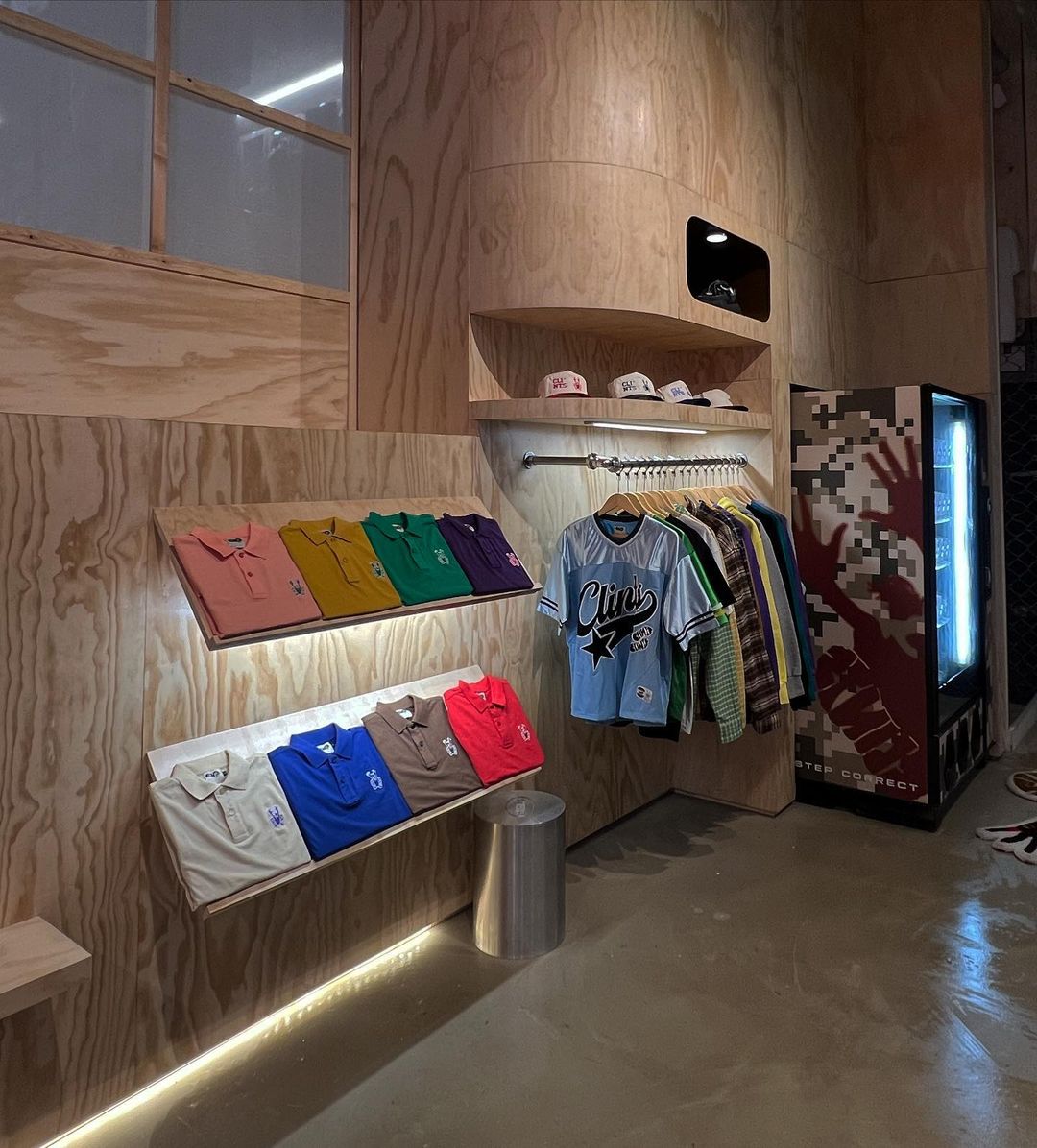
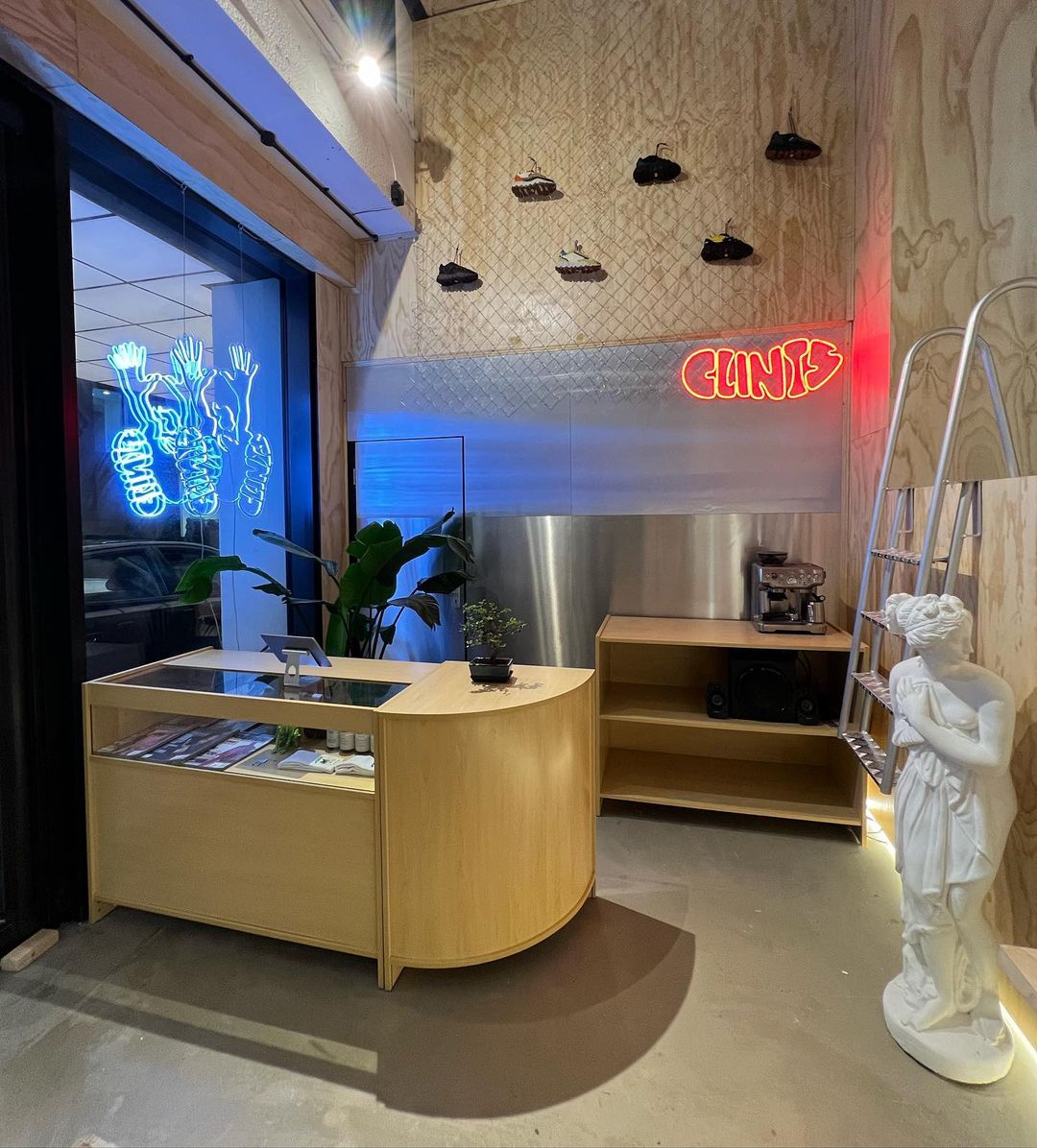
The new store is housed over on Quay Street close to the ABC Building, and images teased online show a clean, minimal shop front with custom Clints details and a mysteriously-empty vending machine that’s piqued our interest. (A trainer vending machine would be pretty cool, just saying.)
Here, fans of the brand will soon be able to get their hands on all the latest Clints drops with access to new footwear, clothing and accessories including TRL Footprint-shaped keychains, stickers, socks and ‘half-tone’ beanies’.
ADVERTISEMENT
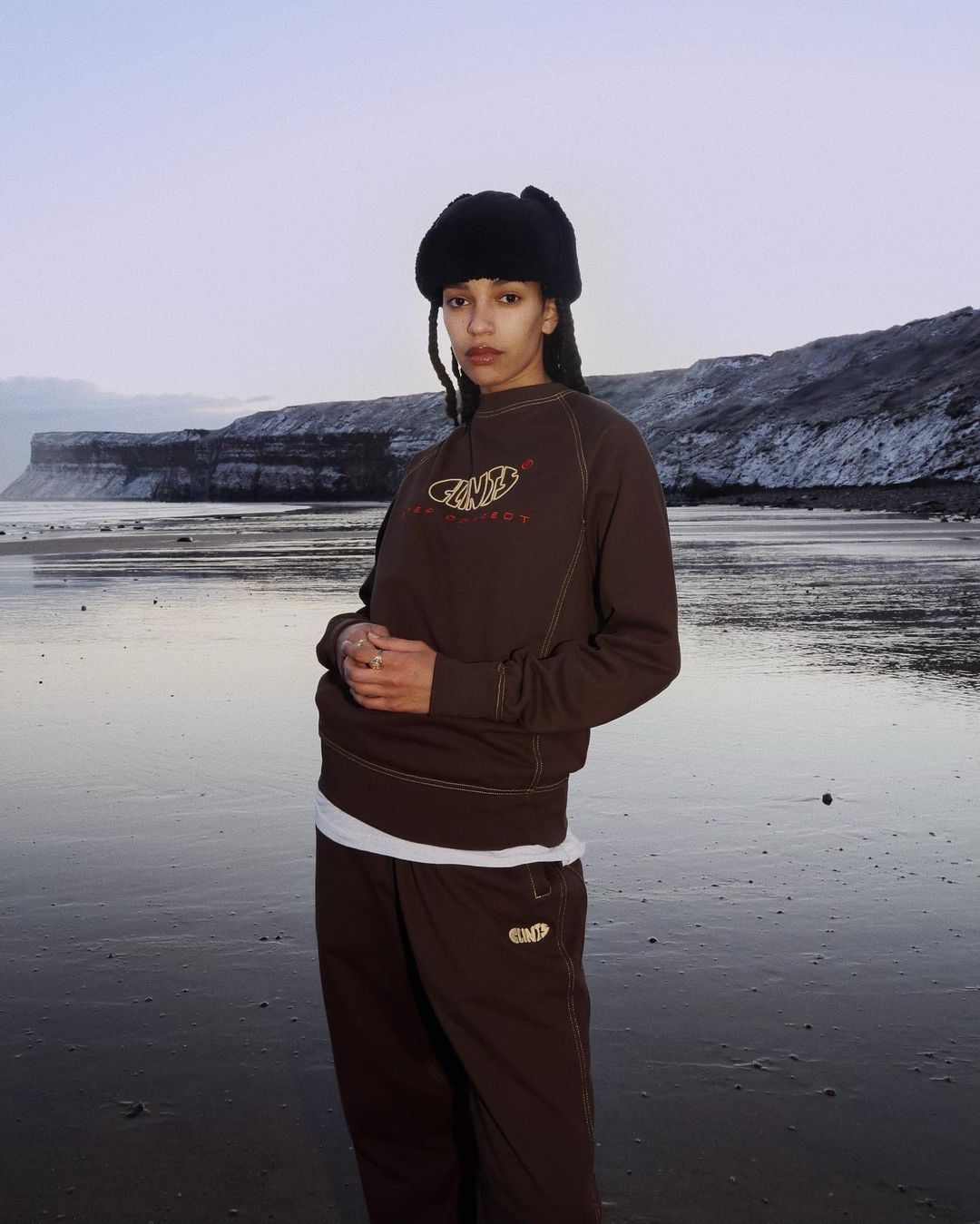
They’ll also find a range of graphic t-shirts and tracksuits, which feature heavily in the Clints’ apparel range.
Image: Clints
Image: Clints
It makes a change from the current online setup, where you need to register with an email and a password before being able to view the online Clints Inc store.
Founded by self-taught designer and university student Junior Clint, Clints Inc began selling limited-run pieces that flew out to its loyal cabal of fans.
Known for delivering retro-inspired sneakers and complementing apparel, its trainers have become a must-have for any self-respecting Manchester sneaker head.
ADVERTISEMENT
Characterised by rope laces, carbon textures with suede detailing and trademark alphabet ‘CLINTS’ pattern outsole, their aesthetic nods to the classic thick sole trends of the 90s which are currently having a resurgence.
The most memorable trainer drop has to be “The Sting” TRL Footprints, released in yellow and inspired by the Manchester worker bee – a symbol adopted by the city for hundreds of years.
This was then followed up by vests and all-black ‘Vantablack’ TRLs, released to celebrate the first anniversary of the initial drop. Clints has also since collaborated with Patta, with the two Black-owned independent brands joining up to work on the Stepper silhouette sneaker release.
Today, you’ll find all sorts – from vests and belts to Clints denim, jumpers, beanies, fleeces and coach jackets – and it seems like the brand is only going from strength to strength.
You can find the new Clints Inc concept store at 21-23 Quay St , M3 4AE. It opens on Saturday 13 August from 12pm.
Feature image – Clints Inc
News
Victim named and murder investigation launched after young woman is killed in Newton Heath stabbing
Emily Sergeant
The victim of a street stabbing in Newton Heath this week has been named for the first time as a murder investigation continues.
It comes after officers from Greater Manchester Police (GMP) responded to reports of a disturbance at around 2am yesterday (Thursday 15 October) on Dorking Avenue, in the Newton Heath area of Manchester, and when they arrived on the scene, they found a woman in her 20s with serious injuries that were ‘consistent with a stabbing’.
Despite best efforts of all emergency services involved, the young woman was sadly pronounced dead at the scene.
As the murder investigation progresses, the woman has now been publicly named and a photo of her has been released for the first time.
She has been named as 26-year-old Alisha Samuels.
At this time, one man, aged 25, has been arrested on suspicion of murder, and a man and woman, aged 61 and 38, have been arrested on suspicion of assisting an offender, and they all remain in custody – with officers continuing their enquiries to establish the full circumstances of this incident.
Alisha’s family have asked for privacy whilst they deal with the devastating loss of their loved one, GMP has stated.
“We are continuing to urge people who may have information in relation to this incident to please come forward to support our investigation and bring justice for Alisha,” the police force said in a public appeal.
Anyone who may have witnessed the incident, or has mobile phone, CCTV, or doorbell footage, is urged to call GMP on 0161 856 5464, or contact them via the Major Incident Public Portal here.
Alternatively, you can contact Crimestoppers on 0800 555 111
Featured Image – GMP (Family Handout)
News
Former supply teacher jailed for multiple upskirting and AI sex offences across Greater Manchester
Emily Sergeant
A former supply teacher has been jailed for multiple upskirting and AI sex offences in schools across Greater Manchester.
Abusali Rahman – a British national of Bangladeshi ethnicity from Salford – appeared in Bolton Crown Court this week for his sentencing after first being charged with, and then pleading guilty to, several offences.
The offences are including, but not limited to, 12 counts of taking an indecent photograph/pseudo-photograph of a child (images obtained by upskirting), three counts of making indecent photograph / pseudo-photograph of a child (making AI-generated images), and one count of attempting to meet girl under 16 following sexual grooming.
The offences are alleged to have taken place between December 2023 and June 2025, according to Greater Manchester Police (GMP).
Twelve girls have been identified in relation to the upskirting offences – aged between 13 and 16 at the time of the alleged offending – at seven high schools in three Greater Manchester boroughs (Bury, Bolton, and Salford).
GMP says it has remained in close contact with the schools, local authorities, and other partners throughout the investigation to ensure all appropriate support is in place for those who need it.
Additionally, the court also heard how Rahman amassed a collection of images of young girls, using AI and other methods to sexualise them.
The images numbered more than 300 in total, ranging from Category A to Category C classifications, and Rahman would post these on social media, often alongside humiliating and disgusting captions.
Rahman was sentenced to six years in prison, and will also be subject to a 20-year Sexual Harm Protection Order.
A former supply teacher has been jailed for child sex offences in schools across Greater Manchester / Credit: GMP
Detective Constable Lisa McGaffin, from GMP’s Bolton Child Protection Team, described Rahman’s crimes as ‘absolutely abhorrent’.
“My thoughts throughout this process have always been with the young girls who have been subject to such indignity,” DC McGaffin said following the sentencing this week. “Their welfare and support will always be a priority for us.
“While working as a teacher – someone who young children should trust and be safe with – Rahman repeatedly took secret photos for his own sick gratification, before posting images online which showed his total disregard for the girls’ respect and dignity.

 Georgina Pellant -
10th August 2022
Georgina Pellant -
10th August 2022