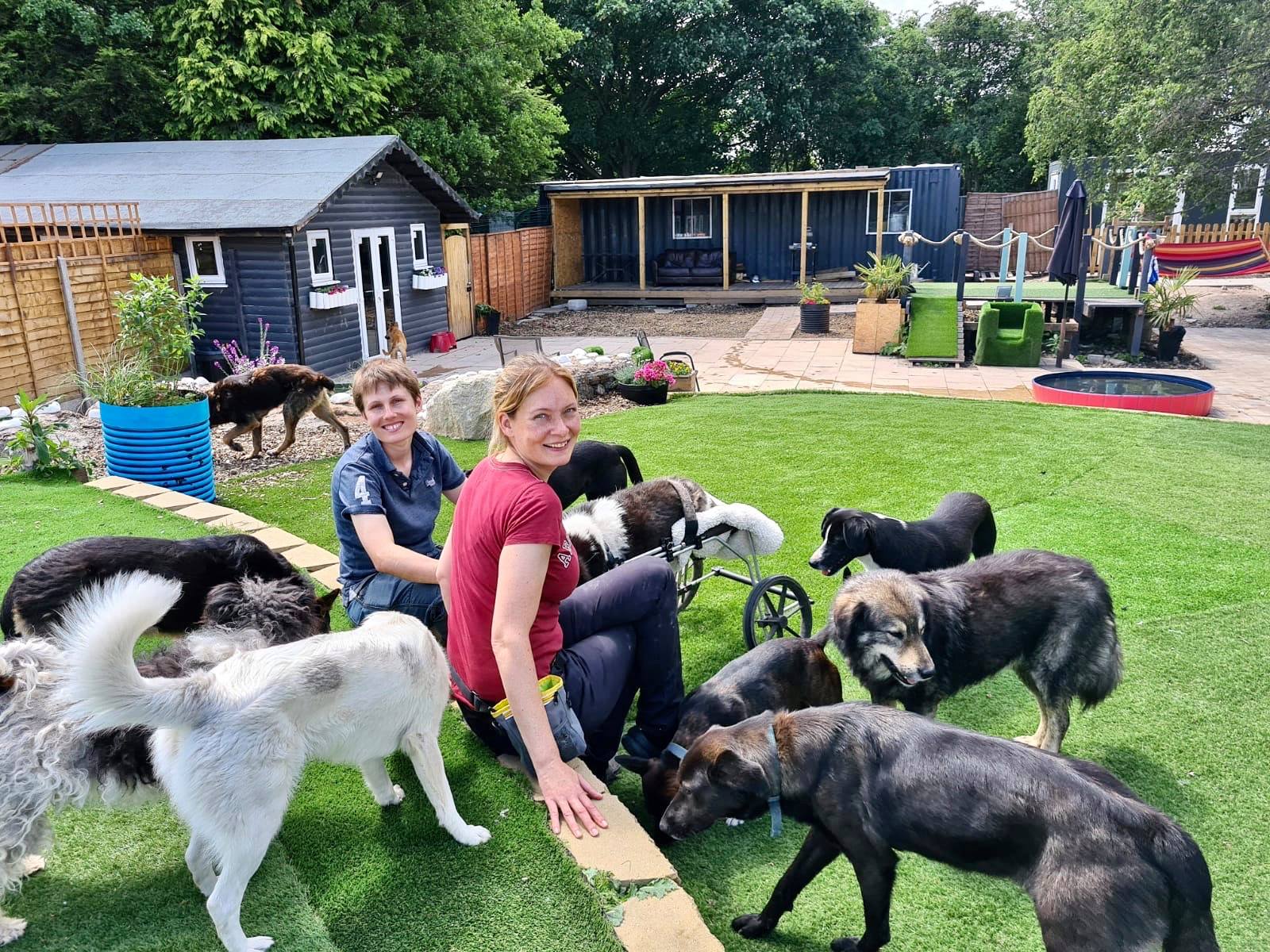
Greater Manchester’s leading dog rescue centre, Dogs4Rescue, has published an emotional plea for dog lovers to help secure a second site – guaranteeing a home for the alarming numbers of unwanted canines across the country.
The kennel-free dog rescue needs £550,000 by Friday (11 September) to purchase land for a brand new centre – which has already attracted high interest from property developers.
If successfully acquired, the charity will transform the rural area into a 40-acre world-class Dog Rehabilitation Retreat and Sanctuary – giving unwanted, abandoned and abused dogs a home on the outskirts of Greater Manchester.
It is predicted that as many as 40,000 dogs will enter the UK rescue system due to the ‘lockdown puppy boom’; meaning Dogs4Rescue are set to be inundated with new arrivals.
Emma Billington, founder of Dogs4Rescue, said: “We have proven the kennel-free dog rescue model works having successfully rehomed almost 1,500 dogs in the last seven years.
ADVERTISEMENT
“By happy coincidence we have also discovered the dogs living together as pack creates an amazing window for rehabilitation, the kind of which traditional kennel-based dog rescues cannot offer.
“We have 16 permanent sanctuary dogs here who provide a backbone of stability to our pack and are fantastic at helping rehabilitate other shut down and frightened dogs.”
ADVERTISEMENT
During lockdown, Dogs4Rescue took in dogs stuck inside the kennel system, as well as pooches considered to be more ‘problematic’.
But with such a high volume of dogs requiring a special environment, Emma has said that the current Dogs4Rescue centre is nearing capacity and “cannot take any more difficult cases”.
“Every day we have to turn down beautiful innocent souls who I know we could help, if we only had a second centre,” Emma commented.
ADVERTISEMENT
“It’s our goal to save as many dogs as possible during our lifetime, and for that to become a legacy as we teach more people how to work with difficult dogs who just need a little more time, love and patience.
“We’re leading the way with our kennel-free rescue and the second site will help that legacy touch the rescue industry to change for the better.
“Donations will be a gift to all the dogs that no-one wants now, during our lifetimes and a lasting legacy into the future.”
Every penny makes a difference here. To help Dogs4Rescue secure an essential second home, please donate whatever you can via their JustGiving page.
For large donations or offers of corporate support, email Emma at [email protected] or ring 07412361769.
Twitter and Insta: @dogs4rescue
News
One million UK adults who have never smoked before are now vaping, new stats reveal
Emily Sergeant
More than a million UK adults who claim to have never smoked cigarettes are now vaping.
According to alarming new data from the Office for National Statistics (ONS), relating to people aged 16 and over, around 2.8 million men (11.3%) and 2.1 million women (8.2%) are thought to be smokers in the UK… but more than a million people, who have never smoked before, have now made the decision to start vaping instead.
People in the 25 to 34 age group were found to be the most likely to vape, according to the data, overtaking those aged 16 to 24, as it was the only age group to see a rise in e-cigarette usage.
Daily or occasional vaping is still higher than the proportion of people smoking cigarettes too, the ONS revealed, at 5.4 million, or 9.9%, versus 4.8 million (8.7%).
One million UK adults who have never smoked are now vaping / Credit: Lil Artsy (via Pexels) | Pxhere
“Fewer than one in 10 adults now smoke,” commented David Mais, from the ONS.
“This is the lowest proportion on record and continues the long-term decline in smoking. [But] at the same time, e-cigarette use remains more common than smoking and has followed an overall upward trend since 2020.
“E-cigarette users are also getting older, with those aged 25 to 34 now overtaking 16 to 24-year-olds as the age group most likely to use them.
“This may reflect existing users getting older, growing popularity among this age group, or a combination of both.”
Overall, the prevalence of smoking dropped in all four UK nations between 2024 and 2025.
Featured Image – Elsa Olofsson (via Unsplash)
News
Three Manchester motorways named in UK’s top 10 ‘most challenging’
Emily Sergeant
Three motorways in and around Manchester have been named the ‘most challenging’ in the UK.
As part of MoneySuperMarket’s new Great British Motorway Report, new research has found that one in three UK motorists find motorway driving ‘stressful’ – despite more than 70 billion miles being travelled on Britain’s motorways each year.
From delays and congestion to high traffic levels, there are a number of factors that can contribute to driver stress levels.
But are some motorways more challenging for drivers than others? According to the data, yes. And three of the top 10 worst motorways in the UK are in and around Greater Manchester.
To find out which are the most challenging, MoneySuperMarket analysed everything from collision rates and roadworks, to lane closures and driver feedback in order to reveal the top 10.
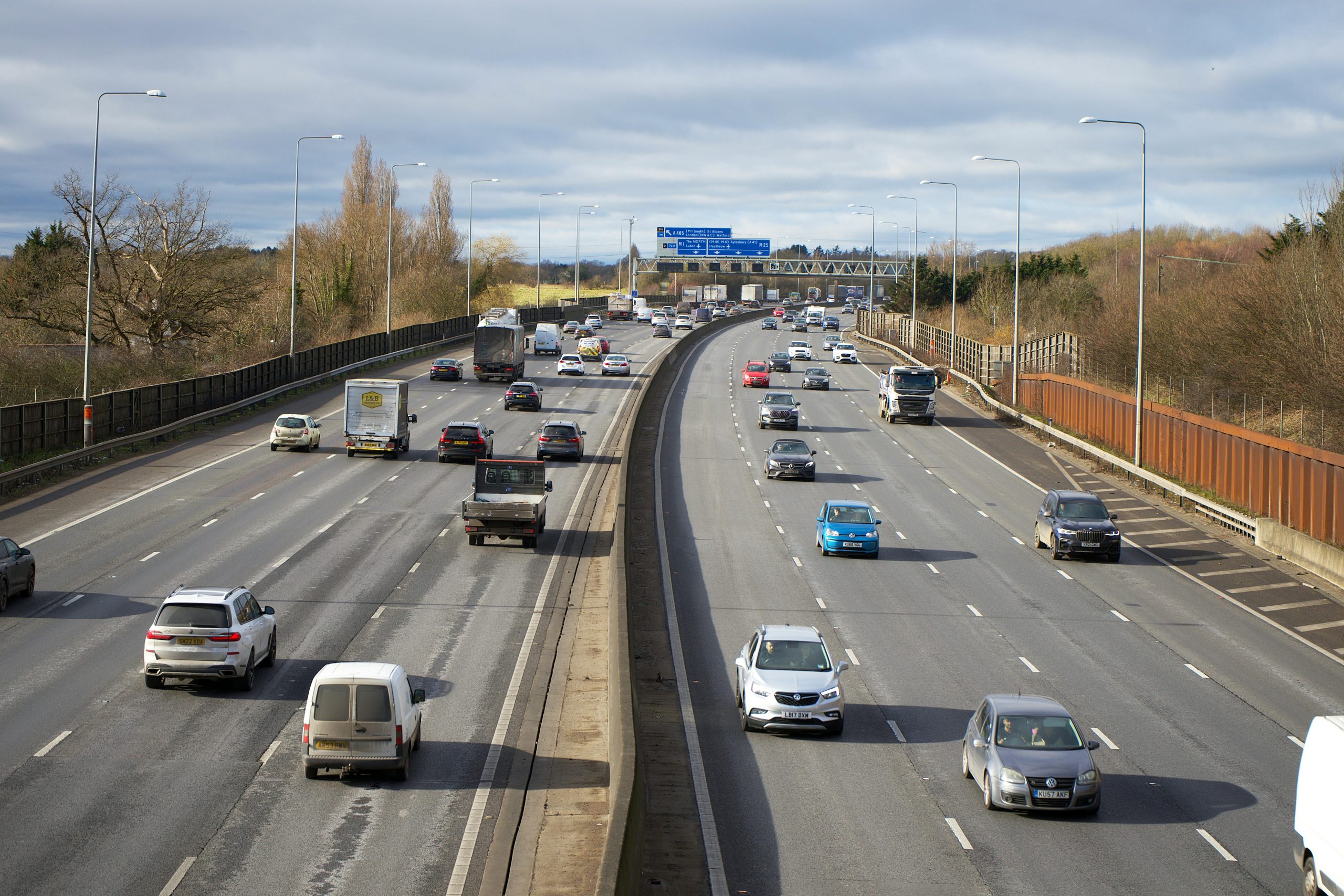
Manchester is home to three of the UK’s top 10 most challenging motorways – the M602, M62, and M60, the latter of which took the top spot on the list.
Three Manchester motorways have been named in the UK’s top 10 ‘most challenging’ / Credit: pxfuel
Encircling Greater Manchester and linking many of the region’s motorways, the M60 recorded the lowest overall score in the index.
Despite handling significant volumes of traffic, the M60 experienced some of the highest average delays, at 15.58 seconds per vehicle per mile, and alongside this, it saw 34 collisions in the past year alone. But despite these challenges, the M60 remains an essential route for regional connectivity, and often cannot be bypassed.
“If you’re feeling anxious, allow extra time for your journey so you don’t feel pressured to rush or make last-minute decisions,” commented Alicia Hempsted at MoneySuperMarket.
“Plan your route in advance, including where you’ll stop for breaks, as regular rest stops can help you stay alert and reduce stress on longer trips, and if you’re travelling alone, consider sharing your route with someone you trust if it helps you feel more comfortable.”

 The Manc -
8th September 2020
The Manc -
8th September 2020