The government has retracted its decision to U-turn on introducing a new law that bans conversion therapy in the UK.
Former Prime Minister Theresa May had initially promised back in 2018 that the highly controversial practice – which attempts to change an individual’s sexual orientation or gender identity – would be outlawed in the UK, just like is in many other countries across the globe.
“We will ban conversion therapy to prevent these abhorrent practices which can cause mental and physical harm,” vowed May in 2018.
“The ban will eliminate coercive practices which cause mental and physical harm to individuals and we will ensure the action we take to stop this practice is proportionate and effective and does not have unintended consequences.”
“People should be free to be themselves in the UK,” she concluded.
ADVERTISEMENT
If you’re unfamiliar with what the practice involves, conversion therapy – which is also sometimes called cure therapy or reparative therapy – refers to any form of treatment or psychotherapy, ranging from forms of therapy and prayer, to more extreme acts such as “exorcisms, physical violence and food deprivation”, that aims to change a person’s sexual orientation or suppress a person’s gender identity.
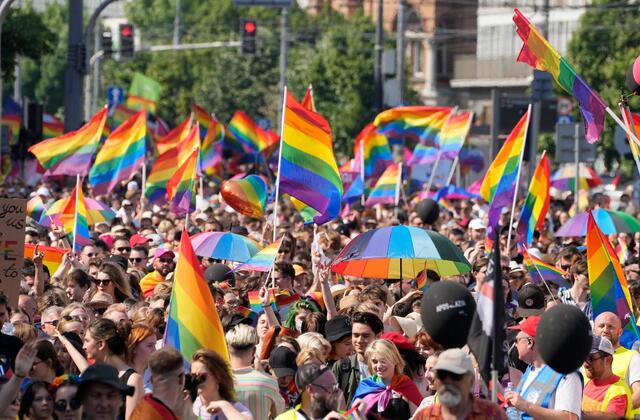
The government has now retracted its decision to U-turn on banning conversion therapy in the UK / Credit: Manchester Pride
It has, understandably, generated significant backlash, with LGBT charity Stonewall saying it is based on an assumption that being lesbian, gay, bi or trans is a mental illness that can be “cured”.
ADVERTISEMENT
The NHS and other professional bodies have warned that all forms of conversion therapy are “unethical and potentially harmful”.
“While ‘conversion therapy’ does not work, it is still extremely harmful, causing severe psychological damage to victims and survivors of this practice, and reinforcing the myth that there is something inherently wrong with being LGBTQ+ and that we can and should be brought out of existence,” added Dr. Christopher Owen – Inclusivity Development Manager at Manchester Pride.
Current Prime Minister Boris Johnson had previously agreed to continue with May’s promise to bring forward legislation that bans conversion therapy – especially after there was outrage from campaigners, organisations, and celebrities – but early on Thursday evening, reports began emerging and several news outlets were said to have been informed by a government spokesperson that ministers had decided to drop the ban.
They would, instead, “proceed by reviewing how existing law can be deployed more effectively”.
Conversion therapy attempts to change an individual’s sexual orientation or gender identity / Credit: Unsplash
A Downing Street briefing paper entitled “conversion therapy handling plan”, seen by ITV News on Thursday, said: “The PM has agreed we should not move forward with legislation to ban LGBT conversion therapy.”
The briefing warned of a “noisy backlash from LGBT groups and some parliamentarians when we announce we do not intend to proceed” – and the LGBT sector will see it “as a signal the government is uninterested in LGBT issues”.
News of the decision to scrap the ban had been heavily criticised since it broke, with Labour MP Chris Bryant, who is gay, most-notably calling it “a terrible betrayal of a promise and of a whole community”.
ADVERTISEMENT
“So-called conversion therapists pray on tender hearts and do immeasurable harm,” he added.
After years of delay in which LGBTQ+ people in the UK have continued to suffer as a consequence of conversion practices, it's devastating to hear that the UK government is again breaking its promise to our communities, walking away from its commitment to end conversion therapy.
Labour’s Anneliese Dodds also tweeted in response to the initial reports that it was an “outrageous decision”, adding that “a government that believes conversion therapy is acceptable in 21st Century Britain is no friend of the LGBT+ community.”
And Liberal Democrat equalities spokesperson, Wera Hobhouse, said it was “giving the green light to a form of torture in the UK”.
However, only about three and a half hours later after announcing its decision to U-turn, a Downing Street spokesman told Sky News, and other news outlets, that the government will in fact ban conversion therapy.
But controversially, it will only ban gay conversion therapy, not trans conversion therapy.
ADVERTISEMENT
The NHS and other professional bodies have warned that all forms of conversion therapy are “unethical and potentially harmful” / Credit: Unsplash
This has, of course, been met with criticism from some MPs and charities, with Rainbow Project notably saying any ban that didn’t include transgender people was “not a real ban”.
Labour MP Nadia Whittome also tweeted following the retracting of the U-turn that: “Boris Johnson has U-turned again after the strength of feeling and will ban conversion therapy for cisgender lesbian, gay and bisexual people but not trans people.
“It’s still not good enough. LGB comes with the T, and the Tories are not on our side.”
Police provide update after stabbing of 14-year-old boy at Manchester Arndale carpark
Emily Sergeant
Police have provided an update following the stabbing of a young boy in Manchester city centre over the weekend.
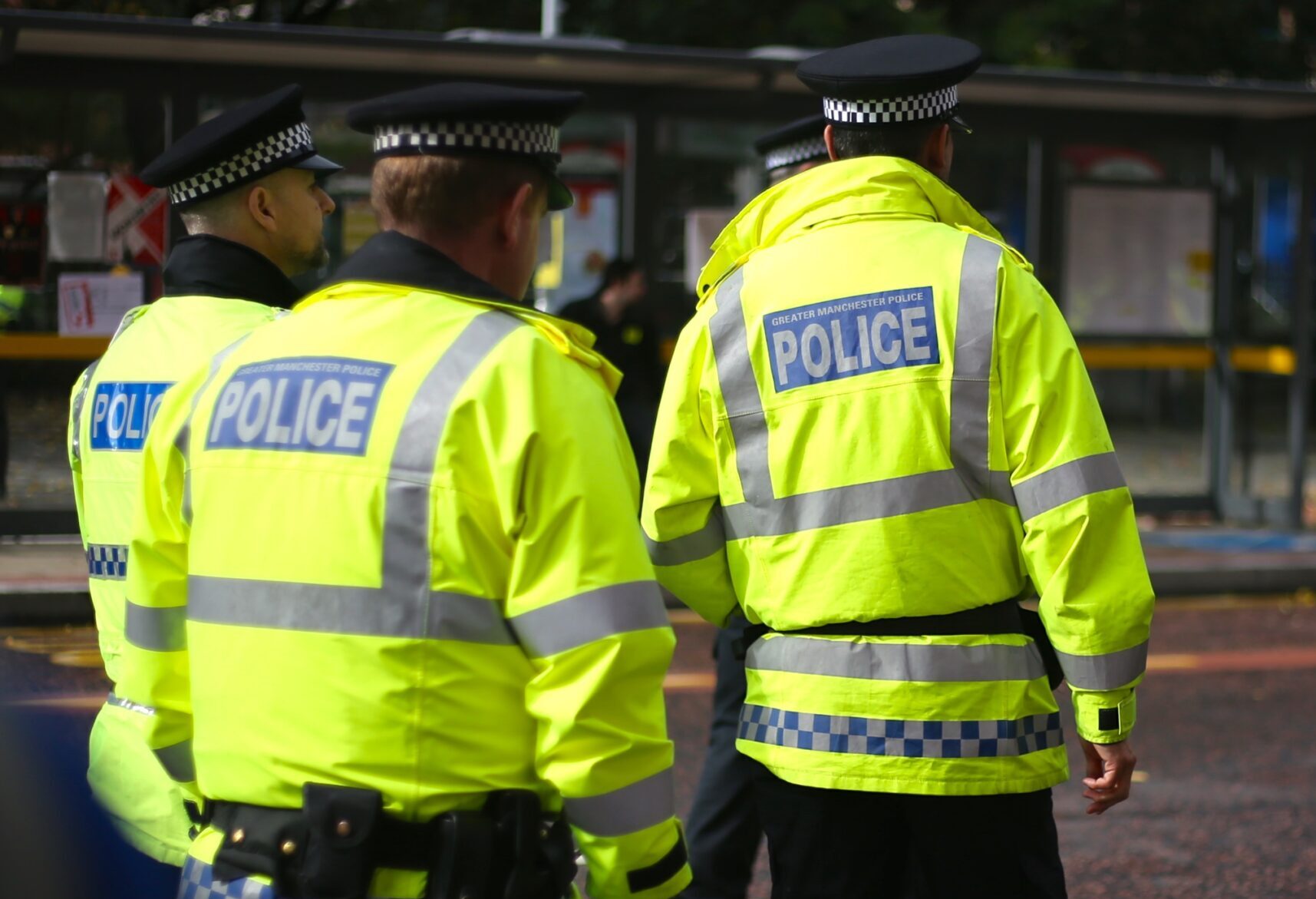
At around 3:15pm this past Saturday afternoon (17 October 2026), officers from Greater Manchester Police (GMP) were called out to reports of a stabbing on the ninth floor of the Arndale carpark in Manchester city centre.
Emergency services attended the scene, and a 14-year-old boy was taken to hospital with injuries consistent with a stab wound.
Thankfully, the victim’s injuries are not believed to be life-threatening or life changing, but an investigation and enquiries are ongoing.
Detective Inspector Sam Jones, of GMP’s City of Manchester District CID, said this will ‘understandably’ cause concern, but has assured the public that police believe this to be an ‘isolated incident.
“Detectives at the scene are working extremely hard to process the scene with Crime Scene Investigators,” explained DI Jones in an update statement issued.
“The car park is expected to be closed for several hours, so we ask for your understanding and patience whilst we gather evidence to bring these offenders to justice.
“Detectives and Officers will be in the area today to speak with local businesses and members of the public to provide reassurance. This is believed to be an isolated incident with no risk to the wider public.
“Greater Manchester Police are committed to diligently investigating all knife crime and bringing offenders to justice, and we are asking for anyone with information about this incident to come forward to assist with our enquiries.”
Anyone with information is asked to contact police on 101, quoting log 2050 of 17/10/2026, or via the LiveChat function. Alternatively, contact Crimestoppers anonymously on 0800 555 111.
Featured Image – Wikimedia Commons
News
TfGM issues statement as ‘essential’ work begins on three major Metrolink lines across Greater Manchester
Emily Sergeant
Passengers are being urged to plan ahead as no trams will be running on three major Greater Manchester lines for the next two weeks.
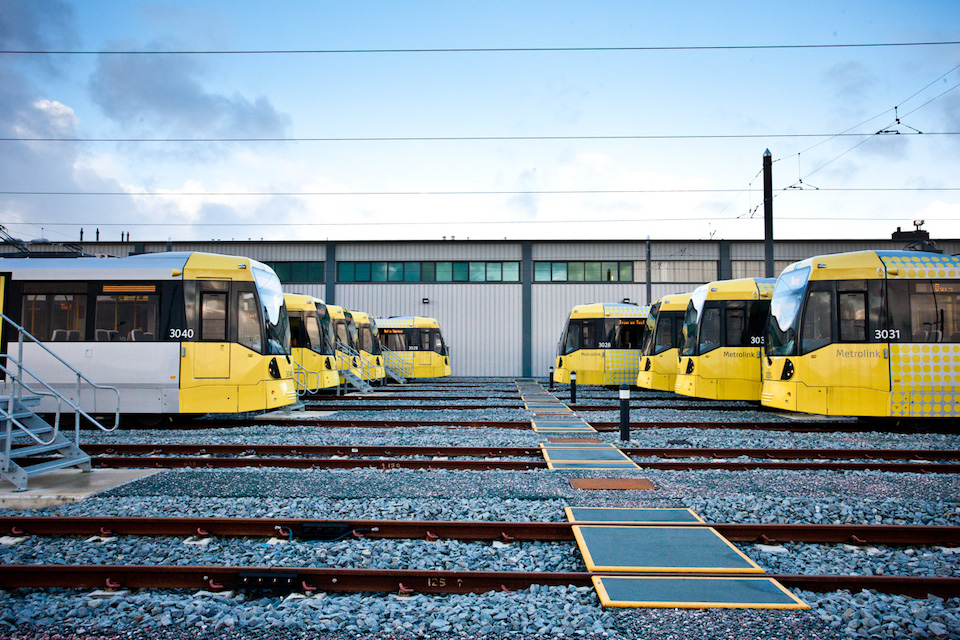
If you need bringing up to speed a little, as part of the ongoing £150m investment into Greater Manchester’s tram network, essential improvement work is being carried out on three major Metrolink lines across the region in a bid to make the network ‘safer’ and ‘more resilient and reliable for passengers’ for years to come.
This means that from today (Monday 19 October) through to Sunday 1 November, tram improvement works will take place at Deansgate-Castlefield, and Trafford Bar.
Additional works will also take place in the city centre during this time, allowing TfGM to keep closures of the tram network to a minimum.
During the dates above, no trams will run on the Altrincham, Trafford Centre, and Eccles lines.
A number of shuttle bus services will the running over the course of the two-week closure, however – with services arriving every 10 or 15 minutes, depending on the line, and you can find a full list of these here.
But despite the alternative services, widespread disruption is still expected for hundreds of people.
TfGM has issued a statement on the works being carried out, and offered support to anyone who may need it: “This is essential work that will help keep our tram network safe, reliable and fit for the future. We’re sorry for the disruption and we’ll be doing everything we can to make sure people can still get around while it’s taking place.
“We’ve listened carefully to feedback from customers during previous closures and have introduced more direct shuttle buses between key locations and extra buses on local Bee Network routes.
“If you use any of the affected lines, now is the time to check your travel plans.
“We’d encourage everyone to visit the Bee Network website or app before travelling so they can see the options available to them and allow extra time where necessary.”
Services will resume on these lines from start of service on Monday 2 November.
However there will be some minor route changes through the city centre in place from Monday 2 to Wednesday 4 November, so it’s important to check your journey before you travel.

 Emily Sergeant -
1st April 2022
Emily Sergeant -
1st April 2022