Mancs will soon get the chance to travel to some of the most beautiful and underrated places on Earth for the first time.
Now that 2026 is here and well underway, the new year is shaping up to be ‘groundbreaking’ for Manchester Airport – especially with its decade-long, £1.3 billion transformation of Terminal 2 due to be completed in a matter of weeks, and a project to redesign and improve other areas and terminals also rapidly progressing.
But if that wasn’t exciting enough as it is, the promise of seven new flight routes to destinations across the world being added into the mix should do it.
Four of the destinations are even completely brand-new to the Airport too.
Manchester Airport has launched seven new routes for 2026 / Credit: Daphne Richard | Denilo | Henrique Ferreira (via Unsplash)
Already described as being ‘the UK’s global gateway in the North’, Manchester Airport offers a route network that’s unparalleled outside London, with more than 200 destinations served by 50 airlines – but that network is set to widen again this year, with seven new services already confirmed from the likes of easyJet, Jet2.com and Ryanair.
ADVERTISEMENT
From stunning French cities and Italian islands, to Greek landscapes and even the chance to see one of the Seven Wonders of the Ancient World, there’s so much to choose from on the roster of new destinations.
easyJet’s service to Montpellier – one of the biggest cities in southern France, offering an array of cultural and archaeological sites, museums, galleries, beaches, and more – launches on Monday 30 March, while Jet2 begins flying to the Canary Island of La Palma form Friday 3 April, and the first direct service from Manchester to Palermo, the largest city on the island of Sicily, starts on Friday 1 May.
ADVERTISEMENT
2025 has brought exciting developments for our airfield and Terminal 2! ✨
Manchester Airport is looking better than ever and there is still more exciting improvements to come.
Preveza and Samos, both in Greece, the Spanish city loved by locals, Castellon, and the ancient Turkish gem of Bodrum round out the list of new destinations.
More routes are also expected be confirmed over the course of this year too, so keep your eyes peeled for announcements.
“Our route network is unrivalled, with more than 200 destinations across the planet,” commented Chris Woodroofe, who is the Managing Director at Manchester Airport.
“Here we have a list here of what we refer to as our biggest unserved destinations – that’s the destinations that we don’t have direct flights to but have the greatest demand, demonstrated by people from the region travelling to them either on connecting flights or from other airports.”
Featured Image – Nithin Shetty (via Unsplash)
News
Popular Manchester comedy festival A Lovely Weekend announces 2026 lineup
Emily Sergeant
A popular comedy festival is returning to our city next month with an impressive lineup of local talent and ‘cult sensations’.
That’s right… some of the UK’s best comedy names are coming to Manchester.
Following the success of events held over the past couple of years, renowned production company, A Lovely Time, has once again put together an absolutely jam-packed lineup of television names, internet sensations, hotly-tipped newcomers, and even critically-acclaimed comedians for a weekend full of comedy shows in the heart of the city centre.
Taking place, once again, at Fairfield Social Club, the weekend-long festival, aptly called A Lovely Weekend, will kick off on Friday 29 May.
You can expect three full days of laughter at the hands of an expertly-curated lineup.
Audiences will get to watch Last One Laughing favourite Harriet Kemsley, viral internet sensation and stand-up Tom Lawrinson, and the return of Mark Silcox from BBC’s Man Like Mobeen on the Saturday, as well as the first-ever live show of Sean McLoughlin’s popular podcast, The Sean McTalk Show.
He will be joined by stand-up comic Josh Pugh, newly announced SNL UK cast member Larry Dean, and French comedian and writer Celya AB on the Sunday, all making for a ‘truly unmissable’ weekend of comedy.
Speaking ahead of the festival’s return, A Lovely Weekend producer John Stansfield said: “With around 20 shows over the course of three days, we can’t wait to pack out Fairfield Social Club with comedy fans for a heck of a lovely time and speaking personally, my favourite weekend of the year.”
The 2026 festival is supported by Found – Fairfield Social Club’s commercial operator – and alcohol free brewery, BRULO.
A Lovely Weekend will take over Fairfield Social Club from Friday 29 – Sunday 31 May, and tickets are on sale now – with tickets to individual shows, and specific day and weekend-long passes all available to get your hands on.
The MOBO Awards in Manchester – everything you need to know
Thomas Melia
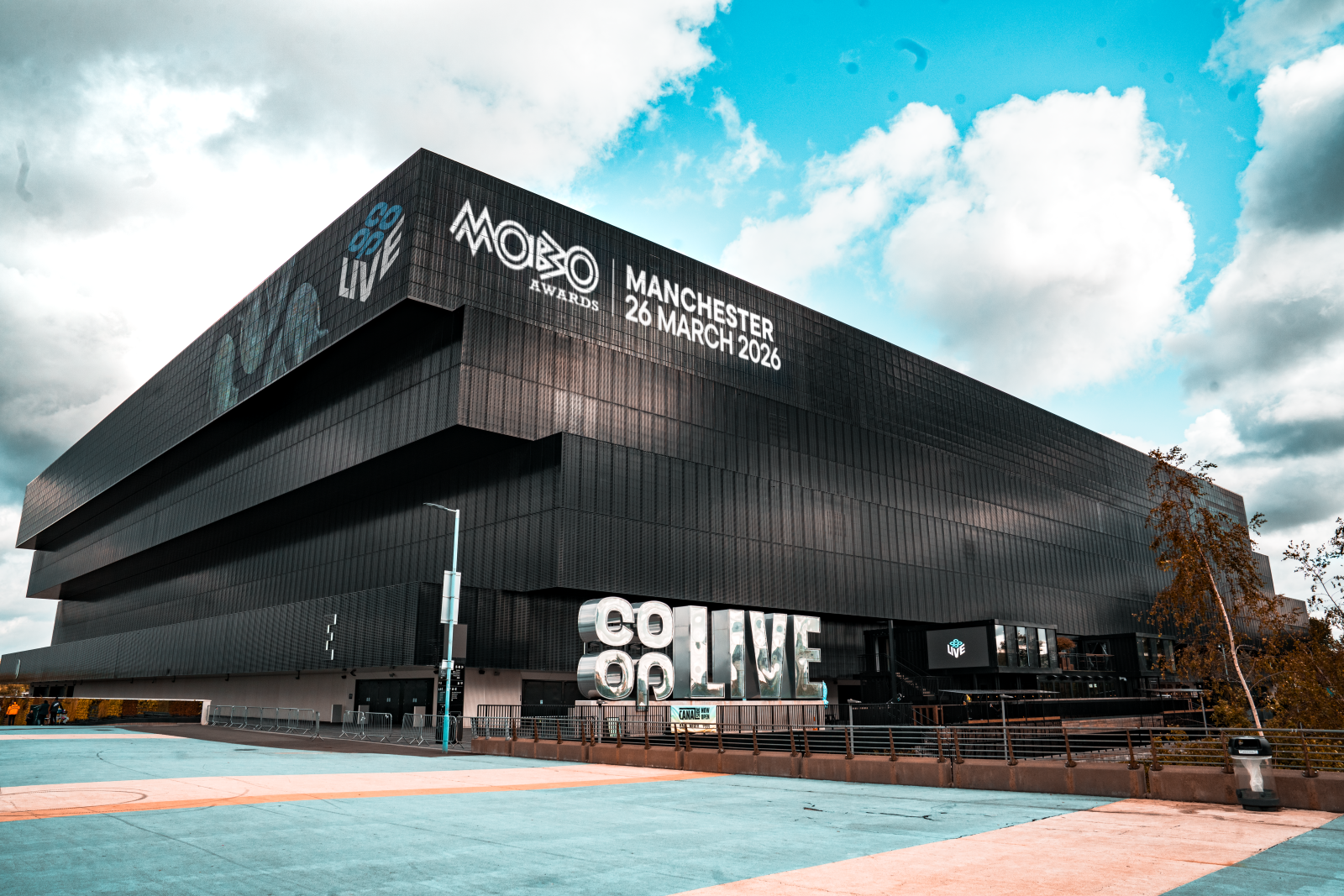
It’s official, the MOBOs are coming to Manchester for a night of live music performances and international artists, all at Co-op Live.
This award show, dedicated to music created by black creatives and musicians, has been hosted in cities nationwide, most recently in Newcastle, but 2026 marks its first time ever in the music capital of the North: Manchester.
A whole host of impressive musicians and acts take to the stage every year, with iconic moments throughout the award show’s history attributed to R&B royalty Lauryn Hill and Queen of Dancehall, Spice.
This award show is dedicated to celebrating Music of Black Origin but is recognised more widely as the MOBOs, with the aim of platforming as many genres as possible, from reggae and rap to soul, hip-hop and more.
Odeal and Spice performing at MOBOs 2025 in Newcastle / Credit: Nick Redman
The MOBOs first took place in 1996, and since then, founder Kanya King and her team have created a legacy – one now set to celebrate its 30th anniversary at 23,500 indoor venue Co-op Live.
MOBOs 2026 guide – all the key info
Are there still tickets left for the MOBO Awards ceremony at Co-op Live?
In a word, yes; there is still a healthy amount of tickets, both general admission and hospitality/VIP packages, if you fancy splashing out.
There’s still time to secure a seat, so grab yours HERE while you still can.
What time do the 2026 MOBOs start in Manchester and on TV?
This year, the MOBOs won’t be broadcast on mainstream TV channels; the award show has decided to collaborate with Amazon.
The show will be live-streamed via Amazon Music UK’s official Twitch account on Thursday, 26 March from 8pm – watch HERE.
There’s also an ‘Access All Areas’ programme hosted by DJ Target on BBC One with interviews and all the red carpet action on Friday 27 March, recapping all the action HERE.
All live streams and official channels have a finishing time of 10:30pm, meaning you can enjoy a night of huge performances while also getting a good quality kip.
Eve and Eddie Kadi are hosting this year’s MOBOs in Manchester / Credit: MOBO Organisation
2026 MOBO nominations
Obviously, the focus of this night isn’t just toasting 30 years of music with Black British culture and beyond, but recognising those pushing the industry forward in their field(s).
Lots of current and up-and-coming acts have found their way onto the list of nominees for the MOBOs this year – many for the very first time.
Shortlisted are the likes of the neo-soul singer-songwriting sensation, Olivia Dean, fellow female solo artists, PinkPantheress and Little Simz; Central Cee, Skepta, Kojey Radical, Raye, Myles Smith and FKA twigs, just to name a few excitinng few.
The MOBOs are known for some of the most insane live performances by some of the music industry’s biggest stars, this year with presenters Eve and Eddie Kadi.
Get ready for the Co-op Live crowd to chant “DEANO!” as the aforementioned Ms Dean will be performing on the night, and with the amount of hits this ‘Lady Lady’ has, we’re bound to know every word.
The ‘Queen of Afrobeats’, Tiwa Savage, is set to take to the stage and her album, This One Is Personal, helped soundtrack 2025, like the Skepta collaboration ‘On The Low’. With ‘Skeppy’ in attendance, anything is possible…
Dancehall diva Shenseea will be performing and has seen massive international success on MOLIY’s single ‘Shake It To The Max (Remix)’, Aya Nakamura duet ‘Dis-moi’, and solo hit ‘Time For Me’.
R&B trio FLO, Manchester rapper Aitch, Myles Smith, Slick Rick and Estelle, as well as a grime medley featuring Wiley, Chip, Nolay, Scorcher and D Double E curated by DJ Target, are also putting on a show – Co-op Live is in for a treat.
Tiwa Savage, FLO and Shenseea are just some of the acts taking to the Co-op Live stage / Credit: Press Shots via supplied
Who else is on the live music line-up in Manchester for MOBOs Fringe?
With the MOBO Awards heading to town for the very first time, there’s also a whole host of events taking place at various independent venues throughout the city.
Some may have already passed in the build-up to event week, such as a special partnered Manchester Basketball game for the MOBO Fringe festival, but if you time to go along to any of the ones still remaining, we strongly urge you to do so.
Get your MOBOs fix ahead of the show by attending some stellar upcoming acts as you gear up for the big event next Thursday night.
Fri 20 March – Shimrise Selects – The Deaf Institute
Sat 21 March – Mobørigins – Renae
Sat 21 March – Habitat x MOBO Fringe – Cupra City Garage
Sun 22 March – Manchester Made: Roots, Rhyme & The Future – Niamos Centre
Sun 22 March – Aarchive House – Side Street
Sun 22 March – Crib Sessions with Faro – Side Street
There are plenty of events ahead of the MOBOs that you can get involved with across Manchester / Credit: Nick Flynn via supplied
How to get to Co-op Live
Tram
ADVERTISEMENT
For those of you heading to Co-op Live to watch the BRIT Awards shows in person, you’ll be glad to know it’s right next door to a rather famous big blue stadium and its integrated Metrolink stop.
Head along the light blue or orange lines directly to the Etihad Campus or Ashton-under-Lyne, and you can get off the tram literally spitting distance from the arena. You can find the full map HERE.
Trams run frequently on the Ashton-Eccles line to the Etihad stop, with services leaving every six minutes from the city centre and until 1:00am on Fridays and Saturdays. It’s also worth noting that anyone with a valid BRITs ticket is granted FREE travel from all zones travelling to and from the venue.
Bus
You can find the full list of bus routes HERE, with the one in closest proximity to the venue being the 53 bus, which runs from Cheetham Hill through to Higher Crumpsall, Old Trafford and Pendleton, leaving just a two-minute walk to Co-op Live. You also get free Bee Network travel with any valid event ticket.
If you’re driving, there is limited parking available at the venue, but this must be pre-booked ahead of time, and there are designated drop-off areas.
The postcode is M11 3DU, and you can follow the signs towards the wider Etihad Campus as you get closer; directions to the adjacent drop-off points will also be signposted.
Keep in mind that congestion on the roads close to the stadium is expected to gather around two hours prior to any event, so if you are travelling on the road, these are the suggested times they provide on event day, though estimates will obviously vary:
Alan Turing Way (both directions): plan an additional 20 minutes into any journey by road.
Hyde Road (eastbound): expect an additional 15 minutes to be added to your journey.
Mancunian Way (westbound): plan for an extra 10 minutes of travel time.
There are also three park-and-ride facilities near Co-op Live, but be advised that the Velopark and Holt Town stops will be closed post-event to help safely manage crowds:
Ashton West (Ashton line) – 184 spaces and 11 disabled spaces
Ladywell (Ashton-Eccles line) – 332 spaces and 22 disabled spaces
Walk/cycle
ADVERTISEMENT
Lastly, Co-op Live is only a half-hour stroll from Manchester Piccadilly, and you could even walk along the canal all the way to the front door if you fancy taking the scenic route.
Greater Manchester now also offers the option to hire bikes on the Beryl app, with riders able to locate, unlock, get to their destination and then safely lock up the bike all through an easy-to-use app. There are hire points just near the south-west corner of the Etihad Stadium on Ashton New Road.
For more information on all travel options, you can check out the enhanced journey planner.

 Emily Sergeant -
16th January 2026
Emily Sergeant -
16th January 2026