A Manchester-based palaeontologist has unearthed the bones of what may be the largest known marine reptile.
This new identification is a crucial part of a fascinating eight-year long discovery journey.
It all started when a seasoned fossil collector named Paul de la Salle found a giant jawbone on Lilstock Beach, near Bridgewater in Somerset, back in May 2016, and then father and daughter, Justin and Ruby Reynolds from Devon, found the first pieces of a second jawbone and another giant bone while searching for fossils on the beach at Blue Anchor, also in Somerset, in May 2020.
And now, a palaeontologist at the University of Manchester (UoM) Dr Dean Lomax, has identified the fossilised remains of the second gigantic jawbone that measures more than two metres long.
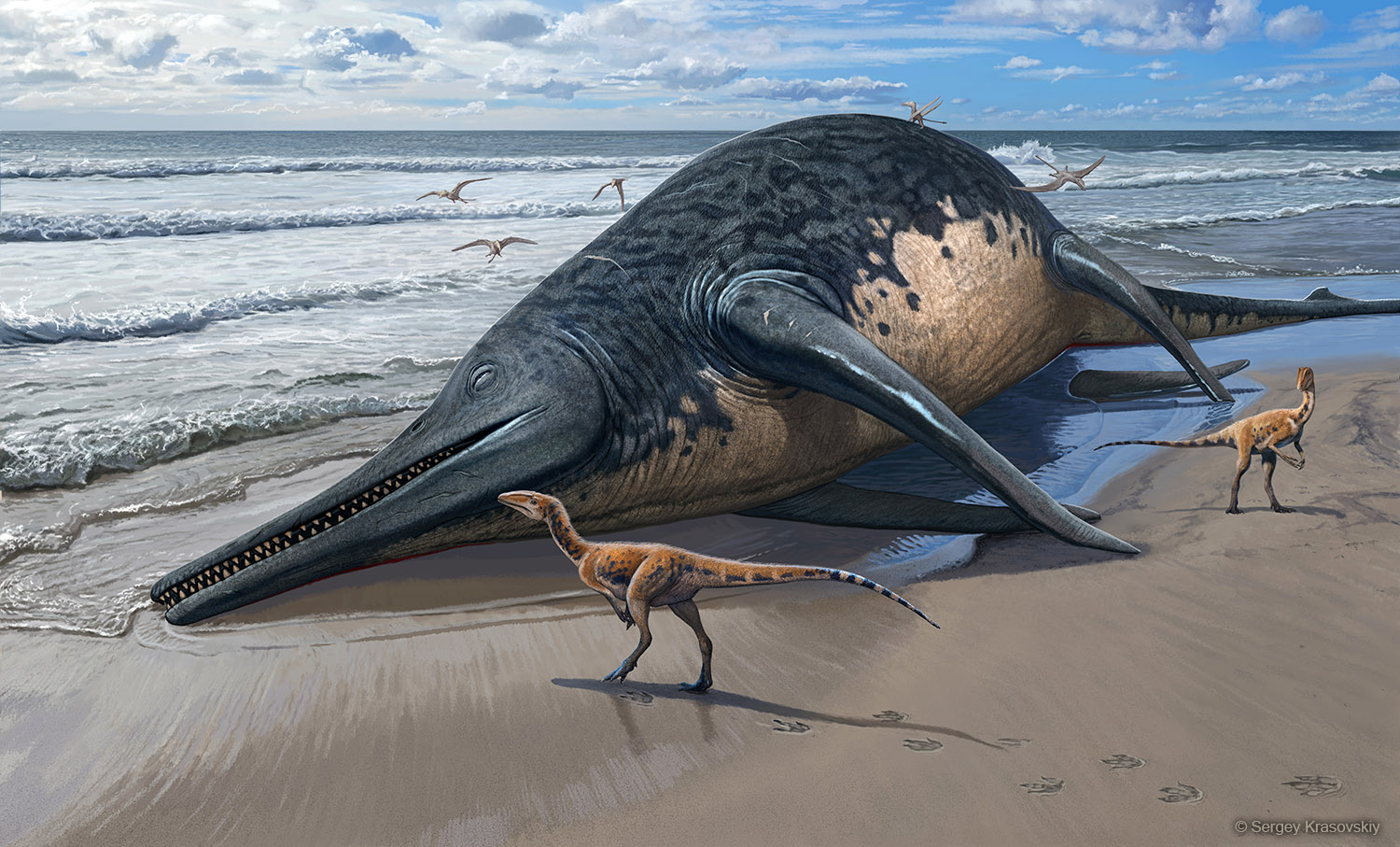
Experts have identified these bones as belonging to the jaws of a new species of enormous ichthyosaur – which is a type of prehistoric marine reptile – and astonishing estimations suggest the oceanic titan would have been more than 25-metres long.
ADVERTISEMENT
Dr Lomax has been working together with Justin and Ruby Reynolds, along with Paul de la Salle and several family members, since the father-daughter duo first contacted them about their groundbreaking discovery in 2020.
A Manchester palaeontologist has unearthed bones of what may be the largest known marine reptile / Credit: UoM
“I was amazed by Justin and Ruby’s find,” Dr Lomax commented.
ADVERTISEMENT
“In 2018, my team and Paul de la Salle studied and described Paul’s giant jawbone, and we had hoped that one day another would come to light.”
He explained that Justin and Ruby’s new specimen was “more complete and better preserved” than the first find, and that he “became very excited” at the chance to learn more following their discovery.
As mentioned, the Manchester-based research team, led by Dr Lomax, revealed that the jaw bones belong to a new species of giant ichthyosaur that would’ve been about the size of a blue whale, and they have called the new genus and species Ichthyotitan severnensis – which means ‘giant fish lizard of the Severn’.
ADVERTISEMENT
The bones – which represent the very last of their kind – are around 202 million years old, and date back to the end of the Triassic Period in a time known as the Rhaetian.
During this time, the gigantic ichthyosaurs swam the seas while the dinosaurs walked on land.
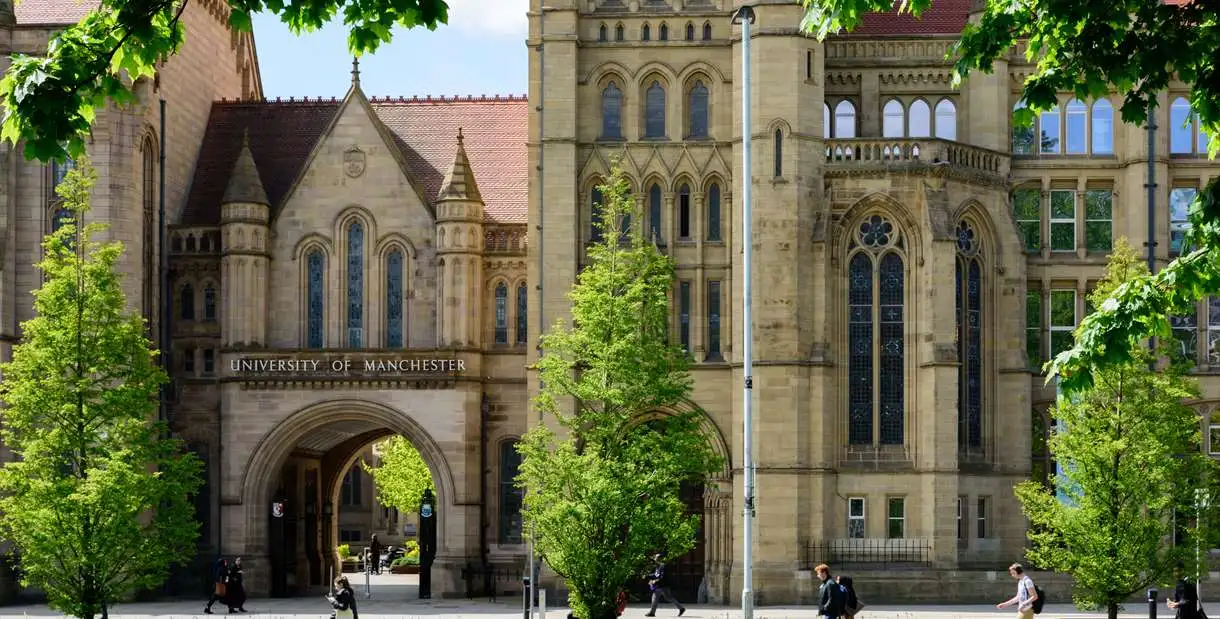
The University of Manchester, where Dr Dean Lomax works as a palaeontologist / Credit: UoM
Ichthyotitan is not the world’s first giant ichthyosaur, but the discoveries by Paul, and Justin and Ruby, are said to be “unique among those known to science”, as they appear roughly 13 million years after their latest geologic relatives – including Shonisaurus sikanniensis from British Columbia in Canada, and Himalayasaurus tibetensis from Tibet in China.
Speaking on the confirmation of the bones’ identification this week, Dr Lomax said: “This research has been ongoing for almost eight years.
“It is quite remarkable to think that gigantic, blue whale-sized ichthyosaurs were swimming in the oceans around what was the UK during the Triassic Period.
“These jawbones provide tantalising evidence that perhaps one day a complete skull or skeleton of one of these giants might be found.”
Featured Image – UoM
News
Manchester Airport issues update for anyone flying today after hundreds of cancellations yesterday
Emily Sergeant
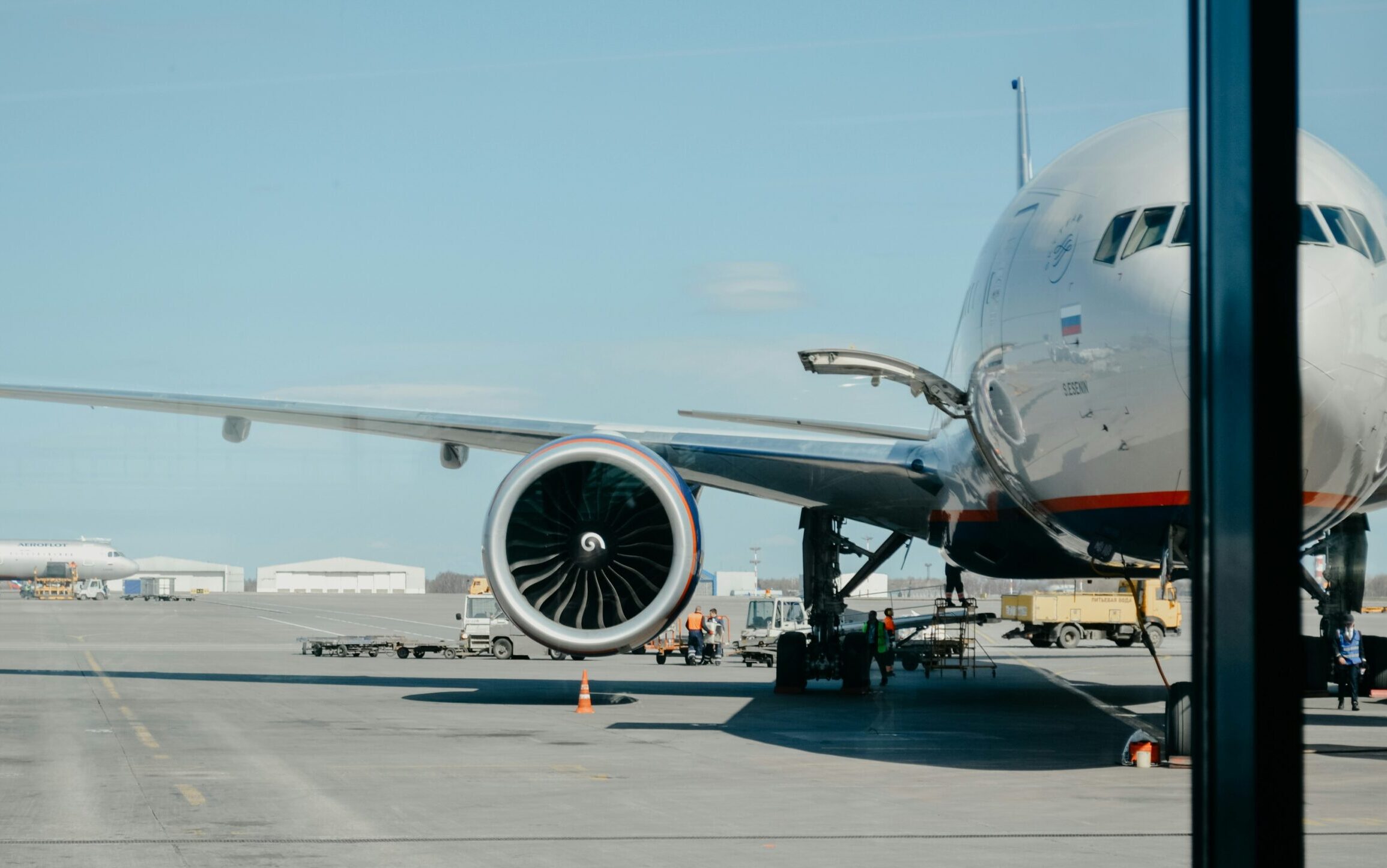
Manchester Airport has issued an update for anyone catching a flight today after hundreds of cancellations yesterday.
In case you hadn’t heard, hundreds of flights at several major UK airports – including Manchester Airport – were disrupted by a technical fault at air traffic control provider National Air Traffic Services (NATS) yesterday (8 September 2026), with the incident grounding planes and resulting in numerous cancellations.
According to Flightradar24, more than 1,000 flights were cancelled nationwide, and many passengers were told to expect disruption for the rest of the day.
One of the worst-affected airlines was said to be Ryanair, with around 65,000 passengers affected by the cancellations and delays.
Manchester Airport issued its first statement addressing the matter at 3:15pm yesterday, stating: “We are aware of an issue affecting NATS’ air traffic control service at UK airports, which may result in delays to some departing flights from Manchester Airport today.
“Passengers due to travel are advised to check the latest status of their flight with their airline. We will continue to monitor the situation and share further updates as more information becomes available.”
Now, although the issue has been resolved, Manchester Airport has issued further statements informing anyone travelling today what they can expect.
The airport started off by saying that it is ‘operating as normal’ today, but that passengers are advised to ‘check with their airline for the latest information’.
“A full flight schedule is expected to operate [today] but the airport may be busier due to rescheduled flights,” it added.
Passengers were then thanked for their ‘patience and understanding’ over the past 24 hours.
Featured Image – Ivan Shimko (via Unsplash)
News
Hundreds of staff at four Greater Manchester hospitals to strike AGAIN next week
Emily Sergeant
Another round of strikes has been called at a handful of major Greater Manchester hospitals.
Amid ongoing disputes following the first set of strikes at the end of last month, it has now been announced that more than 350 Northern Care Alliance Foundation Trust (NCA) employees – including nurses, clinical support workers and housekeepers – who are members of the union UNISON will once again walk out for three days next week.
According to the union, the dispute centres on the NCA’s use of an outside agency called NHS Professionals (NHSP) to manage overtime.
When covering staff shortages, workers are entitled to time-and-a-half pay – however in some cases, staff earn less than they would on a normal shift, and some have even been missing out on more than £80 per shift, the union added.
Operating theatre staff were previously on picket lines in June, and although an option to resolve the row was initially tabled by NCA bosses, this has now fallen through.
Hundreds of staff at four of Greater Manchester’s hospitals are set to strike next week / Credit: Stephen Andrews (via Unsplash)
This means that staff at Salford Royal Hospital, Royal Oldham Hospital, Rochdale Infirmary, and Fairfield Hospital in Bury are walking out next week on Monday 14, Tuesday 15, and Thursday 17 September.
The union’s North West regional organiser, Kevin Dolan, said the trust had given ‘no indication’ that it’s willing to re-enter negotiations, adding that operating theatre services were ‘chronically under-staffed’ and staff were choosing to work extra shifts to cover shortages.
Ahead of the August strikes, the trust declared a critical incident to help it secure extra support and keep urgent surgery running, while also announcing that some procedures would have to be postponed.
Understandably, some disruption is expected at each of the hospitals on strike days.
But Gertie Nic Philib, who is the chief people and strategy officer at the Northern Care Alliance, said that the trust will do ‘everything we can to minimise the impact on patients’ and ‘maintain high standards of care and quality at all times.’
“We also have contingency plans in place for emergency situations,” they concluded.

 Emily Sergeant -
18th April 2024
Emily Sergeant -
18th April 2024