Mandatory eye tests could be introduced for drivers over 70 in the UK

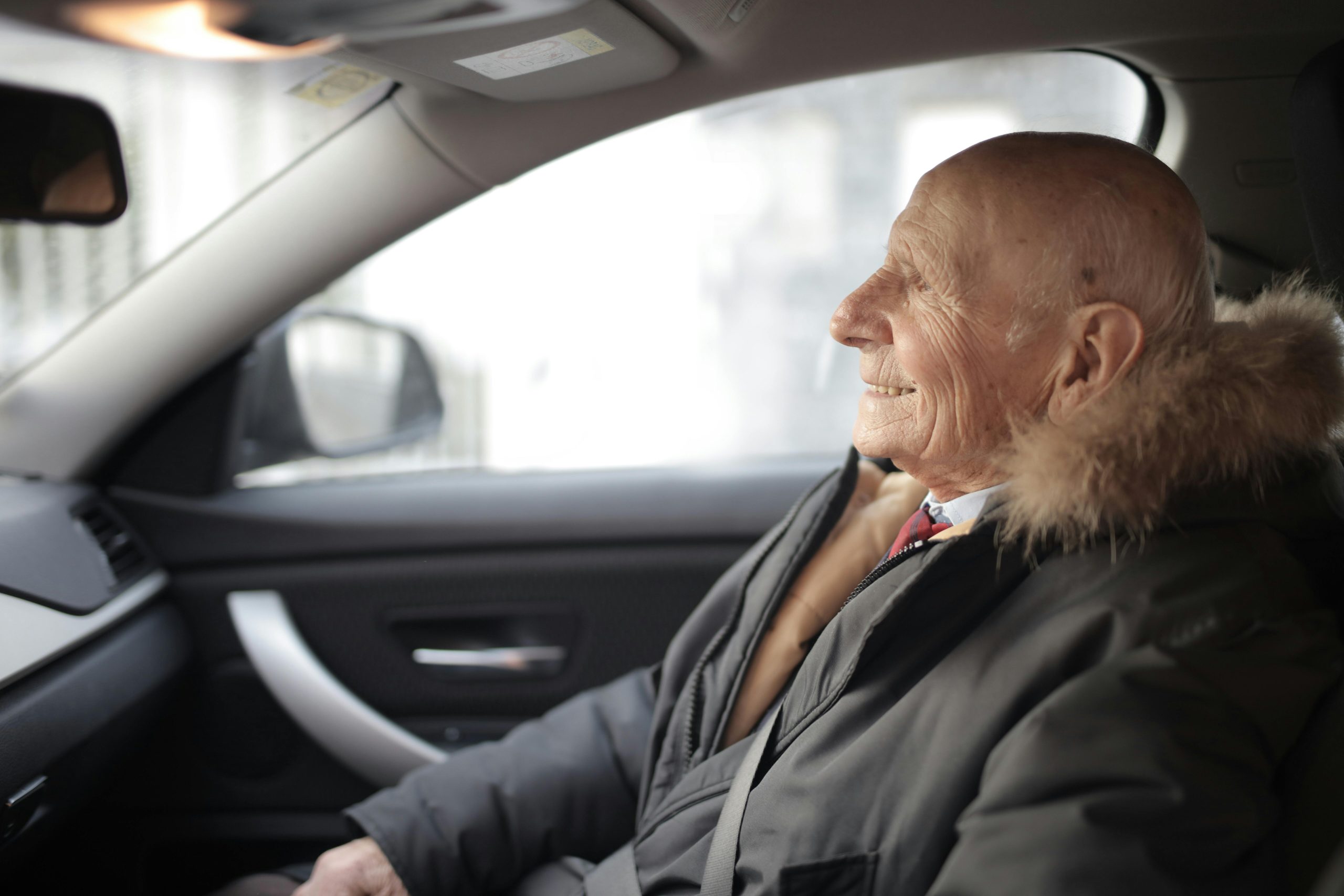
Old man in a car / Credit: Andrea Piacquadio (Pexels)
Mandatory eye testing could be introduced in the UK as part of the first road safety strategy in more than a decade.
According to Government statistics, approximately four people die on Britain’s roads every day, with thousands more seriously injured each year, but through targeted action on speeding, drink and drug driving, not wearing seat belts, and mobile phone use, it’s expected that thousands of these tragedies can be prevented.
In fact, the new road safety strategy sets out an ‘ambitious’ plan to reduce deaths and serious injuries on Britain’s roads by 65% before 2035.
With the number of older drivers continuing to rise year on year, in line with Britain’s ageing population, a consultation on mandatory eyesight testing for those over 70 will be launched, the Government has announced, while options for cognitive testing will also be developed to protect all road users.


On top of this, measures to tackle inexperience behind the wheel by introducing a minimum learning period for learner drivers, and lowering the alcohol limit for driving for the first time since 1976 to help prevent causes of collisions, are also to be discussed.
This strategy sets out a new approach to reverse a decade of ‘stalled progress’, according to the Department for Transport (DfT).
It includes the internationally recognised Safe System approach, which acknowledges that while human error is inevitable, deaths and serious injuries are not, and rather than placing responsibility solely on individual drivers, the system ensures that road design, vehicle safety, enforcement and education work together to protect all road users.
We've launched a new Road Safety Strategy, aiming to cut deaths and serious injuries on Britain’s roads by 65% by 2035.
— Department for Transport (@transportgovuk) January 7, 2026
Key points include:
– tougher action on drink driving
– minimum learning periods for learner drivers
– mandatory eye tests for older drivers
We're committed… pic.twitter.com/DkFTpcI2f7
A new Road Safety Investigation Branch will be set up to analyse collision patterns and inform prevention strategies.
The branch will draw on linked police and healthcare data to identify root causes and make sure any interventions are more effectively targeted.
Transport Secretary, Heidi Alexander, described the strategy as a ‘turning point’, adding that: “We are taking decisive action to make our roads safer for everyone, from new drivers taking their first lessons to older motorists wanting to maintain their independence.
Read more:
- Hundreds of drivers ‘incorrectly’ fined due to speed camera errors on motorways and A roads
- More than 100 new ‘ultra’ speed cameras installed across Greater Manchester
- 80% of drivers say they regularly see people ‘excessively speeding’ on UK roads
“The measures we are announcing today will save thousands of lives over the coming decade.
“Every life lost on our roads is a tragedy that devastates families and communities. For too long, progress on road safety has stalled.”
Featured Image – Andrea Piacquadio (via Pexels)