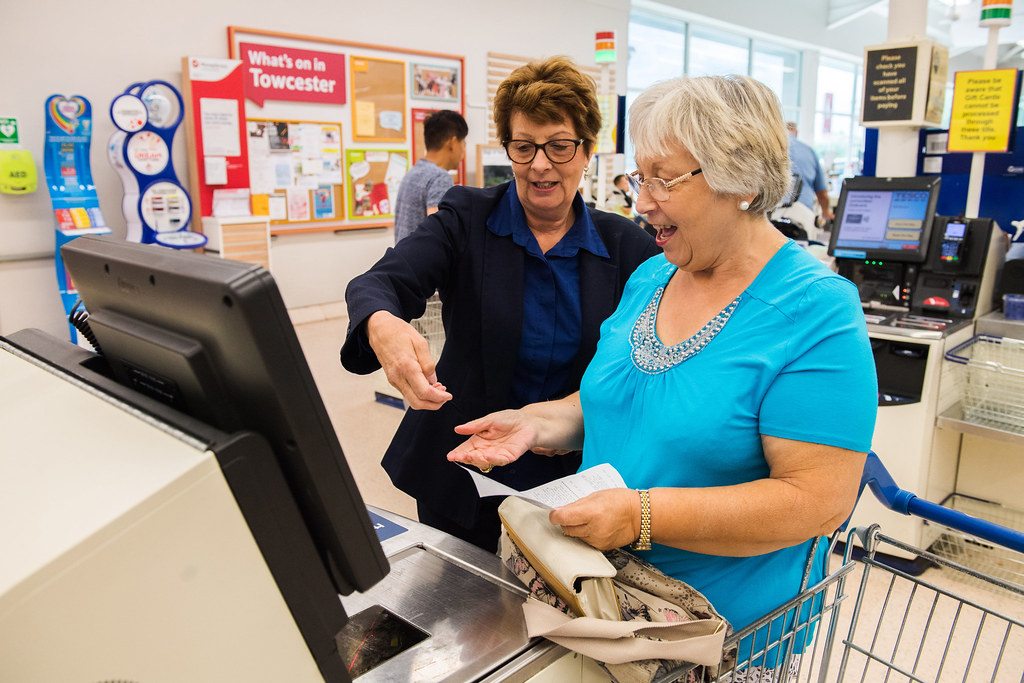
Over 100,000 sign pensioner’s petition to bring back tills at Tesco
69 year old Pat McCarthy says her local Tesco has ''inaccessible self-service tills with no staff', leaving some shoppers waiting over 30 minutes to be served
A regular shopper at Tesco is pleading with the supermarket giant to “stop replacing people with machines”, and has even launched a petition to take them on.
Pat McCarthy, aged 69, started the petition after she struggled to use the self-checkout tills at her local big Tesco supermarket.
Stating “you can’t speak to a machine”, she’s now calling on the company to reintroduce more staffed checkouts – and it seems the nation is on her side.
The petition has already hit over 100,000 signatures – 102,222 at the time of writing – and looks set to soon become one of the most-signed petitions on Change.org.
In it, Pat makes several well-put arguments for the return of more staff, explaining that at her local Tesco, and “probably all over the country, Tesco is bringing in new self-service and sort-it-yourself card only till machines. They make up 3/4 of the tills now.
ADVERTISEMENT
“These new tills are not accessible for people who don’t have credit cards and can only use cash or those with little confidence to use these self-service card-only tills – myself included.
“As an older woman, I can’t lift anything heavy, and that goes for many disabled people.”
ADVERTISEMENT
She continues: “People such as carers, older people, disabled people with mobility problems or lifting problems have to queue waiting for more than 30 minutes.
“I couldn’t lift the windscreen wash the other day in Tesco because it was so heavy and some men were lovely to help and had to put it in my car for me.
“If they weren’t around and my daughter wasn’t with me, I would have been helpless.”
ADVERTISEMENT
On my last visit to Tesco’s we had a £170 shop. We were told to go to the self check out tills! We said unless you open the check out we were leaving all this right here and will never shop here again – they opened the tills #BringBackTescoStaff
Her petition also points out that the new self-service tills have “displaced mainly part-time women staff”, and echos something many older people miss – the bit of chit-chat you have with the staff as they’re scanning your items.
She explains: “I love chatting with the staff, albeit briefly, especially as l live on my own. Talking with human staff is important to me. Now that experience has been taken away from me.
It is not the first time that shoppers have pushed back against self-checkout tills. Back in 2015, Morrisons brought back staff at 1,000 “express” checkouts after learning 67% of their customers felt enxious using the self scanning tills.
The full petition reads: “My name is Pat, I am 69 years old, and retired but I am a volunteer helping disabled people with applying for Personal Independence Payment (PIP) forms and a Trustee of my local Disability Network.
“My local Tesco has inaccessible self-service tills with no staff which makes the shopping experience physically difficult and overwhelming.
ADVERTISEMENT
“At my local Tesco mega-store, and probably all over the country, Tesco is bringing in new self-service and sort-it-yourself card only till machines. They make up 3/4 of the tills now.
“These new tills are not accessible for people who don’t have credit cards and can only use cash or those with little confidence to use these self-service card-only tills – myself included.
“People such as carers, older people, disabled people with mobility problems or lifting problems have to queue waiting for more than 30 minutes.
“I couldn’t lift the windscreen wash the other day in Tesco because it was so heavy and some men were lovely to help and had to put it in my car for me. If they weren’t around and my daughter wasn’t with me, I would have been helpless.
“These new self-service card tills have displaced mainly part-time women staff.
ADVERTISEMENT
“I love chatting with the staff, albeit briefly, especially as l live on my own. Talking with human staff is important to me. Now that experience has been taken away from me.
“With these new replacement Self-service-card-only tills (SSCOT) you have to choose your shopping if you can find it, put it in the trolley, unpack it, load it onto the belt that is static, scan it (if the scanner works), shove it across onto a packing area, pay for it and then lift it off out of the packing area and then load it into your trolley. This is a physically taxing process. As an older woman, I can’t lift anything heavy, and that goes for many disabled people.
“I challenge Ken Murphy Chief Executive of Tesco to meet with me for a discussion to explain his ‘replace people with machines policy’. I want Ken Murphy to bring staff back to do check-outs on the till and not have a replace people with machines policy.
“If we lose, it means an erosion of a great shopping experience into a Tesco’s shopping nightmare.
ADVERTISEMENT
“Sign and share this petition to help people with physical difficulties to have a better shopping experience in Tesco by bringing back staff.”
A Tesco spokesperson said: “Our colleagues and the friendly service they provide are absolutely vital to our stores and will always be on hand to help our customers, whether they are checking out at one of our colleague-operated or self-service checkouts.”
If you’d like to sign the petition you can do so here.
Tributes paid to ‘trailblazing’ Manchester councillor Pat Karney who’s died at age 78
Emily Sergeant
Heartfelt tributes are being paid following the death of ‘trailblazing’ Manchester councillor, Pat Karney, at the age of 78.
It’s said that he had been receiving treatment for cancer at The Christie.
A longstanding Labour Party politician, Pat had represented Harpurhey as a councillor since 1979, as well as being a Lead Member for the City Centre during that time. He was most-notably responsible for setting up the now-iconic Manchester Day festival, as well as being a supporter and one of the key figures in the organising of Manchester’s annual Christmas Markets.
Pat was affectionately known to many across Greater Manchester as ‘Mr Manchester’ or ‘Mr Christmas’, thanks to his deep love of the city and the festive season.
Also throughout his career, Pat was one of the pivotal figures in the regeneration of the city centre after it was devastated by the 1996 IRA bombing.
He was also said to be ‘proud’ of the role he played in standing up for LGBTQ+ rights, especially in the 1980s when Manchester City Council fought against the discriminatory Clause 28 (of the Local Government Act 1988) introduced by the Thatcher Government.
Manchester City Council Leader Garry Bridges, Council Chief Executive Tom Stannard, and Greater Manchester’s former Night Time Economy Adviser Sacha Lord are some of the well-known names leading the tributes to Pat.
RIP Councillor Pat Karney.
In 2006, when I came up with the idea of The Warehouse Project, it was laughed off.
Pat believed in it and helped it happen.
A visionary. A pioneer. A true Mancunian.#RIPPatKarney
Cllr Bridges called Pat a ‘giant of Manchester politics’, while Lord described him as ‘a visionary, a pioneer, and a true Mancunian’.
One of the most prominent tributes has been paid by Greater Manchester Mayor, and former Council Leader, Bev Craig – who said Pat will ‘always be in our hearts’.
Her tribute reads in full: “Across Manchester and across politics, many will mourn the loss of Pat Karney, a force of nature who served our city for half a century. My thoughts are with his family, who he treasured and adored, at this difficult time. He will always be in our hearts.
“Affectionately known by many as Mr Manchester, Pat was one of the city’s most recognisable figures. Through Manchester’s renaissance, Pat championed making our city what it is today from the regeneration of the city centre, improving the health of Manchester people, to the creation of Manchester Day – he was incredibly proud of Manchester and recognised the need to bring people together.
“A local north Manchester boy, he championed Manchester while ferociously fighting for the people of Harpuhey and Collyhurst. He delivered on the ground from new council housing and a GP surgery to championing a new North Manchester Hospital.
“Pat was one of a kind, passionate, determined, sharp and quick witted, but he was also thoughtful, kind and supportive. He will be remembered too for his sense of fun.
“A private man, he was in many ways a trailblazer in politics, someone who sacrificed a lot to be himself he championed the gay village and LGBT equality, he paved the way for generations who came after him.
“Working together for over 15 years we became good friends and like many I will miss him- but also make sure his achievements are celebrated in a way that he would be proud of.”
Featured Image – Cllr Pat Karney / Manchester City Council
News
Details released of Andy Burnham’s meetings with Manchester City owners while Mayor
Emily Sergeant
Details of Andy Burnham’s meetings with Manchester City owners during his tenure as Mayor of Greater Manchester have been released.
In case you need bringing up to speed on the situation a little first, Manchester City was found guilty back in September all of its charges related to the Premier League’s financial rules over a nine-season period, and on top of that, was also found guilty of the majority of charges in relation to its failure to co-operate with the League’s investigation.
According to the Premier League, the independent Commission found that Manchester City had arranged so-called ‘sham’ commercial deals with a number of its sponsors.
These were part of a disguised funding scheme – with those sponsors only required to pay a portion of the relevant sponsorship fees.
The remainder was then funded by Abu Dhabi United Group Investment & Development Ltd (ADUG), which owned the club.
The Commission also concluded, as quoted by the Premier League, that the club had ‘made concerted efforts to stop and frustrate the Premier League investigation’.
Within the past week or so, it has since come to light that now-Prime Minister Andy Burnham had dealings with Manchester City during his tenure as Greater Manchester Mayor, and Greater Manchester Combined Authority (GMCA) has now issued a public statement, giving details on the matter and what these ‘dealings’ entailed.
A spokesperson for GMCA confirmed that Burnham had a ‘formal meeting’ with Man City Chairman, Khaldoon Al Mubarak, back in October 2021.
The statement reads in full: “In October 2021, Andy Burnham, in his role as Mayor of Greater Manchester, had a formal meeting with Khaldoon Al Mubarak at the UK Government’s Global Investment Summit arranged by the Department for International Trade.
“In his capacity as Mayor, he was a guest of Manchester City FC at home matches on a small number of occasions, including attending Vincent Kompany’s testimonial match in September 2019, where he met the Chairman informally in the stands. These have been declared in the usual way.
“Also during his time as Mayor, representatives of Greater Manchester sporting clubs would routinely join business delegations as part of Mayoral international visits.
“This included representatives from Manchester United travelling to Austin and Dublin, Lancashire Cricket Club joining a delegation to India, and Manchester City FC staff supporting visits to China and Japan.”
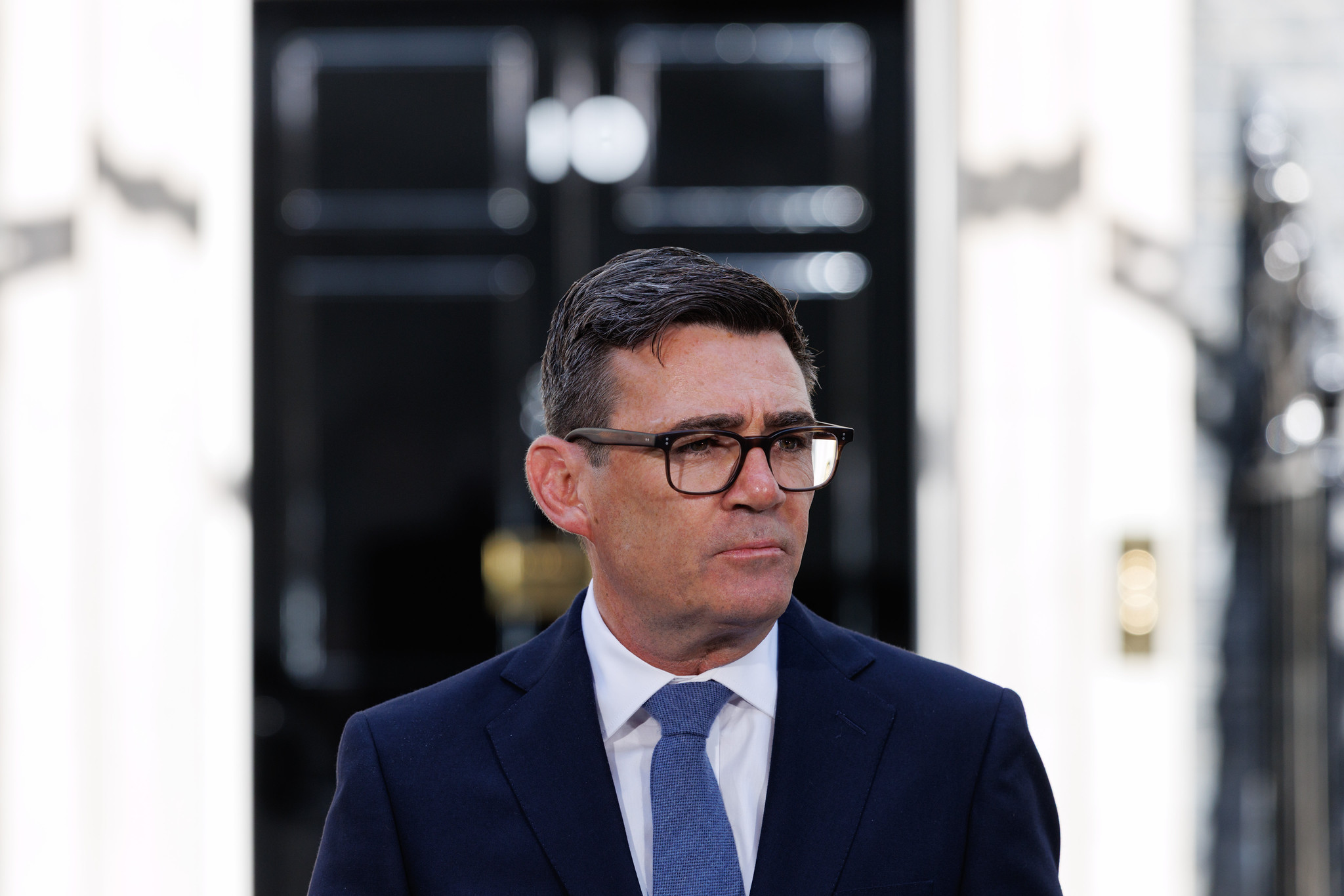
Featured Image – Lauren Hurley / Number 10 Downing Street (Press Image via Flickr)

 Georgina Pellant -
18th May 2022
Georgina Pellant -
18th May 2022