A 51-year-old male has been convicted after police officers saw him taking illicit photos of hundreds of women during the Manchester Pride Parade.
Andrew Smoggie has been charged with a breach of his Sexual Harm Prevention Order (SHPO).
He had been pretending to make phone calls during the busy event in the city centre on Saturday 27 August, but two plain-clothes Project Servator officers noticed his screen was on camera mode.
Smoggie was challenged, and it emerged that he was a registered sex offender whose SHPO prevented him from taking photos of female strangers in public spaces.
Police caught registered sex offender Andrew Smoggie taking photos of women at the Pride Parade. Credit: Unsplash
Hundreds of photos of women, many taken at the Pride Parade, were found on his phone.
ADVERTISEMENT
Smoggie, of Thelwall Lane in Warrington, was remanded in police custody and on Monday 29 August pleaded guilty at Manchester & Salford Magistrates court.
A statement from GMP said: “Every year in Greater Manchester, hundreds of sex offenders are put behind bars following comprehensive investigations by our officers and detectives across GMP committed to getting justice for survivors.
ADVERTISEMENT
“We’re continuing to do all we can to protect the public from harm and sexual offending – whether it be in the real world or the digital world – by safeguarding and supporting survivors, and target and prosecute offenders.
“All our officers tackling sexual abuse will ensure that all necessary steps are taken to use the extent of the necessary legislation so that all available powers are used to ensure offenders are preventing from harming again – and, if they do, we can work with partners agencies to take them off the streets.
ADVERTISEMENT
“If you or someone you know has been raped or sexually assaulted, we encourage you not to suffer in silence and report it to the police, or a support agency so you can get the help and support available.”
You can find support at:
Saint Mary’s Sexual Assault Referral Centre
Saint Mary’s SARC in Manchester provides a comprehensive and co-ordinated response to men, women and children who live or have been sexually assaulted within Greater Manchester. They offer forensic medical examinations, practical and emotional support as well as a counselling service for all ages.
Services are available on a 24-hour basis and can be accessed by calling 0161 276 6515
Greater Manchester Rape Crisis
ADVERTISEMENT
Rape Crisis is a confidential information, support and counselling service run by women for women over 18 who have been raped or sexually abused at any time in their lives.
Survivors provides specialist trauma informed support to male victims in Greater Manchester who have experienced sexual abuse, rape or sexual exploitation.
Call 0161 236 2182
Featured image: Unsplash
News
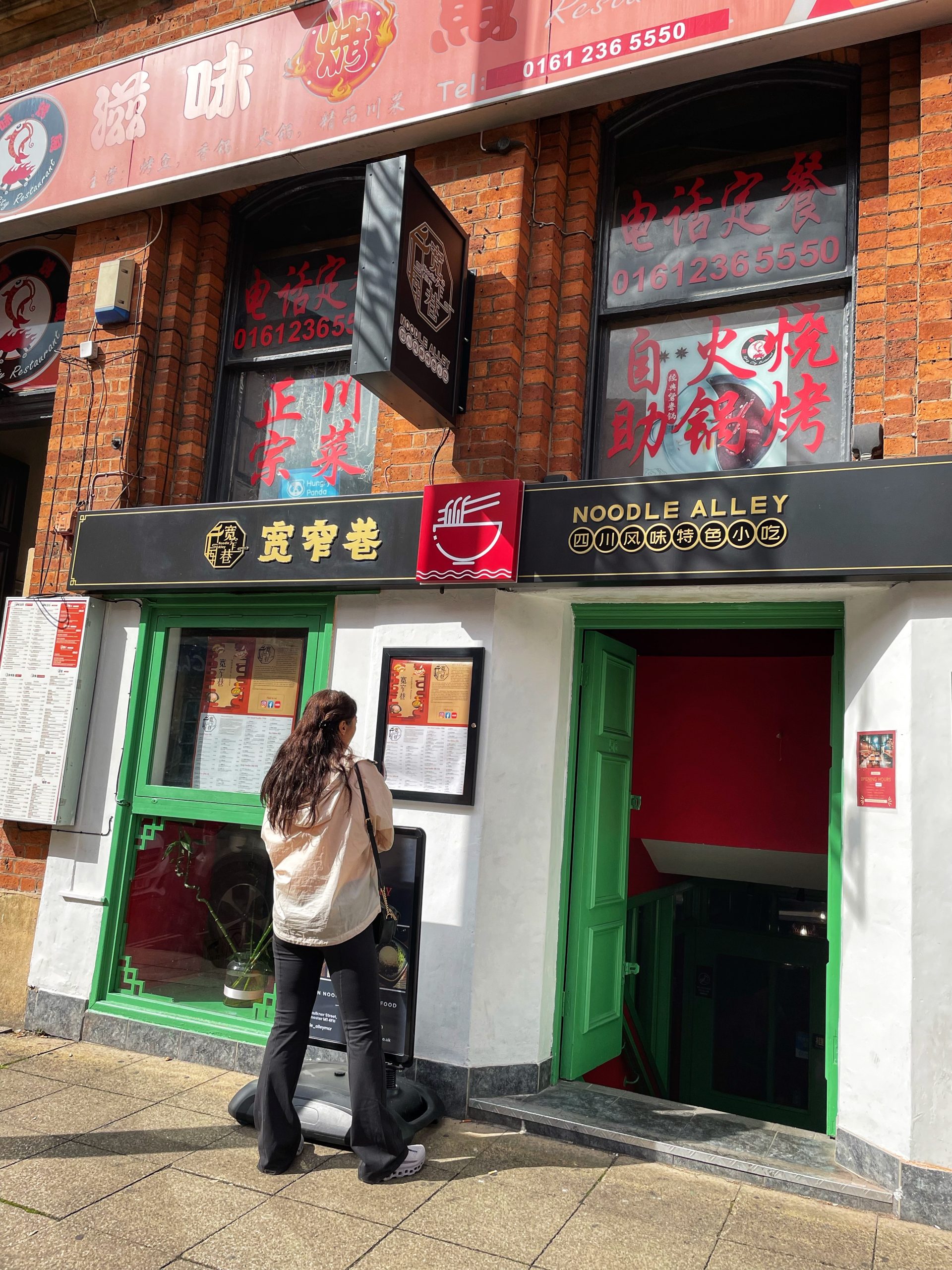
Chinatown restaurant pleads for help after dine-and-dash customer leaves staff member in A&E
Daisy Jackson
A brilliant restaurant in Manchester’s Chinatown has shared CCTV and a heartfelt appeal after one of its staff members was left in A&E.
Noodle Alley shared that one of its young staff members chased after a group of dine-and-dash customers who’d left without paying for their meal.
The restaurant then said that she was ‘assaulted’ at some point in the chase and ended up in A&E.
In their statement, Noodle Alley said that the staff member ‘had treated them kindly and never expected that kindness to come back to her like this’.
They wrote: “What has this world come to? A violent man sent our staff to A&E over an unpaid meal.”
The CCTV shows a group of three young men, all carrying Selfridges shopping bags, entering the restaurant.
They sit and enjoy a meal, before two of them slip out of the restaurant. The third man then exits but is chased by a Noodle Alley staff member.
It’s at this point – out of the range of the restaurant’s CCTV – that they said she was assaulted ‘after going beyond her duty to try and recover what had been taken’.
The family business said that she has been ’emotionally affected’ by the incident.
The police are involved and the restaurant has appealed for anyone who can help with their investigation to get in touch.
It’s also the second time they’ve appealed about a dine-and-dash customer in the last few months, but this incident went ‘far beyond’ previous incidents.
In their full statement, Noodle Alley said: “We’re a small family business, and lately it feels like small businesses are being targeted again and again.
“But this time, it went far beyond anything we have experienced before.
“One of our young staff members — a girl simply doing her job — was assaulted after going beyond her duty to try to recover what had been taken from our restaurant. She ended up in A&E.
“What hurts us most is seeing how emotionally affected she has been by what happened. She told us she had treated them kindly and never expected that kindness to come back to her like this.
“We work hard to look after our staff and our customers, and nobody should have to go through this simply for doing their job.
“We have reported the incident to the police.
“If anyone recognises these individuals or has any information that could help the police with their investigation, please contact us or the police directly.
“We’re sharing this because we believe our staff deserve to feel safe at work.”
Everyone in England can now get FREE careers advice as part of a new Government scheme
Emily Sergeant
People all across the country now have the ability to access support from dedicated career advisers completely free of charge.
That’s because, for the first time ever, the full range of support previously offered by the National Careers Service will be available through Department for Work and Pensions (DWP) under the Government, creating a more joined-up service for people at every stage of their career.
Around 500 qualified careers advisers have joined the DWP, it has been confirmed, and they will provide expert careers information, advice, and guidance alongside the existing employment and skills support that are already available through Jobcentres.
But the key is here, the free careers support will be available to everyone – regardless of whether they claim benefits.
The services are set to be accessed either online, over the phone, or through face-to-face appointments at Jobcentres, giving people a single place to access the advice they need to take their next step.
As mentioned, these new services are part of the wider reforms the Government says it is taking to ‘give everyone the opportunity to succeed’.
These reforms include £2.5 billion of youth employment support, and £3.5 billion investment in employment support for disabled people and those with long-term health conditions.

 Daisy Jackson -
31st August 2022
Daisy Jackson -
31st August 2022