Sniffer dogs that can detect COVID-19 in humans could be coming to Manchester
Sniffer dog trials for COVID-19 have been taking place at London Paddington train station this week. If successful, the dogs may be used in Manchester by Easter.
Sniffer dogs specially trained to detect COVID-19 in humans could arrive in Manchester by Easter 2021, according to a leading security firm.
Security canines have become common at airport terminals, festivals and large-scale events for their ability to sniff out drugs, bombs and explosives.
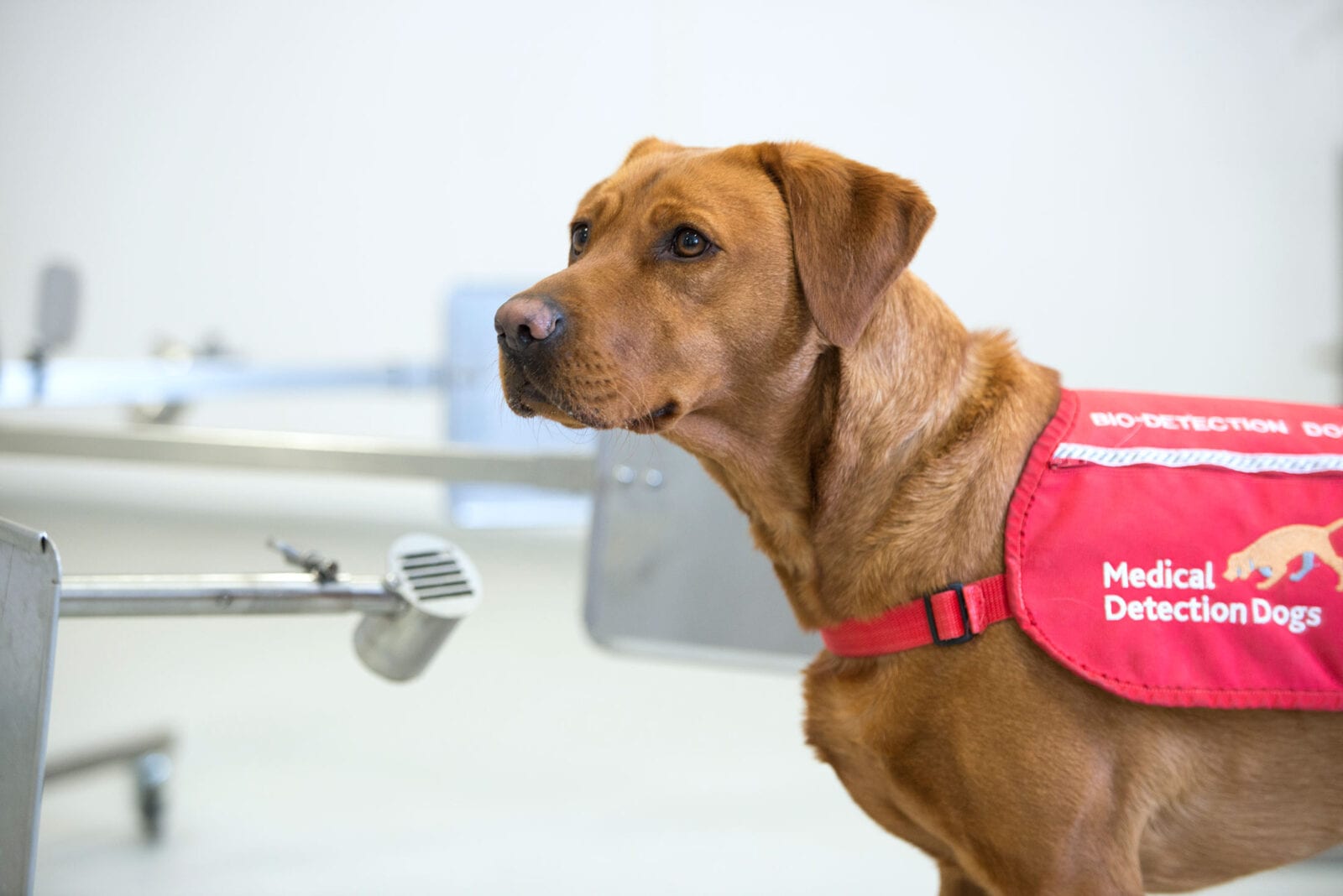
But now these amazing animals are being used to detect coronavirus in humans – even in cases where there are no visible symptoms.
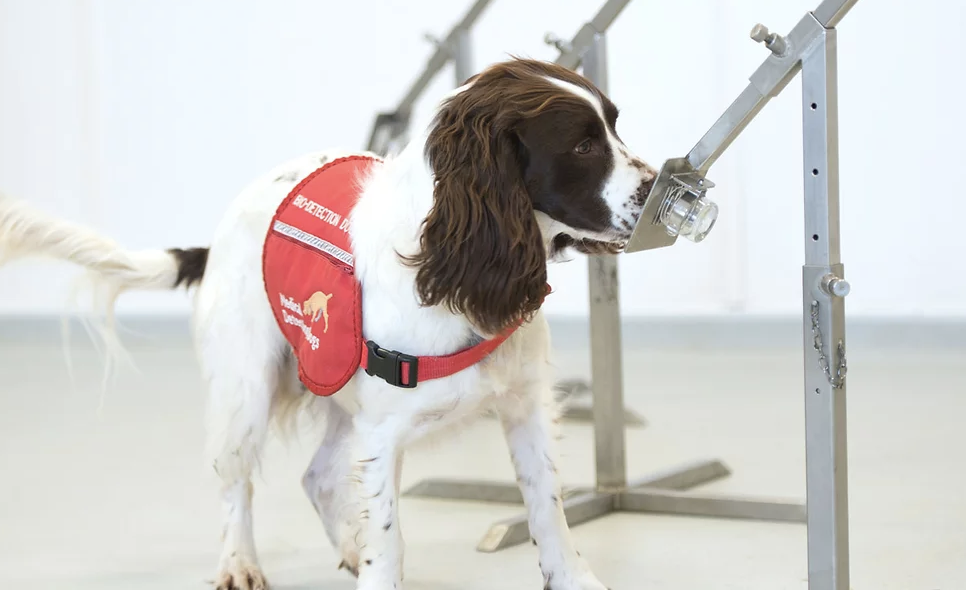
Trained by the charity Medical Detection Dogs, the sniffer dogs have been on trial at London Paddington train station this week.
If results are successful, the canines could be in Manchester by Easter.
ADVERTISEMENT
It was fantastic to see the @MedDetectDogs in action this morning with Her Royal Highness The Duchess of Cornwall
These impressive dogs could be used to identify #coronavirus – helping us further in our fight against this unprecedented virus. pic.twitter.com/fYW8npkB9u
Lilly Moss from Guards.co.uk explained: “The COVID-19 sniffer dogs take less than one second to sniff out the virus, and have been successful in detecting the virus even when no symptoms have been showing.
“Training is currently taking place to enable them to actually sniff out those carrying Covid-19 in busy areas, that’s some skill!”
ADVERTISEMENT
Health Secretary Matt Hancock also met the pooches earlier this week.
Hancock tweeted: “It was fantastic to see [the dogs] in action this morning with Her Royal Highness The Duchess of Cornwall.
“These impressive dogs could be used to identify coronavirus – helping us further in our fight against this unprecedented virus.”
ADVERTISEMENT
The plan is to roll out the programme nationwide and get the dogs to work in busy public spaces – ultimately helping to identify COVID-19 in carriers so they can quarantine.
“We have already had enquiries from some large shopping centre clients about how we could integrate sniffer dogs into the regular patrols,” added Moss.
“They are jumping on every resource they can to keep open and trading.”
Learn more about these amazing animals and how they work online.
News
Seven Manchester green spaces have been named some of the best in the UK
Emily Sergeant
A handful of green spaces in Manchester have once again been handed coveted awards and named among the best in the UK.
It may be on your radar that for several years running now, parks and cemeteries in Greater Manchester have deservingly been recipients of the prestigious Green Flag Award – which is an internationally-recognised honour given annually to the parks and cemeteries that have ‘attained a high standard of green space’.
And 2026 seems to be absolutely no different, with the region coming out on top once again.
Green Flag Awards are granted by environmental charity Keep Britain Tidy each year to recognise accessible green spaces that set ‘an international benchmark for management’.
Seven Manchester green spaces have been named some of the best in the UK / Credit: Donald Judge (via Flickr) | Wikimedia Commons
Every site recognised through the scheme is assessed by experienced judges who judge the parks using eight criteria.
The criteria includes environmental management, biodiversity, landscape and heritage, community involvement, marketing and communication, and management to make sure it’s a safe and secure place for visitors of all ages.
2026 has been one of Manchester’s most successful years, as Manchester City Council has revealed this week that Blackley, Gorton, Philips Park, Manchester General, and the Southern cemeteries have all been given the Green Flag Award, as well as both Alexandra Park and Heaton Park retaining the important title too.
The awards shed light on the range of groups, volunteers, and staff who devote themselves year-round to the maintenance and upkeep of these areas.
“Come rain or shine our colleagues are out in our parks and cemeteries every day of the year, putting their time and effort into making them the internationally recognised locations they are,” commented Councillor Basat Sheikh, who is the Executive Member for Neighbourhoods at Manchester City Council.
“I’m deeply proud of their efforts and I want to dedicate the seven Green Flags we have been awarded to them.
“It’s no overstatement to say none of this would be possible without them.”
Featured Image – Stephen Taylor (via Geograph / Wikimedia Commons)
News
Government announces social media curfew for 16 and 17-year-olds in the UK
Emily Sergeant
Default overnight curfews are set to be switched on for 16 and 17-year-olds on social media apps.
As the Government looks to take further action to back parents and ‘protect the next generation’ online, following the confirmation of the social media ban for under 16s earlier this year, it has now been announced that curfews will be introduced for 16 and 17-year-olds, as well as a crackdown on so-called ‘addictive features’.
This includes features that can keep users scrolling for longer – such as videos that automatically play one after another, and feeds that continually serve up personalised content.
Late-night curfews are set to run from midnight to 6am.
Late-night scrolling. Endless autoplay. Algorithms designed to keep you hooked.
We're changing that for 16 and 17-year-olds.
New protections will mean overnight social media curfews and addictive features will be switched off by default, helping young people get better sleep,… pic.twitter.com/ykWa9gjNRT
— Department for Science, Innovation and Technology (@SciTechgovuk) July 15, 2026
The new protections are said to be aiming to ‘strike a balance’ between giving older teens greater safeguards online, while still allowing them to change their own settings if they wish.
“These measures will help ensure there is no cliff edge in protections as young people move into their later teenage years,” the Government said in its announcement.
Today’s measures follow a first-of-its-kind Government pilot involving more than 300 teenagers and parents across the UK, with families reporting that overnight curfews quickly became part of their routine and helped improve sleep and concentration.
The Government has announced social media curfews for 16 and 17-year-olds / Credit: Julian Christ (via Unsplash)
“These measures will be crucial in helping young people get the sleep they need, focus on school and college, and spend more quality time with family and friends, all of which are fundamental to building a happy, healthy and fulfilling adult life,” explained Technology Secretary, Liz Kendall.
“We want young people to enjoy the benefits of technology while having the tools to make the online world a place where they can thrive.”
Alongside these protections, the Government says it will publish new guidance for children, parents, and guardians on how to use AI ‘safely and confidently’.
Media literacy skills will also be bolstered in schools to teach children how to navigate new types of technology.