Stalybridge is set to take centre stage this year after being named Greater Manchester’s ‘Town of Culture’ for 2022.
Nestled in between the scenic hills of the Peak District, but within easy reach of the rest of the city-region, Tameside Council says that this prestigious accolade “shines a light on the many attributes of the post-industrial town”.
Tameside is known for having a canalside setting, plenty of heritage buildings to its name, and a rich mix of independent businesses.
The new ‘Town of Culture’ title – which is awarded by the Greater Manchester Combined Authority (GMCA), and comes with a £50k grant – will enable Stalybridge to build on its “existing vibrant programme of cultural activity”, according to the Council, and bring “further exciting opportunities” for residents and visitors.
The title aims to build a “lasting legacy” for the town.
ADVERTISEMENT
Tameside Council – which led the submission for the award, working in partnership with The Bridge Cultural Consortium – said the ‘Stalybridge Town of Culture Programme 2022’ will “complement” existing work that’s currently taking place as part of the Stalybridge Heritage Action Zone and the Town Centre Challenge.
One of the key features in the bid that won Stalybridge the prestigious title was the idea of developing a cultural programme for 2022 that will promote projects enabling people to slow down, connect with the local environment, and celebrate its cultural value, with activities and events like artist-led walks and trails, community growing projects, and outdoor theatre and storytelling.
ADVERTISEMENT
These will tie in with existing cultural highlights in the town, such as the popular monthly Street Feast event, the Council says.
Speaking on the awarding of the accolade, Cllr Leanne Feeley – Executive Member responsible for Culture at Tameside Council – said: “I’m so proud for Stalybridge and our local community to receive this recognition.
“We already know what a fantastic, vibrant and creative place Stalybridge is, but this is an opportunity to showcase our town’s amazing cultural identity even more widely.
ADVERTISEMENT
“Stalybridge’s cultural legacy spans the decades – it is the birthplace of the world’s oldest brass band, the Stalybridge Old Band, it’s the place where the iconic First World War song ‘A Long, Long Way to Tipperary’ was written, it’s a key location in the film ‘Yanks’ featuring Richard Gere and it is where Beatrix Potter would often write and draw while visiting her family at Gorse Hall.
“In the present day, it’s still a hive of cultural activity, hosting events such as the recent Royal Exchange’s The Den project and the ongoing and resoundingly successful Street Feast, and the Town of Culture title will allow us to build on this heritage and the wonderful work already taking place, while also creating new opportunities and a new tale in the town’s story.
“It’s a really exciting way to start 2022 and I look forward to what will follow.”
Featured Image – Wikimedia Commons
News
GMP officer sentenced after hitting pedestrian during police chase in Rochdale
Emily Sergeant
A police officer has been sentenced this week after he struck and ‘seriously injured’ a pedestrian following a pursuit of a suspected drink driver in Rochdale.
35-year-old Greater Manchester Police (GMP) officer PC Sam Lockley pleaded guilty back in January 2026 following an Independent Office for Police Conduct (IOPC) investigation.
The IOPC investigation established that, in the early hours of the morning on 19 November 2023, PC Lockley was driving a marked police vehicle with the lights and sirens activated, and attempted to stop a suspected drunk driver on Drake Street in Rochdale.
A short pursuit that commenced but stopped merely a minute later after the police vehicle collided with a pedestrian on the footpath of Rochdale Road at approximately 3:30am.
The evidence gathered indicated that PC Lockley failed to slow down as he approached and drove through the red traffic lights at the Kingsway junction, and was travelling at a speed of 96mph in a 30mph zone.
The pedestrian suffered ‘serious injuries’ as a result of the collision, and received extensive medical treatment following.
At a hearing back in February of this year, PC Lockley received a two-year suspended sentence and was ordered to carry out 15 days community service, while also receiving two-year driving disqualification.
Also following the investigation, the IOPC decided that Lockley should face a gross misconduct hearing to face allegations that his manner of driving breached the police standards of professional behaviour.
“We continue to liaise with the force about disciplinary proceedings,” the IOPC concluded.
IOPC Director Amanda Rowe added: “My sympathies remain with the man, who sustained serious injuries, and all those affected by the incident.
“This was a complex investigation which relied on extensive amounts of data and expert analysis and the evidence showed PC Lockley drove at excessive speeds at night-time and although he was responding to a report of a suspected drink driver, it does not excuse his manner of driving.
“PC Lockley admitted he drove in a dangerous manner when he didn’t address hazards or warnings during the pursuit and ultimately by the time he saw the pedestrian, he was travelling too fast to avoid a collision.
“His actions that day have had long-lasting consequences and he has now been held accountable.”
Featured Image – Rawpixel
News
Manchester Town Hall is FINALLY taking wedding and events bookings for the first time since 2018
Emily Sergeant
A new era is on the horizon, as Manchester Town Hall has announced that it’ll be finally taking bookings for weddings and events once again.
That’s right… for the first time since it closed its doors to the public for what is the UK’s biggest restoration project to date back in 2018, one of Manchester’s most iconic landmarks is soon set to welcome its first weddings and events in a decade – with bookings for the city’s most romantic address now open once again.
Manchester Town Hall has stood at the centre of civic life in the city since 1877, and for generations, couples have exchanged their vows within its walls.
Now, as it enters the home stretch of its restoration, the Grade I-listed building is gearing up to kickstart weddings and corporate events from January 2028.
Set reopen to the public next year, first up will be a series of celebratory reopening events – which are yet to be announced – before a phased approach will then allow the building and teams to be fully prepared to host commercial events again from 2028.
Manchester Town Hall has announced that it’s finally taking wedding and events bookings for the first time since 2018 / Credit: Supplied
From its grand architecture and soaring stained glass windows, to sweeping staircases that offer the perfect ‘just married’ photo opportunities, this one-of-a-kind venue gives couples the opportunity to combine the romance and grandeur of a historic setting with the energy of a city centre celebration.
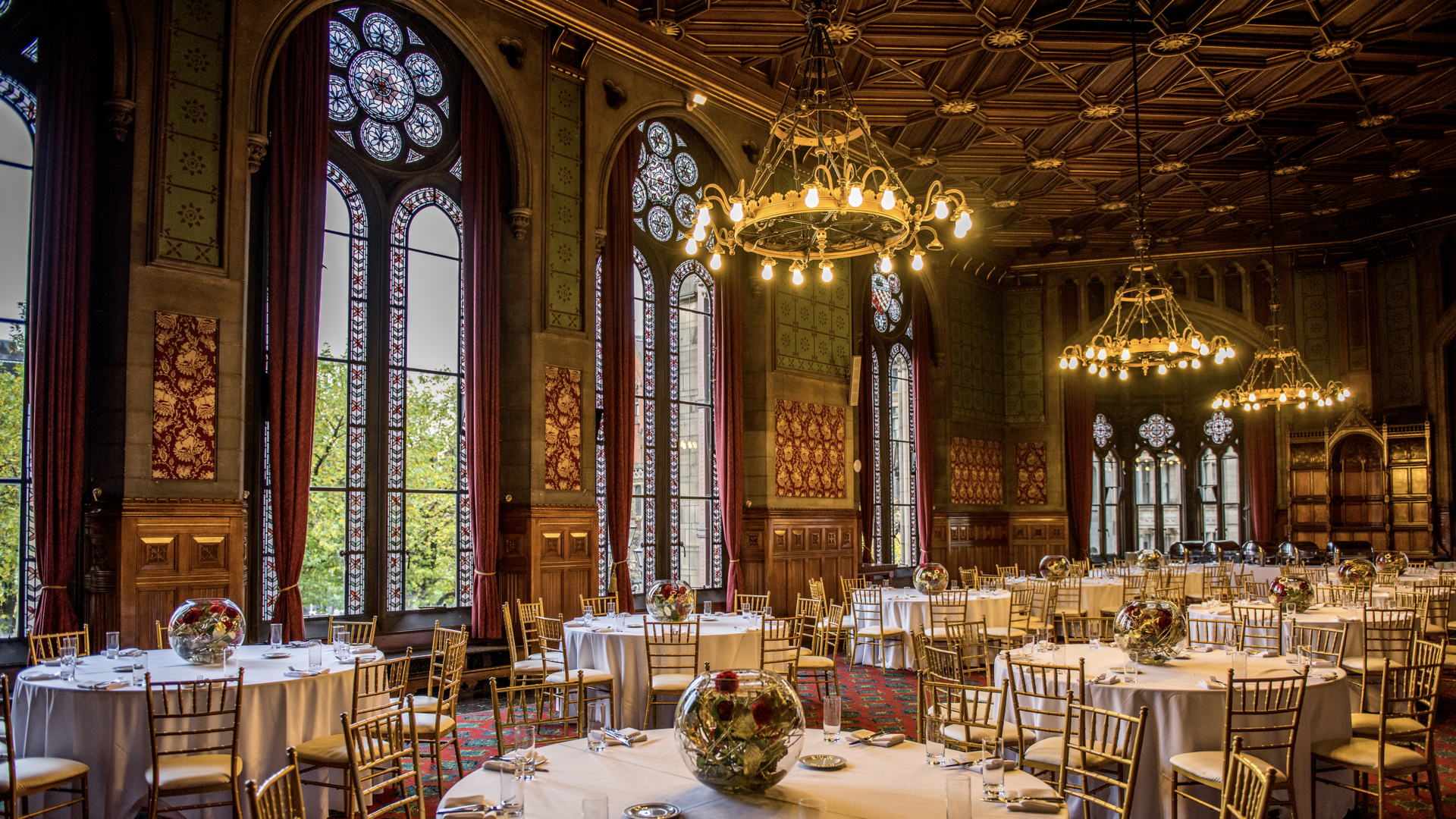
Inside the restored building, you’ll find The Great Hall, which is a magnificent setting with striking architectural character, as well as The Conference Hall, The Banqueting Hall, and The Reception Room, all of which offer equally characterful spaces that are perfect for private dinners, ceremonies, or corporate events.
The Lord Mayor’s Parlour is one of many settings overlooking the newly reopened Albert Square, while various elegant reception areas provide the perfect location for drinks and arrival moments.
“Our Town Hall is a real Victorian masterpiece and we’re looking forward to sharing it with the public once again,” explained Cllr Garry Bridges, who is Leader of Manchester City Council, as bookings finally open up this week.
“It’s a special building which belongs to the people and it’s great that they will be able to celebrate important landmarks in their lives, such as marriage, in its spectacular setting.
“The Town Hall is full of history. Here’s to many more stories being written within its walls.”
Want to be one of the first people who gets married or hosts an event at Manchester Town Hall once it reopens in 2028? You can enquire about booking here.

 Emily Sergeant -
20th January 2022
Emily Sergeant -
20th January 2022