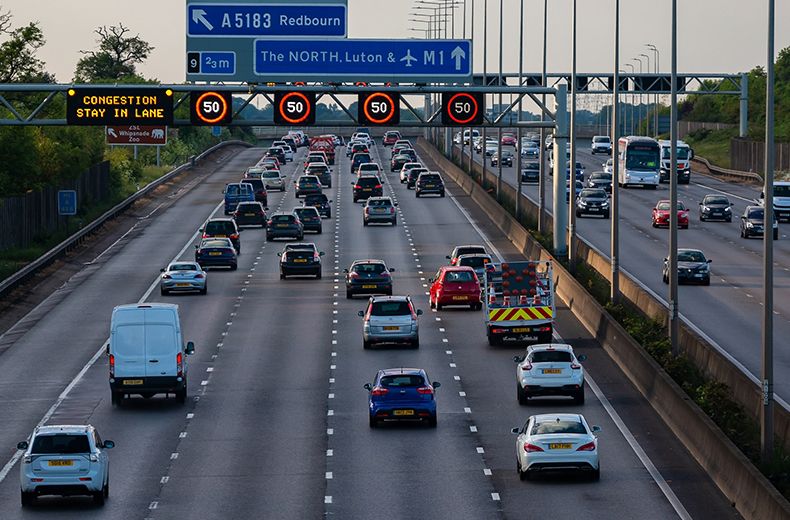
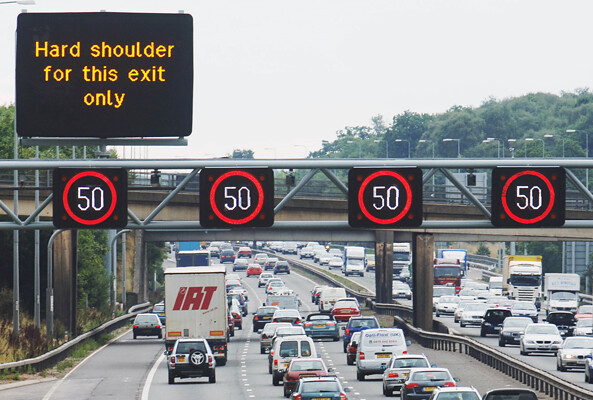
The government has today announced that the rollout of “all lane running” smart motorways is to be paused in the UK amid safety concerns.
Following the publishing of the recent Transport Committee report, ministers from the Department for Transport (DfT) have said that schemes to convert stretches of the M3, M25, M62 and M40 into smart motorways will be held off on until “five years’ worth of safety data are available”.
Where work is already underway, a £390 million retrofit programme will instead see additional emergency refuge areas and Stopped Vehicle Detection technology installed where possible.
The decision to halt the controversial rollout follows a recommendation by the Commons Transport Select Committee – which highlighted that there wasn’t enough safety and economic data to justify continuing with the project.
In the review of smart motorways commissioned by transport secretary, Grant Shapps, in March 2020, the government said dynamic smart motorways were confusing and should be phased out in favour of all-lane running – which would remove the hard shoulder permanently – but MPs on the Transport Committee said that the decision was “premature” and based on insufficient evidence.
ADVERTISEMENT
The report urged the government to instead “consider alternative options for enhancing capacity” on motorways.
Our report on smart motorways called for a pause to the rollout of all-lane running smart motorways until sufficient safety data had been gathered, as well as other key recommendations.
Smart motorways – which were first introduced in England in 2014 to increase road capacity and manage traffic by converting the hard shoulder to a live running lane – have been heavily criticised by safety campaigners and MPs alike, with concerns voiced following a growing number of fatal incidents involving broken-down vehicles on smart motorways being hit from behind.
Most-notably, demonstrators carried 38 cardboard coffins to the Houses of Parliament last November 2021 in protest over the government’s initial motorway plan, with each coffin representing one of the people officially listed as being killed on smart motorways between 2014 and 2019.
Around 53 people are thought to have died on smart motorways since 2014.
ADVERTISEMENT
Claire Mercer – whose husband, Jason, died on a smart motorway stretch of the M1 in June 2019 – is one of the most prominent campaigners for the abolishment of smart motorways entirely, and is the founder of the Smart Motorways Kill campaign group.
Ms Mercer says her husband would still be alive had there been a hard shoulder, and has said that “none of this is enough”.
She wants to see hard shoulders brought back in every instance.
The rollout of “all lane running” smart motorways is to be paused in the UK amid safety concerns / Credit: RAC
Speaking on the decision to pause the smart motorway rollout for five years, Transport Secretary Grant Shapps said: “While our initial data shows that smart motorways are among the safest roads in the UK, it’s crucial that we go further to ensure people feel safer using them [and] pausing schemes yet to start construction and making multimillion-pound improvements to existing schemes will give drivers confidence and provide the data we need to inform our next steps.”
He added: “During the pause, we will continue to make sure all existing ALR smart motorways are equipped with best-in-class technology and resources and are as safe as they can possibly be.”
ADVERTISEMENT
Tory MP Huw Merriman – who chairs the Commons Transport Select Committee – added: “It was clear to our committee that the public needs more reassurance that these motorways are safe to use.
“With conflicting and patchy evidence covering a limited number of years, more time was required to properly assess the impact on safety.”
Campaigners have long argued that the scrapping of hard shoulders has put drivers at greater risk of accidents / Credit: Flickr
Labour’s shadow transport secretary, Louise Haigh, said ministers were “wrong to press ahead” with smart motorways when “the strong evidence warned against it,” and added that “smart motorways in their current form, coupled with inadequate safety systems, are not fit for purpose and are putting lives at risk.”
“Today’s announcement is a welcome step,” she admitted.
“But Ministers should go one step further and reinstate the hard shoulder while this safety work and the accompanying review of the evidence takes place.”
Jewish leaders call for cancellation of huge Fontaines D.C. gigs in Heaton Park
Daisy Jackson
Jewish leaders have expressed ‘profound concerns’ regarding the two enormous Fontaines D.C. gigs taking place in Heaton Park next summer.
The Jewish Representative Council of Greater Manchester and Region has called for the shows to cancelled.
They said that ‘the safety of our community must be paramount’.
Irish rockers Fontaines D.C. have been outspoken at their concerts in the past in their support for Palestine, displaying ‘Free Palestine’ messaging on huge screens across the globe.
Now, the JRC has publicly expressed concerns about ‘the potential consequences of inflammatory rhetoric from the band’.
They added: “At a time of heightened antisemitism, the comments and chants associated with the band risks importing tensions from the Middle East into the UK, with Jewish people here becoming the targets.”
Fontaines D.C. are set to play two massive shows at Heaton Park next summer, on 3 and 4 July.
Manchester City Council has stressed that they will be working closely with members of the Jewish Representative Council as event management plans are developed, and added that ‘partners from the Council, emergency services including Greater Manchester Police (GMP), and event organisers, will comprehensively review the plans in place ahead the concerts’.
In a statement, the JRC said: “The JRC has registered our profound concerns with Manchester Council regarding Fontaines D.C.’s forthcoming concert at Heaton Park and has called for it to be cancelled.
“Despite our representations, it appears the concert will be going ahead. We expect and will be working with the council to ensure robust and adequate safeguards are in place to protect the Jewish community.
“We have no objection to Heaton Park hosting concerts.
“Our concerns are not about legitimate political expression but the potential consequences of inflammatory rhetoric from the band.
“At a time of heightened antisemitism, the comments and chants associated with the band risks importing tensions from the Middle East into the UK, with Jewish people here becoming the targets. The safety of our community must be paramount.”
A Manchester council spokesperson said: “We understand the very real concerns that members of our Jewish community have in the wake of the horrific antisemitic terrorist attack at Heaton Park Synagogue last year and a wider rise in antisemitism. Our thoughts remain not just with those who lost their lives and their loved ones but with the whole Jewish community.
“We stand shoulder to shoulder with them in saying there is no place for antisemitism or discrimination of any form in Manchester and continue to work with the police, communities and other partners to provide reassurance and support.
“On the specific concerns expressed by some members of the Jewish community in relation to the two Heaton Park concerts in summer 2027, addressing these concerns will be front and centre in preparations for these events. We have met recently with members of the Jewish Representative Council and will continue to work closely with them as we develop event management plans.
“Partners from the Council, emergency services including Greater Manchester Police (GMP), and event organisers, will comprehensively review the plans in place ahead the concerts. This is standard practice for all major events in the city and is there to ensure events take place safely and successfully.
“In advance of the concerts, as with any other large-scale events, a thorough risk assessment of every aspect of the event will be carried out, focused on ensuring the safety and security of the event, its attendees and the wider community.
“The organisers, City Council and GMP will put in place suitable and proportionate mitigations and assurances to make sure that the concerts are delivered in full compliance with the licensing conditions. Organisers would also be happy to meet with concerned parties to help address any concerns. They are clear that discrimination or intimidation, including antisemitism, have no place at their events.”
Police shut down suspected brothel in Oldham following concerns raised by locals
Emily Sergeant
Police have shut down what they believe to have been a brothel in Oldham during the early hours of this morning.
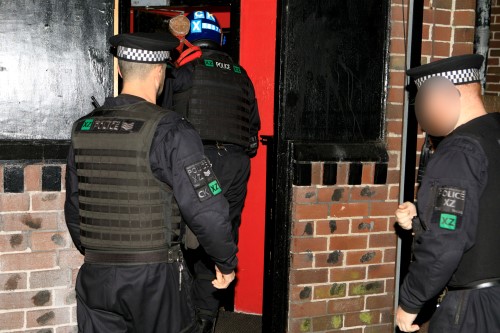
Following concerns raised by the local community and years of gathering intelligence, officers from Greater Manchester Police‘s (GMP) Oldham Neighbourhood Team executed a warrant at a premises on Broadway in Oldham earlier this morning (14 October 2026), as they believed it to be operating as a brothel.
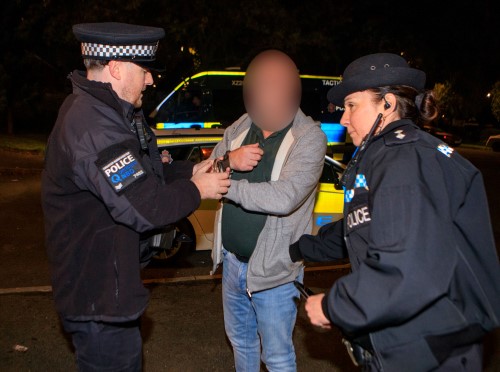
The warrant was executed as a result of the unrelated arrest of a man believed to be connected to the business.
When police seized a mobile phone from the man, examination of the device uncovered evidence which provided them with grounds to suspect the premises was being used for the control of prostitution.
During the operation this morning, a woman in her 40s was found and spoken to by officers. Once safeguarding measures were put in place by GMP, she was subsequently arrested on suspicion of immigration-related offences and possession of Class A drugs.
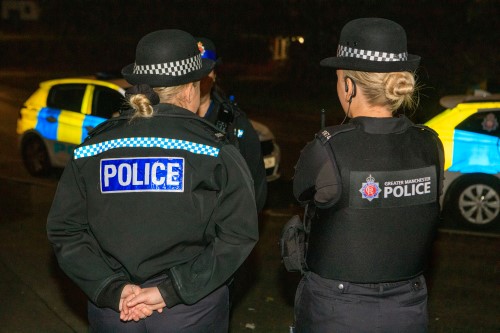
Police have shut down a suspected brothel in Oldham following concerns raised by locals / Credit: GMP
A man – who police believed to be the owner of the premises – was also arrested on suspicion of controlling prostitution for gain.
Officers seized a number of items from the address too, including cash and timesheets, as part of the ongoing investigation.
“The concerns surrounding this premises have been raised by local residents and businesses for a considerable period of time, and today’s action is the result of years of intelligence gathering and partnership working,” explained Police Sergeant Tom Layton.
“By securing a Closure Notice, we have been able to immediately disrupt the activities taking place at the premises and prevent further harm, nuisance and criminality while legal proceedings continue.
“Premises suspected of facilitating criminality can have a significant impact on those living and working nearby, causing nuisance and concern.
“We have listened to the concerns of the community and have taken robust action to address them.”
Neighbourhood Inspector Amie Whitehead added: “Our priority is always to identify and safeguard those who may be vulnerable while pursuing those suspected of criminal offences.
“We will continue to work tirelessly to target anyone who seeks to exploit others and to ensure Oldham remains a safe place for residents, businesses and visitors alike.”

 Emily Sergeant -
12th January 2022
Emily Sergeant -
12th January 2022