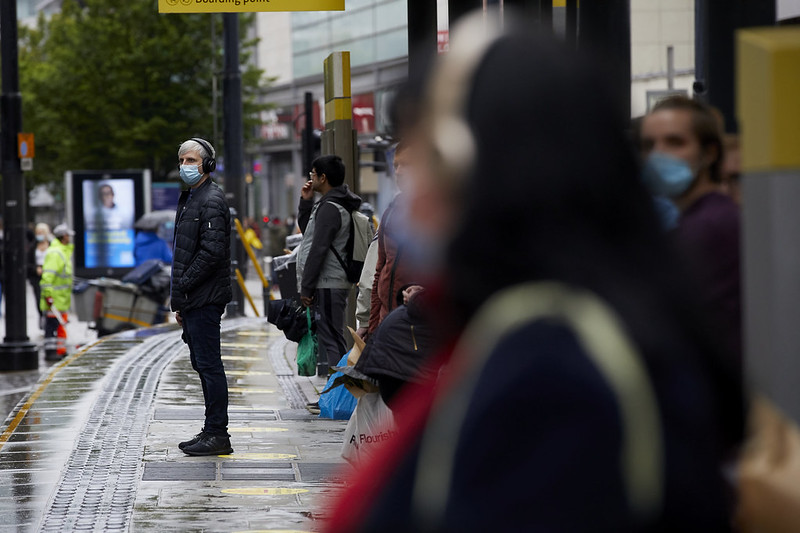
The latest reports suggest that the UK government could be close to introducing new local lockdown restrictions in some of the worst-affected regions imminently.
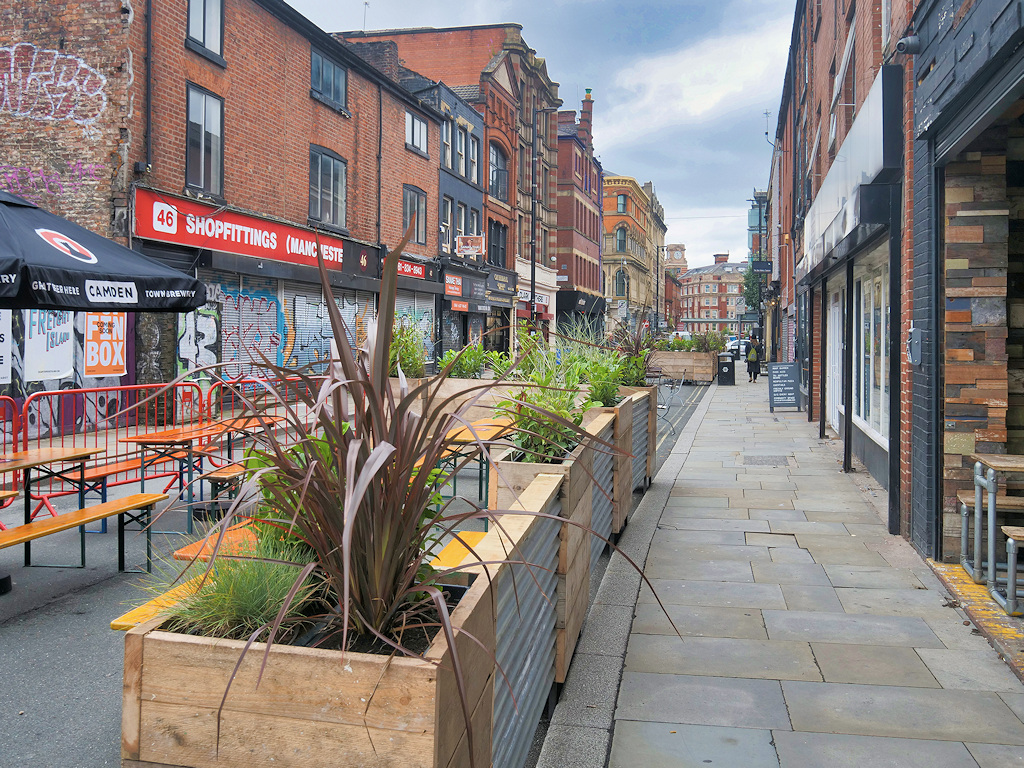
This could see pubs, bars and restaurants in many parts of the North of England – including Greater Manchester – forced to close premises for a period of time which is not yet understood.
There are also talks that there could be a ban on overnight stays away from home in these areas too.
It is believed that a decision on this could be reached at some point today, with a formal announcement not likely to come until Monday, although this has not been confirmed.
ADVERTISEMENT
This decision could be set to follow similar restrictions introduced by Scotland’s First Minister Nicola Sturgeon yesterday afternoon, which prohibits pubs, restaurants and cafes in most of the country from selling alcohol indoors for more than two weeks, and ordered pubs and restaurants in Greater Glasgow & Clyde, Lanarkshire, Ayrshire & Arran, Lothian and Forth Valley in the central belt to close for 16 days from Friday.
It’s thought that these potential restrictions could take effect from as early as Monday too.
ADVERTISEMENT
There are also strong suggestions that the government is likely to introduce a three-tier system for local lockdowns, which would see different parts of the country placed into different categories – although ministers are still believed to be discussing the precise details of the toughest level of restrictions over the next couple of days – but what does this really mean?
How could a potential “three-tier” restrictions system look if implemented in Greater Manchester?
Here is everything we know so far.
ADVERTISEMENT
The Department of Health confirmed last month that a potential new “three-tier” system was being considered, but the concept was signed off by government officials and politicians earlier this month and the roll-out of the new tiers is expected following imminent formal announcement.
As the name suggests – and as understood by the BBC – the system could see towns, cities and regions in England divided into three categories.
Tier 1
Areas that fall into tier one will have fewer than 100 cases per 100,000 of population and residents living in these areas would be required to adhere to national restrictions.
This would include the “rule of six” and social distancing measures.
Tier 2
Tier two would kick in where cases are above 100 per 100,000.
ADVERTISEMENT
Restrictions for these areas would be similar to those currently in place in large parts of Northern England – including Greater Manchester – such as prohibiting the mixing of households in indoor and outdoor settings.
Tier 3
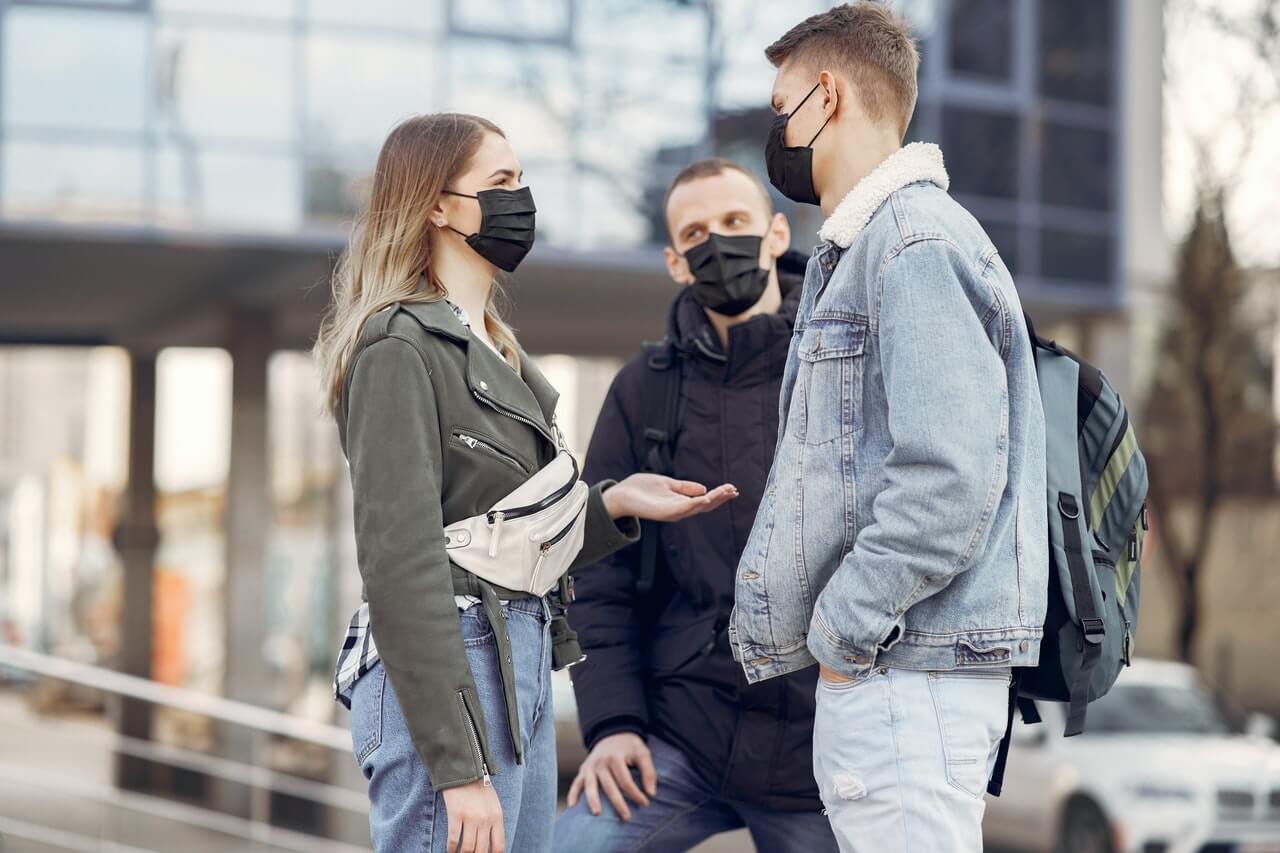
Under the tightest restrictions, areas which are placed into tier three would have significantly higher infection rates and would face “full lockdowns”, although this would exclude the closing of schools and essential businesses – such as supermarkets and certain retail outlets – as well as places of worship.
This does however indicate that it would pertains to the closing of hospitality venues
iStock
Information on the system – again as seen by the BBC – shows that there are plans for additional money to be distributed to local authorities which are placed into tiers two or three.
Local authorities would get £1 per head of population if placed into tier two, and £2 per head for tier three.
ADVERTISEMENT
There has been no formal confirmation at this stage as to which tier Greater Manchester would be placed into should the system be implemented in England, nor whether different areas / boroughs of Greater Manchester would be subject to different restrictions, or fall under different tiers.
More information is expected to be revealed to the public in due course.
___
For the latest information, guidance and support during the coronavirus (COVID-19) pandemic in the UK, please do refer to official sources at gov.uk/coronavirus.
#HandsFaceSpace
News
A documentary about Manchester’s famous homeless charity run has just dropped on YouTube
Danny Jones
An award-winning, short, and completely free documentary about Manchester’s famous annual homeless charity run is now available to watch in its entirety on YouTube.
Following a number of short snippets and teasers shared on social media over the last few months, the mini-doc by local moviemaker Gigi Shum was finally released on the streaming platform this past June.
Documenting not only the backstory of the inspiring Manchester 24 Hour Run Against Homelessness – now a much-loved annual tradition that has since spread to multiple other locations – it also gives a peek behind the curtain at those who organise it and the thousands of inspirational participants.
You can watch one of the most recent trailers here.
Capturing the sixth edition of the consecutive relay run, which spans the length of an entire day (which was another record-breaking year before being smashed in November 2025), Shum didn’t shy away from getting some laps done herself, but she also managed to shoot a truly important public access film.
A trail runner herself with a number of other works to her name already, including a well-supported Kickstarter revolving around neurodiversity, Gigi prides herself on “exploring the neglected truth in the world” through touching tales like The 24 Hour Run.
The adopted Manc and MetFilm School graduate’s roots may hail from Hong Kong, but she’s well and truly immersed and embedded herself in the Greater Manchester community through spotlighting local initiatives like this.
More importantly, this is much more than a student project: the bitesize 21:22 picture has been nominated and won at numerous festivals across the globe, including shortlists like the Florence Film Awards, a finalist in both the Independent Shorts and LEEDSflix competitions, among several others.
Aside from the obvious humanitarian and charitable angle of The 24 Hour Run‘s narrative, the talking heads with members of the team and numerous inspiring runners taking on incredible challenges on behalf of the ‘A Bed Every Night’ scheme make you proud to be from this part of the world.
You can watch it in full down below.
About the same run-time as most sitcom episodes – we’d argue this is a well more worthwhile watch.
Deeply moving stuff, we’re sure you’ll agree.
Speaking after a limited number of exclusive screenings, Gigi told The Manc: “What began as a question about why people run through the night transformed into an exploratory journey of human resilience, community, and active compassion on the streets of Manchester.”
It’s also worth mentioning that the young director and producer is doing lots more to contribute to the region, helping out as part of the Manchester Refugee Support Network (MRSN), supporting asylum seekers who may otherwise end up sleeping rough themselves.
They’ve raised hundreds of thousands for the likes of the Greater Manchester Mayor’s Charity since the event’s inception back in 2019. Mayor Andy Burnham himself may be looking toward no.10 Downing Street moving forward, but fundraising on behalf of this organisation will always be a part of his legacy.
Better still, this dedicated crew of volunteers have also generated vital funds for similar causes in the likes of Birmingham, Leeds, Sheffield, Hereford, and soon to be even more.
Set to debut in Liverpool later this year, another city renowned for backing themselves and looking after their own, we can’t wait to see how much more impact they make on the North West.
Featured Images — The MCR 24 Hour Run Against Homelessness (supplied)
News
Transformational plans set to be approved for ‘major’ new Manchester city centre park
Emily Sergeant
‘Transformational’ plans to regenerate an underused Manchester city centre site are set to be approved next week.
Following ‘overwhelming’ public support for proposals set out in a public consultation earlier this year – where more than 90% of respondents supported the key principles – Manchester City Council says its executive is expected approve an ambitious vision for the Water Street neighbourhood at a meeting next week (Weds 8 July).
The Water Street Strategic Regeneration Framework (SRF) is set to create a city centre district developed around a new urban park.
The SRF is described as being a ‘high-level blueprint’ for future investment that will guide development through the planning process.
The plans are comprised of a new landscape-led neighbourhood that combines homes – including 20% of them being ‘affordable’ – improved public spaces, enhanced walking and cycling connections, and ‘significant’ new green infrastructure centred around the River Medlock.
Sustainability was highlighted as an area of importance to local residents in the consultation, and to meet these demands, the plans include increased biodiversity, sustainable drainage features, and a largely car-free neighbourhood to support Manchester’s zero-carbon ambitions, as well as the new urban park being at the heart of it all.
The new neighbourhood will also offer plenty of new jobs, skills, and investment opportunities.
“The wider Water Street area has seen major regeneration in recent years with world-class investment at St John’s and Aviva Studios on its doorstep, alongside impressive residential developments,” explained Cllr Gavin White, who is Manchester City Council’s executive member for housing and regeneration.
“This renewed regeneration framework will help guide investment to bring this area up to the same ambitious level with new housing, including affordable housing to create an inclusive new neighbourhood, complemented by a brand-new city centre urban park.”
Featured Image – Manchester City Council (Supplied)