It has been confirmed that thousands more NHS cancer patients are set to be offered treatment from the comfort of their own home.
This announcement comes following a successful scheme in Manchester.
A specialist team at the renowned cancer centre, The Christie NHS Foundation Trust in Withington, is currently already delivering lifesaving chemotherapy and immunotherapy at home for around 130 patients per week, after beginning to offer the option for breast cancer patients back in 2016 – but now, there are plans to roll it out more widely.
It’s hoped that up to 10,000 patients with breast, bowel, kidney, lung, prostate or melanoma skin cancer will be treated per year.
The ‘Christie at Home’ service currently consists 12 fully-qualified chemotherapy and immunotherapy nurses from the hospital, and it additionally offers more than 25,000 of treatments each year from a mobile unit and regional clinics.
ADVERTISEMENT
But how does it work?
Well, patients are given their first two treatments in a clinic – to allow doctors to assess them and monitor for any potential complications – and if they’re given the all-clear, they can then opt to have the rest of their treatments at home.
ADVERTISEMENT
The drugs are delivered by a pharmacist and specialist nurses visit to administer them.
Stephanie Hechter – Outreach Service Manager at The Christie – told the Daily Mail that the service has been proving popular and effective throughout the trial period, and particularly during the coronavirus (COVID-19) pandemic, as “patients don’t have to spend time travelling to and from hospital appointments, and they don’t need to worry about parking or sitting around in waiting rooms”.
She continued: The benefits of at-home treatment were even greater last year, when many patients were worried about coming to hospital.
ADVERTISEMENT
“Our way, they get a time slot and one-on-one nursing care.
“It meant that no one missed appointments [and] we were able to keep providing treatment as usual.”
It’s also been confirmed that The Christie is working with and could act as a blueprint for another leading cancer centre, The Royal Marsden Hospital in London, as with figures suggesting there are 4.5 million patients waiting for hospital treatment, experts are saying the service could be a way for other hospitals to help ease pressure caused by a backlog of patients who have seen procedures or treatments delayed during the pandemic.
It could also prevent patients from having to come into hospitals where strict hygiene control and social distancing measures are still place.
One patient to have benefited from the ‘Christie at Home’ service is Bob Huntbach – a 72-year-old retired Detective Superintendent from Urmston, who is a father-of-two, grandfather to five, great grandfather to two, and was diagnosed with melanoma skin cancer four years ago – who has been receiving immunotherapy treatment every six weeks and says he sat in his conservatory while the nurses carried out the treatment.
ADVERTISEMENT
Bob added: “When I was going to hospital for the treatment, I had to write off a whole day and it’s very tiring [but] now, I have the treatment at home and it makes a huge difference.
“You also get a one-to-one service with the nurse, who can answer all your questions”.
Unfortunately in recent months, the cancer has spread to Bob’s lungs and he will now need to go onto a new drug to continue his fight against the disease, but he says that the time he saved travelling has made all the difference to keeping up a somewhat normal lifestyle.
“Once the nurses have gone, I can spend time in my workshop,” he says.
“At my age, every day counts”.
Featured Image – The Christie NHS Foundation Trust
News
Police shut down suspected brothel in Oldham following concerns raised by locals
Emily Sergeant
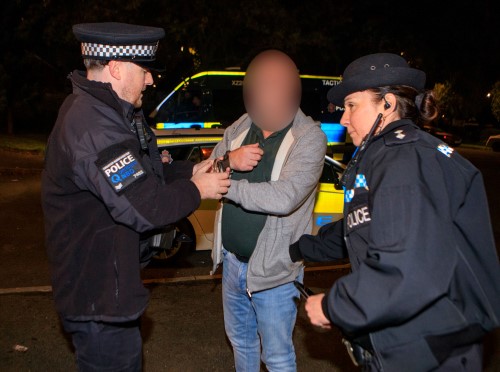
Police have shut down what they believe to have been a brothel in Oldham during the early hours of this morning.
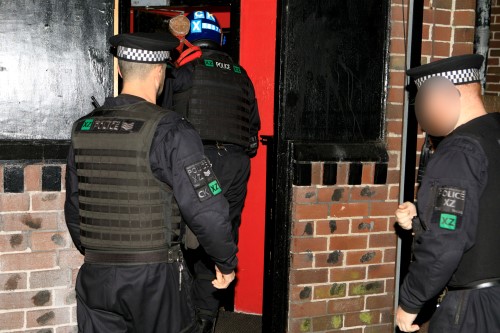
Following concerns raised by the local community and years of gathering intelligence, officers from Greater Manchester Police‘s (GMP) Oldham Neighbourhood Team executed a warrant at a premises on Broadway in Oldham earlier this morning (14 October 2026), as they believed it to be operating as a brothel.
The warrant was executed as a result of the unrelated arrest of a man believed to be connected to the business.
When police seized a mobile phone from the man, examination of the device uncovered evidence which provided them with grounds to suspect the premises was being used for the control of prostitution.
During the operation this morning, a woman in her 40s was found and spoken to by officers. Once safeguarding measures were put in place by GMP, she was subsequently arrested on suspicion of immigration-related offences and possession of Class A drugs.
Police have shut down a suspected brothel in Oldham following concerns raised by locals / Credit: GMP
A man – who police believed to be the owner of the premises – was also arrested on suspicion of controlling prostitution for gain.
Officers seized a number of items from the address too, including cash and timesheets, as part of the ongoing investigation.
“The concerns surrounding this premises have been raised by local residents and businesses for a considerable period of time, and today’s action is the result of years of intelligence gathering and partnership working,” explained Police Sergeant Tom Layton.
“By securing a Closure Notice, we have been able to immediately disrupt the activities taking place at the premises and prevent further harm, nuisance and criminality while legal proceedings continue.
“Premises suspected of facilitating criminality can have a significant impact on those living and working nearby, causing nuisance and concern.
“We have listened to the concerns of the community and have taken robust action to address them.”
Neighbourhood Inspector Amie Whitehead added: “Our priority is always to identify and safeguard those who may be vulnerable while pursuing those suspected of criminal offences.
“We will continue to work tirelessly to target anyone who seeks to exploit others and to ensure Oldham remains a safe place for residents, businesses and visitors alike.”
Featured Image – GMP
News
Tributes paid to ‘trailblazing’ Manchester councillor Pat Karney who’s died at age 78
Emily Sergeant
Heartfelt tributes are being paid following the death of ‘trailblazing’ Manchester councillor, Pat Karney, at the age of 78.
It’s said that he had been receiving treatment for cancer at The Christie.
A longstanding Labour Party politician, Pat had represented Harpurhey as a councillor since 1979, as well as being a Lead Member for the City Centre during that time. He was most-notably responsible for setting up the now-iconic Manchester Day festival, as well as being a supporter and one of the key figures in the organising of Manchester’s annual Christmas Markets.
Pat was affectionately known to many across Greater Manchester as ‘Mr Manchester’ or ‘Mr Christmas’, thanks to his deep love of the city and the festive season.
Also throughout his career, Pat was one of the pivotal figures in the regeneration of the city centre after it was devastated by the 1996 IRA bombing.
He was also said to be ‘proud’ of the role he played in standing up for LGBTQ+ rights, especially in the 1980s when Manchester City Council fought against the discriminatory Clause 28 (of the Local Government Act 1988) introduced by the Thatcher Government.
Manchester City Council Leader Garry Bridges, Council Chief Executive Tom Stannard, and Greater Manchester’s former Night Time Economy Adviser Sacha Lord are some of the well-known names leading the tributes to Pat.
RIP Councillor Pat Karney.
In 2006, when I came up with the idea of The Warehouse Project, it was laughed off.
Pat believed in it and helped it happen.
A visionary. A pioneer. A true Mancunian.#RIPPatKarney
Cllr Bridges called Pat a ‘giant of Manchester politics’, while Lord described him as ‘a visionary, a pioneer, and a true Mancunian’.
One of the most prominent tributes has been paid by Greater Manchester Mayor, and former Council Leader, Bev Craig – who said Pat will ‘always be in our hearts’.
Her tribute reads in full: “Across Manchester and across politics, many will mourn the loss of Pat Karney, a force of nature who served our city for half a century. My thoughts are with his family, who he treasured and adored, at this difficult time. He will always be in our hearts.
“Affectionately known by many as Mr Manchester, Pat was one of the city’s most recognisable figures. Through Manchester’s renaissance, Pat championed making our city what it is today from the regeneration of the city centre, improving the health of Manchester people, to the creation of Manchester Day – he was incredibly proud of Manchester and recognised the need to bring people together.
“A local north Manchester boy, he championed Manchester while ferociously fighting for the people of Harpuhey and Collyhurst. He delivered on the ground from new council housing and a GP surgery to championing a new North Manchester Hospital.
“Pat was one of a kind, passionate, determined, sharp and quick witted, but he was also thoughtful, kind and supportive. He will be remembered too for his sense of fun.
“A private man, he was in many ways a trailblazer in politics, someone who sacrificed a lot to be himself he championed the gay village and LGBT equality, he paved the way for generations who came after him.
“Working together for over 15 years we became good friends and like many I will miss him- but also make sure his achievements are celebrated in a way that he would be proud of.”
Featured Image – Cllr Pat Karney / Manchester City Council

 The Manc -
6th April 2021
The Manc -
6th April 2021