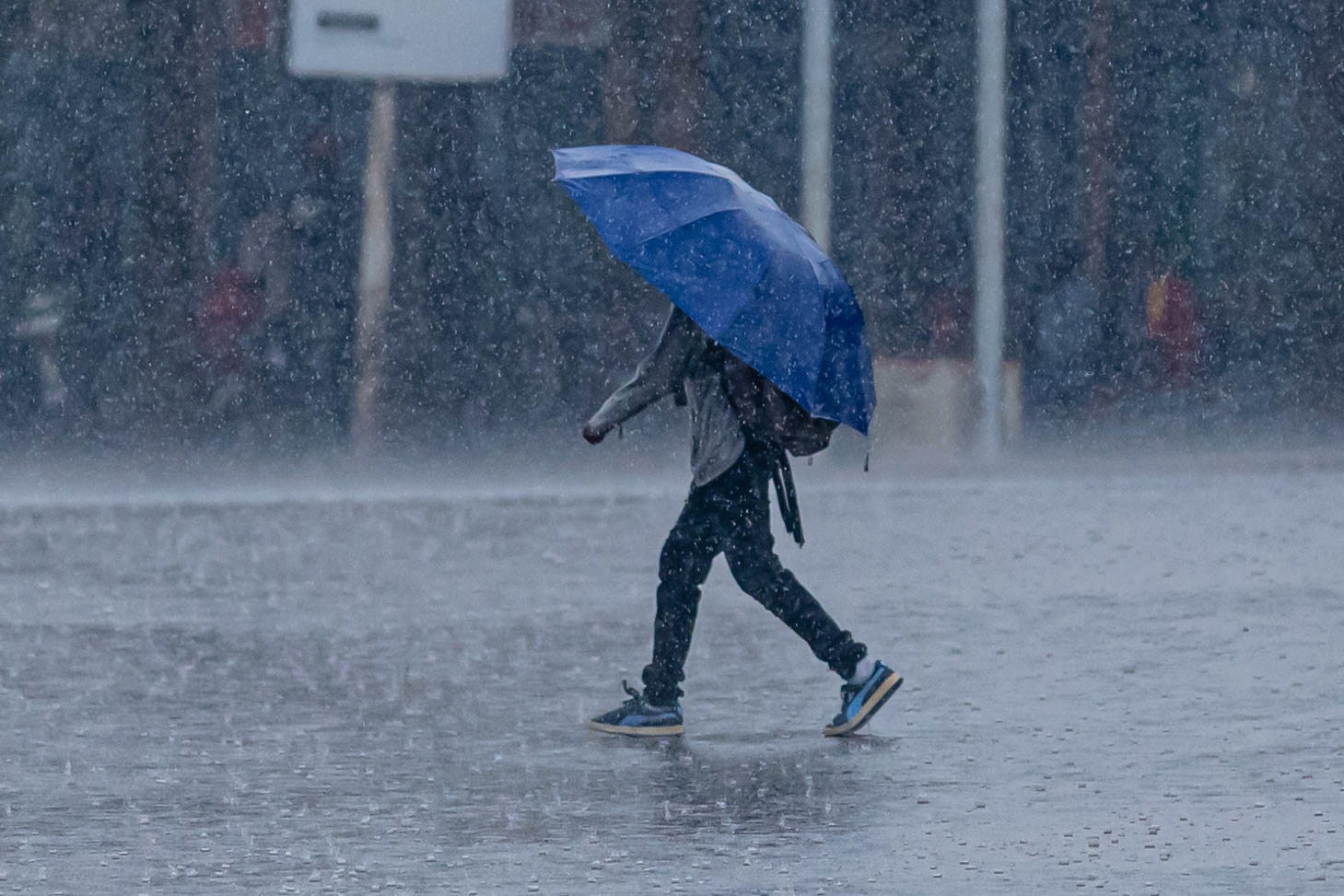
The UK is being told to brace for a series of storms this autumn when the ‘unprecedented’ El Niño weather event arrives.
It’s already been a summer of extremes for the country, with multiple heatwaves over the past couple of months, but now it appears that autumn and winter are set to have some extremes of their own, as the Met Office is warning that this upcoming El Niño could be one of the most significant in recent memory.
El Niño is declared when sea temperatures in the tropical eastern Pacific rise 0.5°C above the long-term average, which therefore impacts global rainfall patterns and average temperatures.
The natural warming of sea temperatures is forecast to reach more than 3°C in the coming months, according to the Met Office, making this year’s weather event have the potential to be ‘the largest since the 19th century’.
The UK is set to be battered by storms as ‘unprecedented’ El Niño arrives this autumn / Credit: Johannes Plenio (via Unsplash)
El Niño will create a heightened risk of drought in the tropics, southern Africa, and north eastern Australia, but over in north western Europe – including the UK – it means we are likely to experience wetter and stormier conditions.
ADVERTISEMENT
The UK, and of course Greater Manchester, is absolutely no stranger to a storm around this time of year, but forecasters say this could be an entirely different beast.
“We should be clear that this is an unprecedented event,” warned Professor Adam Scaife, who is the Head of Long Range Forecasting at the Met Office.
ADVERTISEMENT
“I have never seen an El Nino signal this intense in our forecasts.”
Professor Scaife concluded: “A typical El Nino leads to an equatorial Pacific sea-surface temperature rise of between one to 2°C, with 2°C being a really big event. This implies that, if the forecast is accurate, and other forecast systems show similar extreme values, then 2026 will far exceed our recent experience of El Niño and its worldwide climate influences.’
Forecasters and officials, however, have warned that it could take months of sustained rainfall before rivers, reservoirs, and groundwaters are ‘completely replenished’ – which is when a drought can officially be declared as over.
It also warned drought conditions could persist into the new year as, despite El Niño, as current forecasts do not suggest this autumn will have the amount of rainfall needed to drive recovery.
Featured Image – Wikimedia Commons
News
Hundreds of staff to strike at four Greater Manchester hospitals next week
Emily Sergeant
Hundreds of staff at four of Greater Manchester’s hospitals are set to strike next week.
More than 350 Northern Care Alliance Foundation Trust (NCA) employees – including nurses, clinical support workers and housekeepers – are walking out for three days next week after union UNISON says an offer to ‘resolve’ a dispute was withdrawn before discussions could take place.
According to the union, the dispute centres on the NCA’s use of an outside agency called NHS Professionals (NHSP) to manage overtime.
When covering staff shortages, workers are entitled to time-and-a-half pay – however in some cases, staff earn less than they would on a normal shift, and some have even been missing out on more than £80 per shift, the union added.
Operating theatre staff were previously on picket lines in June, and although an option to resolve the row was initially tabled by NCA bosses, this has now fallen through.
Hundreds of staff at four of Greater Manchester’s hospitals are set to strike next week / Credit: Stephen Andrews (via Unsplash)
This means that staff at Salford Royal Hospital, Royal Oldham Hospital, Rochdale Infirmary, and Fairfield Hospital in Bury are walking out next week on Monday 24, Wednesday 26, and Friday 28 August.
In particular, staff from all four sites will also gather in Salford on Wednesday (26 August) for a ‘unified’ day of protest.
Understandably, some disruption is expected at each of the hospitals on strike days.
“Those at the top of NCA have shown a lack of leadership and made their disregard for their staff clear,” explained UNISON North West regional organiser, Kevin Dolan.
“A deal was put on the table but taken away before we had chance to talk it over. We are ready to continue negotiations, but it’s obvious NCA has no intention of resolving this.
“This isn’t complicated. Staff are simply asking for what their contract says they’re entitled to. Nothing more.”
Featured Image – Pxhere
News
Wetherspoons introduces new phone rule at all UK pubs after customers are ‘driven nuts’
Emily Sergeant
JD Wetherspoon has announced a major new phone rule in all its sites across the UK after customers complain of being ‘driven nuts’.
The pub chain – which has nearly 800 branches across the UK – announced earlier this week that it has made the decision to ban people from playing music or videos out of their phones, and from taking calls on loudspeaker.
The ban, which has been introduced effective immediately, follows a rising number of complaints from customers about the noise – with owners saying sounds from smartphones and tablet computers had become an ‘increasing problem’ in recent years.
Wetherspoon founder and chairman, Tim Martin, says he wants Wetherspoon pubs to be ‘an oasis of tranquillity and contemplation’.
Wetherspoons has introduced a new phone rule at all its UK pubs after customers are ‘driven nuts’ / Credit: Allan Rohmer (via Unsplash)
A formal statement from the company announcing the ban reads: “Following complaints from customers, who are being driven nuts by other people’s videos and amplified phone conversations, Wetherspoon has asked customers to switch their phones to silent or to use earphones.”
Tim Martin added: “In order to avoid customers being driven chicken jalfrezi by a cacophony of sound, we are kindly asking phone users to pipe down.”
Wetherspoon’s ban follows a YouGov poll conducted last year questioning public opinion on a proposition made by the Liberal Democrats of introducing fines of up to £1,000 for ‘headphone dodgers’ who play music out loud on buses and trains.
62% of people, on average, said they would back this move if it was introduced.
The poll, which surveyed 6,815 British adults, found that almost three-quarters of those over 65 would support the fines, while those aged between 18 and 24 were split 47% to 43% in favour of it.
Early public reactions to Wetherspoon’s ban appears to be overwhelmingly positive.